
In a down year for M&A, beauty was a relatively bright spot.
According to investment bank Capstone Partners, year-to-date deal volume fell 6.7% to 56 beauty transactions announced or completed, far better than the 24.2% drop across the broader consumer sector. Beauty deal multiples outperformed the wider consumer market as well, averaging 14.9x EBITDA versus 9.8x.
In a reversal from recent years, when private equity firms were often the most active force in beauty M&A, strategic buyers have taken the lead in 2025. Strategic deals rose 22.9% year-over-year to 43, while private-strategic transactions increased to 34 from 30 and public buyer activity climbed to nine from five.
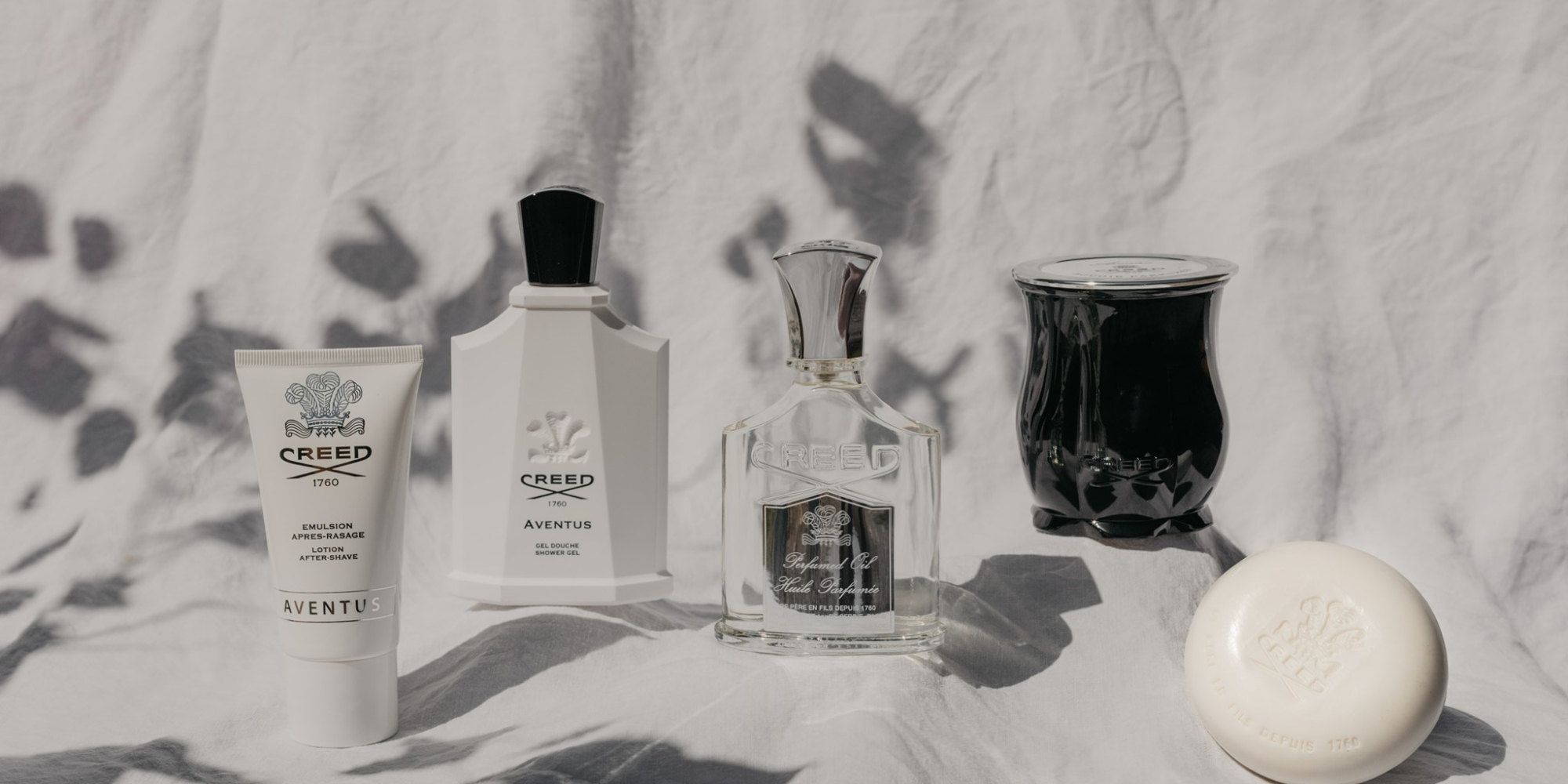
Despite the overall slowdown, 2025 delivered its share of M&A fireworks. A handful of megadeals, from L’Oréal’s beauty-redefining $4.7 billion Kering Beauté agreement to E.l.f. Beauty’s $1 billion purchase of au courant Rhode, reshuffled the competitive landscape and set high bars for valuation.
L’Oréal’s acquisition of Medik8, for instance, was widely estimated to command one of the richest multiples in the sector this year, with reports placing the deal in the 20x to 25x EBITDA range. The valuation underscores the premium buyers are willing to pay for science-backed skincare brands with strong international upside.
As the year winds down, we want to understand the M&A implications of the dealmaking done (and not done). So, for the latest edition of our ongoing series posing questions relevant to indie beauty, we’re asked 14 investors, investment bankers and more the following: What are three key takeaways from 2025’s beauty deal track record? Based on those takeaways, what should indie beauty founders keep in mind if they’re positioning their brands for future investment or acquisition?
-
 Nicole Fourgoux Operating Partner, Stride Consumer Partners
 Three key takeaways from 2025’s beauty deal track record:
- Premium valuations were earned, not given, and they clustered around a very specific profile.
While 2025 was a down year for M&A overall, the beauty deals that did transact, especially at premium multiples, shared a clear set of characteristics: strong brand positioning, defensible differentiation (often science-backed) and credible global expansion potential. The Medik8 transaction is a good example. Buyers were willing to stretch to 20X EBITDA, but only where clinical validation, repeat usage and international scalability were already largely de-risked. This wasn’t speculative growth; it was conviction underwriting.
- Strategics reentered the market, but with a much sharper lens than in past cycles.
The resurgence of strategic buyers did not signal a return to indiscriminate buying. Instead, strategics were highly selective, prioritizing brands that filled portfolio white space, delivered proprietary IP or unlocked new consumer cohorts. Increasingly, these buyers are thinking less about simple category adjacency and more about capability acquisition: science and R&D pipelines, global infrastructure, data-driven community building or social-first and creator-led commerce models.
- Not every “obvious” brand traded, and that was the market speaking.
One of the most telling signals of 2025 wasn’t just which brands sold, but which ones didn’t. Several closely watched indie brands remained independent, either because valuation expectations and buyer risk tolerance failed to align or because underlying fundamentals didn’t support peak-cycle pricing. The message was clear: scarcity alone doesn’t drive exits, quality does. The bar for durable brand differentiation has meaningfully risen.
What indie beauty founders should keep in mind:
Build for durability, not just momentum.
Buyers are underwriting multi-year resilience: margin structure, supply-chain robustness, operating discipline and genuine consumer loyalty, not just top-line growth or short-term hype.
Prove differentiation beyond storytelling.
Compelling brand narratives still matter, but they’re no longer sufficient on their own. Clinical claims, proprietary IP, data and demonstrable product performance, particularly in skincare, are increasingly table stakes. A truly unique capability can be a powerful valuation unlock.
Global readiness is no longer optional at scale.
Even U.S.-centric brands are now being evaluated through an international lens. Demonstrating that your brand can travel—operationally, culturally and commercially—has become a material driver of valuation.
- Alexandre Terseleer Partner, Private Equity Practice, Kearney
Market consolidation has been touted for some three years and is now starting to take shape, most notably with the L'Oréal/Kering deal, but not only that one. This emerging consolidation and especially the bigger deals will put pressure on the entire beauty ecosystem to follow suit and not miss on high-quality assets, at healthier valuations than two to three years ago, before they get scooped up by competitors.
We are seeing interest picking up at every end of the market, though in terms of size, “mature” assets will be preferred (size $100 million-plus retail sales), either with a strong growth outlook or recurring cash flows. Fragrance still has the most interest as a category, given its strong growth outlook, followed by dermatologist-backed skincare and haircare.
Price-wise, the story is a tale of two cities: premium and luxe have a lot of traction, especially in fragrance, but also affordable mass alternatives for day-to-day use, offerings that target the midmarket risk of being stuck in the middle unless their value proposition is very clearly differentiated.
As an indie brand founder, I would focus on finding a partner that has true operational value add and can help optimizing cash flows, for example, through a supply chain/value chain play, or supercharge the growth, for example, through distribution, go-to-market and retail access.
In return, your value-add lies truly in the strength of the value proposition and the customer stickiness. Categories that are ripe for investment are starting to be crowded, and investors will pay a premium for brands that can offer lower customer acquisition cost and high brand equity.
- Manica Blain Founder, Top Knot Ventures
Three takeaways from 2025’s deal track record and what it implies:
- Longevity being repriced, and it now lives on a spectrum.
The biggest shift I see is buyers quietly moving away from the idea that every scaled brand must be a multi-decade compounding asset. It seems the definition of durability is evolving. Some brands will become enduring franchises; others will be culturally dominant for a period, generate meaningful cash flow, and then fade (or get repositioned) because trend cycles move faster than ever (i.e., creator economy, algorithmic discovery, rapid product replication/dupe culture).
And strategics are increasingly behaving like they believe this too: pruning portfolios, refocusing on fewer big bets, and letting go of assets that don’t fit the next chapter. So, durability can mean different things: a true franchise brand at one end, and a “moment brand” at the other that still generates substantial value through cash flow and cultural relevance for five to 10 years. Both can be great assets, but they shouldn’t be valued the same way.
- Impairments and write-downs are the most honest evidence that even “great” brands can be time-bound.
Strategics have literally told us this in financial statements. L’Oréal, for example, previously recorded impairment charges tied to acquisitions, including Magic Holdings and Clarisonic, illustrating how acquisition theses can change when growth or category dynamics shift.
Estée Lauder has also recorded significant impairment charges in recent fiscal periods, including impairment tied to Too Faced and broader impairment charges reported in fiscal 2025 results.
And, on the private equity side, the debt restructuring around Anastasia Beverly Hills, with reporting that TPG’s ~$600M investment was largely wiped out and its stake reduced dramatically, is a timely reminder that what was once perceived as cultural dominance may not guarantee permanent enterprise value.
- 2025 wasn’t no deals, it was just a wide bid/ask spread.
In 2025, a number of widely watched, high-quality brands, particularly in color, simply didn’t transact. I suspect the bid-ask spread didn’t converge. With the supply of strong, well-funded indie brands at an all-time high, buyers can afford to be more selective and reserve premium multiples for the rare assets that are both culturally resonant and structurally defensible (innovation moat, global runway, repeatable hero products, operational rigor). This is why you can still see fireworks at the top end of the market even as many perfectly good assets don’t clear.
Implication: The next era of beauty M&A rewards a sharper distinction between “franchise brands” and “cycle brands.” Both can be excellent outcomes, but they will get financed, valued and acquired differently.
- Alexis Amann Founder, Playbook of Beauty
The 2025 beauty M&A market was smaller, but more strategic, with targets being either cultural phenomena or clinically proven brands bought by big groups looking to fill specific gaps in category, channel or demographic reach.
- Strategic buyers are back
After years of private equity dominance, large beauty conglomerates reasserted themselves as the primary acquirers. L’Oréal, for instance, used its scale to widen its lead, making its largest-ever acquisition with Kering Beauté (€4bn) and adding science-backed brands like Medik8 to its portfolio.
The focus in terms of categories and geographies is clear: Skincare accounted for ~40% of M&A deals, according to DC Advisory. U.S. remained the top market while India is the key emerging market as seen with Unilever’s $350m acquisition of Minimalist.
- The market for assets is polarizing
Valuations and buyer interest have split into two camps. Premiums are reserved either for high-growth, culturally resonant brands (for example, E.l.f.’s purchase of Rhode) or for established, science-backed brands with proven margins and global potential (for example, Medik8 and its 20X to 25X EBITDA multiple). This creates a barbell effect, leaving many good-but-not-great assets in a difficult middle ground where scale alone is insufficient.
- Proven efficacy has replaced clean as the key premium
“Clean beauty" as a marketing claim is being eclipsed by demonstrable, science-backed efficacy. Acquirers are paying up for brands with clinical validation, dermatological endorsements and patented formulas as seen in the demand for brands like Medik8.
How to build an attractive target for investors
For indie beauty founders positioning for future investment or acquisition, strong unit economics and sustainable profitability are critical. This means they should move beyond top-line growth and build a financially sound business, targeting attractive EBITDA margins (like the ~34% seen with Medik8 or Rhode) to get a high valuation.
Furthermore, it is key to develop a clear strategic differentiation which can be of two types:
- Building a dedicated community and an authentic, influential voice (e.g., Rhode), where the brand equity and loyal audience are the brand's key assets.
- Developing defensible IP through proprietary technology, patents or clinically proven formulations (e.g., Medik8). R&D and proof of efficacy become barriers to entry.
Lastly, I reckon brands need to adapt their strategy to the current economic and consumer landscape. As consumers are increasingly scrutinizing price versus efficacy, notably demonstrated by the dupe culture, brands should ensure their products deliver exceptional perceived value. This can be achieved through total transparency, offering masstige pricing or having an undeniable hero product with proven results.
In essence, to build an attractive target for acquisition, founders should build a business that is not only culturally or scientifically distinctive, but also fundamentally profitable and ensure its value proposition resonates powerfully in today's market.
- TINA BOU-SABA Investor
- L'Oréal is playing to win. Of course, L'Oréal has long been one of the most dominant global beauty players. It is a massive company, and its 2025 acquisitions are not large compared to the overall market cap of the company. But, still, it seems to me that L'Oréal was notably more aggressive in 2025 than most of its beauty conglomerate peers. L'Oréal has a strong balance sheet and apparently took advantage of some caution and/or weakness in the market to acquire sizable and important businesses like Creed (and the rest of the Kering beauty portfolio) and Medik8.
- I am going to stick with L'Oréal because its Galderma stake increase is very important, too. That deal speaks to the massive opportunity ahead in the growing aesthetics market. Here, too, L'Oréal appears to be moving more nimbly than many of its peers. Presumably management observes the mainstreaming of injectables and recognizes the importance of building capabilities and expanded product distribution in the aesthetics channel as many consumers include both injectable and topical solutions in their beauty routines
- It was great to see E.l.f. emerge as a billion-dollar acquirer. There continues to be a mismatch between the number of great brands that are seeking to be acquired and the number of large-scale strategic buyers who can write a $500 million-plus check. This is unfortunate because there are many terrific brands out there that don't have a long-term home. Maybe they will remain independent indefinitely? I am not sure. But in any case, E.l.f. acquired its next major chapter of growth. This deal also illustrates the incredible power of audience, of course. Hailey Bieber built a fast-growing, profitable business that perfectly illustrates the attention economy in which we find ourselves today
So, what does this mean for indie beauty founders? L'Oréal and E.l.f. likely have some digesting to do, but I think that is primarily a near-term consideration. More substantively, I think that indie brand founders need to be eyes wide open about what it takes to be acquired in this market. You need to be profitable, growing and simply pretty big.
There is nothing wrong with running a small beauty/wellness business. But, if you are trying to raise money from investors, you need to be prepared to grow and have a clear plan for how you will get to the size and scale required for an exit. And, even then, there is always a bit of luck and timing in this sort of thing.
But if a founder does not have what I call a "customer acquisition edge—i.e., a way to scale profitably—they should spend time building their audience and turning that into a community, not throwing money at paid advertising. Those days are long gone.
- Rich Gersten Co-Founder and Managing Partner, True Beauty Ventures
In 2025, beauty again stood out as a premium M&A category, but the deals that actually got done shared a very clear profile. The most attractive transactions paired strong growth with very healthy EBITDA margins, reinforcing that buyers want both momentum and quality, not one at the expense of the other.
Science-backed differentiation, defensible innovation and global scalability continued to command the highest multiples, while brands with growth but weaker fundamentals struggled to clear the market. The year also showed how quickly the competitive landscape can shift, with players like L’Oréal taking advantage of weakened competitors and well-capitalized strategics stepping in decisively when opportunities emerged.
At the same time, 2025 was a reminder not to anchor too tightly to a single “expected” buyer. Acquirers like E.l.f. Beauty and Church & Dwight emerged as meaningful forces, underscoring that the eventual buyer is often not obvious at the outset. Strategic fit matters, but flexibility matters just as much.
For indie founders, the lesson is to build a business that stands on its own, combining durable growth with strong margins, operational discipline and a clear reason to exist. Brands that do this give themselves the widest possible set of options when the right moment arrives.
- Joël Palix Founder, Palix Unlimited
- Strategic buyers back in the game
2025 clearly marked a shift back toward strategics leading beauty M&A with L’Oréal showing its leadership and appetite with three major transactions: ColorWow, Medik8, Kering Beauty, including the Gucci license and Creed. Focus of many buyers was on assets that filled a clear capability gap (science, dermatological credibility, innovation) and offer a strong strategic fit. “Great brand” and “good marketing” are no longer enough, buyers are underwriting operational readiness, international quick wins and long-term relevance, not just momentum.
- Premium multiples on proof, not just promise
While headline deals pushed valuation benchmarks higher, those multiples were paid for brands with defensible science, repeatable economics and global optionality. In contrast, brands with heavy reliance on paid media, a hero SKU that is not defensible or soft differentiation struggled to attract relevant bids. Founders need demonstrable clinical credibility, strong gross margins and international transferability rather than just rapid but fragile growth.
- Selectivity, not lack of capital
Capital did not disappear from beauty M&A in 2025; it just remained selective. Many processes didn’t transact because expectations were still anchored to 2021 to 2022 pricing rather than today’s risk-adjusted reality. Founders and their M&A advisors should assess very carefully best timing for exiting, align valuation expectations with where the market truly is and prepare brands to be resilient through longer investment decision cycles.
- Elizabeth Lim Strategic Advisor, Joyance Partners
Three key takeaways from 2025:
- Beauty demonstrated resilience, with buyer demand concentrated around focused, results-driven brands.
Even in a slower M&A environment, beauty continued to outperform the broader consumer sector. Buyer interest remained strong, but highly selective. The brands that moved forward paired clear differentiation with disciplined execution and demonstrated durable consumer demand through strong repeat rates, predictable cohort behavior and efficient unit economics. This dynamic is encouraging for founders who are building with clarity, consistency, and long-term value creation in mind.
- Strategic buyers leaned into brands that combined cultural relevance with operational strength and clear portfolio fit.
Strategics drove the majority of deal activity in 2025, particularly where brands offered immediate value through clinical credibility, efficient marketing and authentic community engagement. The most compelling opportunities were brands that filled a clear white space within a strategic’s portfolio and could scale within existing platforms without friction, while maintaining a distinct point of view. Cultural relevance mattered, but it consistently performed best when supported by strong fundamentals and operational discipline.
- The megadeals of 2025 raised the bar for what it means to be truly scale-ready.
The year’s highest-profile transactions reflected a shared focus on brands positioned to unlock new avenues of growth through geography, channel expansion and portfolio elevation. E.l.f. Beauty’s acquisition of Rhode was not only a bet on cultural relevance and efficient marketing, but also a strategic move to accelerate E.l.f.’s expansion into prestige retail through Sephora and support its evolution into a more global, multi-tier beauty player. Similarly, Medik8’s premium valuation reflected both its international expansion potential and its ability to scale into new distribution channels with the support of a strategic partner. In each case, buyers rewarded brands that were ready to expand reach, relevance, and scale quickly and cohesively.
Based on these takeaways, what indie beauty founders should keep in mind:
- Consistency compounds.
The 2025 deal environment rewarded brands that demonstrated reliable performance over time. Founders should prioritize repeat purchase, predictable demand and disciplined unit economics as these signals continue to build confidence with both investors and strategic buyers.
- Cultural relevance works best when it scales cleanly.
Consumer resonance and community engagement matter, but they are most powerful when supported by operational readiness. Founders who invest early in execution, from supply chain to data visibility, are better positioned to translate momentum into sustainable growth.
- Strategic clarity creates opportunity.
Brands that understand their role in the broader beauty landscape tend to attract more meaningful interest. Clearly articulating category authority, white space relevance, and future expansion pathways helps buyers see how a brand can grow within a larger platform.
- Wendy Nicholson
Managing Director, Global Investment Banking, Baird
While it feels like strategics are back in terms of beauty M&A, what we really saw in 2025 was that L'Oréal is back, with L'Oréal having acquired three businesses during the year (Kering, Color Wow, Medik8). Yes, E.l.f. and Church & Dwight both made big acquisitions as well (with Rhode and Touchland, respectively), but, in 2026, we hope to see more engagement and activity on the part of other major beauty strategics when it comes to M&A.
While there has been a lot of discussion over the past year on divestitures and portfolio pruning for some companies, the reality is that most of the big strategics have ample liquidity to pursue acquisitions whether or not certain of their brands are ultimately sold.
We are also cautiously optimistic about the IPO market opening back up for consumer companies. This is important as it could give some of the larger businesses an opportunity to run a “dual-track” process, considering both a private market transaction and a public market one as alternatives to inject capital into the business.
One helpful point here is that some public companies have seen their stocks rebound nicely in 2025—e.g. Estée Lauder’s share price is up 40% year-to-date—which means that benchmark valuations for new IPO’s are more attractive than they were a year ago.
- Odile Roujol Founder, Fab Co-Creation Studio Ventures
Takeaways from 2025’s beauty deal track record:
Resilience amidst broader decline, with only a 6.7% decline in deal volume compared to a 24.2% drop in the broader consumer sector. The increase in strategic buyers (up 22.9% year-over-year) indicates a shift in how beauty companies are being valued.
High valuations for science-backed brands: Investors are increasingly looking for companies that can demonstrate financial health and stability. It means the market is increasingly focused on high-conviction acquisitions and disciplined growth.
Advice for indie beauty founders:
Prioritize profitability over scale. Continue building your community. Don’t rely on a retailer. Engage directly with your audience to foster brand loyalty and create advocates who will support your growth.
Own your data. As trends like ChatGPT shopping gain traction, being able to prove your claims will enhance your visibility.
Engage with potential strategic partners early. Understand how they think. They are not looking for nice-to-have brands in their portfolio, but for changemakers in the industry. They are seeking transformative brands that redefine beauty and address broader health and root causes of aging.
- Sam Kaplan Partner, Five Seasons Ventures
- Strategics led activity and paid for strategic relevance.Premium valuations were concentrated in assets that filled clear portfolio, capability or geographic gaps rather than brands optimized solely for growth.
Founder takeaway: It is never too early to start thinking about brand positioning within a strategic buyer’s long-term portfolio.
- Science-backed brands continued to outperform, with greater diligence scrutiny.The highest multiples were achieved by brands with credible clinical validation, formulation depth and international scalability.
Founder takeaway: If your position is science-based, invest early in defensible science and clinical trials.
- Lower volume = pickier eaters, not reduced appetites. Capital availability remains for high-quality assets.
Founder takeaway: Timing matters (a lot); business quality matters even more.
- Marissa Lepor Managing Director, The Sage Group
My advice to founders: Build a brand and business you’re proud of and make decisions that optimize the long-term health of the business rather than a short-term M&A timeline.
Strategics are willing to pay up for brands that have strong and enduring resonance with customers with robust growth opportunities ahead. Ultimately, strategics are most interested in brands that are incrementally additive to their existing portfolios.
The brands that continue to command industry-leading valuations demonstrate excellence in their core categories and distribution channels while also showcasing a clear path to continued growth in sales and profitability in the near- and long-term, giving buyers confidence that these brands will be additive to their respective portfolios for decades to come.
Buyers are highly focused on brands with a routine-oriented product offering. Brands such as Medik8 and Rhode have a streamlined offering that customers use daily, driving brand loyalty, retention, and long-term profitability. This strategy also fosters operational efficiency from a working capital and R&D perspective, allowing businesses to rapidly scale sales and profit.
- Claire Chang Founding Partner, IgniteXL Ventures
From 2025’s deal activity, three things stand out:
- Quality still wins. Science-backed brands with real efficacy and strong repeat rates outperformed those that looked more like fleeting trends, especially when there was clear headroom to scale.
- The bar was higher. It wasn’t just about top line anymore. Brand equity, ability to scale across markets, compliant claims, strong gross margins and a clear portfolio fit all mattered.
- Back to fundamentals. Brands with healthy contribution margins, a credible path to sustainable profitability and a diversified channel mix had more leverage at the table.
What this means for founders:
For indie founders, this translates into sharpening the fundamentals now: a clear path to profitability, disciplined channel strategy, especially how DTC and retail work together, and differentiation that goes deeper than clever marketing.
Founders are better served by building strategic optionality through strong unit economics and an authentic consumer moat than by optimizing purely for getting acquired.
- Anna Whiteman Partner, Coefficient Capital
2025 was a refreshing year for beauty M&A after several post-COVID correction years and an era of strategic restructuring being prioritized over dealmaking and growth. L’Oréal came out of the gates strong in 2025 with their acquisitions of Medik8 and Kering Beauty, along with taking a larger position in Galderma, reinforcing their position as the powerhouse buyer in the field and spurring a healthy competitiveness in the strategic landscape for 2026.
Smaller players (the likes of E.l.f. with Rhode and Church & Dwight with Touchland) will continue to hunt for brands that stand out both financially and culturally to get ahead of competitive processes in 2026 before they’re picked up by larger balance sheets. Given the relentless growth of TikTok Shop as a marketing and distribution channel—our Consumer Trends Report found that TTS GMV surpassed the sales of both Ulta and Sephora in 2025—brands that can show a strong grasp of this lane through both owned voice marketing and affiliate commerce will be particularly appealing to buyers looking to crack this new consumer behavior.
Lastly, though a strong year for M&A, 2025 also saw several processes for attractive and scaled brands put on pause to provide some additional proof of enduring growth and profitability. Strategic and perhaps even more so financial acquirers will likely revisit many of these names after the wave of 2025 activity to see who has cleared their hurdle rates and whether they can command renewed interest.
If you have a question you want Beauty Independent to ask investors and investment bankers, send it to [email protected].


Leave a Reply
You must be logged in to post a comment.