
The beauty industry hasn’t seen a major initial public offering in the United States in several years, following IPOs by Olaplex and European Wax Center in 2021 and Oddity Tech two years later, but that dry spell could be nearing its end.
Reuters broke the news earlier this month that Wella Company is exploring an IPO in the U.S. this year, and Bloomberg has reported that L’Occitane is weighing one, too. Successful Wella Company and L’Occitane IPOs could loosen a capital markets bottleneck that has constrained beauty exits for years. A reopened IPO window would offer private equity sponsors an additional path to liquidity beyond sales to the limited pool of strategic buyers and introduce newly public platforms with the potential to acquire brands.
Bloomberg suggests L’Occitane, which was taken private in 2024 by founder Reinold Geiger and Blackstone at an equity valuation of about $7 billion, could pursue a public listing at a similar scale. L’Occitane’s portfolio includes L’Occitane en Provence, Sol de Janeiro, Elemis, Erborian, Melvita and LimeLife by Alcone.
According to Reuters, a Wella IPO could value the company well above the $4.3 billion enterprise value of the 2020 transaction in which KKR acquired a 60% stake from Coty. KKR purchased Coty’s remaining 40% stake last year, consolidating ownership ahead of a potential listing.
Headquartered in Geneva, Wella announced Wednesday that Calvin McDonald, former President and CEO of Sephora Americas and CEO of Lululemon, will become CEO in April. Executive chair Glenn K. Murphy, former chair and CEO of Shoppers Drug Mart, has been guiding the company.
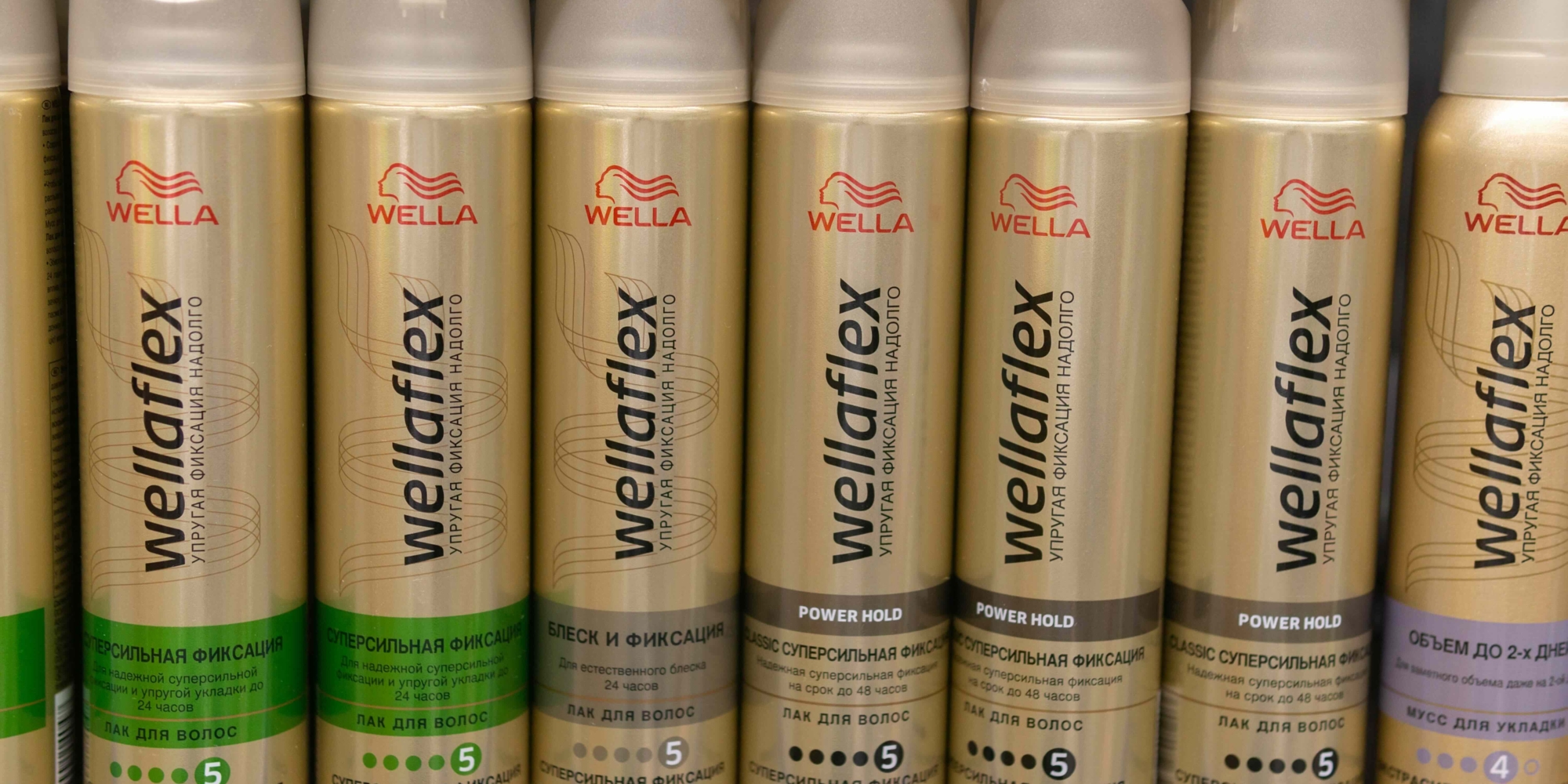
Wella’s global haircare and nail-care portfolio includes Wella, OPI, Clairol, Briogeo, ghd and Nioxin. The company operates in more than 150 countries worldwide and employs over 6,000 people. Its annual revenues are estimated to be around $2 billion.
Beauty has a checkered IPO past in the U.S. Olaplex debuted at about $21 a share in 2021, valuing the company at roughly $15 billion, and now trades at a market capitalization closer to $1 billion. The same year, Honest fetched $16 a share to hit a $2.6 billion market cap, which has since shrunk to roughly $300 million. Oddity Tech, the parent company of Il Makiage and SpoiledChild, went public at $35 a share, rallying in its debut, but delivering uneven returns since.
European Wax Center is slated to be delisted from Nasdaq later this year following an all-cash go-private deal by General Atlantic valued at approximately $330 million. The waxing salon chain priced its 2021 IPO at $17 a share, raising roughly $180 million. Recently, its shares have been trading in the $4 range.
E.l.f. has shown, however, that beauty IPOs in the U.S. aren’t doomed to a freefall. In 2016, its shares were priced at $17 for a market cap of around $1 billion, a figure that has grown to about $5 billion. In an adjacent category, hair-loss biotechnology company Veradermics went public in early 2026, raising about $256 million before shares more than doubled on their first day of trading.
Outside the U.S., beauty IPOs have fared somewhat better of late. For example, The Beauty Tech Group listed on the London Stock Exchange at a valuation of roughly 300 million pounds (about $380 million), with shares trading above the offer price on debut. Puig began trading on Spain’s stock exchanges in 2024 at a valuation of close to 14 billion euros (about $15 billion), and its market value in 2026 has hovered around $11 billion.
Goodai Global, a Seoul-based K-Beauty company with around 11 brands, including Beauty of Joseon, Tirtir, Skinfood, SKIN1004 and Round Lab, is expected to seek a listing on the Korea Exchange (KOSPI) at a valuation of roughly $7 billion to $8 billion within the next two years. Another K-Beauty company, Medicube parent APR, went public on the KOSPI in February 2024 at a valuation of around $1.8 billion, and its shares since then have traded above IPO levels, pushing its market cap above $3 billion.
As we gauge the implications of possible Wella and L’Occitane IPOs, for the latest edition of our No Stupid Questions series, we asked 10 investors, investment bankers and consultants the following: After years without a marquee U.S. beauty IPO, what do you make of the possibility of Wella and L’Occitane going public this year? Could it open the door for other beauty platforms to follow, and who would that realistically help or leave behind? What ripple effects could a Wella or L’Occitane IPO have for beauty investors, founders and would-be acquirers?
-
 DIANA MELENCIO General Partner, Brand Capital Fund, XRC Ventures
 A potential Wella Company IPO is an interesting test case, but I’d be cautious about reading it as a broad reopening of the beauty IPO window. The same applies to L’Occitane. Single-category consumer and beauty companies have consistently struggled in public markets. When a company is concentrated in one category, it carries disproportionate exposure to trend shifts, ingredient narratives, competitive intensity and retailer whims all at once, with no real shock absorber. We saw this with Olaplex. That outcome wasn’t about execution; it was structural.
This is also why so many consumer companies turned to SPACs in 2019–2021. I was involved in a few of them. In my direct conversations with traditional IPO investors on Wall Street, there was and still is clear skepticism toward single-brand or single-category stories that can’t demonstrate diversified growth engines and sustainable profitability. In most cases, SPACs are a liquidity path of last resort rather than evidence of true public-market readiness.
Where consumer and beauty have worked in public markets, the common denominator is diversification and the ability to support long-term value creation. Public markets price consumer stocks, including beauty, on terminal value (roughly 80%), not next quarter’s growth. Platforms have that optionality; single brands don’t.
E.l.f. Beauty is a clear example. Its outperformance was structural: multiple brands with independent momentum, exposure across color and skin, and real channel diversification across mass, specialty and DTC. That mix materially reduces risk in the eyes of institutional investors in a way single-category companies can’t. It’s also why companies like Harry's are actively acquiring brands as they position themselves for a future IPO.
From my outside view, Wella and L’Occitane as well sit somewhere in between. Both have portfolios and global scale, but the key question for Wall Street is whether that breadth represents true category diversification or primarily brand and channel diversification within adjacent categories. That distinction matters when investors are underwriting terminal value.
Even if one or both IPOs are successful, I don’t think it opens the door for single-brand beauty listings. More likely, it reinforces that public capital favors platforms, not point solutions.
For the handful of $150 million-plus beauty assets still on the sidelines without strategic buyers, a SPAC-style IPO would largely benefit early investors seeking liquidity, not long-term public shareholders. That reality leaves the majority of single-brand companies dependent on M&A exits, while IPOs favor scaled, diversified platforms and strategic acquirers building portfolios rather than standalone brands.
- Deanna Andersen Co-Founder, WADE
A Wella or L’Occitane IPO would function like a market referendum on scaled beauty, whether public investors will reward operational durability over narrative-driven growth. Wella going public will be a true test of whether U.S. markets are ready to back a platform-scale beauty business again after years of single-brand hero IPOs that spike and crash.
If it works, it resets being “public-ready” around E.l.f. or Puig traits > scaled, multi-channel, global, portfolio-driven and clearly converting story into cash. And if L’Occitane moves toward a U.S. listing in the same window, it strengthens the signal that this isn’t just a one-off moment, it’s the market potentially reopening to scaled beauty in more than one form.
If these IPOs trade well after debut, they set a template for who gets to go public next and who doesn’t. The door isn’t open for every indie brand. It opens for beauty ecosystems that are diversified. It leaves behind single-market, narrow-channel beauty stories that still look like the Olaplex or Honests of the past: strong on narrative, concentrated in one retailer or DTC and light on proof they can survive when growth normalizes.
Those brands aren’t shut out of exits, but their future is more likely strategic M&A or sale to a platform than IPO themselves. L’Occitane is a useful contrast here. If it’s received well, it suggests public investors will also underwrite premium, global, cash-generative brand equity, not just platform rollups, which raises the bar for what “durable” has to look like.
The biggest downstream shift is what founders build toward: adjacency, capability and resilience, so they’re not dependent on a single product cycle. The beauty founders who win are the ones who deliberately build adjacencies within: capabilities, communities and categories that extend their flywheel, not just add another SKU to the portfolio. If Wella and L’Occitane can go public credibly, it expands the exit playbook beyond the same limited set of strategics, and it creates (or reinforces) publicly traded platforms with acquisition currency, which changes who can buy brands and what kinds of brands get built in the first place.
What changes most is how the industry imagines the next chapter. A credible Wella or L’Occitane outcome would encourage more platform behavior; brands being built to plug into something bigger, and platforms being built to compound multiple brands over time. That helps founders who design for durability and fit > clear role in the portfolio, strong unit economics, clean operations, and it raises the penalty for brands that are still essentially a single channel plus a single product cycle.
Calvin McDonald joining Wella as CEO reads like an operator hire, not a cosmetic one. He’s a systems builder so I’d expect early moves to look like tightening portfolio role clarity, rebuilding the pro ecosystem as an authority engine (education, advocacy, standards) and making omnichannel/global execution more consistent market to market. The upside is the portfolio starts behaving like a system, not a collection of brands.
The watch-out, more generally, is what happens when a multi-brand platform scales: complexity can create drift > too many initiatives, diluted brand roles and innovation that gets busy instead of decisive. At Wella, that risk shows up if the house gets over-standardized under one playbook instead of being run as distinct operating models by brand and channel. He should keep the portfolio differentiated and protect professional authority while scaling.
- Shaun Westfall Managing Director, North Point
Wella and L’Occitane would be important IPOs, but they should be viewed as highly specific situations rather than a broad reopening of beauty exits. Both companies have characteristics that most indie beauty brands lack: meaningful global scale, diversified brand portfolios, established professional and retail distribution, strong profitability and operational track records.
Notably, until the KKR acquisition, Wella was first a part of P&G and then Coty, both public companies. L'Occitane was public, albeit on the Hong Kong exchange. Public investors today will underwrite durability and cash flow, not brand heat or rapid growth narratives.
The new issue markets have become structurally less receptive to smaller, single-brand consumer companies, particularly those reliant on marketing-driven growth or operating with limited float. The market learned hard lessons from the 2021 vintage, and the underwriting bar has moved materially higher.
If these IPOs are successful, the most meaningful impact would be expanding liquidity options for private equity sponsors holding scaled platforms while also creating potential new public consolidators. Beyond Wella and L'Occitane, we have been in active dialogue with both seasoned beauty executives and private market investors on the idea of building a next-generation beauty platform that is constructed of leading indie brands across categories, a platform that utilizes the power of individual brands and communities combined with an operating model that leverages back-office efficiencies and scale. We feel strongly that the capital markets would look very favorable at such platforms.
Additionally, well-valued, publicly traded beauty platforms can use equity as acquisition currency, which would increase competitive M&A dynamics and broaden the universe of credible buyers for scaled founder-led brands. Both Wella and L’Occitane have the ability to create incremental value by acquiring synergistic brands within their respective categories.
It will be important for those platforms to sustain earnings growth and margin durability after listing to maintain investor confidence and valuation support. Otherwise, the impact on the broader beauty landscape would likely remain limited.
- Ashleigh Barker Director and Head of Beauty and Personal Care, Lincoln International
After several years of a muted IPO market and limited success of single-brand beauty IPOs, a well-executed IPO by platforms like Wella could meaningfully reopen the window for PE-backed consumer businesses evaluating their exit options.
Today, few traditional strategics have the appetite or balance sheet flexibility to acquire multi-brand portfolios, yet there are several scaled platforms built over years of strategic add-on acquisitions that are now seeking a viable liquidity path. If public markets remain receptive to diversified, cash-flow generating platforms, this dynamic could materially reshape the exit landscape while validating the buy-and-build strategy many financial sponsors have pursued.
Over time, I anticipate newly public, sponsor-built platforms will emerge as active consolidators (the new strategic, if you will), allowing private equity to gain greater conviction in these strategies. The end result could be a more dynamic and diversified buyer ecosystem that creates new paths for assets that may otherwise struggle to find a home with traditional strategics.
- Rich Gersten Co-Founder and Managing Partner, True Beauty Ventures
The possibility of Wella and L’Occitane returning to the public markets would be symbolically important for the beauty industry, not because the IPO window is suddenly wide open, but because it reinforces that scaled, diversified beauty platforms can still be viable public-market assets.
Both companies look fundamentally different from the single-brand beauty IPOs of 2020 to 2021 that came public at peak valuations and later struggled as growth decelerated and earnings proved less durable. These are multi-brand, global platforms with diversified revenue streams and more predictable cash flow, which is exactly the profile public investors now prioritize.
E.l.f. continues to demonstrate what works in the public markets. Consistent growth paired with expanding margins, fast-cycle innovation and a clear value proposition show that beauty can absolutely succeed in public markets when the fundamentals are right. E.l.f. has also successfully completed acquisitions in recent years helping to position itself as a global platform.
I strongly believe the more meaningful impact of new beauty IPOs would likely show up in M&A rather than in a broad reopening of the IPO window. Today, the beauty M&A market faces a real supply-demand imbalance, with many high-quality brands but a relatively narrow pool of scaled, active buyers. Newly public platforms with fresh capital and acquisition currency would expand the universe of credible acquirers, helping restore healthier competitive tension for attractive assets.
This dynamic is particularly relevant in categories where these platforms already have structural advantages. Wella is especially interesting in this context because it is essentially a haircare-led platform, making it one of the closest things to a pure-play public market bet on a fast-growing category.
For investors, a strong debut from Wella or L’Occitane would help recalibrate valuation benchmarks and reinforce beauty as a durable, cash-generative sector when built at scale. For founders, the takeaway is not that IPOs are suddenly back on the table. It is that disciplined, defensible, well-run businesses get rewarded regardless of exit path.
Bottom line, Wella or L’Occitane going public would not lift all boats, but alongside E.l.f., it would reinforce exactly what the market is rewarding in beauty today, durability, discipline and defensibility.
- Marissa Lepor Managing Director, The Sage Group
Wella and L’Occitane are preeminent beauty platforms. The brands in their respective portfolios have a strong heritage and differentiated points of view, critical in today’s beauty market. If Wella and L’Occitane join the cohort of larger beauty platforms seeking to grow through M&A, it could infuse some welcome competition (and urgency) to an industry that has been predominantly inward focused in recent years, driving an increased commitment to M&A in the near term.
While beauty and personal care businesses have had mixed results in the public markets over the years, the markets still favor businesses that have a strong heritage, unique product offering, global appeal and excellent performance. Both Wella and L’Occitane have proven success in growing their existing product offering, as well as in pursuing successful M&A, which I believe will be very exciting to the public markets if they pursue an IPO.
Wella has the opportunity to continue expanding its multi-category portfolio, and there are a handful of brands that could be value-add additions, whether the team decides to remain focused on haircare and nail, or whether they expand their offering to additional categories such as skincare, body, makeup and/or fragrance.
L’Occitane has scaled its namesake brand alongside its multi-category portfolio. A return to the public markets could further fuel its global expansion across categories, both through its existing portfolio and through continued M&A. There are a handful of brands in market and coming to market that could be quite interesting for L’Occitane from an M&A perspective.
- Meghan McLaughlin Executive Director, Moelis
A successful IPO in the beauty space would be a positive for the category as a whole and signal continued momentum in the market as well as optionality to unlock value beyond selling to a sponsor or strategic. Beauty is a resilient category. Platforms with brand strength, consistent top-line growth and healthy profitability could be strong candidates for a potential IPO.
Many sponsor-backed platforms today generate strong cash flow, but aren’t necessarily primed for a strategic exit because strategic buyers need acquisitions to fill specific holes and needs in their portfolio. This is hard to do with one brand, let alone multiple brands at the same time. Furthermore, some platforms reach such a scale that the buyer universe becomes limited due to a strategic or sponsor’s ability to pay.
In the long run, successful IPOs in the beauty space signal not only a path to exit via public markets, but also add incremental strategic buyers for founders and investors.
- Rose Fernandez Beauty Executive and Strategic Consultant, Cosmo Innovation Group
The announcement of Calvin McDonald, former Lululemon and Sephora CEO, as incoming Wella CEO signals there is a strong reality of an IPO. He understands beauty and public markets. The Wella brand portfolio has solid breadth, with Wella Professionals, OPI, Briogeo and Ghd, and it spans professional and consumer across hair and tools. At around $2.3 billion, it is a meaningful business with professional channel loyalty.
It has been publicly shared that L’Occitane is considering IPO’ing this year, so together these are two meaningful moves that could positively impact M&A activity for beauty. Once Wella goes public, it could look to acquire beauty brands, and given Calvin McDonald’s brand incubation experience from his time with Sephora, I would expect this activity.
Ultimately, if Wella or L’Occitane have success, this could open the door for other beauty brands looking for investment or exits.
- Sally Anne Hughes Partner, Hughes Klaiber
First half of last year saw all consumer mergers and acquisitions activity slow significantly, driven in large part by concerns about the impact of tariffs on company cost structure and income and on how tariffs would impact consumer spending. But we started to see an uptick in M&A toward the end of the third quarter last year, as consumer spending stayed relatively strong, interest rates dipped, and M&A valuations increased. The IPO of Jennifer Garner’s healthy snack company Once Upon a Farm also signals a path opening for consumer IPOs.
Wella and L’Occitane are both global, mature beauty brands, and given the more positive environment for consumer M&A, I’m not surprised that KKR and L’Occitane owner Reinold Geiger are evaluating IPO timing now, with an eye to capturing positive returns on their recent investments. Whether we see their bankers pull the trigger on an IPO will depend on the outlook of the businesses and the ongoing strength of the equities markets, especially the performance of other publicly traded beauty companies.
But a successful IPO in beauty would be highly positive for smaller beauty brands, as exit visibility drives M&A activity and investor interest in all deal sizes. Financial buyers acquire emerging brands with the intention of scaling them and exiting to larger private equity firms, who in turn aim to sell to strategic acquirers or pursue an IPO.
Although an IPO seems a long way from an emerging beauty brand completing a capital raise, a young brand considering growth capital or a more established brand considering an exit to a private equity firm, the lower end of the M&A “staircase” functions best when there are strong exit opportunities at the top.
- Gloria Luna Principal and COO, The Glow Group
The prospect of more platform options can only be a positive signal for beauty brands and investors. It reflects renewed confidence in the growth potential of beauty as a category.
That said, an IPO is clearly not for everyone, as the recent IPOs of Olaplex and Honest have illustrated. Public markets likely still carry skepticism around whether an IPO is a viable way for some brands to scale while maintaining their own pace, particularly given the increased scrutiny and pressure to deliver results quarter to quarter.
If Wella and L’Occitane can demonstrate a clear, disciplined playbook for how to go public successfully, balancing growth, profitability and brand equity, it could reopen the IPO path for beauty.
That said, smaller, single-brand companies should approach this route cautiously until they have proven, repeatable growth drivers and robust financials to support the demands of the public markets.
If you have a question you want Beauty Independent to ask investors, investment bankers and consultants, send it to [email protected].


Leave a Reply
You must be logged in to post a comment.