
In late February 2026, nearly every major consumer goods company in the world walked into a ballroom in Orlando and told institutional investors their plans. CAGNY, the Consumer Analyst Group of New York’s annual conference, is one of the few places where P&G, Unilever, Colgate, Reckitt, Clorox, Church & Dwight, L’Oréal, IFF and a dozen others present so you can hear in real time where the consensus is forming and where it’s fracturing.
IFF is the company that supplies scent to most of the products in your home. IFF opened its presentation with a framing so blunt it was almost refreshing: “Fragrance is a small share of the formulation cost of a finished consumer product, and it has a disproportionate impact on brand equity and value creation.”
Here are some examples:
P&G used Downy Intense, a product line built around proprietary high-intensity perfume technology, as one of its flagship innovations. The launch drove double-digit organic sales growth and more than two points of value share gain in Mexico’s fabric enhancer category. The entire marketing thesis was built around scent: a “24/7 freshly washed hair” fragrance experience designed to last beyond the laundry cycle. What this approach signals is significant. P&G has historically been a function-first product company. However, it’s now treating fragrance as a primary product driver.
In 2024, Unilever spent 100 million euros or around $115 million to build an in-house fragrance house. The company is recruiting expert perfumers in the United Kingdom, United States and India, opening a dedicated lab in Connecticut and transitioning from external fragrance suppliers to a hybrid model where their own teams control formulation from the start. Unilever’s first in-house fragrance already launched: inside a Dove body wash.
L’Oréal, for its part, committed $4 billion to acquire Creed, one of the fastest-growing niche fragrance houses in the world, and 50-year licenses for Gucci, Bottega Veneta and Balenciaga fragrances. They described this as building a “unique fragrance powerhouse.” L’Oréal’s Luxe division is now explicitly organized around fragrance as the growth engine.
The incumbent consumer industry has noticed that scent is a strategic asset. The question worth spending real time on is: Why does that benefit challengers more than it benefits incumbents, and what should you actually do about it?
That’s what this piece is about. The “what to do” breakdown by company stage lives in part two, coming tomorrow. First, the framework.
Feature vs. Platform: A Distinction That Changes Everything
Whether fragrance is a feature or a platform determines pricing power, category expansion potential and long-term brand value. Before we go further, we want to draw the distinction between platform and feature as it changes how you evaluate brands, investments and acquisition targets.

Why this matters:
- Fragrance is becoming one of the highest-ROI inputs in consumer product development.
- Challenger brands that build around scent can unlock pricing power, loyalty and category expansion earlier than incumbents.
- Large CPG companies increasingly recognize this, but many must acquire fragrance permission rather than build it internally.
- That dynamic creates a strategic window for emerging brands to build fragrance-led platforms before corporates consolidate the category.
When fragrance is the platform, a specific set of growth mechanics unlock that simply don’t exist when it’s a feature:
- Consumers build scent loyalty, not just brand loyalty. They return for a specific smell, not a logo.
- The brand earns a right to category extension that would otherwise feel strange: A hand sanitizer brand can launch a body mist, a dish soap becomes a home fragrance.
- The product becomes giftable and collectible, which materially changes acquisition and repeat behavior.
- Strong scent identities generate earned media that paid marketing can’t buy, such as placement in interior design publications, beauty media and gifting guides.
- Across a portfolio, the brand can charge premium pricing because the sensory experience feels distinctive and consistent.
The brands that have gotten this right started with the fragrance question: What should this smell like, and why does that matter? They built the product and the category around the answer.
The Challenger Brands Getting This Right
The brands winning with fragrance treat scent as the organizing identity of the brand rather than as a product variant. Two examples—at different scales in different categories with different acquirers—that keep coming up in how we think about this are Touchland and Aesop.
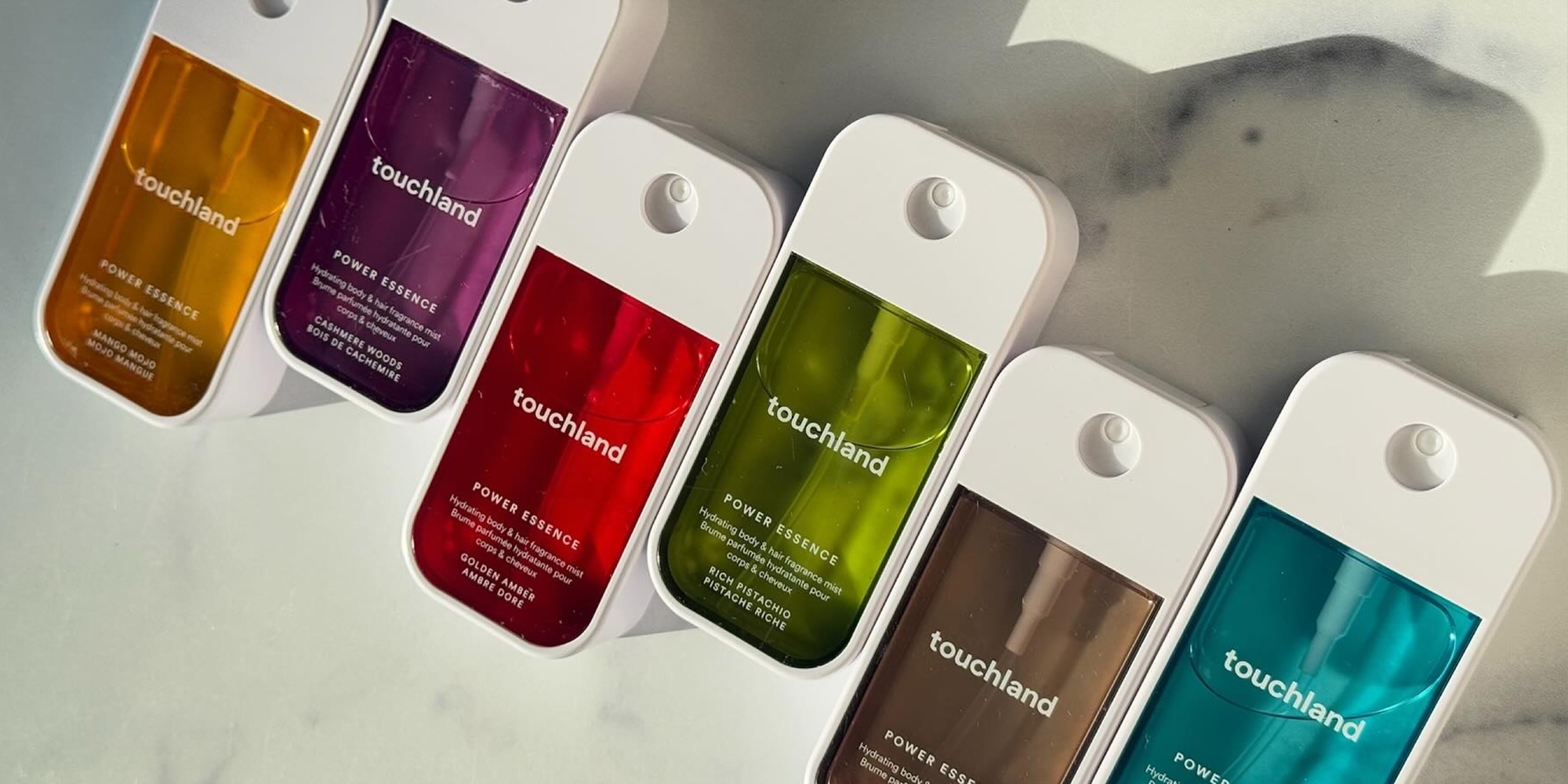
Touchland started as a hand sanitizer company. The received wisdom about hand sanitizers before Touchland was that they smelled like rubbing alcohol, dried out your hands and you used them because you had to. Founder Andrea Lisbona’s insight was simple and radical: What if the smell was the point? Not the absence of a bad smell, but the presence of a genuinely desirable one.
Touchland built a product around fragrance, design and skincare ingredients from the beginning. Early on, the brand was at Target, but made a deliberate decision to reposition into Sephora, trading mass volume for prestige permission. The signature rectangular atomizer bottle, the Scent Universe (a content calendar organized entirely around a monthly featured fragrance), the limited-edition drops with Blackpink and Disney. These are not marketing tactics bolted onto a commodity; they are expressions of a brand where scent is the core. And the channel shift was what made that identity credible.
The result: Touchland grew from $12 million in 2020 to over $100 million in 2024. Then, it launched body and hair fragrance mists (the first category expansion in 15 years), and it landed without a question mark. You didn’t have to convince anyone that Touchland could do fragrance. They already had.

Touchland is the mass-adjacent version of this story. Aesop is the prestige lane.
Aesop is the prestige lane version of the same argument, and the acquirer tells you everything. L’Oréal owns Lancôme. It already owns YSL Beauty, Giorgio Armani fragrances, Valentino Beauty. It operates one of the most sophisticated fine fragrance portfolios in the world, but, in 2023, it paid $2.5 billion for an Australian skincare brand that sells hand wash and face cream.
What L’Oréal was buying was not a just skincare formulation, but a sensory world. Despite all its fragrance infrastructure, L’Oréal had never been able to build this type of fragrance-driven brand world from within. The product range is narrow and considered. The retail environment is designed as a destination, not a shelf. The scent becomes the asset, and the hand cream is simply the format.
The Aesop acquisition sits in a different part of the market than Touchland, but the underlying logic is the same: a large company with deep fragrance capability couldn’t manufacture the permission that a smaller brand had spent years earning, so they bought it.
Most people in the industry framed the deal as L’Oréal buying access to a consumer they were losing, the affluent, sustainability-oriented shopper. That’s true, but it’s the second-order explanation. The reason Aesop earned that consumer’s trust, the reason the brand carries so much influence in Tokyo, Seoul and Sydney, the reason it cracked a retail model that felt impossible to replicate is that it was built as a sensory experience first. Fragrance created the consumer permission, and L’Oréal paid $2.5 billion for the effect.

The Permission Problem: Why Large Brands Can’t Innovate Their Way to Premium Scent
Large companies can build fragrance capability, but they struggle to earn the consumer permission that premium scent requires. Here is the tension that CAGNY made visible this year, even if the presenting companies didn’t frame it this way. The large CPG companies have woken up to the strategic value of fragrance. They get it. They are investing in proprietary capability, internal perfumers and expensive acquisitions. What they cannot easily do is manufacture consumer permission to play in premium fragrance.
Permission is not a formula. It is not a Grasse-sourcing agreement or a famous nose on retainer. It is the result of a brand’s identity, distribution choices, price architecture and cultural resonance. When consumers see Downy Intense with its “perfume-grade” positioning, they’re also seeing the Downy they’ve seen at Walmart next to the economy-size Tide. The context is already there. The brand has been trained into a specific association in their minds and high-brow perfume language bumps against it. While though the product might be good, the brand hasn’t earned permission to charge for scent in the way that a brand that started in scent has.
This plays out across the sector:
- Unilever‘s in-house fragrance capability is impressive. The first commercial application was a Dove body wash. Dove is a loved brand. It is not a fragrance brand. The technology may be there. The brand permission may not be.
- Clorox makes Pine-Sol, which has one of the most recognizable scents in home care, but that scent is strongly associated with bleach and cleaning. That limits how far the brand can extend.
- Church & Dwight recognized this asymmetry clearly enough to pay $880 million to acquire what they couldn’t build. Kudos.
This is a pattern we expect to accelerate: Large players deploying M&A specifically to acquire the consumer permission that their legacy brand can’t generate. The Touchland deal is a great example. Expect more of them, particularly in home care, personal care and the intersection of cleaning and wellness.
For challengers, this creates a specific and time-sensitive opportunity: Build fragrance permission before the acquirers move through the category. The window won’t stay open forever.
Diana Melencio, general partner of XRC Ventures’ Brand Capital Fund, manages the entire investment process and team across the firm’s family of funds. She also writes for XRC Ventures’ Substack, where this piece appeared first. Previously, Melencio was an investor at WISE Ventures and helped start FirstGeneration.vc, an initiative aimed at helping first-generation founders.