Carpe, the direct-to-consumer brand that launched in 2015 with Antiperspirant Hand Lotion, is making a major push into retail with a nationwide rollout at Target.
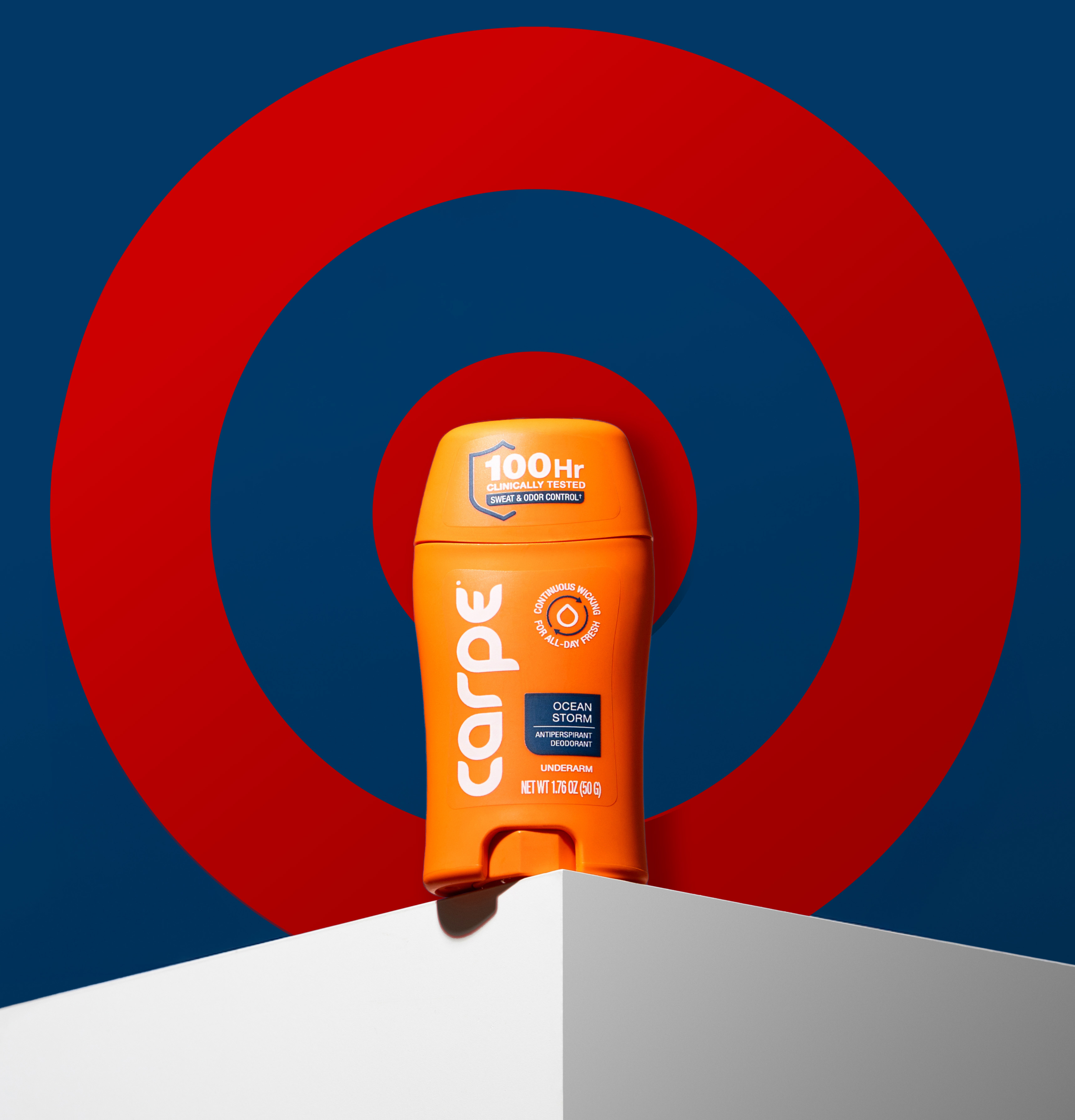
At the big-box chain, the brand is introducing several new scents, including Soft Cashmere and Birchwood & Lavender, following strong early online results, with multiple products recording tens of thousands of purchases in the past month on Target’s website. Carpe’s antiperspirant deodorants, which promise 100 hours of sweat and odor control, are priced at $14.99, above most mass-market deodorants generally priced between $5 and $8 at Target, but in line with premium and clinical offerings. Its women’s Coconut Vanilla is the top scent on the site.
Target isn’t Carpe’s first retail partner. The brand entered retail early in its history through CVS and Walmart, but isn’t currently sold at those stores. Its debut at Target comes as the brand has built broader demand and evolved beyond its hand lotion into a player in the traditional antiperspirant category.
Carpe’s traction across channels underscores its momentum. According to commerce agency Navigo Marketing, its core deodorants and antiperspirants category is up nearly 30% year over year on Amazon, while adjacent body care categories have grown more than 140%. Amazon beauty agency Market Defense estimates its antiperspirant ranks among the top 300 products in the beauty and personal care category on Amazon, generating nearly $71,000 in monthly sales.
“Our long-term goal is to build the No. 1 deodorant brand in the category,” says CEO David Spratte, who founded Carpe with Kasper Kubica. “In order to achieve that distribution-wise, we have to be in retail because that’s where the supermajority—80%—are buying antiperspirant and deodorant products. We have been focused on growing the brand online and on Amazon, scaling awareness and getting in front of people. We have reached a level of excitement, awareness and demand where people were asking store managers at Target, ‘Do you have Carpe?’”
Kubica and Spratte met as summer interns and bonded over their shared affliction of hyperhidrosis or excessive sweating that affects the hands. Kubica attended Duke University and Spratte attended UNC Chapel Hill. Spratte conceived of the idea for Carpe when his hyperhidrosis became an issue for holding hands at Mass during his time at Catholic high school.
The duo went through 60 prototypes to nail the formula for Antiperspirant Hand Lotion. Once it hit the market, customers began using the lotion for their underarms. They liked that its odor protection was long-lasting, and they didn’t have to reapply throughout the day.
Of course, moving into deodorant gave Carpe entrée into a much bigger market than antiperspirant hand lotion. The U.S. deodorant market was roughly $6.6 billion in 2024, up from about $4.5 billion in 2019, according to Euromonitor International. Most industry forecasters have it advancing at around a 6% annual rate.
“Our long-term goal is to build the No. 1 deodorant brand.”
However, the aluminum-free side of the deodorant market has been growing faster than the aluminum side, and Carpe’s antiperspirant deodorants contain 15% to 20% aluminum sesquichlorohydrate as their active ingredient. Data from Google Trends suggests consumers are increasingly evaluating Carpe within the broader debate between aluminum-based and aluminum-free deodorants, with emerging signs that some are reconsidering aluminum options after going natural.
Over the past three months, searches for “deodorant with aluminum” rose 40% even as top queries for “aluminum free deodorant” declined 2% to 8%, according to Google Trends. Interest in Carpe specifically is climbing as part of that debate, with searches for “carpe deodorant ingredients” up 120%, “is carpe aluminum free” up 80% and “does carpe have aluminum” up 60%.
Discussing the debate over aluminum in deodorants and Carpe’s appeal, Spratte says, “There are people coming from clinical solutions and a lot of what they appreciate about Carpe is the fragrances and how it’s gentle on the skin, but there are also people that got caught up in the marketing hype and are tired of the lack of efficacy. You’re going to get no sweat control [with aluminum-free deodorants]. Carpe really delivers performance.”
Ahead of its latest push into retail, Carpe secured investment from private equity firm Topspin Consumer Partners in 2024. At Topspin, it joined a portfolio with fellow beauty and personal care brands Japonesque and Wet Brush. Carpe declined to discuss its revenues or profits, but Topspin discloses it typically makes equity investments of $10 million to $50 million in brands generating under $200 million in sales and $25 million in earnings before interest, taxes, depreciation and amortization (EBITDA). It seeks controlling stakes.

Carpe has an exclusive relationship with Target for now, and Spratte and Kubica report they haven’t locked down other retailers for expansion. The brand certainly has an extensive assortment outside of antiperspirant deodorant that it can leverage to enlarge its repertoire at Target or future retailers. On its site, it sells, for example, an array of cosmetics such as setting mist, setting powder and face primer, feminine care such as women’s groin powder and feminine care deodorant and scalp care such as scalp powder and scalp serum.
“Everything comes back to how we best serve our customers, and we are evaluating how to continue to scale both online and in retail in the best way for them and the best way to be able to do it internally as well,” says Spratte. “It’s an ongoing conversation.”
To support its Target presence, Carpe is broadening its marketing and advertising approach and incorporating influencer gifting. The brand is known for television and social media spots frequently starring Kubica, often in man-on-the-street formats talking to Carpe’s customers about its products.
“So much of the influencer realm has been almost corrupted by low trust and sponsored placement that make people not really believe anything people are saying,” says Kubica. “We steered clear of that and focused on me going out there and talking to people on the streets because people can see that it’s real, but, coming into retail, we thought, OK, we are being luddites a little bit.”