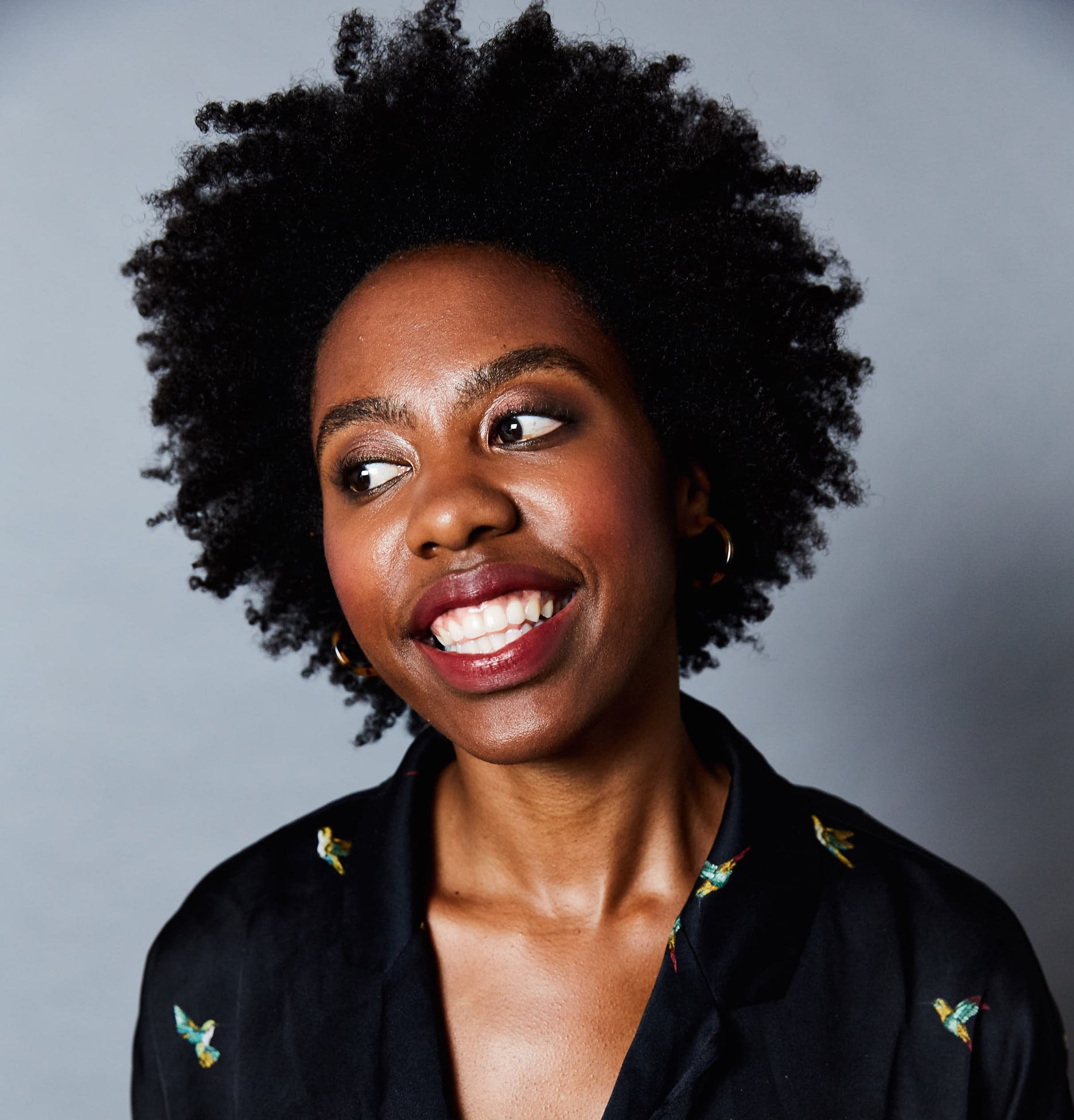
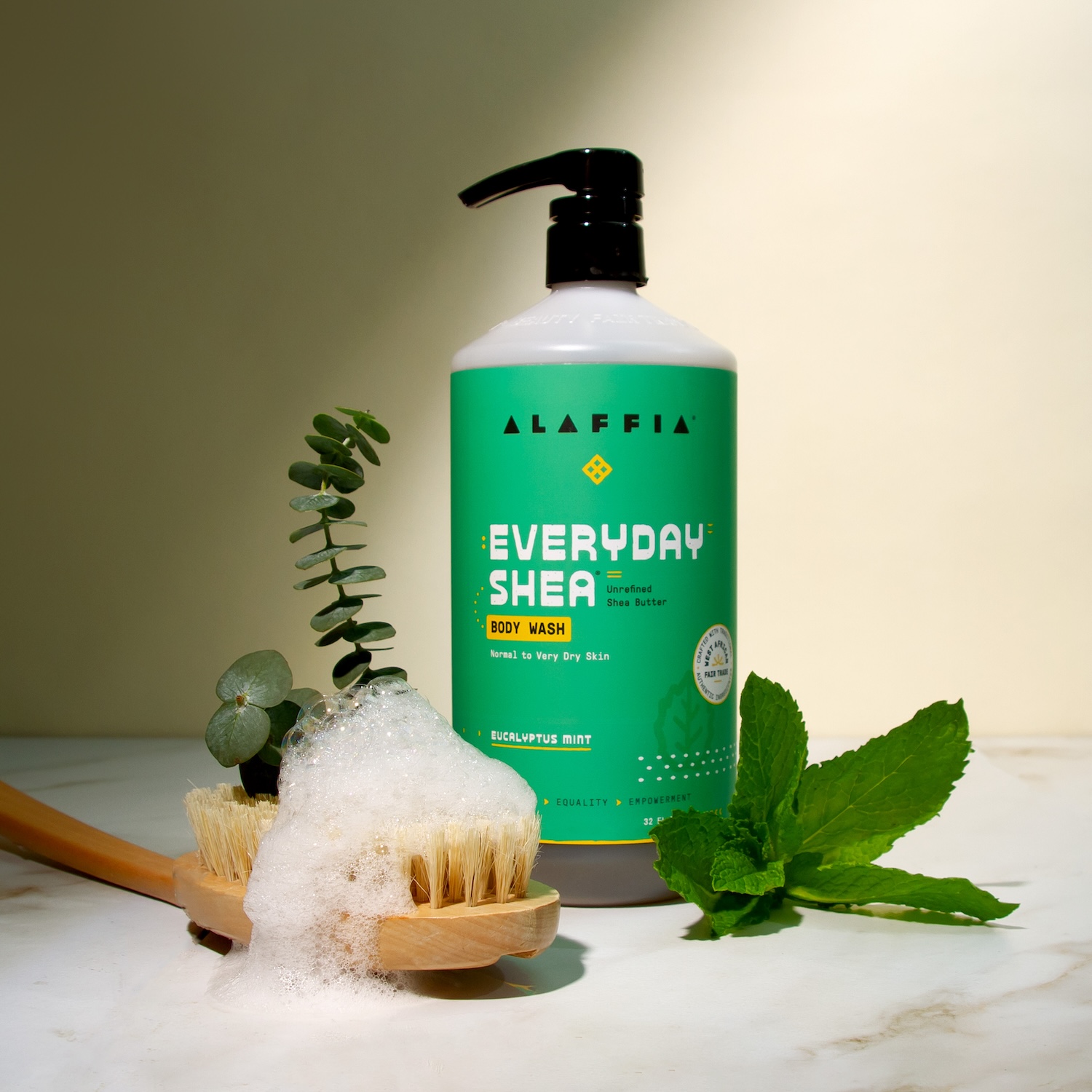
Founder Olowo-n’djo Tchala is back at the helm of Alaffia, the fair-trade beauty brand he built for two decades.
Tchala, who was born and raised in the farming village of Kabole in Togo, has returned to ownership of Alaffia through an acquisition by Ayéya Inc., a company he started in 2022, and it operates under the newly formed corporation Anaaga Inc. Previous owners retain a minority stake as part of the buyback transaction. He declined to disclose financial terms and the names of the previous owners holding shares.
Back in charge, Tchala projects Alaffia will double revenue next year, driven by the relaunch of Good Soap, a triple-milled bar soap made with moisturizing ingredients like fair-trade shea butter and coconut oil, at Whole Foods and by regaining points of distribution. He plans to strengthen operational execution and accelerate product development to launch a new product every four to six months for the next four years. Alaffia has hired a raft of executives this year, including Keith McBride, a former director of merchandising at Whole Foods, as VP of growth and product, and Isabelle Francois, ex-CFO at Shaw Bakers, as president.
Tchala previously stepped down from Alaffia in 2022, citing a misalignment with investors. Throughout its history, the brand has raised over $10 million in venture capital funding, per the financial information resource PitchBook. New Voices Fund, the VC firm established by Richelieu Dennis, co-founder and former CEO of SheaMoisture, is among its investors. In an interview with YouTube channel PassportHeavy posted last month, Tchala divulges Alaffia surpassed $100 million in sales and produced 30 million soap bars annually. In 2018, its retail network exceeded 2,500 doors.
After Tchala stepped down, Alaffia shifted to contract manufacturing and closed a 100,000-square-foot manufacturing facility in Olympia, Wash., a move he disagreed with because he views vertical integration as critical to its ability to maintain a supply chain that sources ingredients directly from women in West African cooperatives. He argues that profits were prioritized over value creation for the West African women who handcraft Alaffia’s products and mentions there were discussions about hiring them seasonally rather than year-round and changing their wages.
“We thought that having minority investors would give us capital necessary to expand the organization, but if it comes at the price of the dignity that we’re trying to present to the world then I need to step away,” says Tchala. “We didn’t start Alaffia for money, and I shouldn’t stay in something that somehow would not respect the African woman.”
He continues, “Alaffia represents a sense of hope, and I can argue that’s a big deal because when you live in the conditions that we live in—Togo is the 12th poorest nation in the world—and there’s an organization that exists for over 20 years that has demonstrated that we can actually live on using our traditional knowledge, it is almost like a social movement, a symbol of hope. Once you stop hope, we won’t be able to continue to build a better future and better generations, let alone that people are suffering because they don’t have a job anymore.”
During Tchala’s break from Alaffia, he didn’t stay away from beauty and personal care. Instead, in 2024, he introduced the eco-friendly brand Ayéya to pick up on Alaffia’s social enterprise mission of supporting women working in West African cooperatives. Ayéya and now Alaffia again handle manufacturing in-house
While Tchala was away from Alaffia, he recounts the brand couldn’t keep up with demand and lost retail distribution as a result of out-of-stocks. He says disappointed customers switched to Ayéya. Today, Ayéya is being run alongside Alaffia as a sister brand. It’s available in Whole Foods and Sprouts Farmers Market stores. The brand primarily resides in the body care category. In January, it will unveil baby care at Whole Foods. Tchala says, “Both organizations can go in parallel to each other, but, at the end of the day, the funnel goes back to, are we standing by those ethical reasons to be?”
“Alaffia represents a sense of hope.”
VC isn’t completely off the table for Tchala’s current business endeavors, but it’s not a target presently. Rather, he’s pursuing alternative funding routes and will kick off a crowdfunding campaign on Dec. 15 to raise funds from friends, family members and customers. For fellow founders with mission-led brands, he advises they structure company governance to foster their mission. He says, “It’s really critical to have governance built in place to protect those beliefs, and then if you were to bring money in, it has to align to those principles, and they’re nonnegotiable.”
Tchala has rejoined Alaffia as shea butter, an ingredient at the heart of the brand’s products, has become a central player in struggles over African resources. In September, the Nigerian government implemented a six-month ban on the export of raw shea nuts. Other nations such as Burkina Faso, Mali, Côte d’Ivoire, Togo and Ghana have restricted or regulated the shea nut trade in the past in an effort to stimulate domestic industries and retain economic power.
Although he lauds the goals of the efforts, Tchala is deeply skeptical they will be effective. He argues a temporary export halt without adequate infrastructure, know-how or capital risks further disenfranchising African women in the shea butter trade. “This has nothing to do with uplifting women out of poverty, it is about channeling and controlling the resources that Americans need and Europeans need,” he says. “Our reason to be vertically integrated, to be part of the community and invest in our community, to make our own product under fair-trade principles and use traditional methods is having access to our own raw materials, and knowledge is more necessary than ever.”
Click here to learn more about Dealmaker Summit happening June 8 & 9 in New York.