In the future, the engine of beauty product customization will move from individuals, who’ve dabbled in it through online quizzes and DIY’ing formulas at home, to the manufacturing infrastructure, where micro-factories will enable brands to produce endless product variations in scent, texture, size, ingredients and much more.
At least that’s the vision of Osmaan Shah, co-founder and CEO of Formulate, a haircare and skincare personalization concept that has surpassed $10 million in revenue since launching eight years ago, with over 10,000 formula iterations shipped and 20,000 active subscribers. To realize it, Formulate has partnered with manufacturing automation platform Vention to bring customized production to the masses via artificial intelligence-based software and robots whipping up products comprised of tens of ingredients within minutes in spaces smaller than retail stores.
“What I believe for sure is that contract manufacturing powered by more efficient, AI-enabled software platforms will proliferate. It will be successful and will scale,” says Shah. “To what size is a big question, but I think it could reach many millions or tens of millions of dollars.”
Before that proliferation happens, Formulate, which has raised almost $3 million in funding across three rounds, has started producing for other brands in a slightly more conventional way, with a big twist for emerging beauty companies. It offers low minimum order quantities for those that want to sell small batches for financial, collaboration, seasonal and consumer vetting purposes.
Beauty Independent spoke with Shah about Formulate’s approach to manufacturing and why it can help many beauty brands stay afloat, the possibility of in-house manufacturing for all and the impediments to executing it.
How did your company start?
I had the original vision to create the manufacturing system that would power the era of personalization in the beauty and personal care space. There are some other players in the space obviously. What I had observed at that time was no one felt like they were really delivering real personalization. It was faux personalization. I wanted to create what I called the 3D printer for manufacturing to be able to do tailored formulations on demand per bottle.
In 2022, we built Gen 2. This essentially does fully automated, remotely controlled cold-process emulsions, and it does dynamic dispensing. We do haircare and skincare. We launched our brand, a competitor to Function of Beauty, but we viewed it as truly delivering on personalization. We built an app, captured feedback and iterated on formulas. We raised $2 million in capital to get to $10 million in business.

What happened from there?
In 2024, we opened up Formulate Labs in private beta, which is making our manufacturing system available to other brands. The pitch to brands is dealing with manufacturers, especially in the U.S., is a disaster for the most part. You have high MOQs. You have really opaque processes. It’s usually email-based back and forth and you get very little updates in real time.
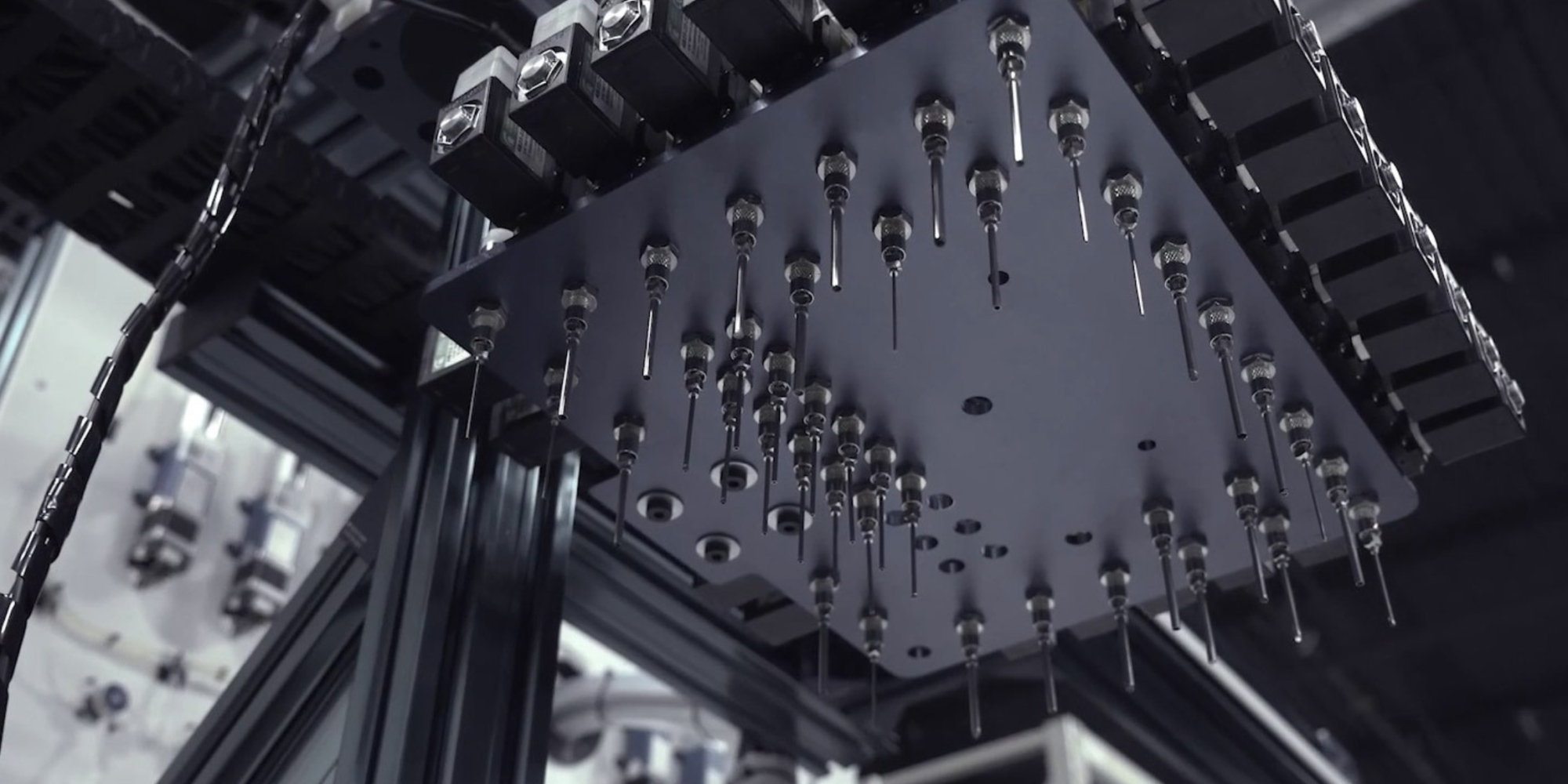
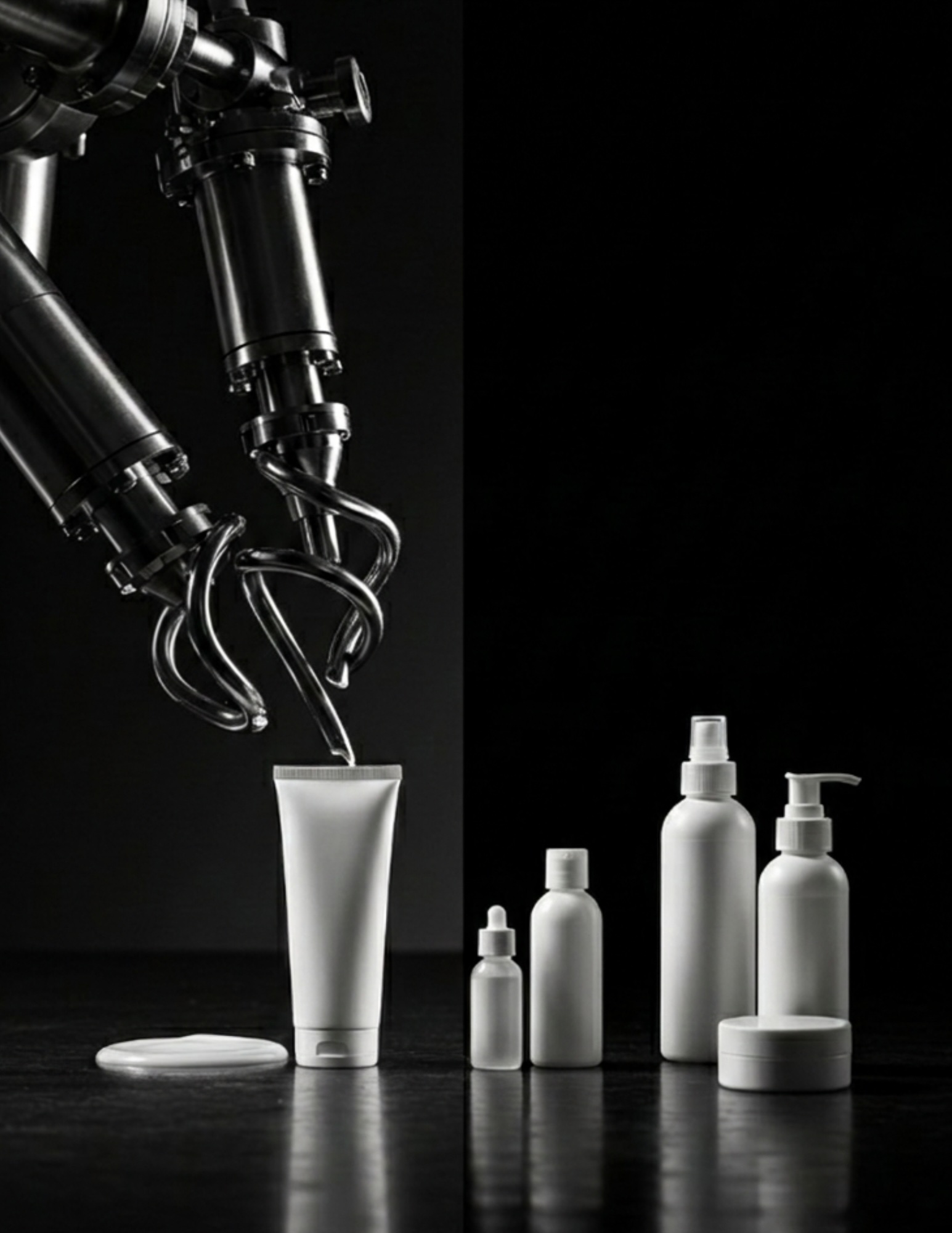
We’re building the factory of the future. Think of it as a next-gen contract manufacturing platform creating more automation around the software and hardware side. We’ve got a facility in St. Louis, where we have what we call our Gen 2 production nodes running. We’re manufacturing a good percentage of the clientele on that equipment.
The bigger vision is that we’re also building our Gen 3, which is a fully automated batching system that we call FormulateLabs.AI. The core value proposition is that we’re running on a full stack software and hardware solution to be able to make low MOQs possible. Usually, the range is like 500 to 2,000, but we are also baking in the 3PL. So, we’re able to do on-demand manufacturing and ship to the end customers. When we have a 3PL client, we can actually make the MOQ even lower.
We can essentially run very small batches on demand and ship a very small allotment, a couple hundred units or less in stock that get picked as we’re connecting with Shopify. That’s a huge draw versus having to purchase 5,000 units, 10,000 units of a specific scent every single formulation.
What’s a typical customer like?
We have about 90 customers. I would say 80% of them are emerging brands and then 20% of them are the larger $20 million-plus revenue brands. The most typical customer from an account standpoint is brands doing zero to $1 million. It’s just been a nightmare trying for them to find manufacturers to make smaller runs. They’re looking for alternatives.
Larger brands have a laundry list of products that they’ve been wanting to launch or formulation variations like a fragrance-free version they haven’t rolled out because of the capital outflows required. They want to do a smaller run for a seasonal drop, for example. We are powering that for those types of brands. The whole idea is to be nimble using automation.
What’s the price range for your services?
It depends on the product, but, for typical products, the cost from the manufacturing side is anywhere from $2 to $5. Dollar for dollar, the price can be the same as another manufacturer. You might buy from us at $3 a unit and produce 1,500 units. You could go to another manufacturer and pay $3 a unit, but they might require a 5,000-unit run.
From a pricing standpoint, our philosophy is to be competitive at up to around 20,000 units. Generally, we match what we see in the market at higher MOQs, but we can offer that pricing at much smaller run sizes. So, if you went out into the market and found a manufacturer offering $3 a unit at a 10,000-unit MOQ, we can usually match that price with a much smaller production run. MOQ is only one dimension. Nimbleness, the ability to iterate and the ability to do variations are hugely valuable, especially for early-stage brands.
How is your batch scrap rate different from more traditional contract manufacturing?
In contract manufacturing, the key area of focus is around the actual cooking process, right? Traditionally, you have a big pot or a vessel, 100 gallons or 300 gallons. You’ve got multiple human operators staging raw materials and manually operating this mixer, heating it and adding the ingredients one by one in different orders. So, you’ve got the human beings doing all the work, and then you’ve got this quality control checks that go with that.
In a beauty and personal contract manufacturer, anywhere from 2% to 5% of the batches get scrapped due to mistakes or contamination. You typically transfer that material to separate it through pumping to another filling station. You have a bunch of waste throughout that entire process because all that gets cleaned out.
Our automated system is actually fundamentally different in that we’re actually moving the vessel between stations and minimizing the waste that would be caught up in the lines and pumping equipment. In a contract manufacturing setting, you’re seeing anywhere from 20% to 25% of revenue goes into quality control around the batching itself. We are effectively automating that core piece of the manufacturing.
How much are your expenses down for quality control?
As projected, one fifth.
What are the typical profit margins for a contract manufacturer versus yours?
For the typical contract manufacturer, after all expenses, 40% is usually what you see. We think we can be up closer to 60%.
You still have the same equipment costs?
We’re using off-the-shelf low-cost hardware, and we’re remotely controlling it. The way to think about this is the following. We are currently in the phase of one. We are publicly launching Formulate Labs as a contract manufacturer. We are digitizing everything. We are trying to make everything easier for a brand to manufacture on, including we’re developing a product development studio that gives the ability to create dynamic formulations through our software and then send them to our equipment.
The idea for us, in the long term in our Gen 3 is to make it available to other brands, so brands that are looking to vertically integrate that want to actually make the product. These nodes would be set up by them.
You mean, you would set up a manufacturer for them?
Yes, these nodes would be set up. It would be on a lease. The idea is to make it cost effective for even a brand doing around $2 million a year versus outsourcing. The annual lease would probably be around $75,000.
How much square footage would it take up?
Pretty small, but it depends on the configuration. There are different cells. One is a powder dispenser and solid dispenser with cartridges, one is going to be a liquid dispenser, one is a mixer. The idea is that a two to four million production system can match what you would typically see with a single 300-gallon batch setup. The square footage is less than 1,000 square feet, and it would do 2 to 4 million units a year.
How do you see the next level of personalization in beauty?
When I started this, my vision was everything you put on your body is going to be customized. We’re going to tailor it based on your feedback. Everyone needs different ingredients. I still believe that to be true.
However, there are too many real-world challenges that make that more of a pet project. The idea that it’s going to be in Ulta and produce everything you want, it is just not feasible.
Personalization is going to be manifested in the market through more and more niche products: more SKU variability and more small micro brands that are going to proliferate forever. Personalization is everyone finding the product that suits their skin type, ethos, whatever. I want to be the enabler of that.
If I’m a brand that wants to lease one of your manufacturing nodes, what will the process be?
It’s a monthly lease. They’re going to be configured through an online tool that depends on how many ingredients you need support for. You could have multiple liquid dispensing cells, you could have a single one.
So, you’re turning into an industrial equipment company?
Yes, exactly. Our goal is actually to optimize manufacturing. You can manufacture without like 95% of the quality headaches because all that’s baked into this touchless system. We also long-term help to optimize the supply chain for you. We can help manage raw materials in real time, restocking, providing documentation.
Who are going to be the early adopters?
I’ve heard from brands that they’ve worked with five different manufacturers. They’re sick of jumping between them and transferring formulas from one to another. These are the people thinking about it or already doing it. We have some clients that are $5 million in revenue already are manufacturing themselves, but it’s been a nightmare dealing with managing it, and they’re not that big. These are going to be people in our first pilot wave.
You have brands that may be doing $1 million to $2 million struggling to stay afloat because of the manufacturing outflows required, the high MOQs, the long lead times. That makes the economics not work, and they fail. It could be a nice, we call it a lifestyle business that funds you, if you had a more dynamic manufacturing solution. That’s a big unlock for us.
What revenues from manufacturing do you expect this year?
We’re shooting for $5 million to $6 million on the manufacturing side. We’re still doing the brand.
What are you doing with the brand?
We are going to continue to run it and operate it on our equipment. It’s a case study for us to test and learn, but, as the founder, I’m much more focused on the technology and us as a manufacturer than the brand.
What are lead times for your manufacturing?
The longer lead time is with the first order. You’re looking at probably around six to eight weeks depending on the raw materials. Once you’re ramped up, it becomes shorter, and we’re literally iterating on formulas weekly or more such as with scents. That’s a big piece of it, especially for growing emerging brands.
What about formula ownership?
My co-founder [Tammy Lisi] is a chemist. We develop formulas. Let’s say it’s a haircare product. It’s anywhere from $2,500 to $3,500 to develop a SKU. Usually, we like our clients to run on our platform. We can give outright ownership, which might be an additional $500 fee, or we’ll give them ownership after a certain number of units they’ve run on our platform like 5,000, 10,000. We do see a lot of customers that want that ownership because they’ve had nightmares with other manufacturers.
What’s your read on the beauty contract manufacturing business?
There are incredible market tailwinds around demand for private-label manufacturing. We’re seeing it ourselves. We get leads every single day, even just through word of mouth, because everyone is trying to launch a small brand.
The sad thing is that a lot of them fail, but our goal is to enable them in such a way that the economics work differently so they don’t fail, even if they’re only doing a couple hundred thousand in business, assuming they’re fiscally responsible in the rest of their operations.
What are the challenges to turning your long-term vision into a reality?
The big bet for us is creating Gen 3 and putting thousands of these systems around the world, even in places like the Middle East. That’s a big dream. No one has really done anything like that before, so there are many ways it could fail.
I obviously have strong conviction or I wouldn’t spend my life on it, but the system could take much longer to develop than we expect. Instead of 12 months, it could take many years. Capital is a challenge. Adoption of the equipment might also take longer than we predict. Managing cash until that point is probably the biggest challenge.
If someone in a foreign country has one of your systems and it breaks down, what happens then?
It would work exactly like it does when you get your HVAC repaired. We would have third-party, contracted, trained technicians who could go there and fix the systems locally.
In the short term, we’re probably only going to deploy the systems in a few markets. A lot of the potential maintenance can be done on-site if you have someone there. If you don’t, obviously we would have to send someone or find a local technician and train them.
Generally, the goal from a design standpoint is to make it very simple to work on. We’ve been running Gen 2 for over four years now, and the maintenance load is extremely low and can generally be handled by minimal staff.
Can we have more factory jobs in this country or is that a delusion?
There are going to be more factories—more distributed, on-demand production—in this country and globally. In the next decade, I think there will be a lot more factory jobs in the U.S. We’re also going to see more automation, but we’re going to experience radical abundance across every category you can think of.
I don’t look at it as people losing out. Yes, people may need to be retrained or shifted into different roles, but I think it’s going to lead to more manufacturing power.
This interview has been slightly edited for brevity and clarity.