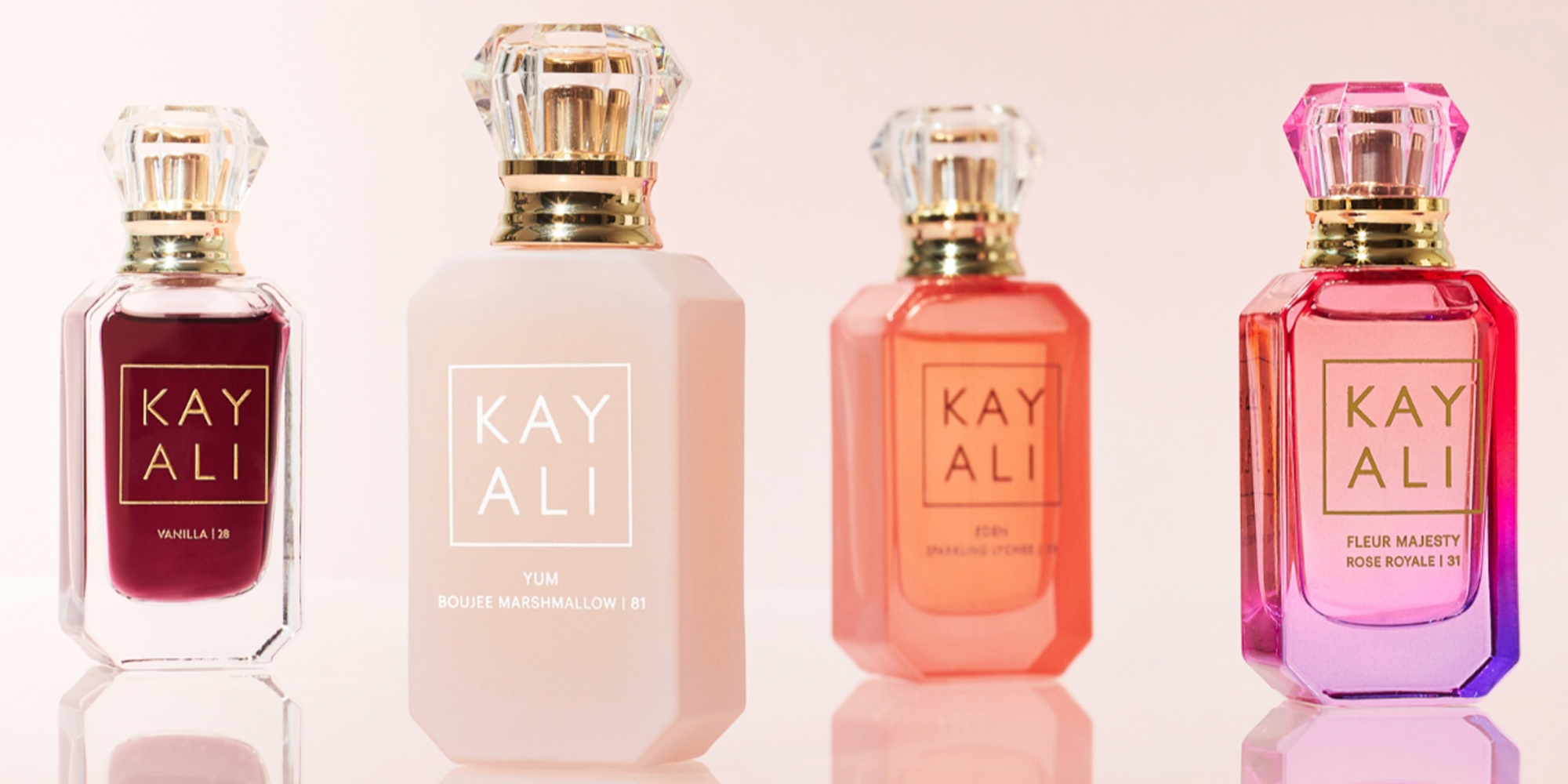

Growth in the fragrance category, which has been on a hot streak since the pandemic, is cooling.
According to consumer insights firm YipitData, beauty’s fastest-growing category was up 14% in the first half of the year compared to the same period a year ago, down from a 20% year-over-year spike in January. The category is still far outperforming skincare, makeup and haircare, which have seen growth rates dip below 10%—and, in the case of makeup, below 5%—this year.
While momentum is slowing in fragrance, consumers continue to be excited by fragrance launches. Of the 14% growth in the first half, 9% is attributable to new fragrances, according to YipitData. At beauty specialty retailers Sephora and Ulta Beauty, most of the year-to-date sales growth is attributed to products launched in 2025. YipitData sources its data on an omnichannel basis from credit and debit cards, web scraping and online and store receipts from a consumer panel of 11 million shoppers.
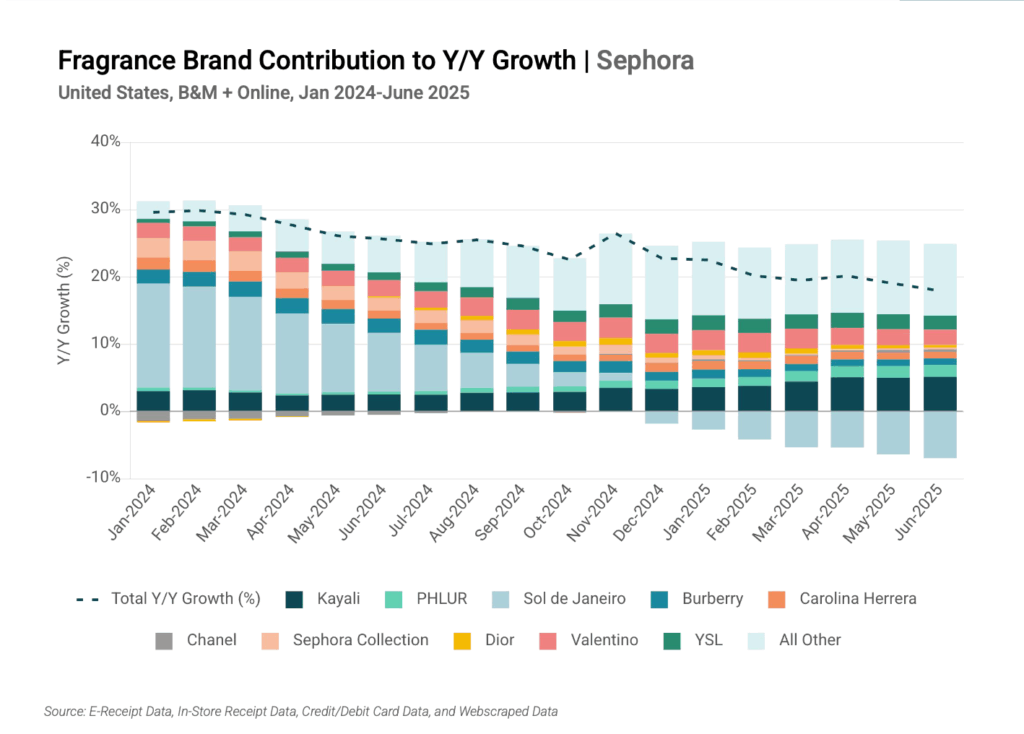
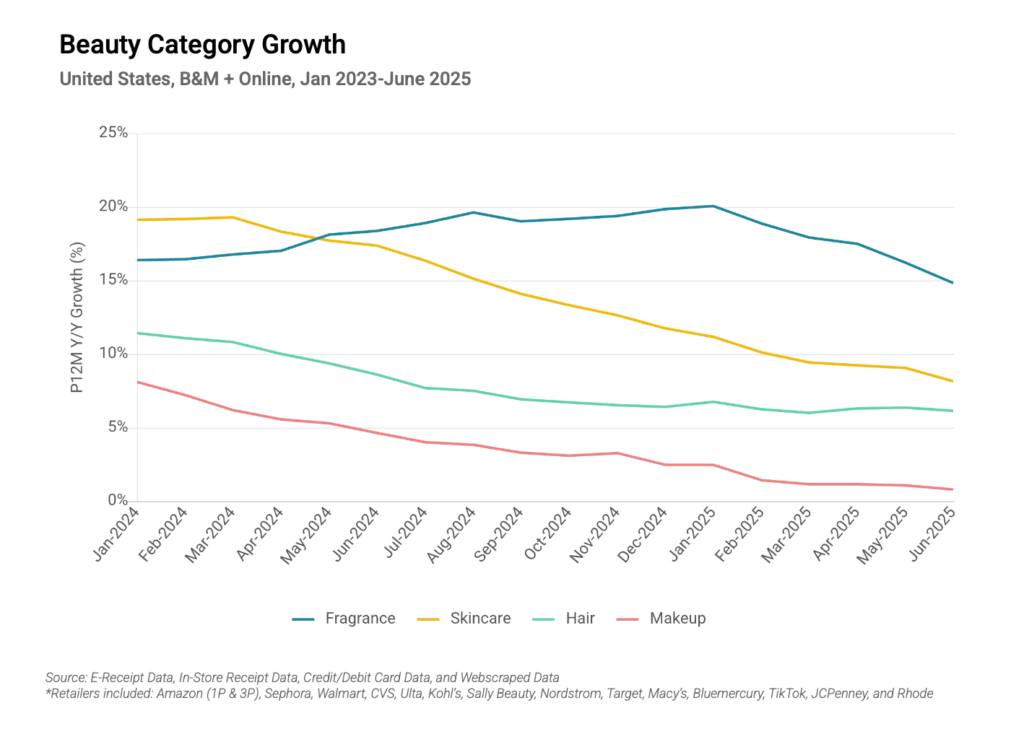 Sephora-exclusive fragrance brands Kayali and Phlur picked up steam at Sephora in the first half of this year. The growth of Sol de Janeiro, the L’Occitane-owned brand that expanded from Sephora to Ulta in 2024, when it was Sephora’s No. 1 brand, slid at the retailer, and its share of Sephora sales has dropped by nearly 10% from last year. Fragrances from Dior, Burberry and Carolina Herrera are losing steam, too.
Kayali has emerged as a leader in the rollerball category at Sephora, per YipitData. Its market share skyrocketed from 3% of the category in January 2023 to approximately 19% as of June this year. Phlur, Glossier, Valentino, Burberry and Jo Malone have also registered increases in travel-sized fragrances, while Gucci, Maison Margiela, Tom Ford, Juliette Has A Gun and Dior have seen declines. Last year, about 13% of Sephora fragrance shoppers who purchased rollerball or travel-sized fragrances converted to a full-size product.
Consumers are deepening their relationship with the fragrance category. YipitData estimates about two-thirds of shoppers purchased three or more fragrances over the last year. Two years ago, one-third of shoppers purchased that amount. “This really…speaks to the shopper being more exploratory and wanting to diversify the collection of fragrances that they have,” said Chelsey Birgisdottir, an analyst at YipitData, during a webinar Tuesday on beauty in the first half of this year.
 Macy’s is the retail leader in the fragrance category in the United States, but its position is slipping. At the department store company, sales growth of existing fragrances, meaning those not launched this year, dipped below 20% year-over-year and dragged its share of the fragrance market down 4% to 31%. Amazon, Ulta, Sephora and TikTok Shop are market share gainers in fragrance. Between January 2023 and July 2025, Ulta’s market share in fragrance grew 2% to 17.5%. For the same time span, Sephora was up 1% in fragrance market share to 15%.
Aligned with beauty overall, fragrance has been the fastest-growing category at Sephora. Traditional cologne and perfumes were strong in the first half of 2025 at the chain, but sales of hair and body mists decreased following a stellar 2024. On a yearly basis, perfume accounted for the majority of fragrance spend across all age groups at Sephora.
With shoppers over 55 years old, perfume constituted greater than 70% of fragrance purchases. Customers under the age of 25 had more varied fragrance shopping habits, and hair mists, body mists and colognes accounted for a third of their fragrance spend. Traditional floral perfumes are the most popular among Sephora shoppers, but spicy and warm scents have been ascending.
 In its first quarter 2025 earnings call, Ulta CEO Kecia Steelman noted that fragrance delivered double-digit comparable growth for the retailer, primarily driven by newness in women’s and men’s fragrances, gender neutral fragrances and multi-branded gift sets. XO Chloe by Khloe Kardashian, Noyz, Valentino and Billie Eilish were singled out as top performers.
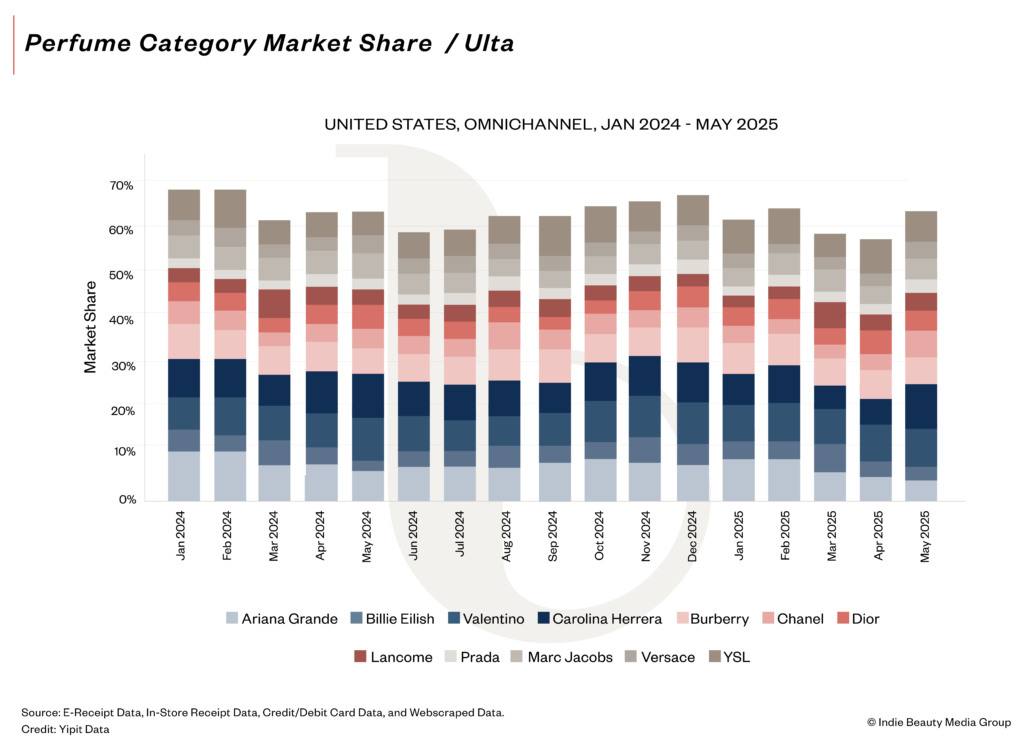
According to YipitData, luxury rules the roost in fragrance at Ulta. Valentino and Carolina Herrera gained the greatest share of perfume sales at Ulta between January 2025 and May this year, each adding over 1.5%. In the same period, perfumes from Ariana Grande and Billie Eilish experienced the steepest declines, losing a combined 9%. With Sol de Janeiro now part of its assortment, sales of body mists are rapidly climbing at Ulta. However, the retailer is trailing Sephora in other fragrance formats.

Leave a Reply
You must be logged in to post a comment.