Louis Vuitton wants to refashion how consumers define luxury beauty.
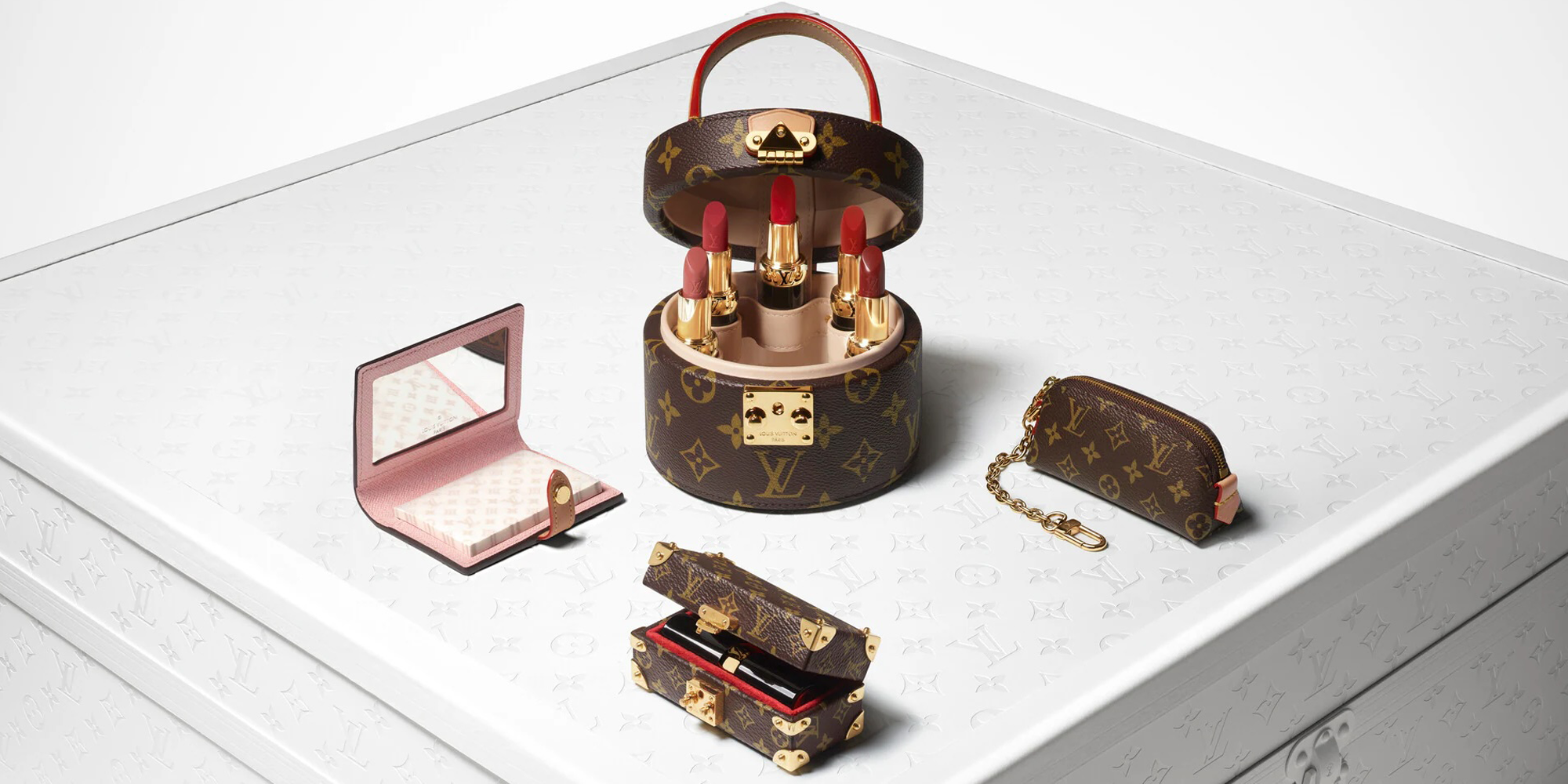
The brand revealed its first makeup collection, La Beauté Louis Vuitton, created alongside legendary artist Pat McGrath, last week with 55 lipsticks and 10 tinted lip balms, each priced at $160, and eight eyeshadow palettes priced at $250. Lip product and eyeshadow refills are priced at $69 and $92, respectively.
Even before Louis Vuitton’s global online launch for La Beauté on Monday after rolling it out to select stores in China, it sparked beauty chatter. Teased initially in March, Spate clocked it last month as the third highest ranking beauty brand for organic growth on TikTok among 10 brands, according to data provided to the publication Women’s Wear Daily. The search insights firm estimated it had accumulated an average of 1 million weekly views on TikTok and registered 5,177% growth.
Not every early read on La Beauté has been rhapsodic. Some have called its price tags tone deaf as economic growth stalls. However, others have raved that Louis Vuitton is distinguishing itself in a crowded market by setting a new high bar for luxury pricing. Christian Louboutin’s lipsticks top out at $105, while Clé de Peau Beauté’s fetch as much as $113 and Estée Lauder charges $100 for one, but sells it as a serum-cum-lipstick.
La Beauté’s $160 lipstick is infused with what Louis Vuitton describes as a “delicate fragrance” crafted by its master perfumer Jacques Cavallier with notes of mimosa, rose and jasmine. It also promises 12 hours of vivid color and a keepsake lipstick case for eternal Louis Vuitton logo flashing.
Curious about the financial architecture of La Beauté and the reaction to it, for the latest edition of our ongoing series posing questions relevant to indie beauty, we asked 13 product developers, cosmetic chemists, beauty entrepreneurs and luxury experts the following: What’s the markup on the $160 lipstick? How’s it different from a drugstore lipstick? What does it say about the state of luxury beauty and the qualities luxury consumers will pay for?
-
 Esther Olu Cosmetic Chemist, Licensed Aesthetician and Instructor
 From my professional perspective, the $160 Louis Vuitton lipstick can be reduced to three aspects: packaging, positioning and margins, not necessarily different base chemistry. The pricing indicates to me that LV is adopting a refills-first model: you buy the engineered, collectible case once, then “feed” it with lower-ticket inserts.
In luxury beauty, gross margins will typically sit about around 65% to 90%-plus, which would imply a cost of goods on a $160 lipstick in the rough ballpark of $32 to $56, translating to an estimated markup of about 3X to 5X on COGS and potentially more if the margin skews above 80%. Using the same yardstick, a $69 refill at, say, around 75% to 85% margin implies around $10 to $17 COGS. (This is a very rough estimate based on trends I have seen in industry, so I may be completely off.)
Outside of the obvious difference (i.e., cost), chemically speaking, the differences between a luxury lipstick and drugstore lipstick are quite minimal. At its core, both lipsticks are essentially pigment dispersed in an oil/wax system. More specifically, iron oxides and organic lakes dispersed in a blend of waxes, emollients, film formers and slip agents. Luxury lipsticks may invest more in ingredients to obtain a more "comfortable" wear (i.e., more sensorial appeal) or diverse range of undertones, but, again, fundamentally, the difference is minimal.
Where I believe the biggest difference lies is packaging. Using LV as an example, the case is a monogram-stamped, refillable metal case, plus accessories that extend it into the world of LV leather goods. Drugstore innovation has come a long way and can be impressively performant. Many are made by the same tier of contract manufacturers and use similar pigment technologies but they typically ship in lighter plastic, simpler magnets (if any), minimal fragrance design, and without the couture-grade object engineering, boutique service and collectible ecosystem LV is selling in this collection. In short, I would say the difference is the craftsmanship and the experience that LV is selling.
This release says two things. First, “hyper-premiumization” is accelerating. LV is deliberately setting a new ceiling (ex: Hermès lipsticks hover around $79 to $81), reframing makeup as some keepsake accessory rather than a typical consumable good.
Second, the economics seem to favor refillable systems that monetize the object once and the bullet repeatedly. Strategically, LV is using beauty as an entry point and a traffic driver at a time when luxury houses are competing to capture attention and control distribution through their own boutiques. The $160 price tests how far aspirational consumers will pay for the idea of luxury embedded in a small, endlessly refillable object. We should anticipate other luxury houses to keep inching prices upward as a reactive measure as well.
Lastly, Pat McGrath’s involvement is a huge part of why Louis Vuitton can command $160 for a lipstick. When a heritage luxury house pairs its brand equity with a creative force like Pat McGrath, who is not only an acclaimed makeup artist, but also founder of her own cult luxury beauty brand, it adds another layer of perceived value to consumers, but especially luxury consumers.
McGrath is known not only for her artistry and brand, but for setting runway beauty trends. Her name signals that the shades, finishes and creative direction are not just standard formulations, but rather tied to the artistry and credibility that consumers in luxury circles deeply respect.
That kind of creative endorsement is difficult to replicate at the drugstore level, where products are often trend-followers rather than trend-setters. For LV, having McGrath on board elevates the lipsticks from being a luxury fashion house’s first attempt at beauty to being positioned as a true artistry-driven product. It seemingly effectively bridges fashion luxury and professional artistry.
- Elana Drell Szyfer Beauty Executive, Mentor and Adjunct Professor, Fashion Institute Of Technology
As one of the last luxury houses to launch a beauty line, Louis Vuitton had to make a statement with this introduction. The timing is interesting—increasing global tariffs and political tensions, a continued slowdown of the strongest beauty markets for the past several years in Asia, specifically China and travel retail in Asia and a slowing global economy. That said, I think Louis Vuitton is using this as a strategy for relevancy and as a way to continue generating revenue as they too have had, for the first time, a decline in global sales from the heritage LV brand.
First, they have checked the important boxes on uniqueness and luxury brand codes. They are starting with the "fashion categories" of lip and eye as opposed to the performance categories of foundation and mascara. This aligns with their fashion and accessories expertise. It also leaves room for both more launches and a signature fragrance.
Next, they have included important luxury codes—55 shades of lip—harkening back to their LV logo (LV is 55 in Roman numerals). They have incorporated storytelling with the shades, including reference to the signature brown of the luggage mixed with the ideal red for lip and a signature red shade meant to represent their own interpretation of independence and individuality. Remember, LV started in travel luggage for royals and dignitaries. The spirit of independence and individuality is a core brand value.
Like Hermès, they are selling lipstick and balm cases with product and as refills. This elevates the importance and uniqueness of the cases as unique and collectible items like their small leather goods and accessories, while also demonstrating a commitment to sustainability, which is an important value for the younger luxury customer. Personally, while the case is custom and includes the logo, the brand flower on the cap and a magnetic closure and was designed by a German designer, I think they could have gone further on uniqueness and artfulness.
Most importantly, they are selling bag charm cases for the lip and eye products. These will no doubt become important fashion accessory item across continents and age groups.
The price of Louis Vuitton bags and small leather goods, where the house makes its money, has nearly doubled in five years. A Never Full tote bag in 2019 was approximately $750 and is now over $2,000. As the house elevates itself against competitors and counterfeit, it still needs to attract new customers into the funnel to become tomorrow's customer. I think this is the role that makeup plays. In an era of people paying $1,000 for a Labubu to hang on their bag, what is $160 for an LV lipstick—or better yet one in an LV lipstick leather carrying case?
In terms of the markup, the lipstick formula, which I haven't tried, will, I'm sure, be exceptional. The brand touts wonderful skin-loving benefits and a unique fragrance. Given the limited quantities being produced and the custom case, I am sure the cost of goods is 100X that of a mass lipstick (likely $20 all in versus $2 at the high end for mass). That said, at $160 retail price, with no margin being given to a wholesale account given that LV is selling these in its own boutiques and online store, there will be plenty of margin going on to the P&L. However, the development of the case, the contract with the packaging designer and Pat McGrath and the full marketing campaign and development costs must also have been high.
This isn’t a play about volume, its about creating a statement and an event for Louis Vuitton and about deepening its engagement with current customers who will easily buy in and purchase one to 10 lipsticks to start and about being the "it" item for a new luxury consumer and continuing to bring in a new customer, while its core accessories line continues to be more and more expensive.
- Naomi Emiko Co-Founder, TNGE
With Louis Vuitton, the markup isn’t incidental, it is very much the product. A $160 lipstick isn’t calculated by the cost of waxes and pigments, but by the value of compressing a century of Vuitton’s cultural capital into something that fits in your palm. The case, the monogram, the heritage storytelling are where the “worth” is built. In this sense, the markup almost becomes the delivery system for status. The brand very deliberately isn’t just selling you color for your lips, but rather a fragment of its mythology.
Functionally, a drugstore lipstick can often match or even outperform premium formulas. Texture, payoff, longevity are no longer exclusive to luxury. The difference here, however, is symbolic, not scientific. Vuitton layers in sensory and cultural cues that drugstore products can’t touch as easily or authentically: a lipstick infused with fragrance, a case that references the maison’s trunk-making roots, personalization options that nudge rituals of ownership. A drugstore lipstick gives you utility, the Vuitton one gives you semiotics. The former is about wearing color. The latter is about carrying culture and signaling status.
For decades, beauty was the bridge into luxury. A $40 lipstick worked perfectly as the democratic entry point into a $4,000 world. Vuitton is pretty much dismantling that playbook. By pricing lipsticks at $160 and palettes at $250, it reframes beauty not as diffusion, but as escalation. This move opens the door for luxury beauty no longer being about access, but about alignment with heritage, craftsmanship and cultural positioning.
But it also raises the stakes. Consumers today are highly attuned to value: 63% say premium doesn’t outperform mass, and artistry-led brands are often leading on product innovation. Vuitton is betting hard that desire can trump efficacy, that owning an LV lipstick is less about what it does on your lips and more about what it signals in your hand. That's a very confident move, because there is no actual precedent. However, if executed well over time, Vuitton could redefine the role of beauty in luxury from gateway product to brand myth in miniature.
- Kim Baker Makeup Artist and Founder, Glamazon Beauty
Cosmetics already have some of the strongest margins in retail. That has always been the industry’s open secret. On average, a lipstick might cost $2 to $5 to produce turnkey. That includes the formula, the bullet and the packaging. Even at the luxury level, $40 to $60 is considered high. So, when you see $160, you know it is not about the cost of goods. It is about Louis Vuitton positioning themselves in the hyper luxury space.
A $160 lipstick is not really about performance. Sometimes there are differences in texture or packaging, but formulas across the industry have become so advanced that drugstore lipsticks can rival high end. The real difference is perception. A Vuitton lipstick is not just makeup, it is an accessory, a status symbol a conversation piece.
What this moment signals is that beauty has fully crossed into lifestyle. Makeup is no longer only a tool for self-expression, it has become part of the portfolio for luxury houses in the same way as handbags or shoes. Consumers are buying identity as much as they are buying product. Pulling out a Vuitton lipstick says as much as carrying one of their bags.
At Glamazon Beauty, my vision has always been that luxury can also be accessible. Beauty should feel aspirational without being out of reach. Because confidence should not require a $160 buy in.
- Karen Young CEO, The Young Group
LVMH really broke through the lipstick price ceiling with this one! It seems like a strange time to be launching such an expensive “commodity” item, but leave it to LVMH. They are always extremely progressive in their approach to the market and always willing to take a risk.
A few key points about the launch and the product:
-The lipsticks are fragranced by a master perfumer and include notes like mimosa, jasmine and rose.
-They are launching in China. LVMH obviously wants to keep a presence in this market for the day when luxury shopping returns.
-The product was four years in development. How many brands can say that?!
-LVMH is well known globally for their heritage, craftsmanship and attention to detail. With regard to lipstick, they claim to have focused on texture, application, pay off and “how it makes you feel.” Commodity products become valued collectables. Again, how many companies can incorporate all this in their marketing message on lipstick (and have credibility to do so)?!
-The refillable packaging is designed to be an “heirloom,” a collectible keepsake. The product is being presented as an objet d’art!
-As luxury slows, looking at more affordable, “entry-level” price points will hopefully keep LVMH in the game and keep consumers engaged. This launch certainly puts the brand in front of the consumer in a major way.
-The luxury industry has recently been accused of dumbing down their offering and targeting aspirational consumers rather than true luxury clients, and thus potentially alienating this much-sought-after group. $160 may be entry-level pricing for some and a trifling, impulse purchase for others.
-Pat McGrath is a highly regarded makeup artist, with a great deal of clout and influence.
I think it was a smart move and will probably do "well," whatever that means.
To the question about margins and comparison to a drug store brand, we’re in a different world here. Lipstick bulk doesn’t cost much (drugstore or luxury), but it’s the trappings in beauty that make all the difference. How many consumers show-off their drugstore lipstick? How many consumers pay attention to the smell of their drugstore lipsticks? How many consumers ever think of a drugstore lipstick as being a collectible heirloom?
This lipstick is TikTok catnip and for many consumers, they are trying to figure out how to get their hands on one fast. Welcome to the crazy world of beauty, where we create products people want, not products people need!
- Julian Sass Cosmetics Chemist and Consultant
While lipstick can be an expensive product to create, the markup on this is quite intense. At this point, you've gone far beyond paying for just the product. You're paying for the vibe, the marketing and even the partnership with Pat McGrath. There's no guarantee that this will perform better than a drugstore lipstick.
I think this product is more of a press piece and a topic of conversation than an actual product that they expect will make them a lot of money. There will always be people who will pay this amount of money to say they have an LV lipstick, but I think this is more to get people curious about their offering and potentially pick up something more affordable.
- Melissa Hibbert President of Beauty Founder's Agency and CEO of Emerge Beauty Innovation Studio
Louis Vuitton’s $160 lipstick is a masterclass in brand positioning. The markup is not about cost, it’s about signaling status. What truly cements its value is Pat McGrath as its architect. Louis Vuitton isn’t just entering beauty, it’s rewriting what ultra-luxury beauty looks like and setting the price consumers will pay for the privilege of belonging. It’s not just a beauty product with an extended shade range, it’s a strategic extension of Louis Vuitton’s luxury codes into an entirely new category.
What Louis Vuitton’s pricing reveals isn’t simply what ultra-luxury consumers will pay, but what they expect: a ritual, a relic, an emblem of belonging to a rarified club. In a saturated beauty market, emotion sells, but Vuitton is taking that to its most extreme and unapologetic expression.
Those of us who have developed products—or guided others in doing so—know the reality: the raw materials and manufacturing for a high-quality lipstick typically cost between $2 and $5 per unit, even for a premium formula. In beauty, the standard retail markup is around 10X. Louis Vuitton, however, is pushing that envelope dramatically, with an estimated markup ranging from 3,100% to nearly 8,000%.
But here’s the point: the markup on a $160 Louis Vuitton lipstick isn’t about covering cost, it’s about prestige positioning. It reflects not only the high-end packaging and brand exclusivity but also the way luxury calibrates the market. In luxury beauty, pricing is a signal, not a transaction. The steep markup transforms what is essentially a utilitarian product into a coveted artifact, placing lipstick in the same cultural and symbolic realm as Louis Vuitton’s fine leather goods.
Ultimately, it’s less about formula versus cost and more about embedding heritage, craftsmanship and elevated storytelling into every tube. While I’ve seen and experienced lovely drugstore lipsticks—and appreciate how much their quality has improved—the true driver of the vast price difference lies in the luxury experience. A drugstore lipstick and a Louis Vuitton lipstick may both deliver pigment, but only one delivers an experience.
Vuitton’s refillable cases, the artistry of the design, high-quality or unique ingredients, refined texture and even the ritual of application, these elements transcend function. Drugstore options democratize beauty, offering mass accessibility and affordability, while luxury makes beauty aspirational. At this price point, consumers aren’t simply buying color for their lips, they’re buying entry into the Louis Vuitton narrative of heritage, luxury and exclusivity.
The brilliance of this launch lies not only in the product but in the partnership. I have followed Pat McGrath and celebrated her work for years. She is, without question, one of the most influential makeup artists of our generation. Her artistry, authority and credibility ensure that Vuitton’s entry into beauty is not just a brand extension, it’s a cultural statement. Every detail, under her direction, reinforces identity and exclusivity. McGrath brings a deep understanding of texture, color and wear that resonates with both industry insiders and consumers alike.
Her involvement lends authenticity and gravitas to the collection, ensuring that even at $160, this lipstick is not dismissed as novelty. Instead, it stands as a legitimate beauty object of desire, backed by the artistry of someone who has defined and continues to define global beauty trends.
What Louis Vuitton is really selling is belonging. In today’s market, luxury consumers demand more than performance, they expect beauty to be cultural, collectible and symbolic. Their unapologetic pricing is not a deterrent, it’s the point. It creates desire, reverence and status around something as simple as lipstick. This is luxury pushing boundaries, knowing that consumers are willing to pay for emotional resonance as much as product performance.
From a strategic perspective, Louis Vuitton could not have chosen a more valuable collaborator. Pat McGrath bridges heritage and innovation, ensuring that the line carries both aspirational weight and technical credibility. To me, that is the X factor in Louis Vuitton’s beauty play and likely the reason this launch will define a new benchmark in luxury makeup where consumers are buying a piece of beauty history. And if I’m honest, I will be one of them.
- Cierra Sherwin Founder and CEO, First Production Beauty
Louis Vuitton Beauty’s pricing strategy isn’t really about lipstick, it’s about status. Sure, the product experience is stunning: Custom packaging, the LV monogram, every detail screaming luxury. But let’s be real, a red lipstick is a red lipstick. What they’re selling is the illusion of access, a chance to buy into the cult of the Louis Vuitton brand, where even something as universal as lipstick becomes a status badge.
Beauty is no longer just functional, it’s cultural. Today, products are experiences, signals and shortcuts to identity. Buying a lipstick isn’t just about pigment or formula, it’s about aligning yourself with a world, a community a value system. The brands you engage with reflect who you are, or at least who you want the world to believe you are. In that way, Louis Vuitton Beauty is less about makeup and more about cultural capital.
- Krupa Koestline Founder and Cosmetic Chemist, KKT Innovation Labs
Louis Vuitton’s $160 lipstick is less about the formula, which looks solid, but not radically different from what’s already available, and more about packaging, positioning and perception. The aluminum and brass refillable case with a magnetic closure delivers a premium, tactile experience far beyond a drugstore bullet, but the raw materials themselves likely cost only a few dollars.
What consumers are really paying for is the status of owning a Vuitton object and the brand’s storytelling. This reflects where luxury beauty is headed: formulas may be on par with accessible options, but design, sustainability cues and the emotional value of exclusivity are what justify and drive these elevated price points.
- Donna Lopez Founder, Making Lemonade
The $160 Louis Vuitton lipstick is less about the product and more about what it signals. We’re talking about beauty as cultural currency, craftsmanship and the evolution of beauty as a collectible object.
From a margin standpoint, the markup is undeniably high, far beyond what we see in even high-end prestige. But this isn’t new. We’ve seen similar luxury plays from Hermès, Valdé, and even provocatively-priced NSFW inspired lipstick designed to provoke buzz. In this tier, the cost of goods is a factor (custom molding, high MOQ), but it is not the driver. The margin accounts for rarity, design pedigree and brand mythology. You’re not just buying lipstick, you’re buying into the Maison. Into Marc Newson’s design. Into the cachet of carrying a sculptural emblem of LVMH’s creative empire.
This product isn’t meant to compete with a $12 lipstick from the drugstore. That’s utilitarian. Everyday. This is intentional. It’s a statement, a status symbol, a piece of luxury storytelling. Products like this shift beauty from tool to talisman. From something you use, to something you display. It’s not about function alone, it’s about desire.
The launch also reflects where luxury beauty is headed. As fashion houses grow their beauty divisions, we’re seeing a blend of collectible design, narrative depth and emotional connection. Beauty is becoming the gateway into the luxury fashion brand’s creative world.
And, let’s be honest, the Louis Vuitton and couture customers haven't been dramatically affected by economic pressures.
- Margarita Arriagada Founder, Valdé Beauty
One of the reasons why there is so much sticker shock around the price points of this lipstick is because, until now, there have been very few offerings that are truly luxury in beauty. Many of the brands currently categorized under "luxury" are mass produced products leveraging a luxury brand logo to appeal to an aspirational customer. We have been experiencing the massification of beauty including in the so-called "luxury" category.
The Louis Vuitton launch is a completely different experience than everyone is used to. The price of this lipstick is a one-time investment into its branded case. An investment in the brand equity built, brand identity and overall experience. No different than anything else within the brand.
The value is in the actual refillable formulas ($65 for the lipstick). You get to leverage this investment time and time again, through buying a lip formula refill that I expect is next level quality given the artistry of Pat McGrath.
The difference in costs from a mass produced product at a very low retail are: To state the obvious, mass quantities, the quality or lack there of raw materials, amount of pigment, experience (slip), wear (how long), ingredients, shades, details like leather pattern on the bullet and the iconic logo and refill ability. Both the primary lipstick case and refill are more expensive to produce than regular components. Add to this if the cases are metal versus plastic and the iconic secondary packaging.
However, despite all this breakdown, a luxury consumer primarily is looking for experience, quality and covetability. Investing in luxury is a personal choice. Like basic utilitarian footwear, watches, sunglasses or spirits, there are the luxury versions of all and beauty should be no exception. There are many luxury customers who invest in fine jewelry, fashion, accessories and want the same of their beauty.
Having created and launched Valdé Beauty four years ago at a price point for a lipstick higher than Louis Vuitton, I am too familiar with the sticker shock. Yet, I can proudly say the brand has never experienced a return from a customer that was dissatisfied because the experience did not justify the price. There lies the most important aspect, that connection that can make something truly priceless.
- Keyanna Sawyer-Jones Founder, Bleum Creative
Louis Vuitton’s $160 lipstick has everyone talking, and, honestly, it’s less about the price and more about what it represents. The refillable case looks like jewelry, the formula is packed with skincare benefits, and every detail, down to the custom scent, is designed to make lipstick feel like art. It’s storytelling through design and experience, where even the smallest item carries the weight of the brand’s legacy.
And LV isn’t alone. Brands like Chanel and Dior have also elevated lipstick well into the luxury tier going an upwards of $500. LV is betting on beauty as indulgence. It's bold, exclusive and crafted to remind us that today’s consumer values the feeling of elevation as much as the product itself.
- Rebecca Bartlett Principal and Creative Director, Bartlett Brands
No markup here. The price tag on La Beauté Louis Vuitton isn’t about the formula, the design or even the packaging, it’s identity. When you swipe it on, you’re signaling membership to a world of luxury, exclusivity and cultural capital.
Spending thousands on luggage and accessories may not be in your budget, but $160 for a lipstick is a comparatively accessible buy-in to the brand’s halo. It’s your ticket to curate the identity of someone who “belongs.” The La Beauté launch democratizes aspiration without diluting luxury, allowing a lipstick to function as both product and passport.
If you have a question you’d like Beauty Independent to ask product developers, cosmetic chemists, beauty entrepreneurs and luxury experts, please send it to [email protected].