
Face Reality, the professional-only acne brand used by over 10,000 skincare experts nationwide, is opening its first clinic and retail destination.
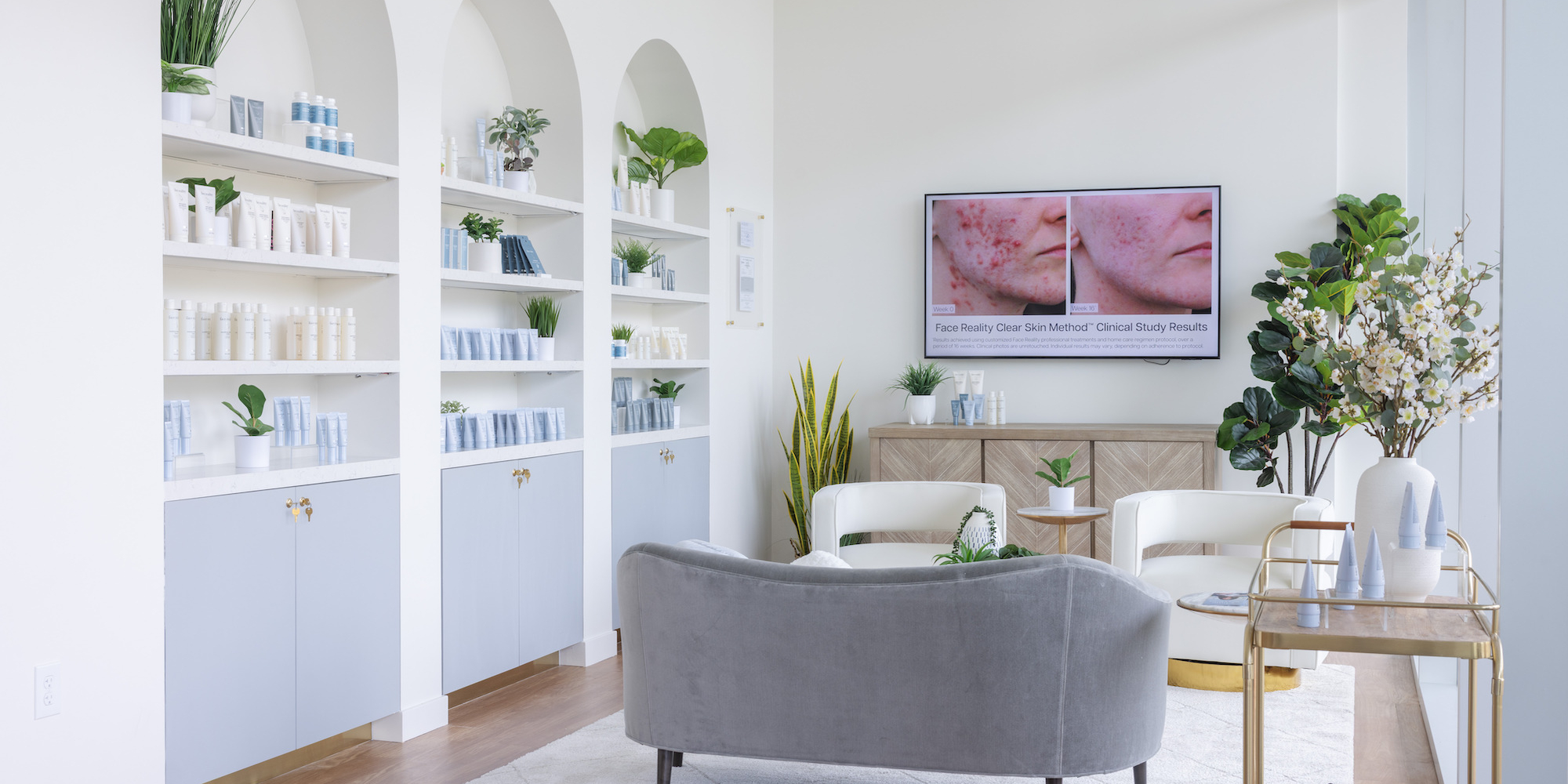
Called Face Reality Acne Clinic and launching Saturday, the flagship, located in San Ramon, Calif., at Bishop Ranch City Center in a 3,000-square-foot ground-floor space, marks a significant step for the 21-year-old company to showcase its approach to treatment, education and innovation. Featuring six treatment rooms and staffed by seven aestheticians, the space is capable of handling approximately 50 clients per day.
The primary intention for the clinic and retail hub is to serve as the center of Face Reality’s brand universe and support its extension network of aestheticians, medical spas, plastic surgeons and dermatologists, according to Face Reality CEO Jeremy Soine. He emphasizes the facility, which he says cost a “seven-figure” sum to build out, isn’t designed to be a major profit center, and its objective is to break even. Face Reality isn’t currently planning to open additional locations.
Face Reality Acne Clinic will operate as a research and development hub and testing ground for Face Reality to gather insights from clients. Deanna Fleming, chief revenue officer at Face Reality, says the clinic will provide a “direct connection to real client outcomes so we can continuously refine our protocols and translate those insights into education and tools that support our professional community.”
“If we can take our results and best practices, whether that’s in the treatment room or outside of the treatment room—lease management, inventory management—all those things you don’t learn when you go to aesthetician school, and if we can share those things with those accounts, they’re going to be better off,” says Soine. “That’s the core purpose of this clinic.”
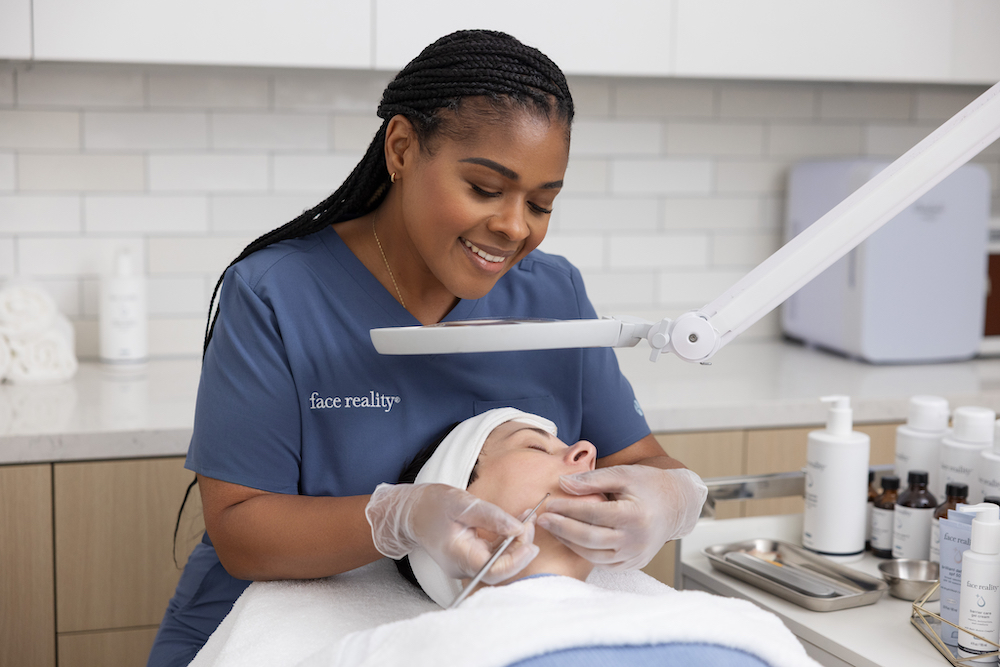
Face Reality Acne Clinic will host immersion and shadowing programs for aestheticians, supplementing the brand’s six-hour online training course. The hands-on experience is key because traditional aesthetician education often lacks detailed training in acne care and treatment. The clinic sells Face Reality’s entire acne product system, but clients are required to undergo a personalized consultation before purchasing products. The clinic won’t carry topical skincare from brands besides Face Reality. The exception is Clean Skin Club’s Clean Towels and devices like at-home red light therapy masks.
Soine highlights that Face Reality products work well in combination with prescription treatments such as Accutane or post-laser care. Isotretinoin, commonly referred to as Accutane, is widely used in the United States, with more than 1 million prescriptions written annually, and remains a mainstay of acne treatment. A recent trend for acne sufferers is to micro-dose the medicine.
Acne care isn’t a niche market as last month’s blockbuster launch of Alix Earle’s acne-focused Reale Actives demonstrates. The publication Puck reported that it hit $1 million in sales in its first five minutes in business. In March, pimple patch brand Starface announced a $105 million minority stake round. The global acne treatment market was valued at $12.19 billion in 2025 and is projected to reach $19.55 billion by 2034, growing at a rate of 5.4% over the next eight years, per market research firm Fortune Business Insights. North America’s market share was nearly 49% in 2025.
The American Academy of Dermatology estimates that around 50 million people in the U.S. experience acne, and Soine points out that roughly two-thirds of all skincare consumers have acne as a primary or secondary skin concern. He stresses that treatment protocols for acne should be nuanced and not one-size-fits-all as the causes of acne not only vary from person to person, but even for a single person from one year to the next.
Soine believes that personalized guidance from a professional is crucial for effective acne results, especially given the dangers of self-diagnosis and detrimental over-treatment. Fleming gives the example of products containing over-the-counter actives like benzoyl peroxide, which Face Reality offers in 2.5%, 5% and 10% strengths. Consumers desperate to clear up breakouts as quickly as possible may immediately reach for the most potent formula, but that over-treatment can backfire by irritating the skin barrier and impeding healing.
The company has a five-year product innovation roadmap prioritizing the modernization of existing formulations. Recent updates include the development of a patent-pending benzoyl peroxide product with a smaller molecule for better skin absorption. The smaller molecule allows for a lower percentage concentration while reducing redness and drying.
Face Reality has also introduced a line dedicated to barrier repair, addressing an estimated 30% of new clients who require barrier work before they can begin active acne treatments. Most practitioners incorporating Face Reality in treatments stock inventory, but if a product is needed, they can use a direct-to-client drop-ship option and receive a percentage of the sale.
According to an estimate in the publication BeautyMatter, Face Reality is projected to generate $50 million to $75 million in 2026 revenues. In 2022, private equity firm Norwest Venture Partners made a majority investment in the brand. Since Soine, former head of U.S. sales and VP at Rodan + Fields and GM and EVP at Ever Skin Care, joined Face Reality in 2020, he notes on his LinkedIn page that he’s grown revenue 8X, earnings before interest, taxes, depreciation and amortization (EBITDA) 15X and the employee count from 15 to 95.