
New first-quarter data from Jump Accelerator shows there isn’t just one way to win in haircare right now, with brands advancing through identity-centered storytelling and premium positioning at Sephora and performance-led claims, professional credibility and sharper value at Ulta Beauty.
Drawing on rankings of more than 350 brands and 7,700 products at Sephora and Ulta, the brand growth consultancy finds that, while shoppers at the two retailers want healthier, better-looking hair, they approach it differently. Founder Rohit Banota explains brands succeed by tailoring price, benefits and messaging to each retail environment, highlighting a divide in consumer needs.
“The Sephora shopper is discovery-based and identity-forward. They do buy an affiliation,” he says, adding that, at Ulta, “It’s performance-based, they want guaranteed results. They don’t want to risk as much, they don’t want to experiment.”
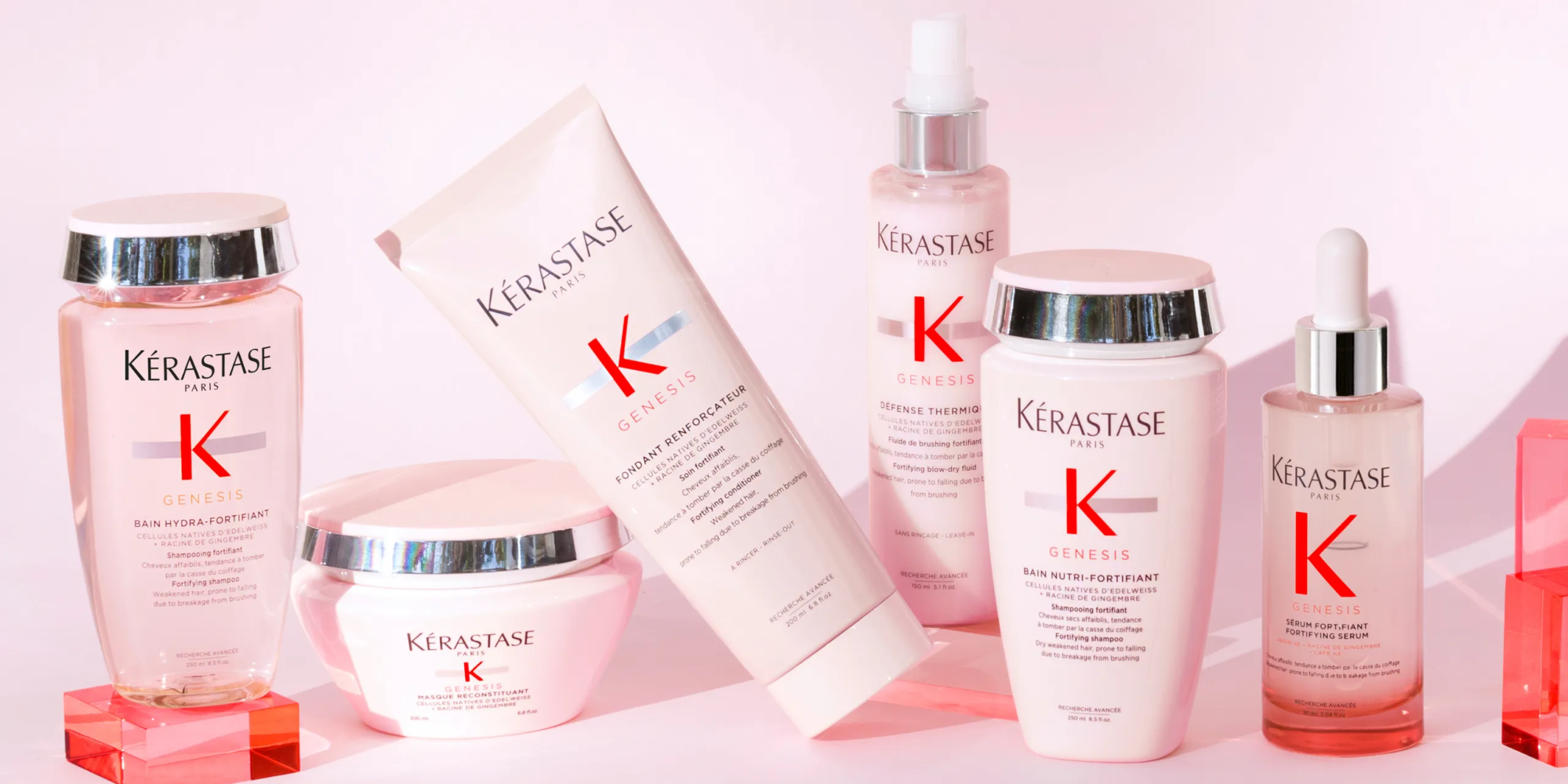
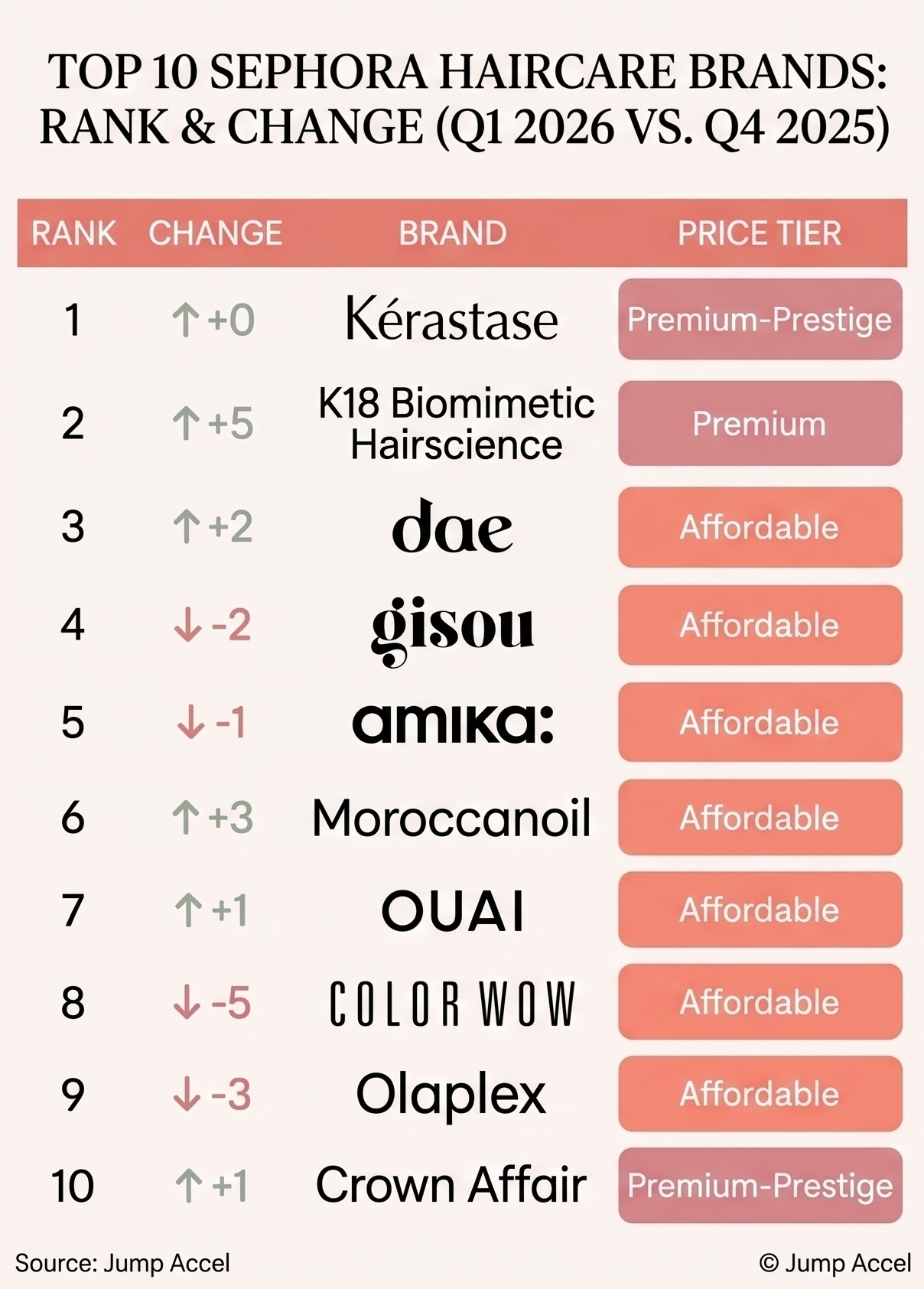
According to Jump Accelerator, which has published category reports for the past two years, Kérastase holds the No. 1 haircare spot at Sephora, followed by K18, Dae and Gisou, altogether an eclectic mix of heritage prestige, biotech innovation and indie darlings. At Ulta, the top rankings are dominated by salon faithfuls, with Redken, Olaplex, Pureology and Biolage in the top four in order. Olaplex, Ouai and Amika appear in the top rankings at both retailers.
The behavioral split between Ulta and Sephora shows up beyond brand rankings in price architecture and product descriptions. Sephora’s top-performing shampoos and conditioners are largely priced from $12 to $68, with momentum most evident around highly specific claims such as anti-breakage for oily scalps, thickening for thinning hair and repair for heat damage. Ulta’s range is tighter and more value-driven, with core winners priced between $6.50 and $36.
There are a handful of brands bridging Ulta and Sephora. Banota argues Amika’s traction is due to elastic positioning. “Amika is affordably priced which goes very well with Ulta, and with Sephora, the brand story is great,” he says. “It’s fun, it’s fruity, and at that pricing, it’s kind of very high value.”
Plus, it has financial backing, with private equity firm Bansk Group acquiring Amika in 2022. According to a Forbes article, the brand was on track to reach $250 million in revenue last year. Also last year, Axios reported Amika was working with investment bank Raymond James to explore deal options.
Banota points out Pureology’s advantages are professional credibility, color care benefits and minimal price friction. He says the L’Oréal-owned brand’s Strength and Hydrate franchises resonate across Ulta and Sephora because the value equation is clear, with products priced at $12.
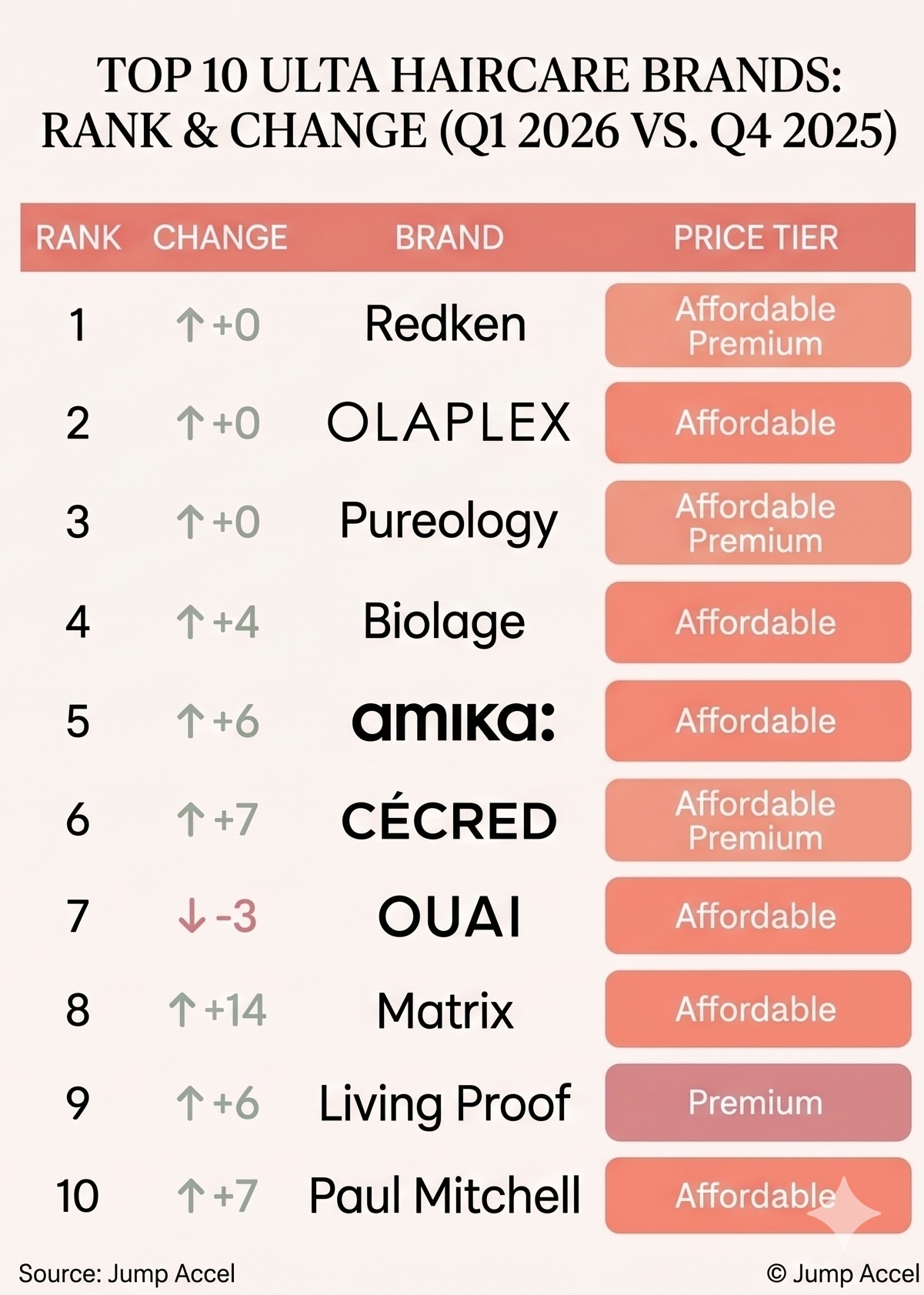
Straightforward product names and benefits are customer draws at Ulta and Sephora. Banota suggests that brands with declining rankings, including Moroccanoil and Living Proof, have marketing language that’s too general compared to rivals that more precisely define the concerns they’re going after.
“The market rewards the specific. People buy products that get them and their specific problem,” he says, adding that specificity is a natural evolution for brands. “First, you come up with a generic solution for everybody, and then you need to have a reason to differentiate. It is niching down.”
Banota identifies scalp health and products that address hair from the follicle as the next frontiers in haircare. He points to Cécred’s Clarifying Shampoo & Scalp Scrub, which is gaining traction at Ulta.
He highlights that many of the brands ascending at the retailer are challengers that didn’t exist in its top tier six months ago, including Virtue Labs, dpHUE and AG Care. These “ascending disruptors,” as he calls them, are built around trends such as scalp care, microbiome science, bioactive peptides and deeper, long-term hair repair, starting from the follicle.
Not all science-driven brands are rising across channels, however. Nutrafol, for example, is declining at Ulta even as it gains traction at Sephora, reflecting differences in pricing dynamics, product assortment and retailer merchandising strategies. At Sephora, scalp care is more established, but still growing, with Kérastase’s Densifique and Genesis lines gaining traction.
Looking beyond scalp care, early signals point to a broader shift toward multifunctional products, particularly in styling. Multi-benefit leave-ins and air-dry creams are winning over sprays, oils and single-function styling products. At Ulta, weightless, affordable, anti-humidity and silkening multitaskers are outperforming traditional smoothing creams.
Jump Accelerator’s full haircare report can be purchased here.