Ulta Beauty, Violet Grey And Printemps On Beauty Retail’s Human Advantage In The Age Of AI

In the era of artificial intelligence, human intelligence and interaction may become beauty retail’s greatest competitive advantage.
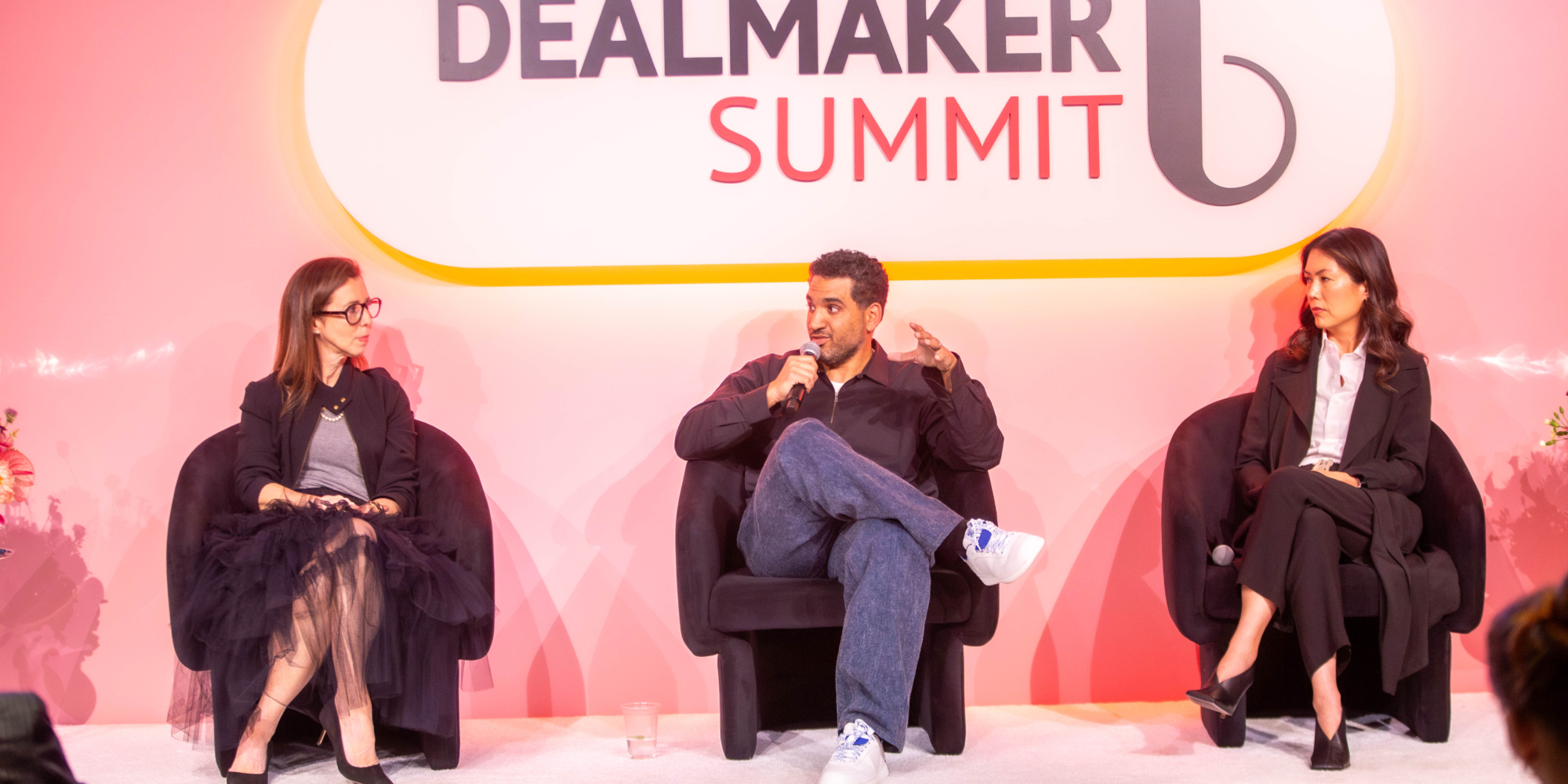
“As we get more digital and get more isolated, how do we make sure that we’re keeping a human connection there?” said Mia Young, SVP of merchandising at Ulta Beauty, during a panel discussion at Beauty Independent’s Dealmaker Summit in New York City last week. Joining her on the panel were Ariel Fantasia, head of beauty at Printemps, Sherif Guirgis, CEO of Violet Grey, and Zach Zavalydriga, beauty brand advisor and board member.
The panelists agreed that the future of beauty retail will hinge less on technology than on how retailers use it to leverage their perennial strengths such as expertise, service and curation. Fantasia envisions that the convergence of beauty, wellness and medical aesthetics will accelerate as AI’s sophistication increases, and it can better assess consumers’ individual needs and recommend products.
“We’re going to see AI play a different role than just the beauty advisor and…it’s going to tell you sort of the next steps between your doctor and your makeup artist,” she said, adding, “I think there is a real hunger…to have that live and in-person reality check of seeing somebody eye to eye.”
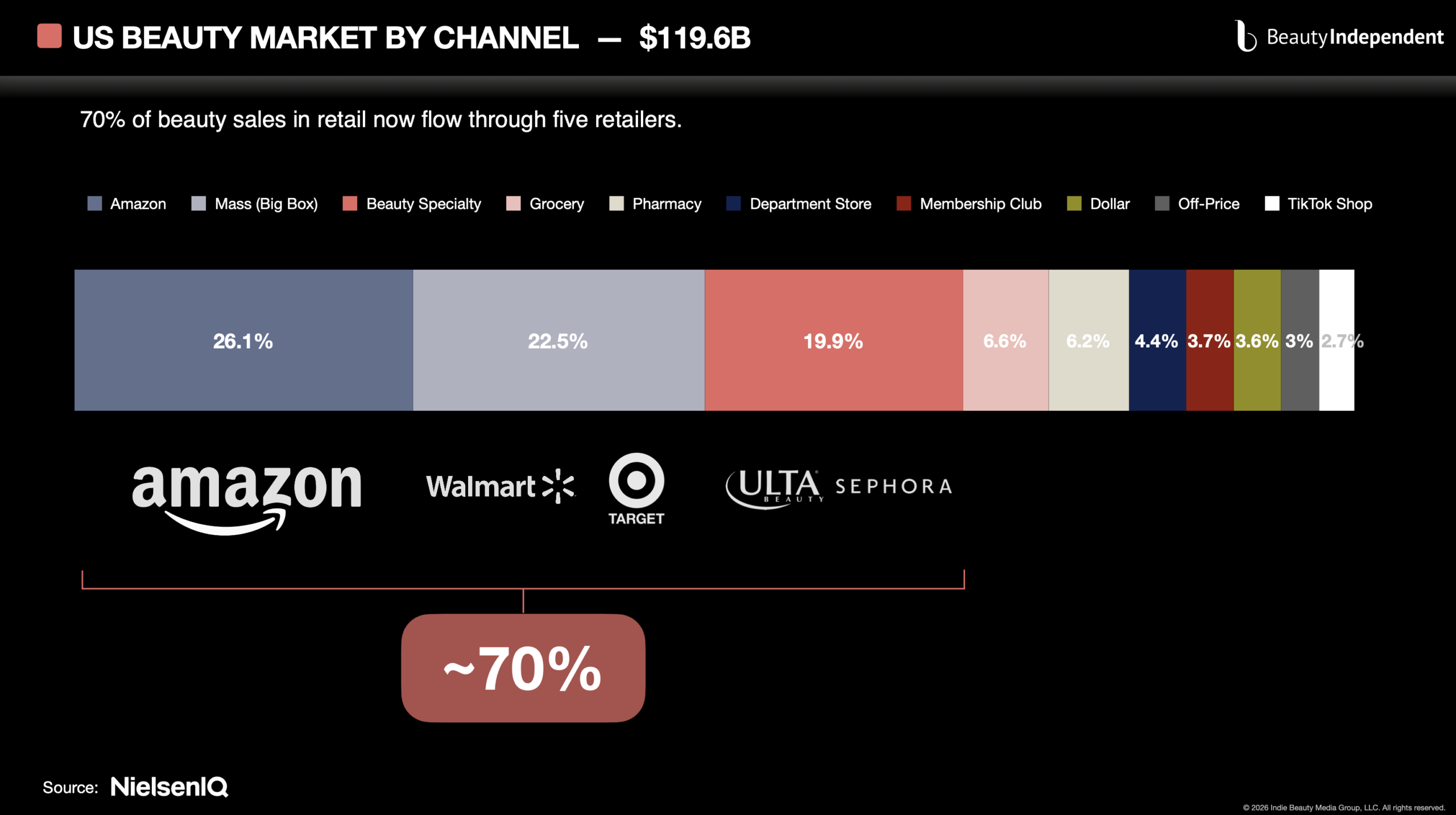
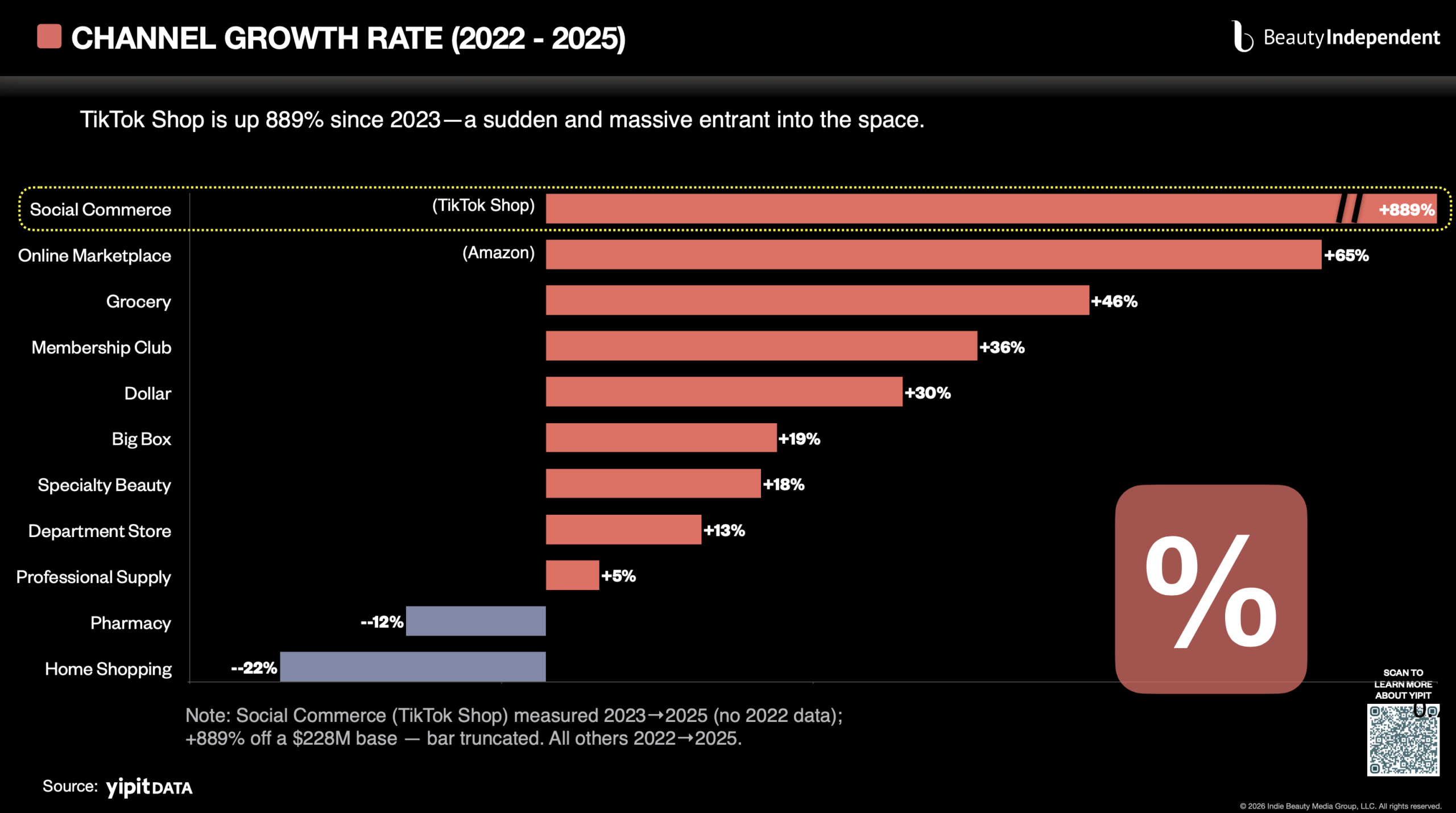
The discussion comes as beauty retailers confront mounting pressure from Amazon, TikTok Shop and a growing number of AI-powered shopping platforms that are transforming how consumers discover and purchase products. According to NielsenIQ, Amazon now accounts for more than 26% of the nearly $120 billion beauty market in the United States. TikTok Shop has captured 2.7% of the market since launching in the country in 2023.
Zavalydriga was skeptical that beauty retail will undergo a dramatic reinvention. Noting that neither the pandemic nor Amazon has fundamentally disrupted the dominance of beauty specialty retailers Sephora and Ulta, he asserted that the industry’s core dynamics will remain intact even as new technologies and shopping channels emerge. “COVID didn’t kill the beauty retailers and neither did Amazon,” he said. “So, if those two things didn’t significantly hurt them…I don’t think there’ll be much that will.”
Rather than viewing the beauty retail industry’s shifts as existential threats, the panelists maintained they’re pushing retailers to become more intentional about what they offer consumers. For Ulta, that means adapting to a customer whose shopping habits are increasingly fluid. Young noted that shoppers buy across the price spectrum, making purchases based on their needs, occasions and specific use cases. Stores remain the retailer’s primary sales driver, with approximately 80% of sales occurring at its more than 1,400 locations.
“We definitely see our guests buy a mass cleanser as well as a prestige serum,” said Young. “Eighty percent of our 47 million loyalty customers actually buy prestige and luxury, but it’s actually that mixed bag customer that spends double what a majority mass or a majority prestige customer does.” She also emphasized speed as beauty discovery transitions online. “On TikTok Shop, a trend can take shape in a moment…so it’s on us how to respond to that and move quickly in store and digital.”
“As we get more digital and get more isolated, how do we make sure that we’re keeping a human connection there?”
For luxury retailers, digital’s infiltration into the shopping journey creates opportunities to double down on curation and the in-store experience. Guirgis was motivated to acquire Violet Grey from former parent company Farfetch in 2024 after seeing a gap emerge in the retail landscape between faltering department stores and the affluent audience they typically serve, who seek trusted guidance when shopping for beauty products.
Known for the “Violet Code,” a vetting process in which a committee of makeup artists, hairstylists, dermatologists and other beauty experts evaluates products before they’re approved for the retailer’s assortment, Violet Grey will open three stores in Los Angeles, Dallas and the Hamptons this year and expand to between 15 and 20 branded stores over the next three to four years. The retailer operates a Melrose Place flagship in the Los Angeles area and two shop-in-shops in Long Island luxury department store Hirshleifers and British department store Harvey Nichols.
Guirgis argued that retailers sitting in the middle between online platforms and highly curated, niche specialists are most vulnerable. “You either want to be on that side, or you want to be at the other extreme where you’re ultra-high service, ultra-high curation, community-like experience,” he said. “Retail as pure distribution is going to be where the squeeze happens.”
Printemps is pursuing a strategy that couples curation with hospitality and services. Founded in Paris in 1865, the luxury department store chain made its long-awaited U.S. debut in March 2025 with a 55,000-square-foot outpost on One Wall Street in New York City’s Financial District. Fantasia described its beauty customers as diverse and often uncertain about exactly what they want when they arrive, making the store’s role less about facilitating transactions and more about cultivating an environment that encourages exploration.
Printemps has leaned into beauty consultations, fragrance discovery, personal shopping and hospitality-driven experiences, including wine and dining concepts integrated throughout the store, to encourage customers to linger and explore. “It’s not just a transaction,” said Fantasia. “It becomes a place to go and enjoy.”
Highlighting the growing complexity of beauty distribution, Zavalydriga identified the rise of large language models, K-Beauty and premiumization efforts at retailers such as Walmart as major forces shaping the retail landscape. Over the past few years, Walmart has methodically been building a more premium beauty assortment to serve higher-income shoppers, giving brands that play at the upper tier of the mass market another growth channel. Zavalydriga said, “People sleep a little bit on Walmart’s push for premiumization.”
On TikTok Shop, where sales often come at the expense of profitability, Zavalydriga contended that the current economics are unsustainable for many emerging brands. He predicted that the platform will eventually be forced to lower fees, improve incentives or reduce advertising costs to prevent it from becoming dominated by larger, well-capitalized brands. “I had one brand that did $700,000 last year on TikTok Shop and lost $150,000,” he said. “This year we’ll do about $7 million, but we’ll lose $700,000, which is insane.”