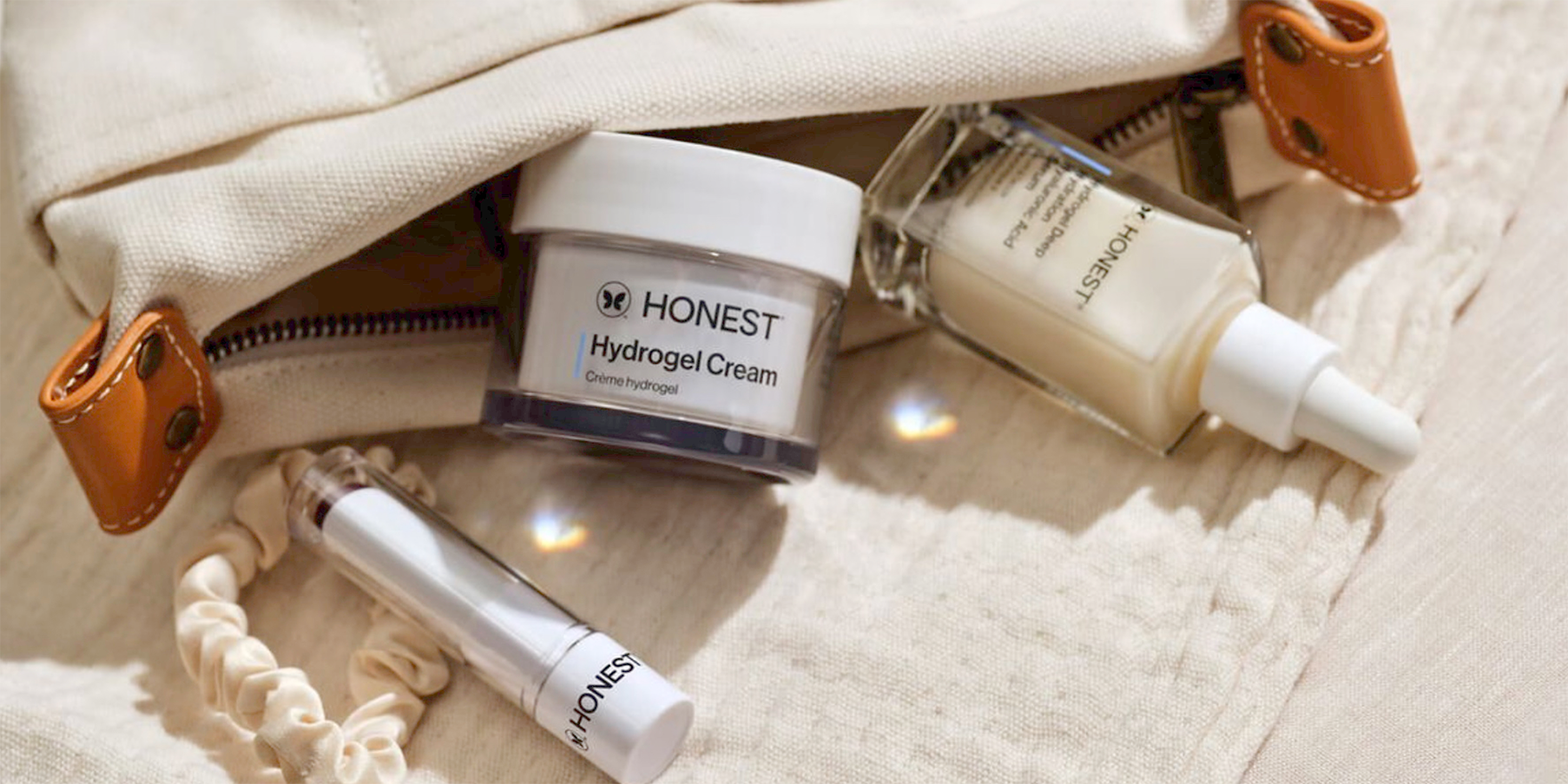

To The Honest Co., direct-to-consumer became a distraction, and the brand has now moved on from it.
In news first reported by Retail Dive on Dec. 19, Honest, which launched as a direct-to-consumer business in 2012, shut down e-commerce sales on its website and app on Dec. 28 as part of a turnaround plan. The brand remains available through retailers, including Walmart, Target, Amazon, Kroger and H-E-B.
In a note to customers, Honest wrote, “These updates were made with you, our loyal Honest family, at heart and will allow us to focus on what matters most: developing and designing products that meet our rigorous Honest Standards for you and your loved ones.”
Honest’s exit from DTC comes amid broader challenges for the brand. Its stock has been trading in the low-$2 range, and it missed revenue expectations with third-quarter sales of about $93 million. It also comes amid a wider reassessment of DTC’s role across consumer brands. Digital customer acquisition costs are widely viewed as elevated, Amazon’s dominance continues to grow, and many industry observers say the rise of artificial intelligence is upending long-held assumptions about search, discovery and distribution.
Many beauty industry observers predict that DTC headwinds will intensify as AI platforms like ChatGPT increasingly function as search home pages and the Google-driven discovery model of the past loses relevance. However, Leslie Ann Hall, founder and CEO of beauty media agency Iced Media, takes the opposite view, predicting an AI-fueled resurgence of DTC.
“We’ve been calling the post-COVID period a return-to-retail era, but we expect that changes to ChatGPT and integrations with other large language models will drive e-commerce shopping on brand websites to levels we haven’t seen since COVID,” she told Beauty Independent for an article on 2026 predictions. “That’s going to be a boon for many independent and challenger brands.”
With signals around DTC pointing in different directions, we’re looking for clarity on the evolving role of DTC. For this edition of our ongoing series posing questions pertinent to indie beauty, we’re asked six e-commerce experts the following: Should brands expect the share of sales coming from DTC to grow or shrink? How should they adapt their distribution strategies accordingly? And can you offer specific, hypothetical examples of where DTC might ultimately land as a percentage of total sales across channels?
-
 Austin Gardner-Smith CEO, Drivepoint
 If we’re being honest, a lot of brands recognized as early DTC successes were never actually designed for DTC in the first place. Take The Honest Co. Shipping bulky, heavy products like diapers and household cleaners directly to consumers was never some structurally advantaged model. It worked early because there were no better options, not because the economics were great.
That distinction matters. Today, brands have far more distribution choices and far more efficient platforms, especially in beauty. So, the first real question isn’t, “Does DTC work?” It’s whether a brand actually has product–channel fit for DTC.
Products that are small, lightweight, easy to ship and benefit from subscription or repeat purchase dynamics can still perform extremely well in DTC. When that fit exists, there’s nothing stopping a DTC-led brand from scaling to hundreds of millions in GMV. But as brands mature, it’s become clear that the path to real scale almost always involves more than one channel and eventually retail and wholesale.
As that happens, DTC’s share of sales often comes down. For many scaled brands, it might settle at 20% or less. That’s not a failure. It’s a sign the business has grown up.
What matters is that DTC becomes the strategic backbone of the company. It’s where brands test products and pricing, learn fastest from customers, protect margin and generate the data that improves performance across every other channel.
There’s also a misconception that DTC “stops working” because of a CAC ceiling. In reality, there’s a cost ceiling everywhere. In DTC, you pay for media. In retail, you pay through take rates, retail media, promotions and margin give-up. You usually end up paying roughly the same for demand. There’s no free lunch. You’re just choosing where to place your bets.
For most brands, even if DTC ultimately caps out below 20% of sales as they scale past $100 million, it’s still worth investing in. Not because it’s the cheapest channel, but because it’s the one that can give you the most insight and control.
- Will Haire Co-Founder and CEO, BellaVix
DTC should grow in absolute dollars, but for most brands it will shrink or plateau as a percentage of total sales. Not because consumers stopped shopping online, but because they consolidated where they shop.
E-commerce penetration keeps climbing, and Amazon alone now represents roughly 40% of U.S. e-commerce spend. Walmart is quietly doing the same thing in the background. Consumers are not abandoning digital. They are abandoning friction.
What broke the original DTC model was not demand, it was math. Paid acquisition got expensive. Fulfillment expectations got higher. And consumers learned they could get the same product faster, cheaper and with fewer steps through Amazon or Walmart.
DTC is not dead. The “DTC as the main growth engine” narrative is.
Brands should design DTC around the functions marketplaces are not great at. Amazon and Walmart are built for convenience and scale. They win when shoppers want fast delivery, easy returns and quick comparisons. DTC should play a different role: education, storytelling, bundles, subscriptions, limited runs and capturing customer data you can actually use later.
The practical takeaway is simple. Let marketplaces do volume efficiently. Let DTC do relationship building and margin protection where it makes sense.
A more realistic view for a scaled beauty brand is that retail and B2B take the biggest slice, then marketplaces, then DTC.
For a hypothetical $100 million brand, a healthy mix might look like:
- Retail + B2B: $45 million to $65 million
- Marketplaces (Amazon + Walmart): $25 million to $45 million
- DTC website: $5 million to $20 million
That range is wide on purpose because channel mix is not a universal truth. It depends on repeat rate, price point, retail distribution depth and how much the brand invests in top of funnel awareness versus direct response.
From what we see, marketplaces often become the “beneficiary channel.” Brands invest in awareness through social and upper funnel media like streaming TV, and shoppers still choose the path of least resistance. They do not always go to the brand site. They go to Amazon or Walmart because it is faster and familiar. As awareness grows, you also see more customers searching for the brand by name inside those platforms, which makes marketplaces even more efficient over time.
In other words, it is common for Amazon or Walmart to match or exceed DTC revenue with less incremental investment, especially once messaging is dialed in and the listings and creative do the heavy lifting.
We have seen this dynamic repeatedly with brands where marketplaces became one of the top revenue channels after full funnel efforts increased awareness and clarified positioning. Once the message clicks, marketplaces can scale quickly and compete head-to-head with the website on revenue while often delivering a lower cost to acquire customers.
- Katherine Ledesma Founder and Fractional CMO, Atelier Skye
In the near term, I expect DTC to shrink as a percentage of total sales for many brands, especially those that scaled aggressively during the COVID-era boom without recalibrating their cost structures. Elevated acquisition costs, platform dependency, particularly Amazon, and shifting discovery behaviors have made “DTC at all costs” difficult to sustain.
That said, DTC isn’t becoming irrelevant. It’s becoming more intentional. DTC is shifting from a primary growth engine to a strategic control layer within a broader omnichannel ecosystem. Brands should use DTC as:
- A margin-protected environment for hero SKUs, subscriptions and bundles
- A testing ground for innovation, messaging and pricing
- A first-party data engine that informs retail strategy rather than competes with it
The brands that struggle are trying to make DTC do everything. The brands that succeed right-size its role and integrate it tightly with retail, Amazon and emerging discovery platforms.
The percentage of sales from DTC varies by stage and category, but a few realistic scenarios:
- Early-stage or indie brands: 40% to 60% of sales as brands validate demand and build community
- Growth-stage omnichannel brands: 20% to 35% as DTC becomes one strategic channel among several
- Scaled or mass-distributed brands: 10% to 20%, still valuable for margin, storytelling and customer insight
In this context, The Honest Co.’s exit from owned DTC commerce isn’t a rejection of DTC, it’s a signal that, for some scaled brands, the operating cost no longer justifies its role relative to their retail footprint.
Looking ahead, AI-driven discovery may eventually drive renewed interest in brand-owned commerce, but only for brands with clear positioning and disciplined operations. DTC won’t rescue unfocused brands. It will reward focused ones.
- Lane Barrocas Industry Expert
The Honest Co.’s decision to shut down its DTC site and app has sparked a lot of debate, but I don’t view it as a signal that DTC is fading. I view it as a signal that DTC must match the brand’s economics, category and operational reality. For Honest, a mass-market, publicly traded company with broad retail distribution, the economics simply no longer justified the investment.
Running a full-stack DTC channel is expensive. Between site operations, fulfillment, customer service, returns, fraud and rising acquisition costs, the fixed-cost burden is substantial. For a brand like Honest, where AOV is modest, replenishment is high and retail partners already drive the majority of volume, DTC can quickly become a distraction rather than a growth engine.
In a previous role as VP of sales, e‑commerce at THG Ingenuity, I worked directly with brands across categories to grow and scale their DTC businesses, and the pattern was consistent: prestige brands with higher price points could make the economics work; mass brands almost never could. The cost stack is identical—pick and pack, packaging, shipping, customer service—but the margin structure is not.
Take Honest’s toddler wipes at $10.97. If COGS are 35% to 40%, pick costs are roughly 60 cents, packaging another $2, and postage is covered by free shipping. There’s very little profit left.
Compare that to a $330 La Mer body cream with a 15% to 20% COGS profile and the same fulfillment costs. The unit economics are fundamentally different. Mass price points almost force brands into channels like Walmart, Target and Amazon, where scale and logistics efficiencies create more dependable profitability than a standalone DTC operation ever could.
From the prestige side of the industry, the picture looks very different. Prestige brands often have the ingredients that make DTC powerful: high-margin hero products, strong founder IP and a community that wants to buy directly.
Rhode is a perfect example. Before entering wholesale, Rhode generated over $200 million in DTC revenue with exceptional efficiency: 34% EBITDA margins and a MER above 9. That level of profitability is nearly unprecedented and reflects a combination of celebrity influence, operational rigor and a hero product strategy that converts awareness into repeat purchase.
Honest and Rhode illustrate two ends of the spectrum. Honest’s exit from DTC reflects the realities of a mass brand optimizing its P&L. Rhode’s DTC strength increased its valuation and made its Sephora expansion even more strategic. Both are valid models; they simply serve different business structures.
Another trend worth noting is the increasing number of brands choosing to double down on Amazon instead of DTC. Amazon’s logistics infrastructure, consumer trust and built-in demand generation often deliver better margins and lower operational risk than running a full-stack direct channel. For many brands, Amazon has effectively become the more efficient “DTC.”
So, will DTC grow or shrink? I think the answer depends entirely on the brand’s category, price point and margin structure. Over the next five years, I expect the average brand’s DTC share to compress slightly, but the variance by segment to widen significantly.
- Mass, multi-channel beauty and personal care brands: DTC stabilizing around 10% to 25%
- Prestige brands with selective distribution: 25% to 50%
- Digital-first or celebrity-led prestige brands: 50% to 80%, with retail used strategically for reach and credibility
AI will accelerate this divergence. As AI-driven discovery reshapes how consumers search and shop, brands with deep, differentiated content and strong first-party data will see more qualified traffic routed to their owned channels. Brands without that foundation will increasingly rely on Amazon and retail partners for scale.
The takeaway for founders is not that DTC is dead or that retail is the only path. It’s that DTC is a business model choice, not a badge of honor. Honest’s story is a reminder that DTC must make financial sense. Rhode’s story is a reminder that when DTC is executed with discipline, clarity and community resonance, especially in prestige, it becomes a value multiplier that strengthens retail partnerships and long-term brand equity.
- James King Founder, Data Made Simple
DTC is more important than ever for indie brands in 2026. But as they grow, it’s less about volume and more about control, having a direct line to your customers and honing messaging in a way that retail can’t.
Conversely, for Honest, as a public company with broad retail distribution in turnaround mode, DTC can seem an operational drag when it is such a small percentage of total sales. The watchout for Honest as they cut operational cost is ensuring that they still control the narrative of the brand and not let their retail velocity drop in an increasingly competitive environment.
So, where should DTC land as a percentage of total sales across channels in 2026? Of course, this varies wildly, but I can offer some broad guides based on a digital marketing career at both large retail brands like Benefit Cosmetics and indie brands just entering retail distribution.
Mass/CPG with broad distribution: 0% to 10% DTC
DTC is mainly for brand/education and sometimes subscriptions, but rarely outcompetes retailers on speed, price perception and basket-building, so it stays small. This is where Honest sits.
Omnichannel indie (e.g., Sephora/Ulta + DTC): 10% to 40% DTC
Retail is where customers discover you at scale; DTC is where you convert that ongoing demand into repeat, via routines, bundles, loyalty and subscriptions.
DTC-native with high replenishment + strong repeat: 25% to 50% DTC
DTC can still remain a large share because of replenishment and subscriptions, but strong retail presence is increasingly important for reach as customer acquisition costs rise.
In short, the brands that win in 2026 will let retail drive scale, while keeping DTC as the place they own the customer and the narrative.
-
When it comes to channel growth expectations in 2026, there is no one-size-fits-all approach. Regardless of the size of the brand paired with their immediate and future distribution goals, DTC growth will be largely dependent upon deliberate planning and a commitment to consistent spend in order to get a strong ROI.
Of course, there are long-term benefits to committing to DTC growth: consumer-brand loyalty, high AOV and margin control to name a few. This is especially true of smaller and emerging brands and brands that are invested in maintaining a close relationship between their consumer and their brand story.
We know that regardless of the return to in-store shopping, “Online channels are expected to make up 33% of beauty sales by 2030,” according to McKinsey & Co. Prioritizing DTC investments is an important way to capture share and to build brand while continuing to grow alternative channels.
Brand recognition, largely driven by online and social shopping, is as important to retailers as it is to the brand’s health, as it drives customers and traffic into stores. Going “viral” may not happen to every brand, but with a deliberate strategy, there is plenty of consumer spend.
One strategy to gain DTC growth in 2026 is to lean into authentic UGC. Affiliate programs deliver and scale well and are targeted to your brand’s specific audience. Risk is low (but get ready for real feedback), margin is high and you gain real-life reviews of your products across an interested and aligned audience. You may even identify a niche in your demographic that you previously did not address.
Identifying a target audience and allocating affiliate commissions with a strong call to action builds top of funnel opportunity and long-term customer loyalty. With the growth of social selling like TikTok and other live selling, there is ample opportunity to capture the consumer outside of a four-wall environment. TikTok contributed to a 22% year-on-year increase in beauty product sales across all social commerce platforms in 2024, according to Euromonitor. Brands should be sure to invest in TikTok-related channels that can feed DTC growth.
For brands that have gained retail placement in physical stores, there is still a huge opportunity to embrace growth with an omnichannel strategy like diversifying assortments by channel. Laneige did a great job in 2025 of creating an add-on opportunity to lip sleeping mask sales at DTC by launching mask toppers (IYKYK). What a great way to appeal to the Laneige sleeping mask groupie, who has to have it all.
Limited-edition, online exclusives are a savvy way to create interest and traffic to your DTC channel. Exclusively online bundles and sizes are also great incentives to the customer that do not compete with in-store GWPs and retailer-specific promotional periods.
“Customers want convenience,” says Jessica Quick, CEO of Buzz Beauté, a marketing and Amazon agency. We see with our clients that as AEO (answer engine optimization) and GEO (generative engine optimization) reshape discovery, DTC’s share of total sales rises.
Brands with differentiated products, strong community and unique value (subscriptions, bundles, limited drops, shade matching, routines) will benefit from AI-driven recommendations. AEO and GEO reward the clearest, most trusted “best answer” experience and DTC continues to gain when it’s optimized content and commerce direct consumers through AI engines to confidently find, understand and purchase conveniently.
In conclusion, an omnichannel strategy is a best bet for 2026 and for long-term growth. Target a 25% to 35% total DTC sales contribution if you are already established in brick-and-mortar. Target a higher DTC sales contribution if you are just starting to establish a hybrid brand footprint, and if you are digitally native, weigh the cost and operational commitment of expanding into retail versus staying DTC exclusive.
Most importantly, include DTC and the associated consistent spend as a priority in 2026. It is where value compounds (reorders, subscriptions, bundles all add up to profit). DTC is not going anywhere, and you have the most influence and visibility in portraying your brand’s story and position in the marketplace at your own store online.
If you have a question you'd like Beauty Independent to ask e-commerce experts, send it to editor@beautyindependent.com.