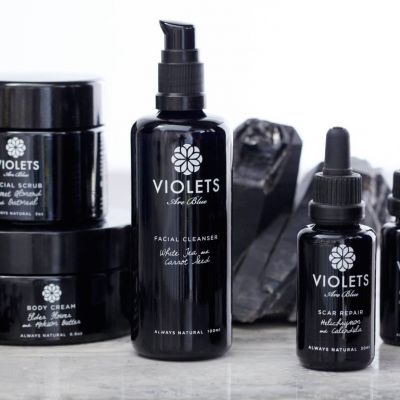

Missions haven’t been enough to salvage mission-based beauty brands lately. World of LLA, which was dedicated to self-care routines for mental health, Violets Are Blue, which was started by a breast cancer survivor and supported cancer programs, Of Other Worlds and Ami Colé, which focused on inclusivity, and sustainability champion LOLI Beauty are among the latest indie beauty brands to announce closures.
Despite the closures, consumer research consistently suggests strong stated demand for values-driven beauty. In a September 2024 report from the SeeMe Index in partnership with Circana, beauty brands rated “certified inclusive” grew 1.5 times faster than less inclusive brands, with inclusive brands posting an 18% sales increase versus 12% for others.
Surveys also show consumers prioritize clean beauty. A 2025 CleanHub survey found that 63% of respondents say clean beauty is “very important” or “extremely important” when selecting cosmetics. Grand View Research’s 2023 clean-beauty market report projected strong double-digit annual growth through 2030, reflecting deep interest in ingredient safety- and sustainability-led brands.
However, that interest isn’t always enough to prop up beauty brands in today’s cutthroat market, where price, trendiness and convenience often dominate shopping decisions. Amid those pressures, we’re curious whether brands looking beyond profits to purpose will continue to have pull.
So, for this edition of our ongoing series posing questions relevant to indie beauty, we asked 14 brand founders, executives and consultants the following: What do you think the future holds for mission-based brands? What operating models or distribution strategies give them the best chance at survival? And what missions resonate most with current beauty shoppers, and which no longer do?
-
 Effie Asafu-Adjaye Founder and Director, Beautiful Sparks
 Mission-based brands will always have a place, but mission alone won't save you. It's the first step for differentiation, community, opening retail doors and attracting talent and investors. After all is said and done, you still need to run a profitable business. Excellence in sales, operations, finance and manufacturing all matter to keep you in business.
I'm not an operations expert, but from what I'm hearing across the industry, brands get stuck on the same fundamentals. Either their unit economics don't work, SKU velocity is weak, or they scale retail before building a proven sell-through engine.
Themes like inclusivity or sustainability are now table stakes and no longer category-defining. They absolutely still resonate, but brands need to get more specific and prove it, not just claim it. Communicating what their policies are, how they vet partners and how their business mission is embedded in operations and not just part of their marketing is the proof. A statement on your website isn't enough anymore.
- Rachel Martin Founder, RemCal Insights
This is such an interesting topic and one that consumers genuinely struggle with. On the surface, people say, "Yes, of course, I care." But when you dig deeper, there are always caveats to that acquiescence. Here’s what actually matters and how mission-based beauty brands can “show up”:
- Missions consumers can feel on their skin.
The missions with real staying power don’t live on the “about us” page; they show up in the product experience.
- Inclusivity means shades that truly match undertones and SPF that doesn’t leave a white or gray cast.
- Safety means chemo-safe or barrier-safe formulas that don’t burn compromised or sensitized skin.
Consumers might forget the science, but they never forget when something finally feels good on their skin. The missions that are losing excitement: generic self-care, vague “we donate a percentage” or clean claims that never translate into noticeably better product experiences.
- Evolving beyond the DTC channel.
The future is less about strictly DTC and more about balance: Showing up where trust is built and where convenience lives.
- Brick-and-mortar builds credibility and real-world discovery moments.
- Digital gives consumers the ability to educate themselves, replenish products they already love and connect with a community that believes in the same mission.
- Distribution and storytelling that fit the mission’s emotional core.
Your mission should dictate where and how you show up.
- Mental health-centered brands belong in slower, more intentional spaces that encourage reflection, not just in the noise of an endless scroll.
- Representation-driven brands have to walk the talk, from who sits in the boardroom to who is hired in stores and who appears in campaigns and partnerships.
Consumers will almost always say they want to do the "right" thing and support the “right” mission. The only way to know which values they will actually spend behind is to keep talking to them and listening closely to their trade-offs and priorities.
- Greg Starkman Co-Founder and CEO, Innersense Organic Beauty
Mission-led brands aren’t losing relevance, they’re entering a new phase. Values like clean, inclusive and sustainable are now category expectations, not differentiators, which means purpose has to be paired with strong fundamentals: product efficacy, operational discipline and a clear commercial strategy.
In an increasingly competitive market with rising acquisition costs, brands also need authentic community engagement and loyalty to sustain growth beyond early momentum. Consumers still respond to mission, but they ultimately stay with brands that deliver measurable performance and build trust over time.
The mission-driven companies that will endure are those integrating purpose into every operational layer while also driving innovation, consistency and real connection with the people they serve.
- Hana Holecko Innovation Strategy Consultant, Hana Holecko Consulting
First of all, regardless of their closures, I genuinely hope the founders of the brands mentioned feel proud of themselves because they created something meaningful, thoughtful and deeply needed, even if the market didn’t reward them in the way their missions warranted. As a former founder who has closed a brand, I understand how heavy that grief can feel, and I truly hope Lily, Cynthia, Simedar, Diarrha and all other founders facing closure feel supported as they move through this chapter.
Unfortunately, there is a very real difference between what consumers say is important to them and what actually guides their purchasing behavior. Most of the data that gets surfaced in these conversations comes from surveys where shoppers self-report their values at a conceptual level and very little of it compares those values to their actual purchases. I would love to see that kind of hard behavioral data in beauty because the gap between intention and follow-through is where so many mission-led brands struggle to survive.
Even in the Circana and SeeMe Index report, the 18% versus 12% growth figure is an aggregate number that is unweighted, and there is no brand-level sales data, so we cannot see whether one very fast-growing smaller brand moved the entire average upward. The report itself acknowledges confounding variables like distribution, inflation, promotional intensity and launch calendars, but it does not hold those variables constant or normalize for distribution gains, nor does it analyze like-for-like performance or break out launch-driven growth.
The specific POS channels used also aren’t disclosed, and this matters enormously because mission-led brands often have very different channel mixes than their conventional competitors. All of this makes it hard to draw firm conclusions about why values-driven brands do not seem to capture the level of success that top-line surveys suggest they should.
There are also broader pressures at play that have nothing to do with a brand’s mission. Customer acquisition costs are dramatically higher than they were even three years ago, DTC as a discovery engine has weakened significantly, dupe culture moves faster than smaller brands can reasonably compete with, and inflation continues to push consumers toward price-sensitive decisions.
Traditional retail partners are also facing their own cost pressures, which translate into tighter margin requirements for emerging brands. None of these dynamics are unique to mission-led businesses, but they disproportionately impact them because consumers often love the story and the purpose, but still make day-to-day choices based on price, speed of results and convenience, especially in crowded categories.
With all of this said, I truly believe consumers have good intentions and want to support mission-led brands, and I believe mission plays a real role in building affinity and trust. I also believe that loyalty and repurchase behavior come down to a predictable set of levers that matter across the entire market, which are product efficacy, visible results, price accessibility and how quickly and easily a shopper can get the product again.
A customer can absolutely love a brand’s purpose and love the product itself, but if they cannot pick it up in their normal errand runs or same-day delivery patterns, there is a good chance they simply will not buy it again. This is why a solid omnichannel strategy matters so much, even for smaller brands, and why founders need to proactively champion and repeatedly promote every single point of sale where their products are available because distribution awareness is a surprisingly powerful driver of retention.
When it comes to which missions resonate most now, shoppers are responding well to brands that make inclusivity tangible instead of conceptual, particularly when it shows up as real shade availability, accessible price points and everyday representation. Environmental commitments still resonate, especially when they involve packaging reduction, refillability or meaningful operational changes rather than broad sustainability language. Mental health messaging feels increasingly important across demographics, especially when done with care and not as a marketing moment.
On the other hand, missions that rely on the language of “clean,” without clear substantiation or differentiation are beginning to feel less compelling to shoppers. Broad self-care messaging that does not connect to actual product benefits also seems to be losing traction. Founders who center the mission in a way that feels more personal than consumer-oriented can also struggle, not because the story isn’t valuable, but because shoppers need the mission to solve something for them, not only represent something for the founder.
From an operating-model perspective, the brands that seem to have the greatest chance at longevity tend to build around a hero SKU with strong repurchase rates, use clinically or technically credible points of difference, stay disciplined in their SKU counts and design for retail distribution earlier than they think they need to. Teams that keep overhead lean, outsource intelligently and invest in the specific channels that are most likely to drive trial and repurchase often end up more resilient. Values absolutely help a brand stand out, but the fundamentals still determine whether those values translate into a viable business.
Mission-led brands matter, and I want them to succeed, but mission alone cannot compensate for gaps in distribution, pricing strategy, velocity, discovery or customer access. The brands that survive will be the ones that integrate their mission into a strong operational backbone, not in place of one, and the ones that make their purpose feel real in both the product and the shopping experience. If we can close the gap between what consumers believe in and what they actually buy, mission-led beauty could have a much stronger future, and that is work worth doing.
- Kate Assaraf Founder and CEO, Dip
Consumers still want brands with values. They want clean formulas, sustainability, ingredient transparency and companies that try to make the world better. The data proves that. What they will not tolerate anymore is "mission as marketing." They want proof of work, not a manifesto on a website.
Dip is proof that mission-based brands can survive and grow when the mission is baked into the operating model instead of sprinkled on top. Our mission is not a campaign. It guides every business decision we make. We keep prices fair, we refuse to sell on Amazon, and we build real relationships with small stores because our mission is about strengthening local economies, not just reducing plastic. That mission actually shows up in our distribution strategy, our margins, our supply chain and who gets to win financially alongside us.
The mission-based brands that will survive are the ones that align their purpose with a channel strategy that supports it. If your mission is community, you cannot rely on trends or platform algorithms for survival. If your mission is sustainability, you cannot make twenty SKUs in PCR that no one asked for. If your mission is inclusivity, you have to build products and retail experiences that actually serve diverse customers rather than assume the label alone is enough.
What no longer resonates is generic “clean beauty” language. Consumers are bored of it. They want cleaner behavior, not cleaner buzzwords. They want to see where the money goes, how the brand treats its retailers, how it treats its customers, how it makes decisions that reflect its stated values. The future of mission-based brands is bright, but only for the ones that choose healthier distribution models, slower growth, deeper community and honest storytelling. Dip has shown that this path can work at scale.
- Lesley Holmes Founder, Brand Strategist and Leadership Advisor, Beneath The Gloss
I don’t think mission-based brands are disappearing, but I do think mission as the main product is running out of runway. Consumers still want values, inclusivity and purpose. They crave a cause they can get behind. They care how companies treat people, how ingredients are sourced and what’s happening behind the scenes.
But mission can no longer compensate for weak unit economics, unclear positioning, poor distribution strategy or products that don’t perform. Many recent brand closures aren’t proof that mission doesn’t work, they’re proof that beauty is an unforgiving business and a mission alone is no longer a breakthrough or sufficient strategy.
“Clean” is a good example. Consumers expect products to be safe and thoughtfully formulated, but clean has become ubiquitous, in my opinion, and means different things to different people. It’s now a baseline expectation, not a primary reason to buy. What matters more is the intentionality behind ingredients: why they were chosen, how they’re sourced, and whether they actually deliver results.
What I see working now is a clear “yes and” model:
- Yes, values matter, and the product must be exceptional.
- Yes, clean and safety expectations are baseline, and what else does it do, what proof exists, and why should I reorder?
- Yes, purpose resonates, and it must permeate the company, not just live in outward-facing messaging.
In terms of operating model and distribution, the brands with the best chance at survival are the ones that build sustainably, not performatively:
- Tight unit economics from the start, realistic inventory planning and a clear hero-product strategy.
- Omnichannel, but with intention: DTC for sales, education and community, wholesale selectively for discovery and scale when margins and operations support it. Sephora is not and should not be the dream destination for all.
- Community-led growth that favors trust over hype, where founder content, employee voices and smaller creators often outperform glossy celebrity marketing.
- A clear niche and point of view. Broad mission statements don’t build loyalty, strong storytelling and specificity do.
The missions that resonate most today are the ones that show up across the full ecosystem of the brand: real inclusivity, real transparency and real responsibility. The missions that are fading are the ones that feel like marketing veneer, especially “clean for clean’s sake” without performance.
The future of mission-based brands belongs to those that pair results with trust and values with operational excellence.
- Rebecca Bartlett Principal and Executive Creative Director, Bartlett Brands
The mission is evolving, not disappearing. Mission-based beauty brands are entering a new chapter, not an end. While today’s market favors price, trendiness and convenience, consumer values haven’t vanished. Clean, inclusive, conscious, what once differentiated brands has become the cost of entry, creating a sameness problem rather than a loyalty driver.
What’s emerging instead is a more expansive definition of mission. The strongest brands are thinking beyond the product and category, using purpose as a platform for storytelling, entertainment and community-building. When the mission becomes something consumers participate in rather than just agree with, it gains staying power.
The future belongs to brands that treat the mission as a living asset: something that can fuel content, partnerships and experiences. Values still resonate, but only when they’re delivered in ways that feel differentiated, current and culturally captivating.
- Robin Albin Founder and Brand Strategist, Insurgents
Truth be known, I'm biased on this subject as I'm currently working on a mission-driven startup. We hope to inspire a movement with a passionate following and collective action. Stay tuned. We're just getting started. It's an ambitious goal. And it will take more than a hot moment to achieve.
To understand the future and resonance of mission-driven brands, it's critical to differentiate them from values-driven and philanthropic brands. The differences get muddy, and that muddiness is killing credibility across the board.
Mission-driven brands are external-facing. They are built around a shared enemy, an urgent threat to society. They aspire to create demonstrable change in the world. They're obsessive about execution. And, crucially, they're willing to sacrifice profit to achieve the mission.
For example: Climate change is an urgent external threat. Patagonia exists to save the planet. Buying from them feels like joining a movement. Being part of something that matters, not just buying a jacket. The mission is intrinsic to the business model. Remove the activism and Patagonia as we know it would not exist.
Values-driven brands are governed by consistent internal principles that build trust. Clean ingredients, radical transparency, sustainability, these guardrails shape every decision from formulation to marketing and distribution. The brand becomes an extension of how customers see themselves and want to live.
But here's the catch: Values can become table stakes. Fast. Clean, inclusivity, sustainability can masquerade as differentiation. But once everyone claims them, they're just boxes to check. The brand loses its reason for being. Ami Colé promised inclusivity for melanin-rich skin. Admirable. But Fenty, Haus Labs, Rare Beauty and fifty other brands say the same thing. What makes you different when everyone shares your "values"?
Philanthropic brands use business success to give back. It's additive. It’s what you do with profits after you make them. Newman's Own donates 100% of profits, but people buy it because the salad dressing is good. Remove the charitable component and the business can still function. Philanthropic brands create a feel-good halo—a nice-to-have—without constraining operations.
Net-net:
Mission-driven shapes why you exist (Patagonia = activism)
Values-driven shapes how you behave (The Ordinary = transparency)
Philanthropic shapes where profits go (Newman's Own = give back)
Values and philanthropy are admirable. Mission-driven brands inspire us to address urgent problems: inequality, injustice, the state of the world beyond Sephora's shelves. They seek to change what we can accomplish collectively, not just what we buy.
The uncomfortable truth:
Unlike values-driven brands (present-oriented: how we operate today) or philanthropic brands (past-oriented: what we do with success), mission-driven brands are future-oriented. They're in it for the long haul. That's how they create fierce loyalty and maintain momentum.
So, what’s the future for mission-driven beauty brands?
Honest answer: iffy. Many would-be indie mission-driven brands fail when they confuse mission with marketing. LOLI Beauty claimed sustainability. Ami Colé claimed inclusivity. Both are just noise now. Neither owned something urgent or specific enough to build a movement around.
For mission-driven brands to survive and succeed, they need to:
- Own something urgent enough to rally around.
- Embed the mission in the business model.
- Ensure distribution reinforces purpose, not just scale. Better to be cult in the right channels than mass in the wrong ones. Think Credo's curation versus being another brand at Ulta.
- Have a willingness to upset the status quo, even if you make enemies. If everyone loves you, you’re not challenging anything.
The startup I'm working on? We believe our goal is worthy not because it’s trendy, but because we’ve identified an urgent need and we're willing to sacrifice easy growth to solve it right.
- Dominica Baird Brand Consultant and Department Chair, Business of Beauty and Fragrance, Savannah College of Art and Design
I do not think mission-driven branding is losing relevance. If anything, it has become table stakes. Consumers still care deeply about inclusivity, sustainability, ingredient safety and social impact, and the data consistently supports that. The challenge is not demand for values, it is the economic reality of the current market.
Right now, it is extraordinarily expensive to operate a beauty brand, from manufacturing to marketing to customer acquisition and distribution. At the same time, consumers’ wallets are under real pressure as the cost of everyday necessities continues to rise. Even consumers who want to support brands that do good are being forced to make harder tradeoffs on price. In this environment, affordability and perceived value increasingly come before sustainability or mission, even for mission-conscious shoppers.
That creates a very unforgiving landscape, particularly for mission-led indie brands that often carry higher costs. The brands most likely to survive are those that integrate mission into a strong product proposition and a disciplined operating model rather than relying on values alone to drive loyalty. Clear differentiation, focused distribution, fewer products and realistic growth expectations matter more than ever.
Some of the most compelling examples of this are coming from international markets, where brands treat storytelling less like marketing and more like immersion. Brand narratives are brought to life through space, materials and experience, often engaging multiple senses. This kind of storytelling pulls consumers into the brand world and makes even abstract values feel tangible, meaningful and worth buying into.
This is an area where indie brands can actually have an advantage despite smaller budgets. Their missions are often deeply personal, closely tied to founders and easier to express consistently across all touchpoints. Winning brands will be the ones that pull consumers fully into their world rather than simply stating what they stand for. When people are buying less often, the experience has to be good enough to justify the purchase.
- Pamelia Lall Founder, PJL Beauty House
I believe mission-based beauty isn’t disappearing, it's evolving. The recent closures of brands rooted in clean formulations, inclusivity, wellness, sustainability and social impact don’t signal the end of value-driven beauty. Instead, they highlight a shift in what type of mission resonates and how that mission resonates in today’s hyper-competitive landscape.
Consumer research continues to affirm the importance of purpose-driven brands with thoughtful products. Intentionally made, inclusive, ethical and eco-aligned categories are all posting strong growth. Yet the brands struggling today often share a common challenge: their mission was heartfelt, but not always paired with a scalable business model, differentiated innovation or a distribution strategy fit for today’s accelerated marketplace.
I think values matter deeply to shoppers, but values alone no longer guarantee velocity. Back of house excellence—operations, supply chain, margins, production partners—are equally vital to a brand’s success and longevity. Consumers are prioritizing brands that pair mission with measurable efficacy, transparency and a scientific backbone.
And they want inclusive shade systems, inclusive clinical testing pools and inclusive ingredient safety data, not just inclusive storytelling. They are fatigued from brands just saying it without action. Sustainability is still a priority, but it must be paired with packaging innovation, supply-chain accountability and product formats that genuinely reduce waste.
I think the future of mission-based beauty will favor brands that:
- Lead with proof, not just positioning: This means their mission must be tied to performance. The marketplace rewards mission when it’s paired with true product superiority.
- Make a shift from emotional mission statements to operationalized missions: Consumers want traceable sourcing, third-party certifications, science-backed claims and lifecycle accountability, especially in categories like “clean” beauty, sustainability and microbiome or barrier solutions.
- Leverage modern distribution models built for agility: Community-led DTC, strategic retail partnerships, service-driven channels (derm offices, med spas, longevity clinics, wellness centers) and content-commerce ecosystems will outperform traditional wholesale alone. The strongest missions are reinforced through education, expert alignment and experiential touchpoints, not just shelf presence.
- Innovate in categories where purpose and performance converge: This is where repeat purchase and customer loyalty comes in. High-growth opportunities include:
- Biotech-powered skincare (exosomes, NAD, PDRN, peptides, barrier science, microbiome, fermentation)
- Longevity and skin health and life spans
- Melanin-focused and undertone-accurate color systems
- Hormonal and life-stage beauty. Hugely underserved!
- Inflammation, sensitive skin and barrier-first solutions
- Sustainability through material innovation, not just messaging
These categories reflect missions consumers are actively investing in. I think what no longer resonates are vague, diluted “clean beauty” claims without scientific depth. Surface-level inclusivity without proof. Sustainability that stops at recyclable packaging. Wellness narratives without measurable outcomes.
Today’s consumer is purpose-driven, but also performance-demanding and increasingly science literate. Mission-based brands won’t just survive, they’ll thrive when their purpose is inseparable from their product performance, their operational rigor and their ability to deliver real impact in a world where consumers expect both meaning and measurable results. This truly is an exciting time for beauty.
- Cherie Buziak Owner and CEO, BeautyEdge LLC
Mission-based messages go back to keeping the messaging consistent, telling the story often and collaborating with other organizations. I'm not certain on missions that resonate. Cruelty-free continues to be one space that is important, but I don't see that as a "mission statement,” and "safe" beauty, meaning “clean beauty” is a term consumers continue to use, and yet they can't really define the term if you ask them the question.
I do a lot of consumer-facing work in-store. I always ask, "What do you mean by ‘clean beauty’?” And, frankly, the customer doesn't really know how to respond and will make statements like chemical-free, nontoxic. I think they read and heard to "ask" for clean beauty from influencers on social media platforms that they view. They know it's "good for them" and still believe only certain newer brands provide this claim.
Consider Estée Lauder and breast cancer awareness. Here’s the breast cancer awareness and Estée Lauder timeline:
1985—Breast Cancer Awareness Month launched by the American Cancer Society.
1992—Evelyn Lauder and Self magazine create the pink ribbon. Estée Lauder launches its first campaign.
1993-1995—Campaign spreads through media, fashion, and retail; other brands follow.
1996-2000s—Pink ribbon becomes a universal symbol. Fundraising and awareness expand globally.
2000s-Present—Estée Lauder continues annual campaigns, raising millions and solidifying cause-marketing impact.
It's like Nike "just do it.” The messaging is repetitive, easy to understand and embedded from memory because the consumer constantly sees the messaging.
- Daniel Isaacs Director of Research, Medik8
The conscious consumer is driving a significant shift in the beauty landscape, seeking brands that have a clear purpose and mission, balancing ethical commitments with proven efficacy and scientific credibility. This demographic is no longer satisfied with a singular focus on efficacy or ethical claims alone. They demand a holistic approach from the brands they choose to support.
At Medik8, we call this results without compromise. Our customers expect professional-grade results alongside ethical policies. We’re proudly B Corp and this means that we use our capabilities as a manufacturer for good: to reduce our carbon emissions, be responsible towards the environment and be allies to people and the community.
At Medik8, our core strength lies in our unique, vertically integrated business model. This means that we possess complete and autonomous control over every stage of the product life cycle, from initial ideation and concept development through to the creation of the final formulation, supply chains and overseeing the precise manufacturing processes.
This end-to-end in-house capability is a game-changer for us. It grants unparalleled flexibility and total autonomy, enabling us to significantly compress traditionally lengthy product innovation and development timelines.
In a fast-moving industry like skincare, this agility is crucial. It future-proofs our product pipelines, ensuring they remain relevant and highly responsive. We can react to the latest breakthroughs in skincare research, emerging technological advancements and new market opportunities as soon as they materialize, bringing best-in-class, scientifically validated products to market faster.
Today's consumers prioritize transparency, sustainability and social responsibility, seeking verifiable actions and evidence from brands over mere compliance or greenwashing. They’re driven by values and want to see verifiable actions and evidence from brands, not just ticking a box and greenwashing.
Ensuring your audience feels genuinely seen and heard is paramount, not just through product ranges, clinical trials and visible marketing efforts, but also by leading ethical practices behind the scenes. Leveraging your influence and capabilities as a manufacturer to ensure transparency in fair labor practices and living wages for workers throughout the supply chain.
- Alicia Nogalas Co-Founder, Santu Beauty
I believe every successful brand has a very clear mission. It has to start there in any business, especially in startups, where you have fewer resources and are also learning in real time as you go. Hiring a strong team cut out for the startup hustle and self-initiative to be curious and strategic in problem-solving is key.
For me, it all starts with a good team. As far as distribution strategies, it needs to be diversified with differentiated buckets, so DTC, retailers, and, in our case at Santu, hotels, and spas.
We live in a fast-paced business world with trends changing quickly. What worked two years ago may not be relevant. Know what this looks like and forecast accordingly. The wellness industry, which includes personal care and beauty, is estimated to be a $9 trillion industry in 2028, outpacing global GDP growth.
And when I look around and see the global temperature of unrest and the fast-paced rhythm of life, it makes sense that real people are looking for ways to integrate their physical, emotional and spiritual lives as they define them.
- Kim Walls Fractional and Interim AI Leader, Chameleon Collective
As someone with a research background, I’ll start with the uncomfortable truth: a lot of “values-driven” demand is stated demand. People often answer survey questions in alignment with their ideal selves. But when it’s time to pay more, search longer or change routines, actions don’t always match those self-idealized values.
Against that backdrop, “mission-driven” isn’t as differentiating as it used to be. Showing up with a clear ethical posture is close to table stakes for indie brands now, and even multinational brands often lead with purpose. At the same time, consumers are being asked to care about everything: inclusivity, mental health, women’s rights, sustainability, climate, animal welfare, you name it.
Personally, I care about all of it. What I’ve consistently seen in the field, though, is that the feeling of being overwhelmed drives consumer behavior toward simplification. In beauty, that usually lands on one question: Does it work? Performance wins.
So, I think the future of mission-based brands is this: mission still matters, but when it comes to driving revenue growth, performance and proof matter more. Even when an indie product is exceptional, the brand has to prove it repeatedly across every touchpoint.
And, right now, with generative AI, content production is scaling faster than credibility can keep up. AI makes it easy to produce more content, but harder to earn trust. In my work building AI-enabled operating systems for beauty brands, I’ve seen the same thing again and again: mission holds when it’s baked into the workflow, not bolted onto the campaign.
We’re starting to see third-party solutions emerge to support that trust by validating content claims in the same way clinicals and consumer studies have long validated product claims. CertREV.com is one example of that broader content-credibility layer.
That’s why the brands that thrive treat mission as an operating system, not a headline. Nécessaire is a strong example. The mission is built into the way the business runs, not just the way it markets. That operational discipline shows up in leaner fundamentals (tight assortments, disciplined unit economics, retention-first marketing) and in distribution choices that protect the story.
Start with DTC to preserve margin and build community, then add selective wholesale where the shopper is already in a considered mindset and the retail environment can hold the brand’s standards. The winners won’t just tell you what they believe. They’ll show you what they’ve built through ingredient transparency, measurable results and third-party validation that holds up.
As for which missions resonate most right now, it’s the ones that feel tangible and provable: ingredient honesty and safety, inclusivity with follow-through, sustainability without sacrifice and missions that clearly improve the customer’s day-to-day. When brands operationalize those values, they tend to win on loyalty and retention.
Under Luna is a strong example of how mission can translate into repeatable experience, not just messaging. The missions losing pull are the vague ones, like purpose-washing, “clean” without proof or anything that asks consumers to do extra work without delivering unmistakable results.
If you want Beauty Independent to ask a question of brand founders and consultants, please send it to [email protected].



Leave a Reply
You must be logged in to post a comment.