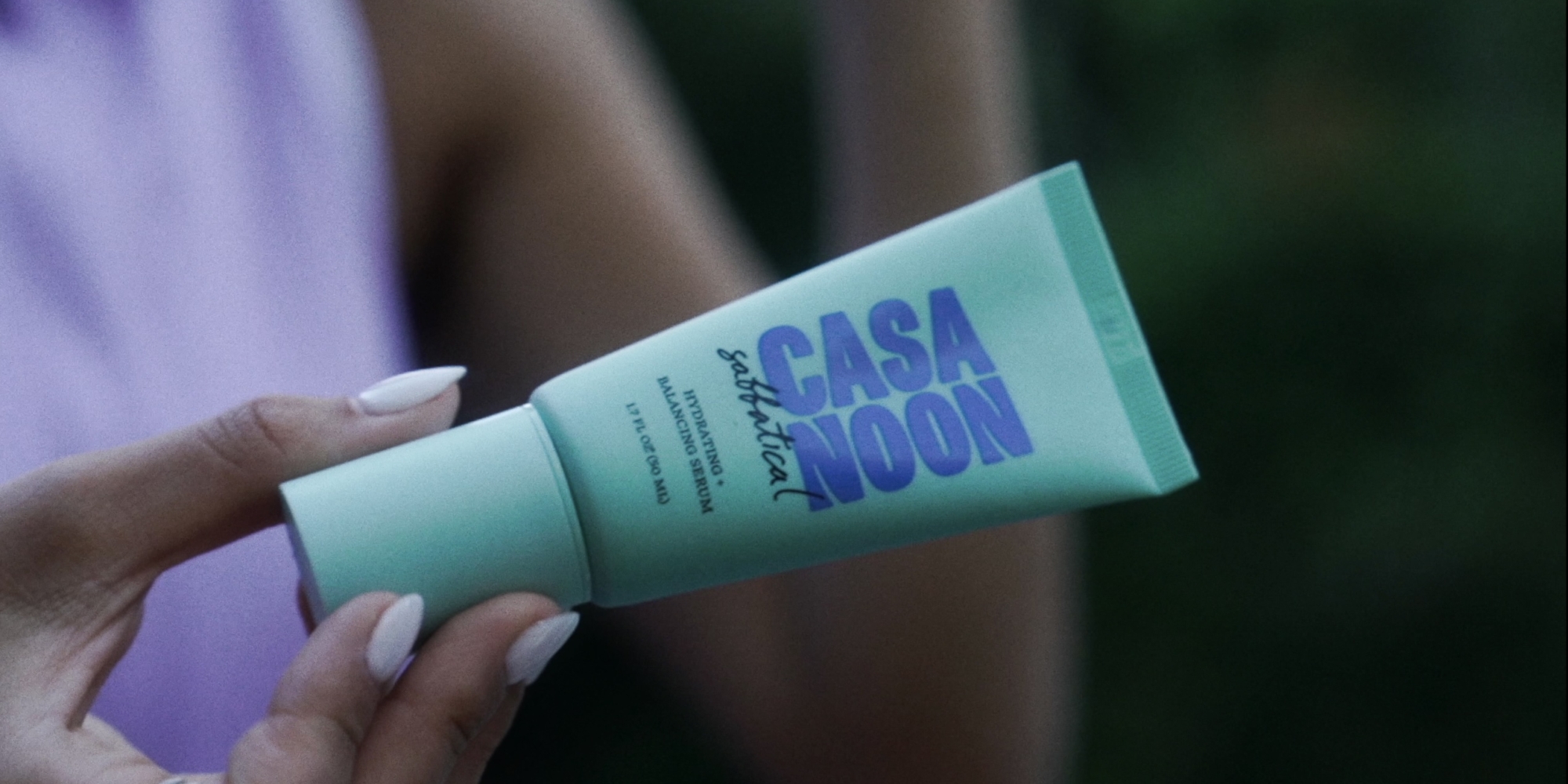

After more than a decade in beauty leadership roles, including as director of sales and business development at Estée Lauder-owned Aveda and GM at salon distributor Neill Corp., Andi Alleman noticed a divide between sun care and skincare that she believed she could bridge. “What was missing was a line that acknowledged people who actually live in the elements: who hike, surf, walk city streets, spend time in cars, travel, sweat,” she says.
Over the course of three years, Alleman set out to create that line with Casa Noon, which takes a hydration-first approach to skincare starting with its debut product, Sabbatical Hydrating + Balancing Serum. Priced at $88, the aloe juice-based serum is formulated for sun-stressed, uneven and dry skin. It’s powered by the brand’s proprietary ingredient complex, which it calls Casa Complex, designed to form a hydration field defending the skin barrier, along with RetinART, a marine-derived ingredient from supplier Algaktiv with retinoid-like anti-aging benefits, bakuchiol, hyaluronic acid and neroli distillate.
“[Casa Noon] was built for women who live in the sun, love hydration and want formulas that keep up with real life,” says Alleman, who adds of the serum, “We named it ‘Sabbatical’ to represent an act of rest, a break from the constant doing. It captures what the serum actually does: gives your skin permission to recover from sun exposure without asking you to give up the sun itself.”

Alleman points out that a big draw of Sabbatical is that it acts like a retinoid product without requiring users to avoid sun exposure. She says it’s gentle enough for daily application, with none of the irritation typically associated with retinol. In a clinical study overseen by dermatologist Alan Cohen, the serum reduced wrinkle depth by up to 21% in eight weeks, evened skin tone and decreased hyperpigmentation by nearly 30% in 56 days and boosted firmness and elasticity by 8% in four weeks. According to the brand, thanks to RetinART, more than 50% of participants tolerated the serum better than traditional retinol, with no reported irritation or sun sensitivity.
“I live in California, I like to be outdoors, and I travel a ton, but I have hypersensitive skin and hyperpigmentation, and as I age, I really need science-forward products that are clean, don’t irritate my skin and don’t require me to stay indoors,” says Alleman. “Every retinoid alternative I tried—tretinoin and countless over-the-counter options—failed me. They all came with the same warning: avoid the sun.”
She explains that traditional retinol and prescription retinoids activate multiple receptors simultaneously. Those pathways are responsible for retinol burn: the peeling, redness, increased sensitivity and barrier disruption that make most people cycle retinol on and off or avoid it entirely. “For people spending time in the sun, that sensitivity compounds,” she says. “We chose ingredients that selectively activate only the receptor associated with anti-aging and skin remodeling benefits while avoiding those that cause irritation.”
Alleman has invested $125,000 from her personal savings to bring Casa Noon to life. She projects that it could hit $1 million in sales in its initial year on the market. She originally tried to partner with a company in Australia that had formulated a serum, day cream and night balm with a tentative launch date on TikTok Shop of summer 2023 that the company missed, and she encountered major supply chain and ingredient transparency issues.
“What was missing was a line that acknowledged people who actually live in the elements.”
“There had been a couple red flags before this, but missing that deadline was the signal I needed,” says Alleman. “I slowed down, ended the relationship with the Australian team and started again.”
Casa Noon switched to partnering with a manufacturer in California. Although devastated, the setback taught Alleman the value of trust. “The research and development was such a learning. I’ve worked in beauty my whole career, but I had never built a product from the ground up,” she says. “Finding the right people was crucial. Getting the doors open wasn’t necessarily challenging, but getting to the shared understanding of what I wanted to build was a little trickier.”
Prior to starting Casa Noon, in 2021, Alleman opened Oui, We Studio, a brand strategy house where she facilitates visibility for Fortune 500 companies, indie founders, creators and artists. Before landing on the brand’s name and look, Alleman crowdsourced feedback on four mood boards featuring distinct names and brand directions. The name “Casa Noon” received the best reception.
Alleman says, “‘Casa’ means home, and noon is when the sun is highest and the light is most alive: warm, unhurried, a little sun-drenched, like a chic beach club you never want to leave.”
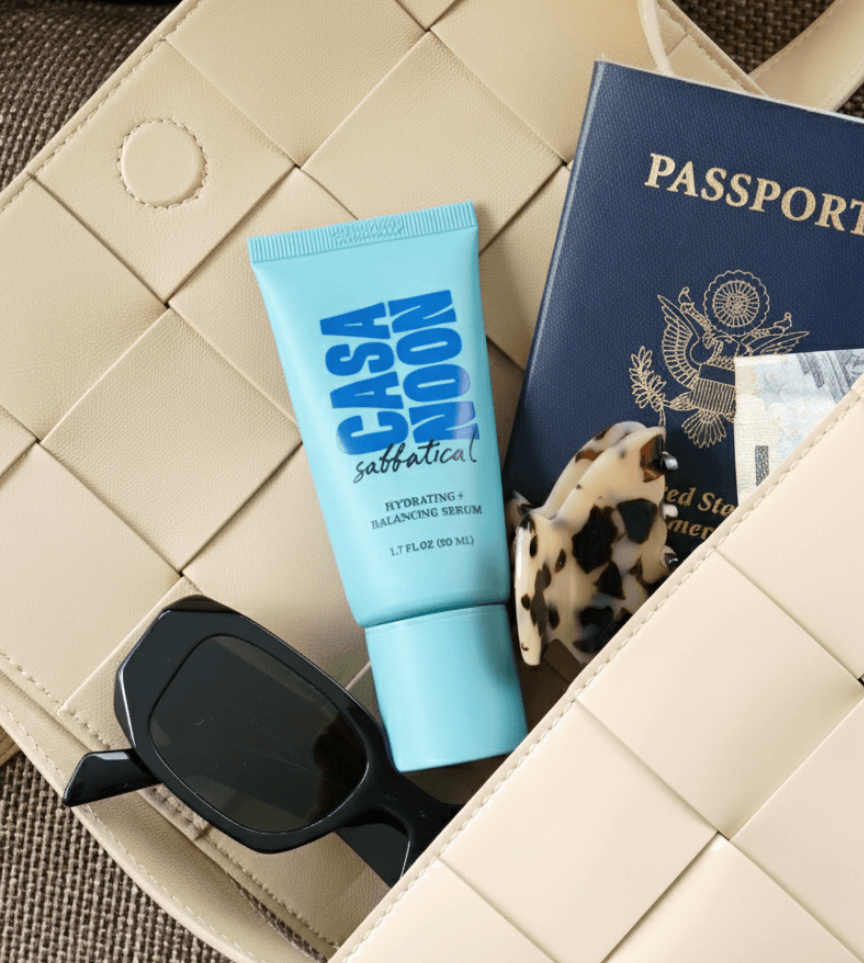
Casa Noon’s visual identity features a color palette of blue and sun-bleached neutral tones that trace a sun-soaked path from California’s coast through Byron Bay’s laid-back luxury to the Mediterranean’s timeless ease, three places where the sun dictates the rhythm of life. Alleman says, “Classic surf reports were a consistent reference point throughout, a visual language of coast, tide and light.”
Casa Noon has initiated conversations with indie and online retailers, but plans to concentrate on direct-to-consumer distribution at the outset. Eventually, the idea is to place the brand in lifestyle boutiques, resort destinations, surf shops, curated beauty and wellness stores, and elevated general stores and grocers.
Later this year, Casa Noon will expand its assortments with two products to complete morning and evening rituals: Dawn Patrol, a day cream with sun protection, and Night Swim, an evening mask. While the immediate focus is on facial care, the vision is broader. As the product range enlarges, the beach-club aesthetic will deepen with more colors, patterns and layered coastal references.
“We’re building a full lifestyle brand for hair, body and beyond designed for people who refuse to choose between glowing skin and living freely,” says Alleman. “What you’re seeing now is the foundation. The casa has more rooms.”



Leave a Reply
You must be logged in to post a comment.