Beauty Founders Say Tariffs Cost Them Thousands To Millions, Forcing Permanent Changes
In a landmark ruling watched closely by business, the Supreme Court struck down President Donald Trump’s tariffs on Friday, Feb. 20, holding in a 6-3 decision that the International Emergency Economic Powers Act (IEEPA), the legal authority Trump had used to impose the sweeping tariff regime, doesn’t give the president the power to levy tariffs.
Trump isn’t backing away from one of his signature policies. Within hours, he moved to replace the IEEPA tariffs with a new global tariff rate of 10%, taking effect on Feb. 24 under Section 122 of the Trade Act of 1974 permitting tariffs to remedy large and serious balance-of-payments deficits. He has since announced plans to raise the tariff rate to 15%, the maximum allowed under Section 122.
The Tax Foundation estimates Trump’s tariffs cost American households $1,000 on average in 2025. With the IEEPA tariffs struck down, it projects the remaining Section 122 tariffs will cost households $600 to $1,000 in 2026. However, those tariffs last only 150 days unless Congress votes to extend them.
Many trade experts assert the new tariff imposition is illegal, and the conditions outlined in Section 122 don’t exist. The administration is also facing lawsuits from thousands of companies, including L’Oréal, Sol de Janeiro, Dyson, E.l.f. Cosmetics and Conair, arguing they’re owed refunds for IEEPA tariffs. The Supreme Court didn’t address whether reimbursements should be issued in the IEEPA decision, and the path to them is expected to be complex and lengthy.
In the meantime, we were curious about the impacts of the IEEPA tariffs and lasting changes that may have been made because of them. So, for the latest edition of our No Stupid Questions series, we asked nine beauty brand founders and executives the following: How much have tariffs cost you? What changes have you made that you’ll be keeping in place and which will you be moving away from if there’s a return to lower tariffs?
-
 Cece Meadows Founder and CEO, Prados Beauty
 Tariffs have cost my small beauty brand over $10,000 in 2025 alone, which is very significant for a business our size. That money could have gone toward hiring, product development or keeping prices stable for our customers.
Instead, we’ve had to scale back inventory, delay launches and make hard pricing decisions. If tariffs are reduced, I’ll immediately reinvest in jobs, product innovation and keeping beauty accessible to our community. For small businesses, this isn’t political. It’s survival.
- Alexandra Fine Co-Founder and CEO, Dame
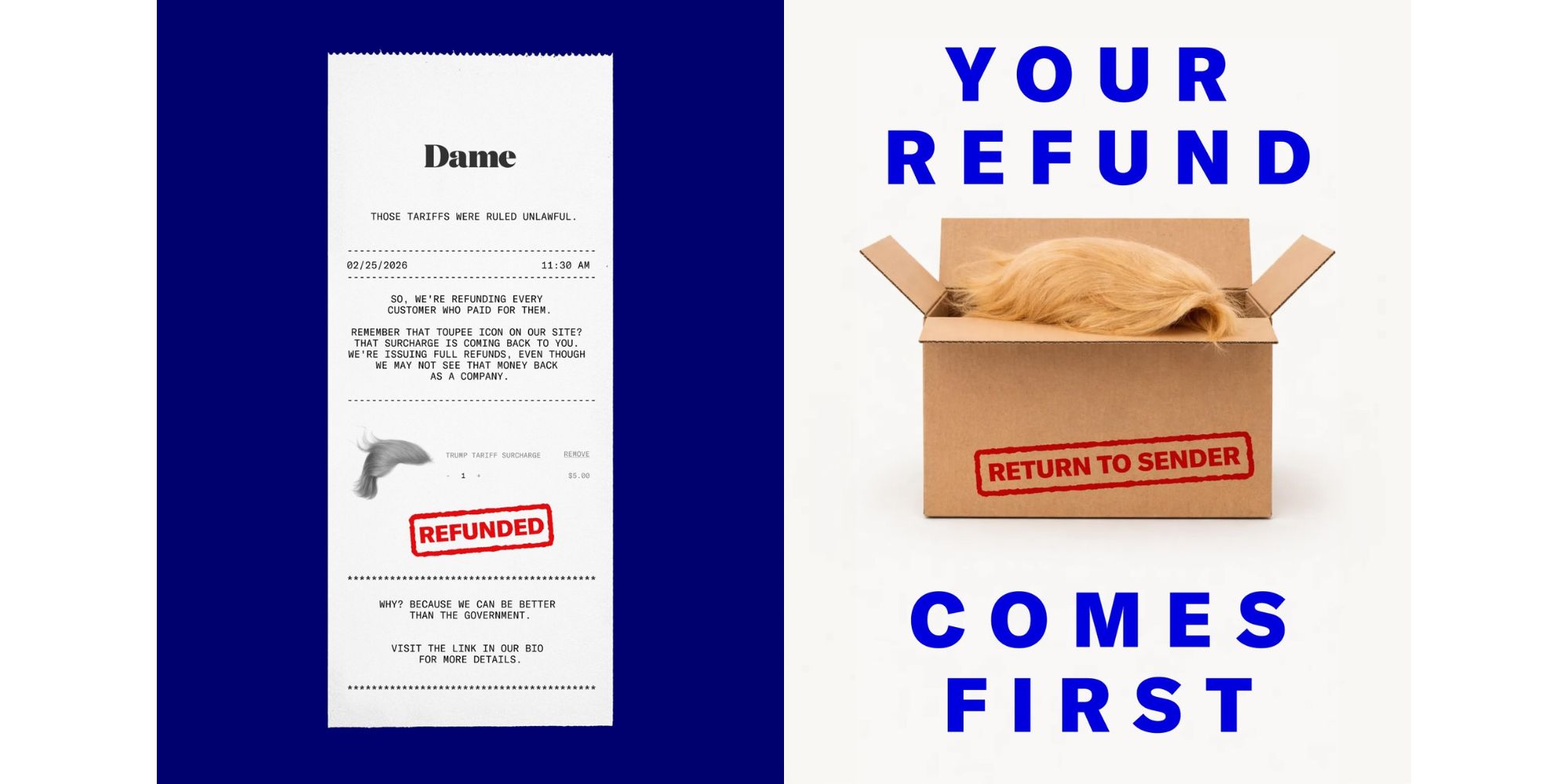
Dame is refunding anyone who paid a Trump surcharge. Will the government refund me the $70,000 it owes me? Probably not. But that doesn't mean I need to suck like the government. I run an organization and get to decide how we behave, just like those in power at the government decide how they behave. So, we are doing it better than them.
And I'm thrilled they were deemed unconstitutional, even if they get replaced by some other arguably more constitutional, though equally unjust and unhelpful, tariff.
- Nicol Varona Cancelmo Co-Founder, Ocoa Beauty
While we’ve been proactive in our strategy, we haven’t been entirely immune. To date, we estimate a direct cost impact exceeding $25,000 on components still sourced from China. However, this figure would have been exponentially higher had we not made the strategic decision in 2024 to aggressively diversify our supply chain. By anticipating these shifts early, after some rebranding mishaps, we transformed a potential financial crisis into a calculated investment in our brand’s stability.
The most significant change was moving to domestic sourcing for the majority of our components. We realized early on that relying on a single region, especially for our custom packaging, was a vulnerability we couldn't afford.
Despite the initial challenges of transitioning, we’ve achieved a level of economies of scale with our domestic partners that we previously thought was only possible overseas. We are keeping these U.S. partnerships in place permanently. Not only does it mitigate tariff risk, but it also provides us with shorter lead times, a smaller carbon footprint and a much tighter feedback loop on quality control for our custom designs.
If tariffs were to drop, we might reevaluate some of the smaller, non-custom stock components that we still source internationally to bridge gaps. However, we have no intention of returning to the "old way" of sourcing. The peace of mind that comes with domestic supply chain security is worth more to us than the marginal savings of overseas production.
At Ocoa, we’ve learned that "cheap" sourcing often comes with a hidden price tag, be it through trade volatility or supply chain delays, and we prefer the transparency and reliability we've built here at home.
- Maekaeda Gibbons Founder, Brown Sugar Babe
Tariffs and shipping costs have doubled and in some cases tripled in the last year for Brown Sugar Babe. We spent approximately $90,000 on tariffs in 2025.
We plan purchases really far in advance for large supply orders, and we are working on manufacturing some essential packaging items in-house in the future. One change that we’ve made that we’ll probably implement permanently is trying to find as many U.S.-based vendors as we can for certain components to avoid some of the tariffs costs in the future.
We will be keeping our practices the same even if tariffs go down as we have created operational changes to keep costs off the consumer.
- Katie Sturino Founder, Megababe
In the last year, tariffs have likely cost us somewhere in the range of $100,000 to $200,000. The exact impact is difficult to determine, as not all tariff-related expenses are fully transparent. While we have clear visibility into tariffs on imported components and goods, the effects on raw materials for our formulations are less apparent. Some contract manufacturers have itemized tariff increases passed directly to us, while others have incorporated them into broader cost-of-goods adjustments. Overall, we are seeing COGS rise by approximately 5% to 10%, depending on the SKU.
We have long prioritized U.S.-based formula manufacturing, with most components sourced domestically or within North America. While tariffs have had a meaningful impact, our localized supply chain has helped mitigate greater exposure. In areas where we source internationally, we continue to evaluate domestic alternatives where it makes sense.
Adjusting suppliers for existing products requires significant time and careful development to ensure quality and performance remain unchanged. While we haven't found viable solutions in every case, this process has prompted us to remain curious and nimble. We will continue to challenge ourselves to explore new partnerships, both domestic and international, as we believe this will ultimately help strengthen and diversify our future pipeline.
Without the added pressure of tariffs, we would have greater flexibility to experiment. As a small, self-funded business, we currently need high confidence that each SKU will perform and scale across all distribution channels. Tariff-related costs limit our ability to test with smaller production runs or pursue more niche concepts. With fewer constraints, we could take more calculated risks in innovations that may carry longer-term upside but are harder to justify in the current environment.
- Hedieh Asadi Co-Founder, DeoDoc Intimate Skincare
We are based in Sweden and make everything in Sweden and then ship it to the U.S. The tariffs are 15% from goods made in Sweden to the U.S. Unfortunately, we did not want to, but we had to increase our prices by 10% to 15% due to the tariffs and we need to keep them in place unless they are removed.
- Shaz Rajashekar Co-Founder, Shaz & Kiks
The tariff hikes over the past year resulted in an additional $20,000 in costs, a significant burden for an independent brand of our scale. While Shaz & Kiks manufactures domestically, our supply chain is global, and our primary hit came from packaging sourced in China.
To mitigate these costs, we pivoted more heavily toward Taiwan to capitalize on more favorable rates. In parallel, we conducted a rigorous search for North American alternatives which revealed that the domestic infrastructure wasn't yet a viable replacement. While domestic options offered marginal cost benefits during the period of high tariffs, they couldn't match our Asian partners in terms of MOQs, technical expertise in recyclable plastics, breadth of portfolio or overall efficiency. We chose to absorb these costs rather than pass them to our customers, but for a small business, that strategy is a short-term bridge, not a long-term solution.
A return to lower tariffs will allow us to reallocate that capital back into product innovation and sustainable growth.
- Jack Jia Founder and CEO, Musely
Directly the tariffs haven’t impacted us too much, maybe a couple of million dollars. Musely compounds all of our medications in the U.S., so the impacts were only on our material costs, COGS and equipment imports.
But the consumer confidence impacts were much bigger before and after April 2025. We were at an all-time high with consumer confidence before April 2025 and then people became much more cautious after and less willing to spend.
We haven’t put many changes in place given the unstable policies in the last year. We use a no change strategy to deal with weekly and monthly changes. We may hold off on any future price increase for a while.
- Lori Waiser Founder, Glampton
We've lost six figures to the tariffs and though they've only been reduced by 10%, the majority are still firmly in place. As a company, we made a very intentional decision not to pass those added costs on to our retailers or our customers. Instead, we chose to absorb the impact ourselves, which has meant operating on slimmer margins.
As a small business, that hasn’t been easy. Over the past year especially, rising costs have put real pressure on our operations. We’ve seen significant backlogs across the industry and in many cases because partners simply couldn’t pay for goods at the increased costs. That has created a ripple effect. It strained brands, delayed production and ultimately affected shelf placement and timing.
We’ve stayed transparent with our retail partners throughout, not just about pricing at point of sale, but also about availability and the realities of supply chain slowdowns. From manufacturing to logistics to final delivery, there are so many moving parts. Navigating that responsibly while protecting our customer experience has been one of our biggest priorities.
If you have a question you want Beauty Independent to ask beauty brand founders and executives, send it to [email protected].