After A Decade Of Costly Lessons, Bootstrapped Brand Reina Rebelde Reins In Retail Risk
Reina Rebelde emerged in 2016 as a love letter to the women and men of the Latino makeup-wearing community. Unlike many competitors, which sought Latinx market share but often counted few among the top brass, Reina Rebelde is a Latina-run and -owned self-funded makeup brand. Founder Regina Merson is a former lawyer who grew up in Mexico and decided to bring her culture’s unapologetic embrace of makeup stateside with high-performance formulas featuring ingredients native to Latin America.
A decade in, Reina Rebelde has gutted out countless obstacles that would’ve destroyed a weaker brand, from entering and leaving Target and Walmart, which exposed the operational and financial strain of massive distribution on a bootstrapped independent company, to algorithm changes and adjusting to Amazon’s thin profit margins. Today, Reina Rebelde’s voice is clearer than ever, with a broadened audience, a sharper assortment, a refined look and a launch on Nordstrom.com.
“I’ve learned a lot of good hands-on business lessons launching into several retailers since the inception of this brand,” says Merson. “I wake up some days and marvel at the fact that we have not gone bankrupt at times because of the extensive capital outlay it takes to pull this off. They can become very expensive mistakes, and that’s hard for a brand of our size.”
Days after Reina Rebelde’s online debut at Nordstrom, Merson tells Beauty Independent about the partnership and explains how a decade of hard-earned lessons is informing a more disciplined approach to retail, products and growth.
Your target customer has evolved from what you initially imagined. Can you elaborate on that?
Over the last three years, we’ve been featured in a number of Ipsy boxes, and it has exposed us to a much broader range of customers. We have been indexing very well with middle-aged and older women. I can say that because I am middle-aged.
At first, this was surprising for me, but because I am in that age demographic, I make sure everything I create from a formula perspective works on me. As my concerns—aging skin, lips, wrinkly eyelids—have come along, every product I create has to work with those concerns or I won’t launch it.
Our customer has changed geographically, too. Nordstrom has really opened us up to that Midwest customer. It’s also opened us up to an international consumer base. We have a ton of customers from the Midwest, which was not an area we ever really focused on. We focused on the coasts, Florida and Texas.
Right now, where our customer lives really impacts how price sensitive they are. If you’re in California and everything is very expensive at the moment, you’re still buying, but you’re not maybe buying the way you’re going to buy in the Midwest, where things are a lot more reasonable in terms of cost of living.
We are very Latina-forward, but we know that there are a lot of people that are not part of the Latina community that also love the things we make, and we welcome you. That has always been the case, but now we have a platform through Ipsy and Nordstrom.com to reach those people. What’s nice is that entering Nordstrom.com allows us tap into a customer base that might be a little bit less price sensitive without losing our initial customer.
In the past, Reina Rebelde was sold at Target and Walmart. How did you make the difficult decision not to continue with those relationships?
Target for us was a “you can’t say no” opportunity that landed in our lap early on. You can’t say no to that volume. I remember somebody at the time telling me, “Target is knocking on your door; you need to go fundraise to make this work.” We had launched six months prior.
I was like, “I don’t have time to go fundraise and deliver on time.” So, we didn’t. Once we were in there, Target was promoting us on the endcap, and the brand performed incredibly well. As the years progressed, they moved us inline in aisle, and we had no control or say where we were placed.
At that point, I should have gone in when I had leverage and said, “I don’t want to be placed next to a brand that sells $5 lipsticks because no one’s going to buy a $19 lipstick if the $5 lipsticks right next to it.” That was really tough, and it was harder to find us. People began to say, “I went and I couldn’t find Reina Rebelde.”
There were challenges at the store level that I did not appreciate when we launched like stocking issues. We were never going to be in a position as a small brand to solve those the way big conglomerate can.
You push all of this marketing spend toward getting a customer to walk into a Target and buy something in the store. Then, they walk in, and it’s not on the shelf. You’ve not only lost that sale opportunity, but you’ve also frustrated the customer longer term with the brand experience. That stung.
The final nail in the coffin was that the chargeback world of retail is very expensive. If you don’t know what you’re doing, its tougher, and Target was our first rodeo.
How did the chargebacks change the economics of being at mass?
At Target, you’d sell X, and then you’d get paid for X 90 days later, which was pretty quick. Then, six months later, you’d get a bill for these chargebacks. As a small business owner, you’ve already spent the money you got 90 days after you sent the order because you have to survive.
So, we got into this vicious cycle of having to float cash while we were waiting to be paid. Meanwhile, we’re paying interest on loans to keep the business operational while we’re waiting for these huge invoices to be paid. And when the invoices are paid, we’re paying the loans back.
We did a very in-depth analysis after our first two years there, and we were right below breakeven once you built in the chargebacks. It’s just that it’s not readily apparent on your QuickBooks in real time because sometimes a chargeback comes in the next year. It’s also very hard to prove what amount is valid and what is not. Many chargebacks are labeled as “broken product” or “theft.”
There is some loss that every brand has to cover, but the percentage that we were being asked to cover with no proof was challenging. The conglomerates of the world are able to negotiate a much more reasonable amount for theft and breakage.
And who’s breaking the product? I felt that the small brands were getting stuck with these disproportionately high chargeback percentages for things that didn’t make sense. At one point I was like, “Send me back everything that’s broken.” Of course, they can’t do that. That would be impossible. There was no way for us to validate that. The whole exercise ends up being, to some degree, a margin-enhancing exercise that larger retailers have at their disposal.
How did the brand come to be at Walmart?
Right after [we exited Target], Walmart approached us. They wanted us to just do a Day of the Dead collection for them. This was right smack in the middle of the pandemic. We were like, “We are really not a Walmart beauty brand. We’ve already been through this exercise with Target. We are not a drugstore brand.”
But they promised us a lot of things. There were going to be no issues with stocking because everything was going to come preloaded. We had these preloaded, beautifully designed displays that had the product in them. All anybody had to do in the back was take them out of the shipping box and plop them on the endcap. Once it’s sold out, it’s sold out. It was supposed to be a four-week flash in the pan.
Of the approximately 480 stores we were in, I think 70 of the displays made it out to the floor. My husband and I got in our car and drove to every Walmart in Texas that was remotely near where we lived and were like, “We will put it out on the floor for you.” I was three months pregnant with my firstborn walking around in the back stockroom of various Walmarts around North Texas trying to figure out how to get these out on the floor.
At some point you’re just like, “This is bonkers. This is not the support we were promised.” One of the naive things very candidly on my part was thinking that the people you are interfacing with, which are the buyers, have any control over what happens at the store.
You’re in J.C. Penney now. How does that feel different?
Part of that strategy was getting away from the drugstore pricing, reestablishing that we’re not a drugstore brand. It’s still a huge retailer, but a much more manageable one for us. Somebody is walking in and having a department store experience, exploring the testers. That’s the right place for us to exist.
That has been more effective than trying to be at these juggernaut retailers where they’re dealing in millions of units every single day. It’s easy to get lost in that shuffle. Going back to Nordstrom.com, it’s a lot less risky, but there’s a lot of traffic. Are you going to be selling huge swaths of product at a time? You’re not, but you’re also able to control risk on the backend a better.
You mentioned deciding not to secure funding from the get-go. How do you think about that in hindsight?
In hindsight, I wish I had raised money earlier on. I don’t think I appreciated what a deep pockets game this industry is. I couldn’t have known then, over the last five to six years, how much more expensive it’s become. The most organic marketing you can have now is word of mouth. Everything else is highly padded.
I have taken on all the risk myself. I was carrying very big inventory loans at very high prices, and some retailers were not paying on time because they were having issues. I had to bear the brunt of that, and I didn’t sleep well.
I also see the other side. If we had, we would’ve been under the gun to grow at all costs. You’ve got a short runway once you raise money to prove growth. Based on my experience with my own brand, being profitable requires sometimes slower growth, and that’s not something that would’ve been available to us if I had raised money. I would’ve lost control over that journey.
So, it’s a mixed bag. We did try to raise money at one point. It was not a control issue for me per se as much as it was finding people aligned with our mission. I understand everybody needs to make money, but it also comes with consequences when you partner up with people that don’t really care about your community.
Will there be an opportunity to go into Nordstrom stores down the line?
Introducing the brand at Nordstrom.com is a very strategic move on their part and ours. It’s a way a lot of retailers test brands now before deciding to bring them in store. The reality for a small brand is that managing an in-store presence anywhere—we’re in-store at every J.C. Penney around the country—can be a very expensive endeavor. It makes sense to test this way.
The advantage, too, is that it allows for quicker pivots. If we are in store and we launch a new product, it’ll take 12 to 18 months for us to get that product on a shelf because of the shelf reset. The flexibility online is such that if we can have a new launch up in a matter of days. Another benefit of dot-com is you are benefiting from the efforts they’re putting in to get traffic to their website.
I’m not saying we would not explore a store placement. If we did, we would probably pitch something like, “We’ve been dot-com for a year and a half or two years, and these are the clear five bestsellers, let’s do a holiday pop-up with or a kit and see how that goes first.”
Reina Rebelde has entered, exited and then re-entered Amazon.com. How’s it going for the brand on Amazon now?
We are very much leaning into Amazon right now. We have a very odd history with Amazon. When I first launched the brand in 2016, everybody was saying, “You have to be on Amazon.” Then, we launched at Target. Target was not too happy about us being on Amazon.
Amazon requires you to undercut every price you have out on the internet. That can become a race to the bottom. At some point I was like, “We just can’t do this. This will never be profitable.” We completely pulled off Amazon for almost three years.
I had to reestablish our pricing. I spent a year on various platforms very strategically being like, “This is our pricing. We’re not going to have wildly different pricing on Amazon and wildly different pricing here.” Then, we started dipping our toe into Amazon almost two years ago, very carefully with limited SKUs at first.
The issue with beauty products on Amazon is that there are a lot of fakes. How do you control for that? You have a lot of IP concerns all the time. We finally cleared some of those out. We’re trying to slowly grow that channel in a way that’s profitable.
How has managing your own website been in today’s environment?
Having your own website has become a much harder thing at this point in terms of driving traffic and getting that traffic to convert. It is inconsistent. We have had banner months with 10X, 15X return on ad spend, and then other months where what worked the prior month no longer works.
Having been at this for a decade, you realize everything’s a phase, and you have to figure out how to navigate the phase and survive. Forty percent of our traffic on our website between 2016 and 2019 came from Instagram. Now, it’s 5% if we’re lucky. Those are from algorithmic changes.
While our own website has the best margin, we are really trying to drive traffic to our partners like Amazon, Nordstrom.com, Macys.com and J.C. Penney. We’re also trying to pad these efforts by testing new things like affiliate partner programs on ShopMy, LTK and SkimLinks and shoppable editorial content.
Anything we launch has to have a very firm strategy and be something that we feel is going to be worth the year that it’s going to take us to set it up, vet it, test it and grow it. You don’t really get a strong read on anything for about 12 months.
How has the evolution of your product range broadened your audience?
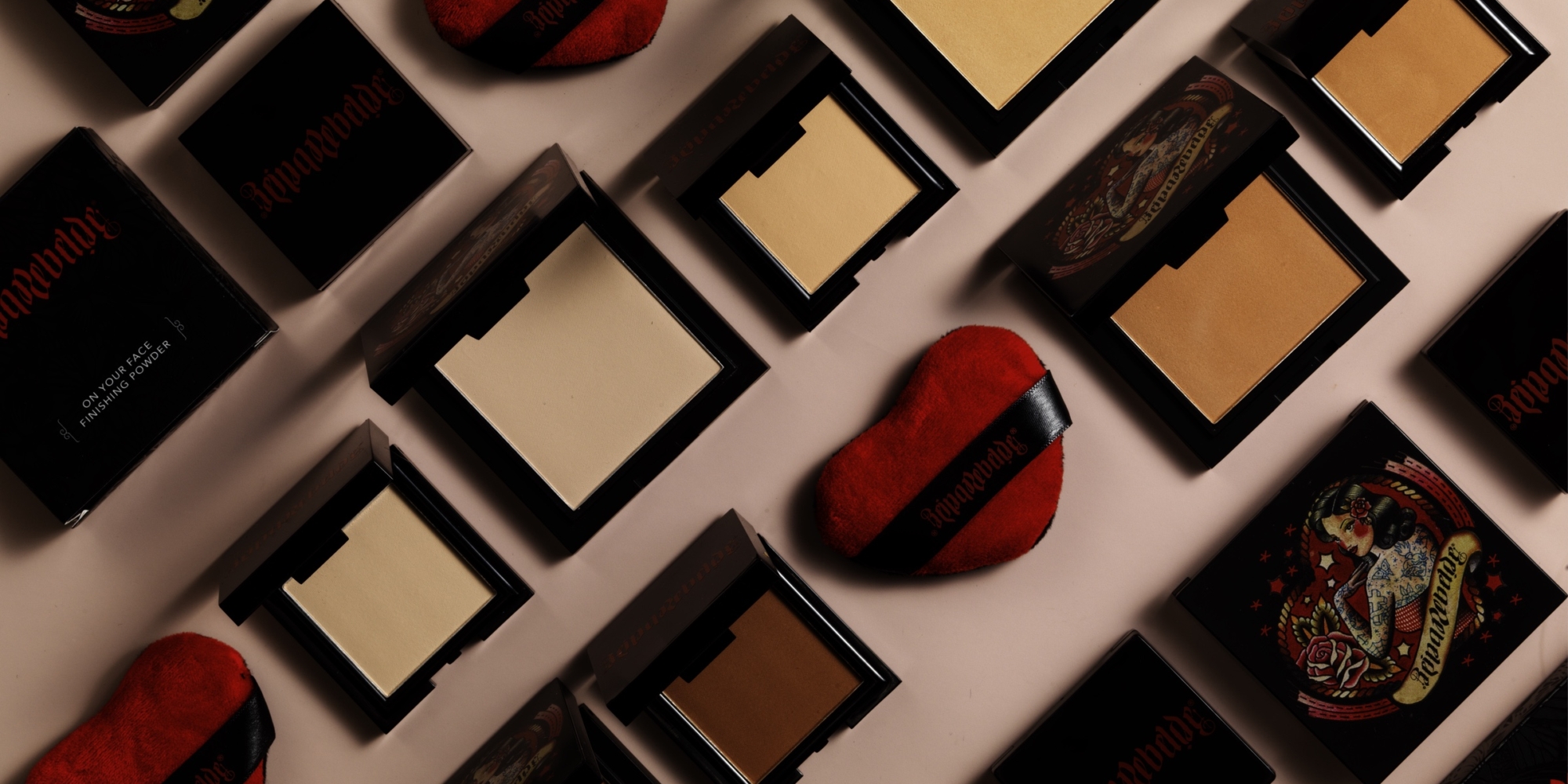
For example, we’d never done a complexion product because we thought it would be tricky. If you’re going to be out in the market as a brand that looks amazing on all skin tones, a complexion product is a tough challenge. We spent about a year working on the Almendra Finishing Powder.
It was very important for me to include native ingredients to Mexico, so it’s enriched with rose oil and avocado oil. It was also important to me that the product didn’t settle into fine lines.
Then, the biggest question was, how do we create a shade range that is compact, but works across every skin tone? It only has four shades, and every shade basically handles a pretty large range of fair, medium and deep tones. It has become our top-selling product. We have people that are on their 50th palette.
How is your packaging changing?
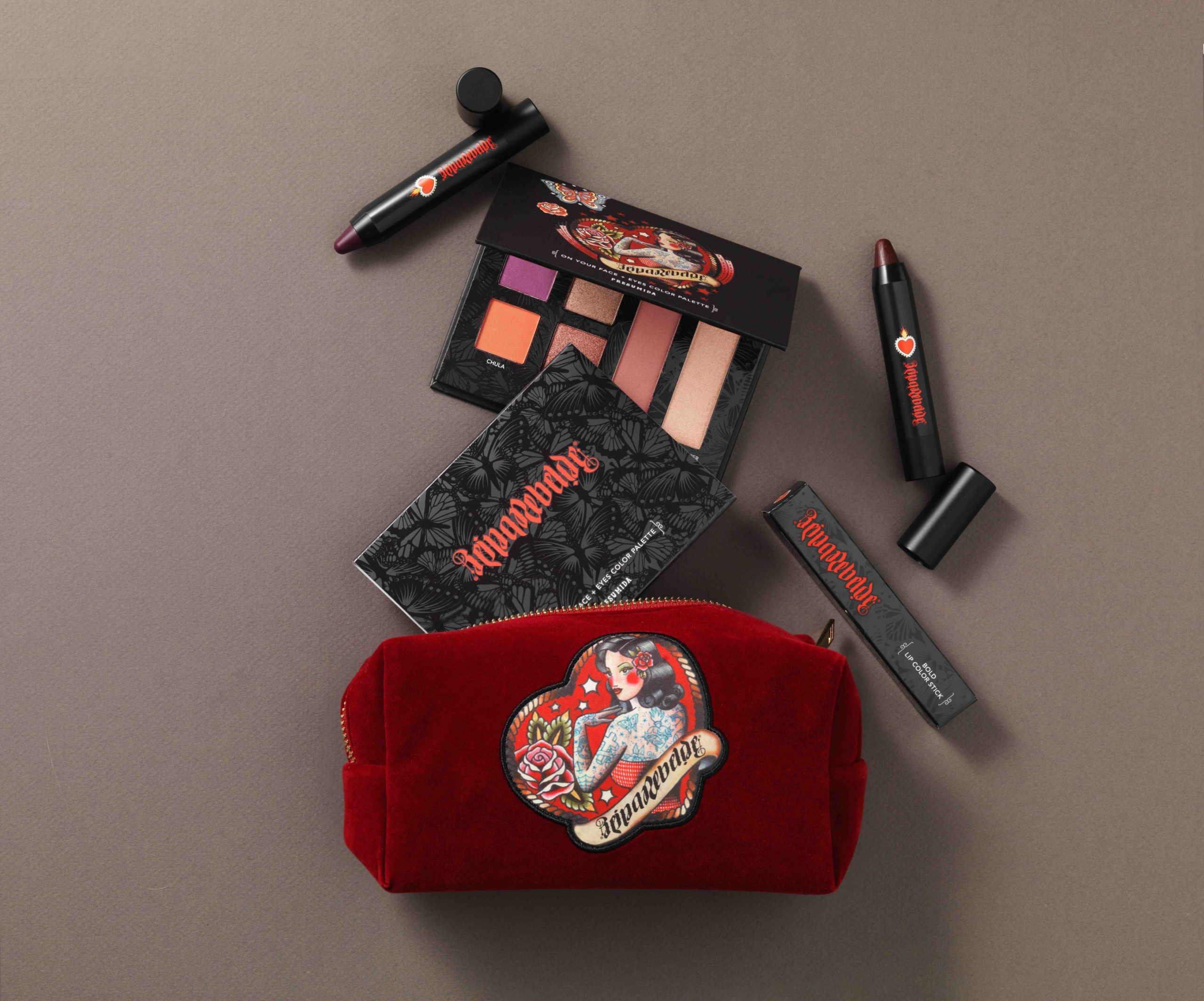
We now have a English-speaking customer that is very strong for the brand and we are trying to make the packaging more accessible to this newfound audience. We’re asking them to read in Spanish. They may not know what they’re reading. The least we can do is make it more legible.
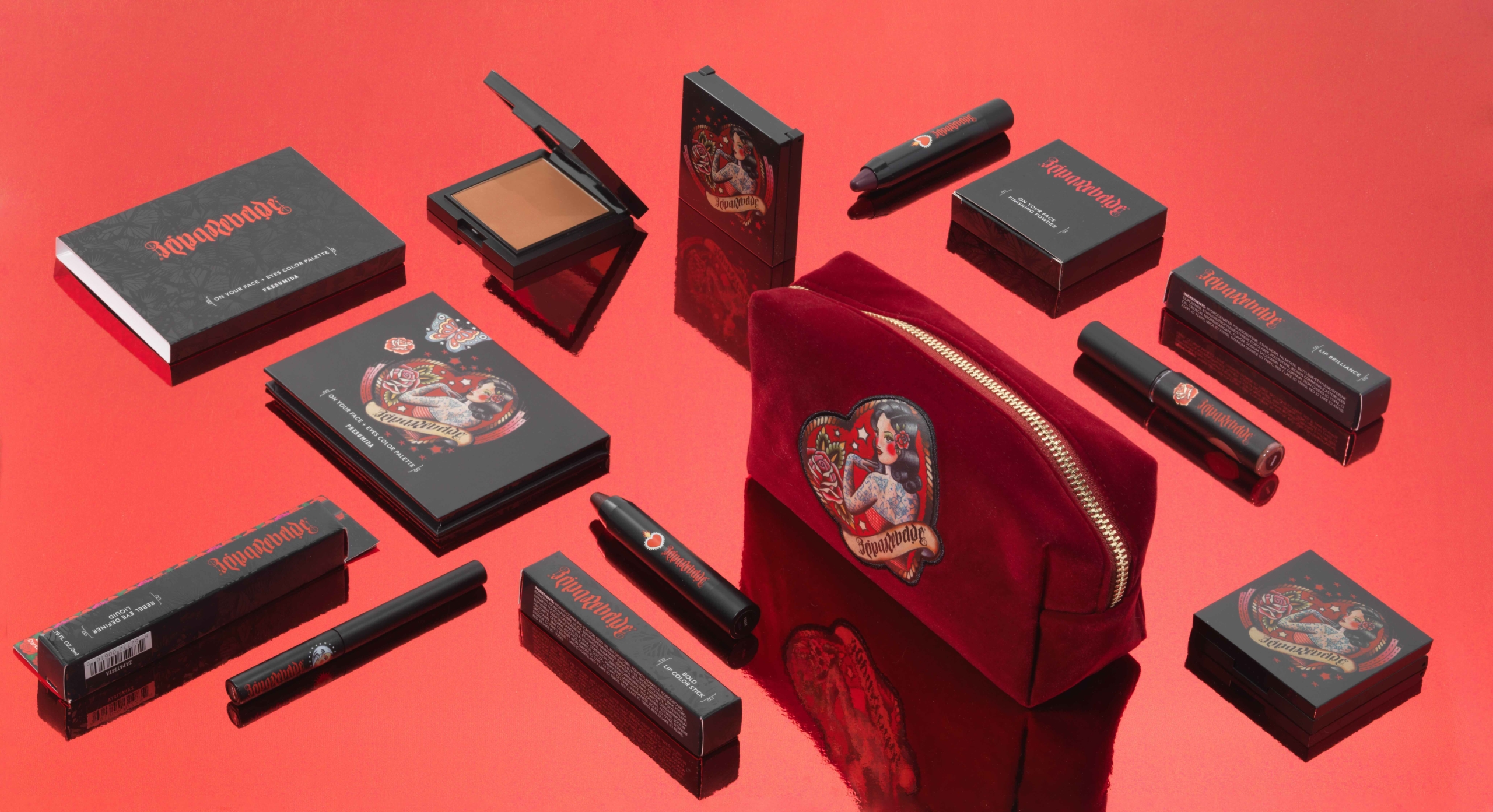
We were very heavily black, clean, modern aesthetic, a little bit edgy. We’re leaning into pinks and reds more. When I was creating the brand, I meant for it to have 125 elements hidden in the design so that at different points we could pull out one element and do capsule collections. That has served us well.
We have a new black eyeliner out that has one iteration of the new packaging, and we have a couple of products coming out [with the updated packaging] this spring. In the fall, we have another complexion product coming out with different packaging. I’ll give you this hint. For our cartons, the outside was covered with black butterflies, and the inside was covered with roses, and we inverted that.
What’s next for your brand in terms of growth and expansion?
I learned in the first five years that it’s better to do a handful of things really well in terms of where the brand appears rather than respond to the call of everything. We were invited by a very reputable company to expand to India, Hong Kong and other parts of Asia. I spent two or three years trying to get this thing off the ground, and it ended up just being a total waste of time and money.
But it was informative for how we’ve handled things. Much of our current spend is what I would categorize as “playing defense.” You have to keep advertising to play defense on where your website appears on a Google search and now on AI. A lot of it is not necessarily for brand growth, and that’s frustrating, but I’m sure next year we’ll be having a very different conversation.
How have you dealt with the tariffs, inflationary pressures and volatility in the economic environment?
I basically put a stop on any replenishments unless it’s a top seller. It has dwindled the inventory available for some of the outlier SKUs that are a fun part of the collection and don’t sell as fast, but are necessary part to tell the story we’re trying to tell. Between the time you place the order and the time it’s ready to ship, the landscape from a tariff perspective is so volatile that you could end up in a situation where you’re paying double what you anticipated paying. We just can’t do it.
One of our top sellers is an eye pencil. It has 10,000 5-star reviews. We sold out of it. I’ve gotten an email about it every other day asking, “When is it coming back?” It’s made in Germany and it’s going to be expensive, but I’m going to have to figure it out because it is something that people really want.
Beyond that, I’m like, we have to wait and see where everything lands. I’ll actually tell people, “When we have your favorite product, buy five because no one knows what next year’s going to bring.”
How much has the brand grown year over year, and what do you hope 2026 holds for the brand?
Like many independently owned beauty brands navigating a volatile economy over the past couple of years, Reina Rebelde has had years that tested us, especially 2025. Growth has not been linear. We’re still bootstrapped. When the market contracts, we feel it immediately.
But heading into our 10th year, we’ve made deliberate moves to position the brand for its next chapter: a new VP of marketing [Lissette Rios], expanded retail distribution including our launch on Nordstrom.com, an affiliate partner for expanded shoppable content opportunities, upcoming product launches and a deeper investment in the community-driven storytelling. 2026 is shaping up to be a pivotal year for Reina Rebelde.
I have learned that a lot of what it takes to be a successful founder in the long term is just being patient. There’s this whole narrative that you want to grow aggressively every year to ultimately exit, and everybody wants that dream, but maybe the road there is not always as linear. Our path has not been linear at all.