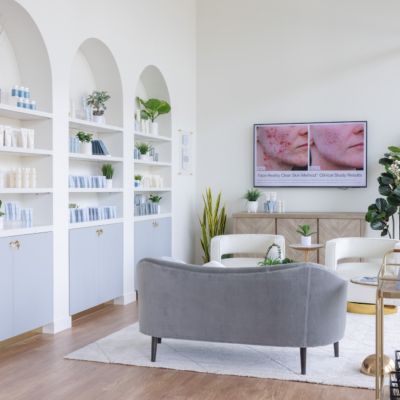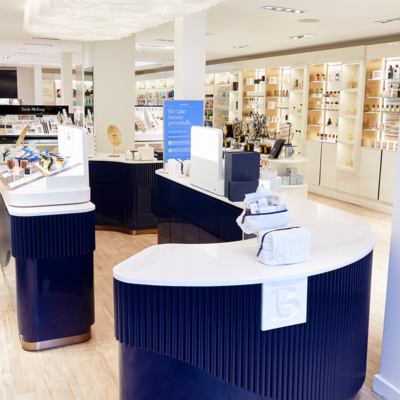
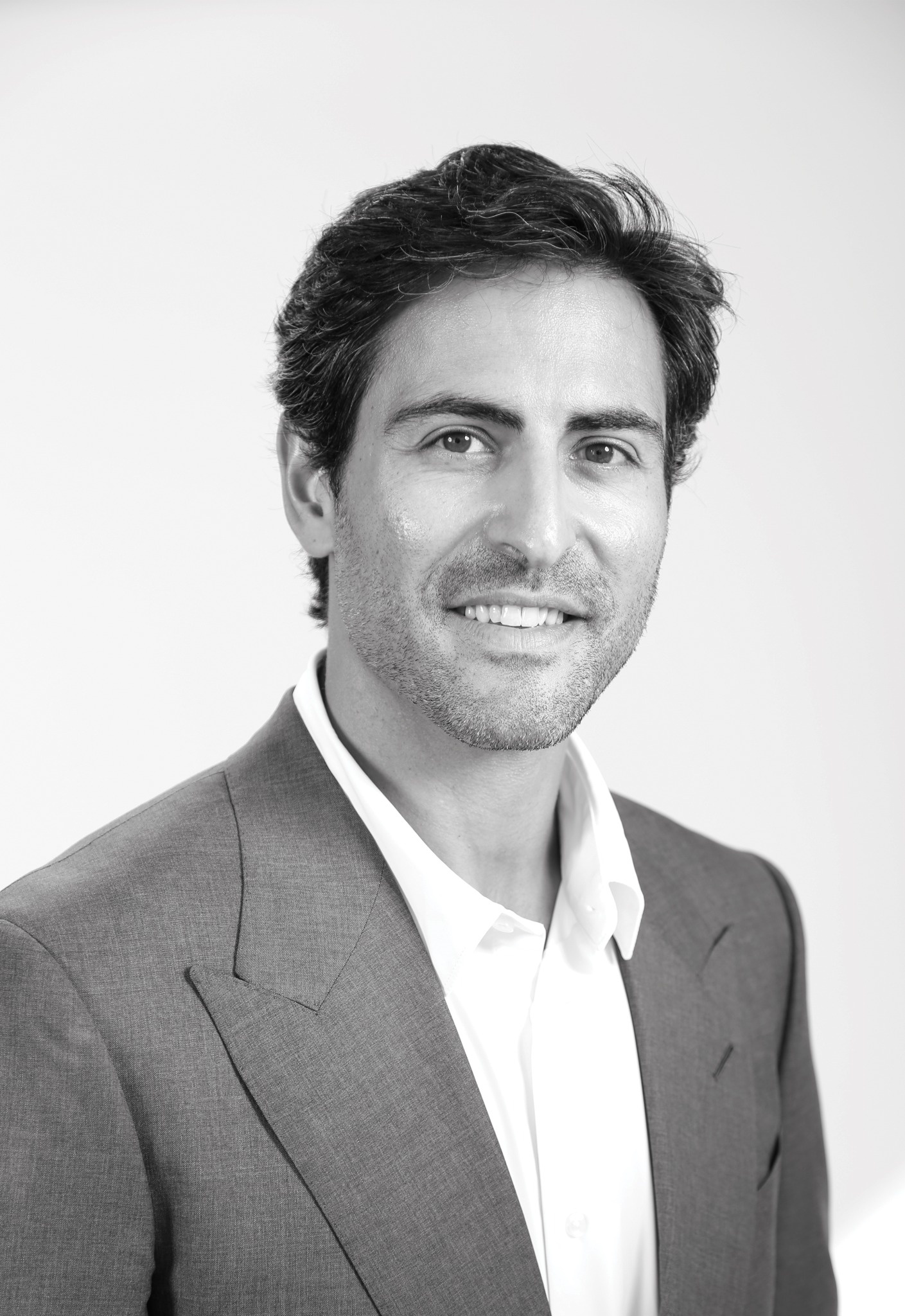
After 20 years at Cos Bar, including the last five as CEO, Oliver Garfield has departed the luxury beauty retailer his mother, Lily, founded in Aspen in 1976.
Garfield exited in early February, less than six months after Cos Bar was acquired by private investment firm Mitchell Family Office for an undisclosed sum. Cos Bar was the firm’s first beauty retail deal, although it also owns artificial intelligence-powered beauty device company Swan Beauty. John Mehas, an operating partner at Mitchell Family Office, has been named CEO of Cos Bar.
Mitchell Family Office’s acquisition of Cos Bar came after Violet Grey pursued a deal to purchase it last year following its acquisition of clean beauty retailer The Detox Market. Positioned as a boutique alternative to luxury department stores, Cos Bar was previously in Tengram Capital Partners’ portfolio for a decade.
For Garfield, a sale was the end goal he had been working toward while steering Cos Bar. “I had the opportunity to grow Cos Bar to 21 stores and its highest revenue in company history and lead a full digital transformation,” he says. “That’s the body of work I’m most proud of.”
Although Cos Bar’s store fleet extends across New York, Colorado, California, New Jersey, Minnesota, Texas, New Mexico and Arizona, it hasn’t yet expanded to the 50 locations it had been forecast to reach. The retailer stocks about 75 luxury beauty brands, including Sisley, La Prairie, Byredo, 111Skin, Tom Ford, La Mer, Chantecaille, Creed, Westman Atelier and Natura Bissé.
Beauty Independent spoke with Garfield, who plans to remain in the consumer space and is setting up an incubator to test new business ideas, about his lessons from Cos Bar, the outlook for luxury beauty in 2026, Violet Grey’s expansion plans, the impact of Saks’ struggles and how shifting distribution dynamics are changing beauty retail.
What’s your read on luxury beauty shoppers and the beauty industry more broadly?
Prestige and mass were both up mid-single digits. That’s good growth for an industry, yet there’s this unease that things aren’t good that continues.
The amount of new family offices popping up means there is wealth creation on the top end of the K-shape that’s still happening. More and more money is being made, and those people are price inelastic. They are going to continue to spend on luxury goods, and that’s where the growth is going to come from. When it comes to a $300 moisturizer, that is not going away.
On the lower end toward mass, the product is as good as it’s ever been and continuing to get better. So, it becomes, what are you paying for? The only thing I think worthy of note within that is fragrance. If the aspirational customer is gone from makeup and skincare, the aspirational customer has existed as strong as ever in fragrance.
That one was true for us in terms of younger kids and the wider demographic that was coming in to purchase a $400 fragrance. That is still a status symbol clearly for teens and gen Z. That’s the only category that I think bucks the K-shape economy trend, purely because there’s an aspirational customer that still exists in that category.
How does premiumization at mass impact the luxury beauty shopper, if at all?
If the marginal difference is small in efficacy but large in price, they’re still willing to spend for that incremental value. It doesn’t matter if it’s $300 versus $100. For that top-end customer, I don’t think it matters.
What categories are poised to perform best this year in luxury?
Fragrance was accelerating, makeup was decelerating, and skincare was holding steady. Hair actually started to exceed fragrance acceleration, but it’s a smaller category.
Makeup is the most interesting. There’s just not been a lot of newness and excitement. I don’t think people are buying makeup for efficacy. It’s about what’s fun, what’s cool and trendy.
What about makeup brands at retailers like Sephora?
Who is bringing in makeup? Sephora. This is actually a bit of a paradigm shift if you look at the longer arc of the industry. Cos Bar always felt it competed with department stores in terms of brands. In the last five years, it competed with Sephora. Makeup brands wanted to go to Sephora. Those were conversations of like, wait, you’re choosing Sephora over Cos Bar?
I get it from a scale standpoint, but from a positioning standpoint, wouldn’t you want to go premium and help the brand get that top 1% customer and then go scale? But they wanted to go to Sephora. To Sephora’s credit, they’re the best in the industry with exclusives. That’s where I think they’ve been the black hole of gravity and innovation in makeup.
How should luxury beauty retailers evolve?
Physical retail, more than anything, was a destination for discovery. That was the value proposition. AI is going to take over that discovery element. It’s happening now, and it’s going to get better.
What physical retail will need to transform into is experience and conversion. It’s a trip with a purpose. It’s not just browsing. I have a sense that I’m here to purchase, and there’s far more intent and conversion with that.
Then, what defines experience on a go-forward basis? I would agree exclusivity would’ve been one of the pillars for any retailer historically, but now you walk into any department store, and the overlap is almost like 80%, 90%. Even Macy’s is now starting to overlap significantly with Neiman’s, Saks, Nordstrom and Bloomingdale’s. You could argue Bluemercury and Cos Bar.
On the brand side, could the brand be choosy and not open up to everyone and just go deeper in relationships? I’d say they should, but they don’t because at some point there’s the growth engine behind them that requires more revenue year over year, and they’re only going to get that with more distribution. Unfortunately, it’s kind of growth at all costs.
What do you make of Violet Grey’s expansion plans?
What Violet Grey is doing is really smart. The three locations that have been reported—expanding in their home market in L.A., extending their New York presence into the Hamptons and entering Dallas—are well-chosen markets. Dallas in particular is on fire right now and will continue to grow.
When brick-and-mortar is done right, when you’re paying for the right location at the right price, the customer acquisition formula works incredibly well, and physical retail gives them the ability to connect their strong digital footprint with in-person experiences in a way that I think will be very effective.
What sets them apart is a highly curated approach to merchandising. They carry only the very top performers from a wide range of brands, which gives them one of the tighter assortments across the multi-brand beauty landscape.
You see a curated philosophy with Goop as well, but Violet Grey’s perspective is laser-focused on beauty, with a bit more of a glamour sensibility and, I’ll say, a je ne sais quoi that comes through in how they present fragrance, makeup and skincare. That point of view is their competitive advantage and expanding it into physical spaces in the right markets is a natural next step.
“The 35-to-65-year-old luxury beauty consumer is more orphaned from a wholesale standpoint than they’ve ever been. ”
How will Saks’ bankruptcy shake up distribution for luxury beauty brands?
A luxury brand today has very few options for wholesale distribution. You can count all the potential retail partners on two hands, and that’s being generous. Saks and Neiman’s historically sat at the very top of that hierarchy, the pillars that defined a brand as luxury through their wholesale presence. Given the bankruptcy, the well-documented challenges around vendor payments and now the significant reduction in doors, brands simply aren’t putting them at the top of their distribution strategy the way they once did.
That elevates everyone else. Nordstrom and Bloomingdale’s are the clearest beneficiaries. Bloomingdale’s, in particular, has been performing exceptionally, and their beauty business has been a real driver of that momentum.
I also think Dillard’s deserves more credit than they get. They’ve done a remarkable job pushing further into the luxury space, expanding their brand assortment and in some cases reintroducing brands. This also presents significant opportunity for Bluemercury if they can continue to build on what’s working and obviously for Cos Bar if it can grow in scale.
The broader dynamic I keep coming back to is that the 35-to-65-year-old luxury beauty consumer is more orphaned from a wholesale standpoint than they’ve ever been. Sephora has gotten very young, and Ulta is largely focused on competing with Sephora. That core luxury client—the woman who wants expertise, curation and a premium experience—doesn’t have as many places to go as she used to, and that gap is only widening.
Amazon is worth watching. They clearly have ambitions in beauty, and the scale is undeniable. Whether luxury brands can build meaningful, brand-appropriate businesses through that channel remains an open question, though I would be bearish on marketplaces being a material channel for luxury beauty.
What are the biggest takeaways from your time at Cos Bar?
The industry changed dramatically over my time there. When I started, it was a far simpler business with very clean lines of distribution. Brands stayed true to their channel, the channels were clearly defined by retailer, and the retailers were the gatekeepers. There was no DTC, which is why it was so difficult for new brands to break through.
It was exciting to watch that disruption unfold, with DTC giving brands their own direct relationship with the consumer. That engine only got stronger, and it fundamentally diminished the gatekeeping role that retailers had benefited from. In many ways, it made being a retailer harder, which forced you to be much more intentional about what made your experience different.
For Cos Bar, that meant focusing on being the best at service. What I learned is that service, more than anything, is culture and retention. I’m most proud of the long-tenured career beauty specialists who defined the customer experience. We did enough of the important things right, and that started with investing in people who genuinely cared about the client.
The other lesson that stays with me is how much success in multi-brand beauty depends on the depth of relationship between retailer and brand across every function. Retail is details and execution. Launching a new brand or product is a symphony where all of those things need to coalesce at one moment for both brand and retailer to be successful. Most people would be surprised at how hard that actually is to get right all the time. Lastly, the throughline was always having to reinvent while staying true to the things that made Cos Bar unique.