Once considered a plumbing concern, water quality is increasingly being viewed as a beauty issue.
An estimated 80% to 85% of Americans live with hard water, defined as water that contains high levels of dissolved calcium and magnesium. Consumers are becoming more aware of its potential effects on hair and skin, including dryness, irritation and buildup. According to consumer insights firm Spate, searches for hard water have spiked 71.6% year over year across Google, TikTok and Instagram.
London-based Hello Klean is among the brands bringing water quality into the beauty conversation. Earlier this year, Brita acquired a minority stake in the company, marking the German water filtration giant’s first beauty investment. The seven-figure investment is expected to support product development and international expansion.
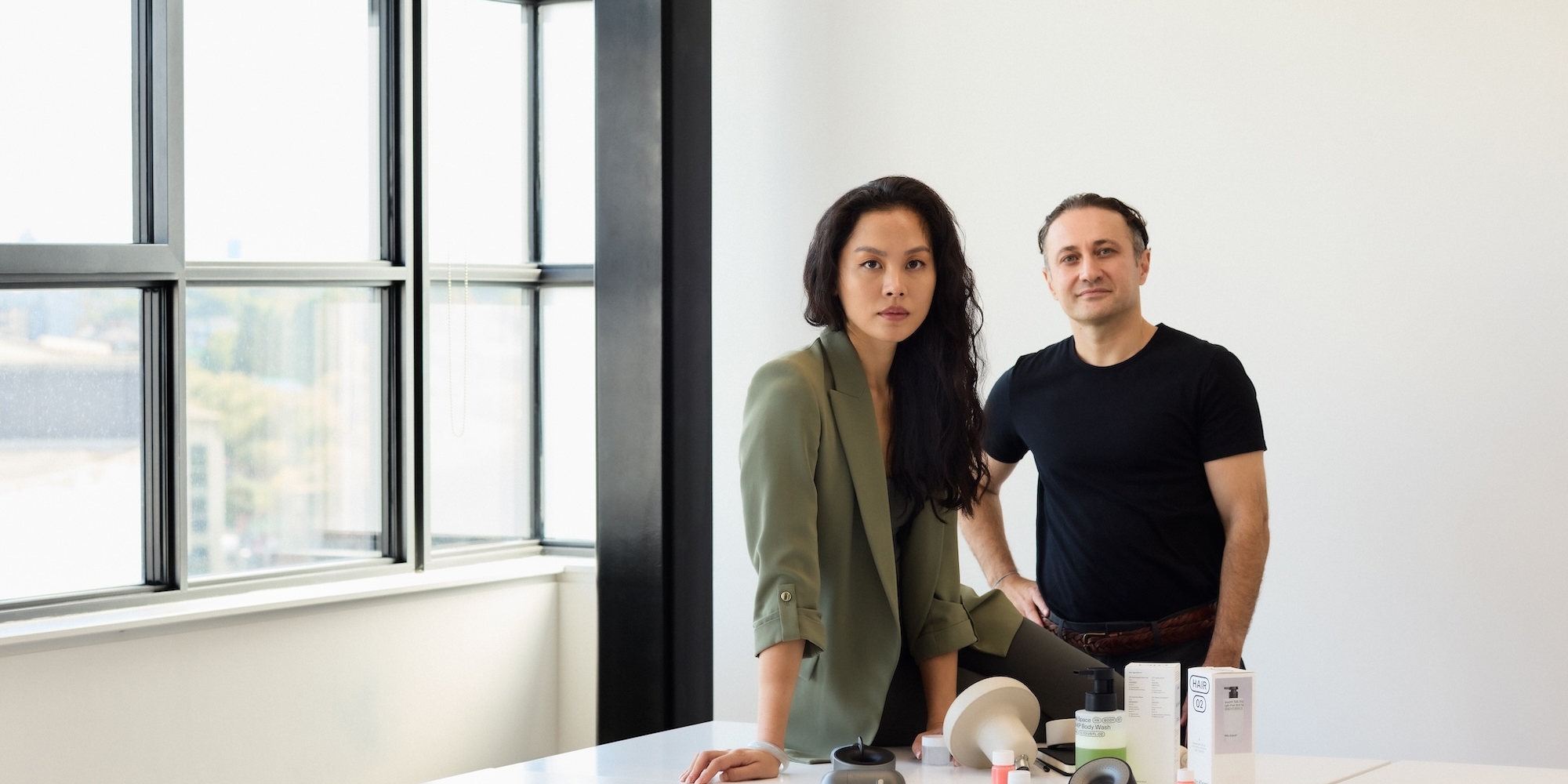
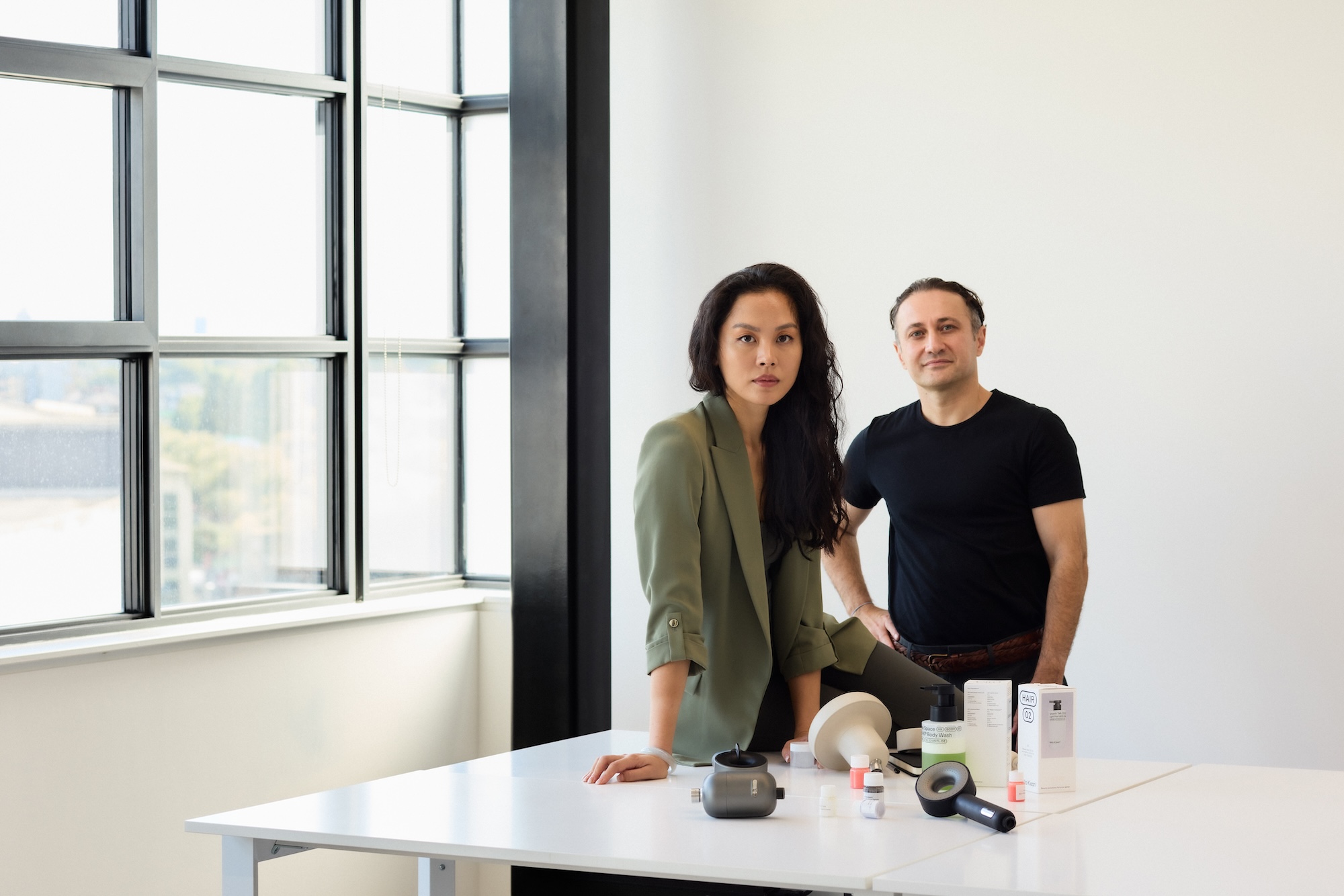
Founded in 2020 by former Huda Beauty social media manager Karlee Zhang and former Zalando head of product Omer Ozener with $75,000 from their personal savings, Hello Klean bootstrapped its way to more than 1 million units sold. The brand specializes in sleek shower filters designed to reduce chlorine and certain heavy metals commonly found in shower water, along with an expanding assortment of haircare, scalp care and body care products aimed at addressing the downstream effects of hard water and mineral buildup.
Hello Klean generated $14.7 million in revenue in 2025 and is projecting $27 million in revenue for 2026. The brand is available at select retail partners, including Cult Beauty, Selfridges, Planet Organic and Sephora in the United Kingdom and Ounass in the Middle East.
Ahead, we speak with Zhang and Ozener about the brand’s beginnings, the appeal of its Brita deal, why they believe shower filters will become the standard and their ideal exit.
What led you to launch Hello Klean?
Zhang: It really stemmed from my personal experience from years of traveling and relocating for work. It is a very weird feeling when you’re living in the U.S. and you come to the U.K. and you take a shower, and your hair just doesn’t feel quite right. You’re using more products than you would normally do. Your skin feels more tight and itchy. This happened on and off for many years. Eventually I got quite frustrated and was like, OK, let’s try some different types of solutions.
I started by changing the products, taking supplements, going to see a doctor. To be honest, it always felt like a Band-Aid. My background was in beauty. I think that experience and learning about what’s happening inside the industry, it led me to the conclusion that it was the water composition, specifically the minerals, heavy metals and the chlorine that is different in each city, which was causing my various concerns.
Omer and I were like, there’s a white space within the beauty industry where we can talk about how water is having this impact on our hair and skin. When you’re searching water hardness solutions, it’s either DIY treatments where you’re diluting vinegar, putting baking soda or you are looking at very industrial solutions. When you’re looking at what the customer wants, which is ultimately to solve their hair and skin issues, versus what the market offered, there was this huge disconnect. So, we’re like, “Let’s give it a try.” It came from a gut feeling and now here we are.
What products did you launch with?
Zhang: The shower filter first and the scalp soak second. Then, it was a body product, the handheld showerhead, hair products. The vision from day one was that it’s going to be a shower ecosystem so that you have hair, body and filters that work alongside each other.
What did the initial money to start the brand go toward?
Ozener: Before we started, we spent some time in Korea. We found out that in Korea shower filters existed for a long time and we found some producers there and went to visit them and visit retailers to see how the shower filters are presented there. After that, we made a short list of suppliers and started our R&D and our first production with them.
I would say half of the budget was going into inventory and R&D. The remaining was advertising. Karlee comes from a beauty marketing content background, and I come from an e-commerce and technology background. In the initial setup, we were able to do pretty much everything ourselves from design to building the website to creating content and managing social media. That’s why we were able to put all of our existing budget to just the product and the advertising part.
We first launched in Berlin, but quickly we saw the U.K. had potential for this product, and we moved to the U.K. to scale there. What helped us to scale on a small budget at the beginning is the try-now, pay-later free trial setup. We were giving the filter away for free and charging customers 30 days after because we really believed in the product and its benefits. That was a game changer.
It was a risky move because it was open for abuse potentially, but only 20% of customers preferred not to pay. The remaining stayed with us as a subscriber, which brought a very healthy and predictable subscription revenue. Even today, if you look at our business model, 80% of our customers are subscribers, which is the main reason why we were able to stay bootstrapped until recently.
Early on, how did you market the filters?
Zhang: From day one, we realized that, if you just try to directly sell the benefits, you’re always going to get some confusion on what it is. So, we put most of our emphasis on education about hard water and how water is impacting your hair and skin. One of our first ads was like, “Don’t let London’s hard water ruin your hair and skin.” That ad helped us scale quite a lot.
Ozener: The biggest change and strategic direction we took in our positioning was focusing on the beauty angle. Shower filters existed when we launched and you could buy them from Amazon, but they were a plumbing accessory, whereas, in Korea, shower filters were beauty products. So, our take was, “Hey, we should position shower filters as a beauty product because they solve a beauty problem.” That angle worked well in our advertising, and it’s resonated with the customers.
We started with a lot of our own produced ads, and seeding and influencer partnerships came later. We’ve always invested in organic word of mouth and PR because there’s so much value in media and when that recognition is earned. It was a slow process because we were bootstrapped. We never had the large capital to burn on advertising, so it had to be slow and steady. When I look back now, it was the healthier way of doing it.
You received investment from Brita this year. What made you appealing to the company?
Ozener: They came to us to have a first call and, after a couple of meetings, we learned that, from their perspective, they see the future for their company to be around water optimization and their investments are all around this concept, whether it’s the water you drink, the water you flavor, your tea water, coffee water. They see a very good extension going into the shower and bathroom space. They want to become a more lifestyle-focused company built around water optimization, and what we offered them was quite appealing.
Secondly, what they found strong in us are those direct-to-consumer and influencer marketing muscles. We are a brand that’s 90% direct-to-consumer and is very much a subscription brand, built on influencer marketing and Instagram, basically not the muscle they have. They are mostly retailer-focused brand.
What was appealing to you about Brita, and why was now a good time for funding?
Zhang: For us, it’s about positioning and building authority in this category. With Brita, they bring over 60 years of filtration expertise, and this partnership helps us improve in R&D, credibility, education and authority.
Ozener: We already started working with their R&D teams on how we can improve the filtration and testing capabilities to build more trust in the category. It’s a very strategic partnership as well. We want to do more synergies on the product side.
The investment is also going to help with international expansion. Where do you want to expand to?
Ozener: We are launching into more countries in Europe, and we just launched in Canada a month ago. We have some organic sales coming from the [United States,] but we don’t actively advertise in the market.
What’s your newest product?
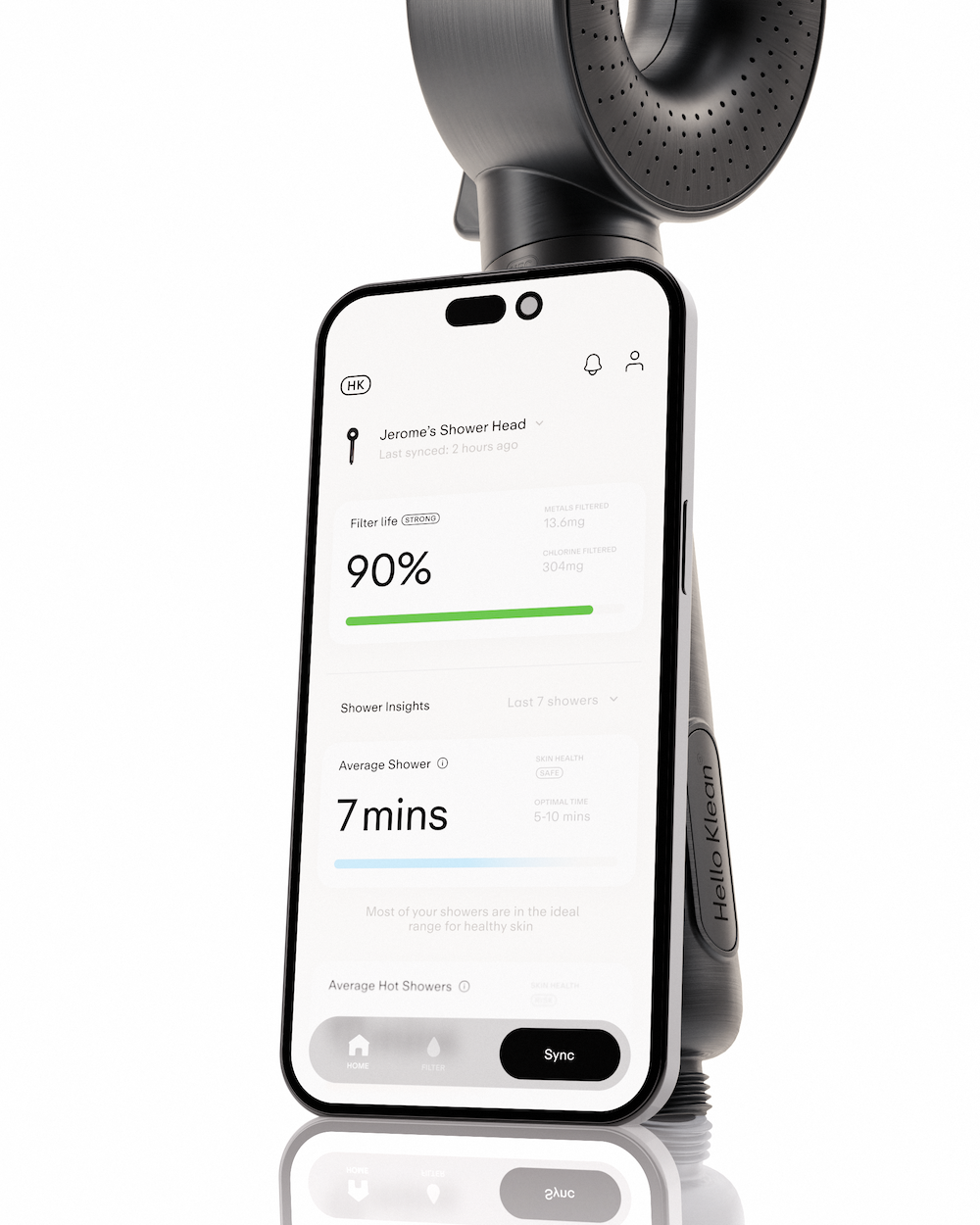
Ozener: A month ago we launched the first intelligent shower filter. We built a technology hardware that’s inside the shower filter that can track the water usage and temperature and can tell you exactly when your filter needs a change.
The challenge with shower filters is most brands in the market give an estimation about when you need to change the filter, but exact timing depends on how much water you use. We built technology that can track water use and can give you exact timing for your filter change so that you don’t use an already dying filter. We launched it on one of our products, and we are going to expand this technology to our other versions as well. We are going to also come up with filters that are in the other parts of the bathroom.
Who is the Hello Klean customer?
Zhang: Demographics-wise, they’re between 25 to 35, quite urban and international. They’re frequent travelers. They probably relocated somewhere for work or for school and that’s how they felt their hair and skin was quite different in the first place.
What we see with our customer is that they really feel like their life is out of control when their skin and hair acts out because they’ve invested in every single other aspect of their life. This is a customer who’s going to have an air purifier at home, count their calories and go to the gym. They also want their water to work for them.
Are there any other future, short-term, long-term goals that you have for the brand?
Ozener: The new launch product is doing quite well, and we’ll have new launches coming the end of this year and next year. Then, international expansion. Every year we want to launch in a couple of new markets, so it’s going to take some time to really expand the business globally. We launched in the Middle East last year in the UAE and Saudi Arabia, and it’s been a big success there. We believe we have great product-market fit and the rest is just executing it in different countries. That’s the plan for the coming years.
From my side—I look after brand creative—what we’ve been working towards in the last two years is how to do world-building for a brand in such a functional category. People’s expectation is almost that, as long as it’s not ugly, it’s fine. So, the standard is quite low. We already bypassed that, but we want to ultimately transform the feeling you have when you step into the shower.
Ozener: On top of that, if you look at the global trends, what we see, especially in U.K. and Europe, is the awareness around water quality has increased massively mostly because water quality is going down significantly. We see now a lot more customers really don’t want to put that water on their skin and hair, not only the drinking water. Filtering your shower water is going to be a standard in the future.
Brita might have the option to acquire Hello Klean in four years. What does an ideal exit look like for you?
Ozener: From day one, we’ve been in this business for the long term and we have a vision we want to execute. We want to make this brand a global brand. One day I see every household filtering their shower, and we want to be the household name for it, but we are not in a rush. With Brita, we had a very strong agreement on that.
They didn’t want to acquire the business and suddenly put us under their group. We wouldn’t be OK with that. They believed in us to run this business long term. It’s a minority investment right now. We still have full control of the business, and it is going to stay that way for some time and gradually then Brita will increase their shares, but we still want to be in the business. We still want to run this company.
This interview has been lightly edited for brevity and clarity.