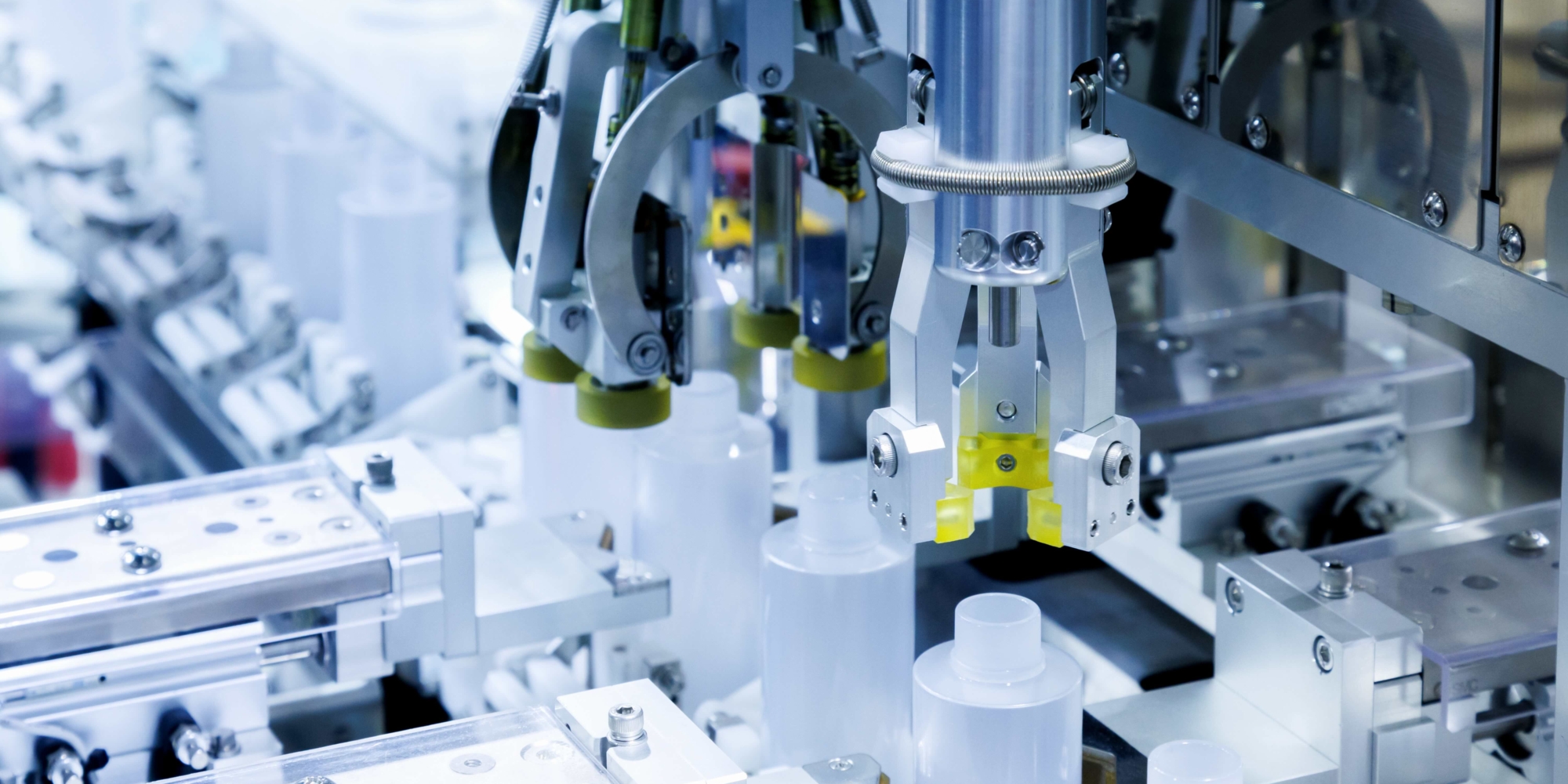

As 2026 gets underway, dealmaking, artificial intelligence and global trade disruptions are colliding in beauty manufacturing, underscored by Prime Matter Labs’ acquisition of Mana Products, the adoption of emerging technologies and uncertainty tied to President Donald Trump’s stochastic threats of new tariffs.
Sorting through what these developments could mean for brands and service providers, for the latest edition of our ongoing series posing questions relevant to indie beauty, we asked 14 beauty manufacturers the following: What are three to four business and consumer trends you believe will shape the beauty manufacturing sector in 2026? And which ones do you think will be left behind?
-

I think the changes coming to beauty manufacturing in 2026 will be a combination of consumer preferences and economic pressures. Consumer preference: over half of my skincare formulation clients in the last six months have requested some form of low-viscosity emulsion. Milky toners, fluid moisturizers and cream serums are the texture of 2026. We’ll see this texture expand into U.S.-based sunscreens as well as the FDA begins to approve new UV filters that work in lower-viscosity formulas.
Economic pressure: packaging in 2026 will be chosen for supply chain flexibility rather than standout unique aesthetics. We’ll see more stock-style shapes, form factors shared across multiple SKUs and even a shift toward labels rather than screen-printed artwork, which can allow for more manufacturing flexibility in response to sales projections.
Both consumer and economic: skincare formulas will shift toward one to two hero ingredients rather than kitchen-sink INCIs. Consumers are more educated than ever on ingredients and know what they’re looking for. Simultaneously, simplifying ingredient lists helps control costs and prevent supply chain issues in an unstable global economy.
There are a few things we’ll leave behind in 2025 as well. I think we’ll see fewer launches that are created strictly to go viral. Think bizarre textures or gimmicky color changes. It’s become too complex and expensive to launch a product you know will be a flash in the pan. Eye-catching is great, but it needs to have some real performance behind it to stay relevant.
Speaking of complex and expensive, the one-two punch of tariffs and inflation means many brands are moving away from manufacturer-proprietary ingredients. The SKUs that have stayed in stock and maintained their margins are ones that have the flexibility of multiple suppliers for each ingredient. If your hero ingredient is only made by one company, and that company suddenly triples its price or increases its lead time by 20 weeks, you’re out of luck.
I also think we’re seeing the end of “clean” as the beginning and end of a product’s claims. We’re moving into more specificity. What does clean actually mean in this case? Is it sustainable ingredient sourcing? Microplastic-free? Compostable packaging? “Clean” on its own went from innovative to table stakes to mostly meaningless.
- Edward Smith III Director of Sales and Marketing, Ayo Labs
Trends That Will Shape Beauty Manufacturing In 2026
As brands navigate faster trend cycles, tighter margins and increased operational complexity, beauty manufacturing in 2026 will increasingly favor partners and operating models built for speed, flexibility and control, not scale alone.
AI-assisted formulation and development
AI will play a growing role in accelerating R&D, reformulation and ingredient optimization, enabling brands to respond more quickly to trend shifts, regulatory changes and supply-chain disruptions.
Expansion into adjacent categories
Categories such as oral care and pet care are expected to continue gaining traction as consumers apply beauty and wellness expectations to a broader range of daily routines.
Increased preference for domestic manufacturing partners
Ongoing tariff uncertainty, quality control considerations and speed-to-market pressures will push more brands to prioritize near-shore and U.S.-based production capabilities.
Private-label and controlled brand-ownership models
Retailers and brands alike will lean into faster launch models that offer greater margin control and flexibility, while reducing long-term inventory exposure.
Trends Likely To Be Left Behind
At the same time, several longstanding industry approaches rooted in volume-first thinking and rigid structures are expected to lose relevance.
Retail-only growth models
Growth strategies that depend solely on retail as brands struggle to meet accelerating requests for new inventory, faster launches and constant product refreshes.
High minimum order quantities as the default
Large upfront production commitments that limit a brand’s ability to test, learn and scale in response to real-time demand.
Brand building without operational discipline
Go-to-market models driven primarily by hype or aesthetics without sufficient attention to manufacturing readiness, margin structure and supply-chain fundamentals.
- Corey Miles Owner, Niche Skin Labs
Business Trends
1. Algae boom: Algae is becoming an increasingly versatile ingredient in personal care, with new applications emerging. Its sustainable sourcing and functional benefits are driving significant market growth, making it a key raw material for future product development.
2. Rise of robotics: The integration of robotic manufacturing is slowly emerging to enhance efficiency in production facilities. With advancements in AI and automation, manufacturers are optimizing operations to reduce costs and streamline processes.
3. Embracing fragrance-free: With increased awareness of fragrance allergens on labels, brands and manufacturers are developing unscented versions of their scented products, giving customers the option to choose their preferences.
Consumer Trends
1. DIY skincare: Consumers are increasingly seeking to create personalized skincare products at home to save money and develop unique solutions tailored to their skin type.
2. Less is more: Consumers will continue to move away from complicated, multistep skincare regimens and embrace minimalist skincare routines, favoring multifunctional products that offer multiple benefits.
3. Nighttime self-care: More people are prioritizing their evening beauty care routines to look and feel their best the next day. Products such as innovative sleep masks, at-home beauty tech devices and topical products that help boost melatonin production to improve sleep quality are becoming increasingly popular. This trend taps into the self-care movement, blending beauty and relaxation in nighttime routines.
Left Behind
1. Skincare overconsumption
2. Fast fashion beauty
3. The beef tallow craze
- Tish Poling Co-Founder, President and Chief Development Officer, International Products Group
For 2026, IPG is focused on developing and manufacturing new personal care and wellness products for its clients. We’ve been working on new launches over the past six months that will hit the market in Q1. Everyone has jumped on the healthy train and is looking for beauty and wellness products that make them feel good as well as look good. Women’s health remains at the top of developers' and marketers' minds, formulating products using biotech and science-backed ingredients.
Below is a list of what we think is in for 2026 and out with 2025:
What’s Shaping 2026
- Brands are utilizing AI to speed up decisions within their brand strategies
- Science-backed and results-driven skin and haircare
- GLP-1 products are still popular and so are products that benefit hair loss, skin laxity and loss of radiance
- Growth of beauty and wellness tech, especially devices like lasers, red-light therapy, and wellness trackers
- Skin regenerative, longevity-focused beauty and wellness (biostimulators, peptides, exosomes, microbiome, growth factors, NAD+, biohacking, etc.)
- Social wellness club
- Pre- and post-procedure products
- “Cleaner than clean” formulas with certifications (e.g., 100% natural, organic, Made Safe and Credo)
- IV therapy (overall wellness, dehydration, nutrient boosts, hangover, NAD+)
- Going back to basics (vitamin C and retinol), but making them better than before
- Transdermal patches (sleep, energy, mood)
- Fragrance is still hot—luxury perfume, hair mists, body mists
- Strong vendor partnerships within the U.S.
What’s Out In 2026
- Overly complicated skincare routines that don’t work
- Harsh or inflammatory treatments that compromise skin health
- Filler-heavy aesthetics and over-augmentation
- DIY treatments and viral fads that lack scientific backing
- "Miracle" ingredients that do not deliver results
- Synthetic colors and dyes in products
- Excessive unnecessary packaging
- Over proliferation of SKUs
- FRED KHOURY President, Above Rinaldi Labs
Trends That Will Shape Beauty Manufacturing In 2026
AI embedded in R&D, QA and operations: AI is becoming essential operational infrastructure. Manufacturers will increasingly use it for formulation optimization, ingredient substitution, regulatory checks, demand forecasting and preventative maintenance. The real impact will be shorter development timelines, fewer batch failures and tighter compliance.
Modular, flexible manufacturing: Large MOQs and rigid production lines are increasingly misaligned with current brand launch strategies. Manufacturers that invest in modular equipment, small batch capabilities and rapid iteration will lead the market. This flexibility supports speed-to-market for limited drops, clinical pilots and influencer-led brands.
Cost transparency and margin discipline: In response to inflation, tariffs and labor shortages, manufacturers must educate brands on true cost structures. Expect tighter SOWs [statements of work], a clearer delineation between development and production costs and formulas designed with manufacturability and margin in mind from the outset.
Trends Likely To Be Left Behind
Overbuilt product lines and SKU bloat: The era of "more is more" is fading. Brands and manufacturers are rationalizing SKUs to reduce complexity, waste and operational drag. Fewer, high-performing products will replace traditional, multistep routines.
Clean beauty as a standalone differentiator: Clean positioning without performance, substantiation or regulatory rigor no longer resonates. Manufacturers are shifting toward documented safety, efficacy and traceability over vague marketing language.
Hype-led manufacturing without technical depth: Products built solely for a viral splash that lack formulation defensibility or supply chain durability will struggle to survive beyond the initial buzz. Manufacturing realities are finally catching up to marketing timelines.
- James Hart COO, Merit Manufacturing
What Will Shape Beauty Manufacturing In 2026:
Brands are getting more disciplined. We’ll see fewer SKUs, shorter production runs and a bigger focus on formulas that actually perform rather than just sound good. Manufacturers that can move fast, scale cleanly and support tighter forecasting will have a real edge. Transparency will matter more, too. Brands want to understand cost, sourcing and feasibility upfront, not after something breaks.
What Will Be Left Behind:
Endless customization, viral ingredient chasing and vague “clean beauty” positioning are losing steam. The industry is tired of complexity that doesn’t sell or scale. 2026 feels less about hype and more about making smarter, more sustainable decisions on the manufacturing floor.
- Megan Cox Founder, Innacos Labs
The past decade—from 2015 onward—was marked by relentless trend cycles, the meteoric rise of influencer culture and an industry too often built on deception and empty promises. As we entered a new astrological age, it all came to a head. 2025, the final year of a numerological cycle, felt like a reckoning.
Now, in 2026, we're collectively recalibrating. Consumers are more discerning, brands are being held accountable, and there's a palpable shift toward data-driven innovation with a human touch. The era of blind trust is over. What's emerging is something more honest, more grounded and ultimately more sustainable.
Finally, a spotlight on biotech: Those of us in the industry have seen the rapid emergence of biotech ingredients, especially those that via fermentation reduce carbon emissions or create more consistently available alternatives to the ever-increasing volatility in natural ingredient markets over the past two years, but consumers are not yet fully aware of such ingredients. I think we'll finally see biotech get its spotlight in the consumer space.
More effective skinnovation from Asia: This year was all about exosomes, spicules, polynucleotides and just truly effective skin ingredient innovation from Asia. Every other booth at InCosmetics Seoul was some form of innovation in one of the aforementioned categories. Asia is putting in work on the ingredient R&D side, so I believe we'll see even more fun ingredients hit the market.
Whether consumers trust Western brands with these ingredients and their handling enough to purchase is a different story, but it is clear that budgets are stretched thin and consumers are only committed to paying for real results, not empty promises.
A return to credentials: Consumers are fatigued with influencer marketing and increasingly skeptical of the loudest or most popular voices on social media. Once popular beauty and skincare influencers are seeing the pendulum swing, with consumers trusting credentialed experts more than ever.
This doesn't necessarily mean dermatologists on social, who may have eroded their credibility through sponsored content or trend-chasing antics, but rather credentialed scientists and cosmetic science professionals. I expect a handful experts who have been consistent and unwavering in their viewpoints to finally get their flowers in the public eye this year.
The thread connecting all of this? Consumers are tired of bullshit, and, more importantly, they can't afford it anymore. Inflation squeezed budgets. Influencer fatigue killed blind trust. What's left is a consumer who will only open their wallet for guaranteed results. Substance over style isn't a trend; it's economic necessity. In 2026, brands that don't deliver won't just lose credibility. They'll lose business.
For brands, this demands discipline. Use data and clinical testing to back your claims, not marketing instinct or trend forecasting. Resist the cash-grab impulse. Commit to slow, intentional development cycles. The industry doesn't need more products. It needs better ones. Stop creating waste. Better yet, start taking accountability for the unintentional waste you do create along the way. Start creating real value.
Take it from an Aquarius in the age of Aquarius. We see through the smoke and mirrors, and 2026 won't be kind to those still hiding behind them.
- Warren Becker Founder and CEO, Next Beauty Labs
Four Trends That Will Shape 2026
In 2026, AI formulation will continue to advance and become a daily tool rather than a headline, helping teams model ingredient interactions, anticipate stability issues before scale up and make better decisions earlier in development, resulting in faster timelines, fewer reformulations and more predictable products in the market.
At the same time, beauty manufacturing will continue shifting toward smart factories, where robotics, machine vision and real-time data monitoring support compounding, filling and quality control, with early adoption of humanoid robots for repetitive, labor-intensive tasks driven not by novelty, but by labor availability, safety and consistency.
Tariff pressure, freight volatility and geopolitical uncertainty will also push manufacturers to rethink global supply chains more structurally, accelerating regionalization, dual-sourcing strategies and near-shore or domestic production as brands prioritize cost control, reliability and risk reduction over pure unit economics.
Finally, transparency will increasingly replace “clean” as the primary trust signal, as consumers and regulators demand clear ingredient sourcing, documented testing and traceability, rewarding brands and manufacturers that can show their work rather than rely on vague positioning or marketing claims.
Four Trends I Think We’ll Leave Behind
The viral celebrity-influencer playbook will continue to lose effectiveness as consumers become more skeptical of paid hype and short-term launches, shifting attention toward brands that demonstrate real product performance, credibility and long-term commitment rather than momentary visibility.
Sustainability without real metrics will also fade, as broad claims and surface-level gestures give way to measurable standards around carbon impact, water usage, sourcing and traceability, making vague “eco-friendly” positioning increasingly insufficient.
We’ll also see fewer rapid brand launches that lack a realistic financial runway, as higher development costs, continued tight capital markets and more disciplined consumers make it harder for undercapitalized brands to survive beyond an initial drop or two.
Finally, quality control that relies only on human checks will become the exception, not the norm, as manufacturers adopt data-driven monitoring, automated inspection and real-time analytics to improve consistency, reduce risk and scale responsibly.
- Kyle LaFond Founder, Natural Contract Manufacturing and American Provenance
Uncertainty and chaos seem to be the most frequently used words to describe 2025. Looking ahead, those same themes may hold true for 2026. Predicting trends is difficult even in times of relative stability. Unfortunately, I think that 2026 will provide a continuation of many of the same issues and challenges that we faced in 2025.
Pricing and affordability will continue to be crucial considerations in the beauty and beauty manufacturing sector. Some costs have continued to rise while others are showing signs of stabilizing. Unit economics will continue to drive difficult decisions for brands and manufacturers.
Related to these ever-increasing costs, many brands and manufacturers will continue to look for innovative alternatives for costly inputs. I think that this will increase demand for lab-generated actives, packaging alternatives and the use of AI to cut costs.
AI will also be used to help indie and challenger brands even the playing field with larger global brands. The availability of information and resources to everyone the world over will allow smaller brands to compete and gain market share. Smaller brands will be able to be much more flexible and nimble to meet the needs and desires of the consumer.
In the manufacturing space, I think that we're going to see further consolidation. Larger contract manufacturers are realizing the importance of being involved with brands from the early onset. These large manufacturers don't want to lose out on future business and will have to find ways to work with brands in their infancy. I think we'll see larger CMs pursuing smaller CMs to have their own entry point or farm system to intake new clients.
- Ali Perry-Hatch Founder and CEO, Pure Earth Labs and Earth Harbor
In 2026, More Brands/Clients Want:
- Nearshored production that hits deadlines. Fewer border crossings, fewer surprises, faster recovery.
- Manufacturers who control the variables. Fewer handoffs, fewer moving parts, fewer “not our fault” moments.
- Price still matters, but brands are choosing total cost over cheapest cost. Delays, expediting and missed launches are the real budget killers.
- Transparency and accountability for sustainable and ethical practices from their contract manufacturers, pulling back the curtain and brands not conveniently turning a blind eye during the handoff.
- What customers once sought from brands (like efficacy, sustainability and ethicality) is now table stakes, with responsibility being transferred more than ever onto contract manufacturers to uphold for brands.
- Close-touch relationships where you feel like an extension of the team, not a pass-off moment. We started as a brand ourselves—Earth Harbor—before expanding into contract manufacturing, so we understand the pain points and that personal connection, care and genuine understanding has earned us most of our clients and retained them.
What’s Being Left Behind Is:
- Contract manufacturers getting away with making claims that they do the above (efficacy, sustainability and ethicality) without proving it.
- Transactional, arm’s-length relationships. Brands/clients want to know you have their back, no matter what.
- Contract manufacturers that don’t know what it’s like to run a brand and have no insights into that part of the service chain.
- CHRISTINE STAPLES CEO, Cohere Beauty
What We're Leaning Into:
- The "cute economy" and lifestyle-driven product design
- Moving the conversation from anti-aging to longevity and regeneration
- Performance beauty and the in-person fitness influence
- Packaging that actually delivers
What We're Stepping Away From:
- Greenwashing
- Science-washing
- Wellness claims that don't hold up
Beauty is getting cuter, and it's strategic. Products are doubling as lifestyle accessories and collectibles, especially for younger consumers who are purchasing keychain glosses, portable fragrance rollerballs and blind-box packaging. These aren't gimmicks, but ways for beauty to further support self-expression and visual identity, which drives real loyalty and repeat purchases.
In 2026, we expect a smarter, more intentional and more informed beauty consumer. The focus is shifting toward longevity science, hormone-conscious formulation and results you can prove. That means clearer claims around things like endocrine disruptors backed by real clinical trials and visuals that hold up under scrutiny.
We're also seeing recovery-aligned beauty gain traction, especially as in-person fitness and wellness culture continues to grow. Think: products that refresh, purify and rebalance skin and scalp after a workout, not just before you leave the house.
Packaging is evolving, too. It's no longer just about looking good on a shelf. It also needs to be functional, whether that's an improved application, better protection for the formula or a solution to a real problem.
Sustainability is moving from aspiration to action. Brands are cutting unnecessary packaging, investing in waterless formats, and manufacturers are upgrading wastewater treatment and energy systems. It's not perfect, but it's progress.
This year, we're leaving behind shortcuts. No more science-washing, greenwashing or vague wellness claims. Consumers are smarter than that. They want transparency, evidence, and brands that actually mean what they say.
- Christina Mahar Founder and CEO, Craft Beauty Lab
Trends I See Gaining Traction In 2026
The skin ecosystem, beyond barrier repair
This includes increased attention on microscopic organisms such as fungi and naturally occurring mites, and how imbalances contribute to redness, rosacea, dryness and other skin issues.
Verifiable claims
Brands are replacing “free-of” statements with claims documentation. We are seeing increased requests for written verifications, certifications and certificates of analysis so brands can prove their claims to the end user.
Continued interest in biotech ingredients
Exosomes, NAD, peptides, etc. Clean beauty brands are working to define where they stand with these more tech-driven ingredients and whether they define themselves as “all natural” or “healthy,” which are not always the same thing.
Trends That Are Fading Away
Trend chasing
We are starting to see social media and hype influencers have less impact on consumer purchasing decisions.
Over-launching new products
Brands are backing away from launching tons of new fast fashion, low-quality, novelty products.
Skipping testing in the rush to market
Both manufacturers and brands are wary of the compliance and downstream issues created by skipping packaging, stability or challenge testing in favor of fast launches.
- Laura Horne VP Sales and Marketing, FP Labs
While 2026 is the start of the new year, I believe that the biggest trends will be continuations from prior years. Beauty and personal care brands have always been on the front edge of trends, and I foresee that continuing moving forward.
The use of AI in all things. We have already started to see partnerships between AI platforms and shopping platforms. Consumers are on the platform, which means brands will soon be there as well. Marketers are trying to stay up to date on the rapid-fire changes that happen on a daily basis.
Expansion of biotechnology. Biotech brings multifunctionality of problem solving, efficacy and performance while challenging the consumers to imagine the impossible, all this with the possibility of time savings.
Authenticity. This could be called transparency. Consumers have access to more information than ever before. There is a demand to know what is included in their personal care products, why they are included and how they should perform. There is an increasing demand for claims that are backed by solid substantiation.
Cost consciousness. While this is less sexy than the other trends, consumers do not have time or money to waste. Overpackaging, overcomplication and overpricing are not categories that consumers will continue to shy away from moving forward.
- Chris Dodge Founder, Beauty Bridge Labs
There are four different areas that brands can focus on in 2026. The U.S. has an inherent perception of higher value in the global arena, and price points have a better potential to be resistant to end-user inflation. Simply put, when someone sees a BMW, they feel they can still get value for money. (Fun fact, the largest BMW plant in the world is in Spartanburg, S.C., yet it is still thought of as a German brand).
Brands should look to local contract labs as a way to overcome trade or tariff barriers. It is projected that, in the next two years, a majority of K-Beauty brands will be produced in the U.S. for U.S. consumption. If one maintains the U.S. identity, having it made in a region where it is being sold will save on this and things like shipping costs.
Focus on brand identity without being too specific. The strength of the U.S. brand is as strong today as it ever was. (Another fun fact, at the height of the Cold War, the No. 1 vodka sold in the U.S. was Stalinskaya from the USSR.) The vast majority of L'Oréal that is made for the EU is made in either Poland or Romania, yet it still always says L'Oréal Paris.
Brands can and should take into account brand locality. Brand locality is providing some slight modifications to the brand that can enhance the local appeal of a product, things like the level of fragrance or even the type. (Last fun fact, the reason why there was a massive demand for Mexican Coca-Cola in the U.S. was because Mexican Coca-Cola was made with sugar and not high fructose corn syrup.)
If you have a question you'd like Beauty Independent to ask manufacturers, send it to [email protected].

Leave a Reply
You must be logged in to post a comment.