
As the beauty retail landscape fragments, beauty e-commerce agency Navigo Marketing is helping brands move away from siloed channel strategies toward a more integrated approach to growth.
Rather than optimizing platforms in isolation, the agency’s Connected Commerce model focuses on how demand is created and ultimately converted across paid media, Amazon, direct-to-consumer websites and retail marketplaces. The approach has delivered positive results for Navigo’s emerging beauty clients, growing sales by an average of 112% this year, with several brands outperforming that benchmark. The brands in the agency’s emerging beauty roster typically generate less than $10 million a year in revenue.
“Most agencies optimize inside platforms. We optimize across platforms,” says Jacob St. John, founder and CEO of Navigo Marketing. “That’s why our brands see growth even as consumer behavior becomes more fragmented.”
Meredith Matthes, account director at Navigo Marketing, says brands often view growth through the lens of individual platforms. “We immediately zoom out,” she says. “Once we connect the dots, growth starts to compound across retailers.”
At the core of Navigo’s Connected Commerce model is a clear distinction between demand creation and demand capture. Paid social is treated primarily as a demand creation engine, influencing performance across Shopify, Amazon and retail. Platforms such as Amazon, Google and retail sites like Ulta.com are viewed as demand capture environments, where shoppers validate interest and convert.
The model is designed for beauty and wellness brands generating roughly $5 million to $50 million in revenue or those that have outgrown single channels, but are not yet operating at enterprise scale. Beauty brands Lancer, Fur, About-Face, Beauty Pie and Nopalera are among those on Navigo’s client list.

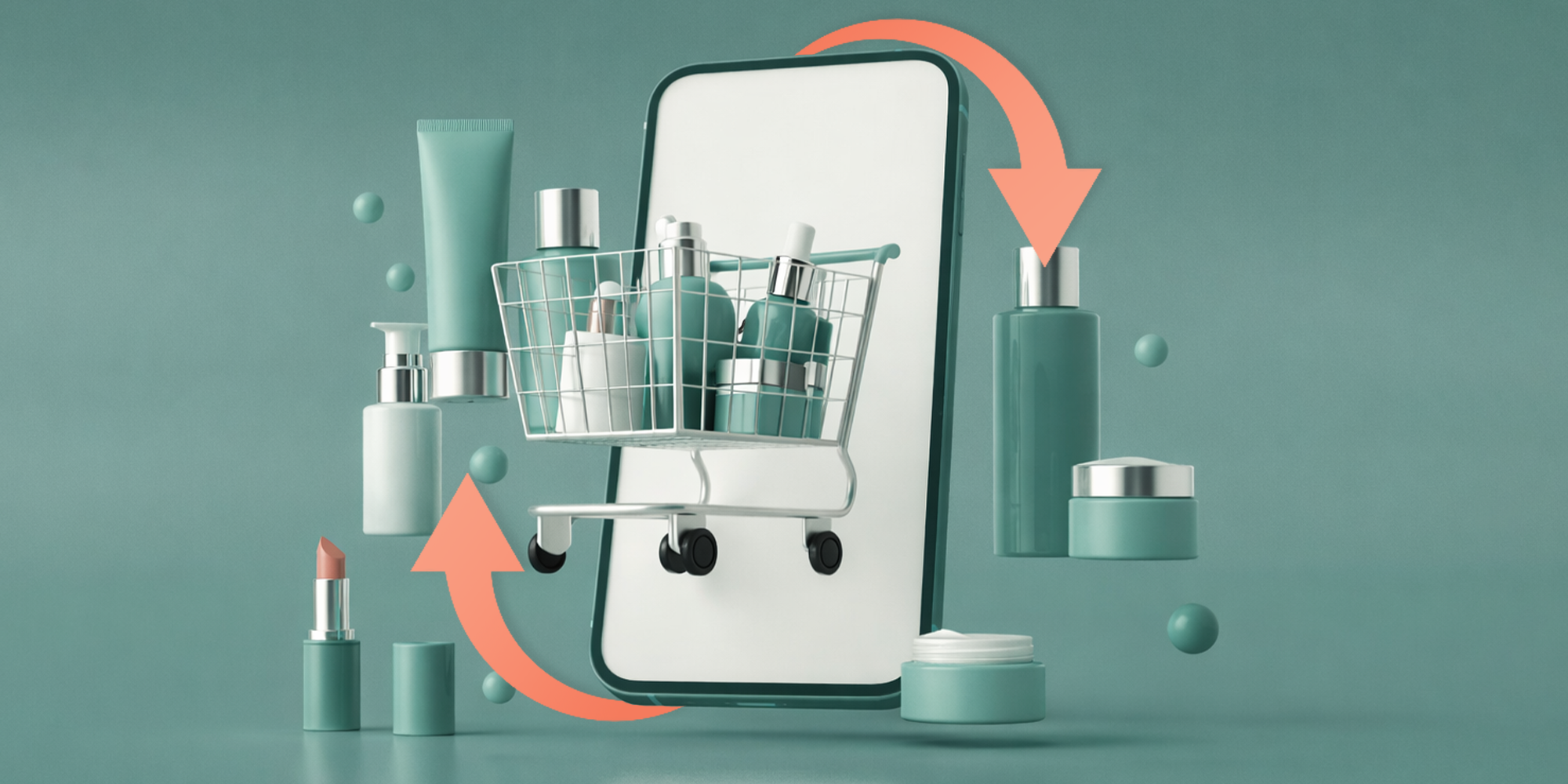
In practice, the model creates a feedback loop rather than a linear funnel. Paid social builds awareness and familiarity, while shoppers complete purchases on the platforms they prefer. As conversion improves across the spectrum, efficiency improves upstream.
“We see the strongest results when we’re able to manage the full ecosystem,” says Matthes. “When one team owns demand creation and demand capture together, performance stops competing with itself.”
For Navigo, building an efficient cross-channel strategy starts with understanding where conversion is truly won or lost. For most beauty brands, that happens on Amazon. Rather than treating Amazon as a starting point for optimization, the agency considers the e-commerce giant as a validation layer within a broader commerce system. Performance on it then becomes a signal. If momentum created through paid social or other channels isn’t converting there, the issue is rarely isolated to a single asset, but to how demand is being reinforced or not across the system.
That perspective also shapes how Navigo approaches cross-channel insights. For example, a high-performing advertising campaign on Amazon that can be tweaked and repurposed for Google, paid media or Ulta is less about creative reuse and more about understanding how messaging and intent move from awareness to consideration to purchase. What resonates upstream should strengthen conversion downstream, and what converts well should inform how demand is built.
Brand consistency across platforms plays a critical role in that reinforcement. “One of the worst things you can do is have Amazon look completely disconnected from the rest of your business,” explains Matthes. “When the same message is reinforced at the top of the funnel, we see much stronger conversion as shoppers move closer to purchase.”
In one recent case, a premium body care and haircare brand partnered with Navigo to apply its Amazon playbook to Ulta. The agency restructured the brand’s Amazon catalog, rebuilt product detail page content and refined its advertising strategy. It then translated those learnings into Ulta-specific content and advertising. Paid media was aligned with seasonal demand, and performance was tested across both marketplaces.
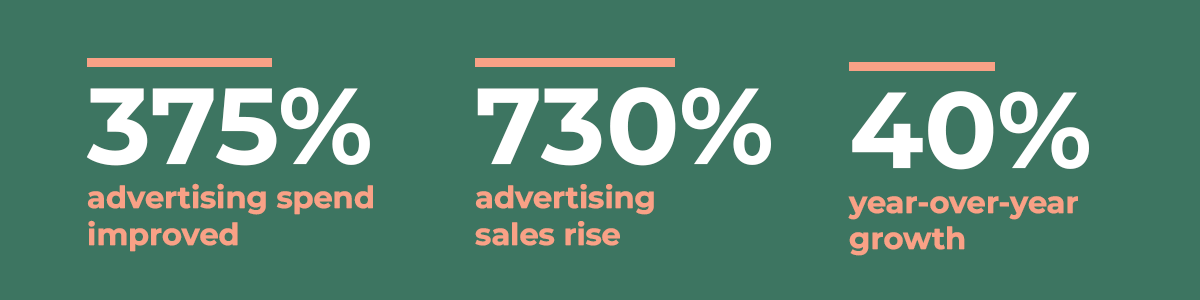
Within 90 days, the brand reached the No. 1 and No. 2 search rankings on Ulta’s site. Return on advertising spend improved 375% and advertising sales rose 730%. Meanwhile, Amazon sales continued to grow more than 40% year over year.
In another case, a beauty brand facing declining revenue and increasing acquisition costs worked with Navigo to rebuild its acquisition strategy across Meta, TikTok and paid search. The agency shifted focus toward top-of-funnel prospecting, tightened retargeting and eliminated $50,000 per month in non-incremental branded search spend. The result was a 400% increase in profitability over the Black Friday/Cyber Monday weekend alongside a 60% reduction in paid spend and exposure to roughly 1 million new customers.
“Rebuilding the funnel, not increasing investment, drove a full recovery in revenue,” notes Matthes.
As brands scale, Matthes argues the challenge is no longer choosing platforms, but understanding the role each platform plays. Paid social, paid search, Amazon and retail media all contribute differently, and treating them as interchangeable performance levers often leads to inefficiency.
“Amazon alone can’t build brand awareness, and paid social alone can’t carry the business,” she says. “The problem we see is brands expecting every channel to do the same job.”
As more commerce channels emerge, brands often respond by adding agencies or headcount. “At this stage, many brands have separate teams managing search, social, Amazon, and retail,” says Matthes. “We replace that structure with one integrated team focused on where incremental growth actually comes from.”





Leave a Reply
You must be logged in to post a comment.