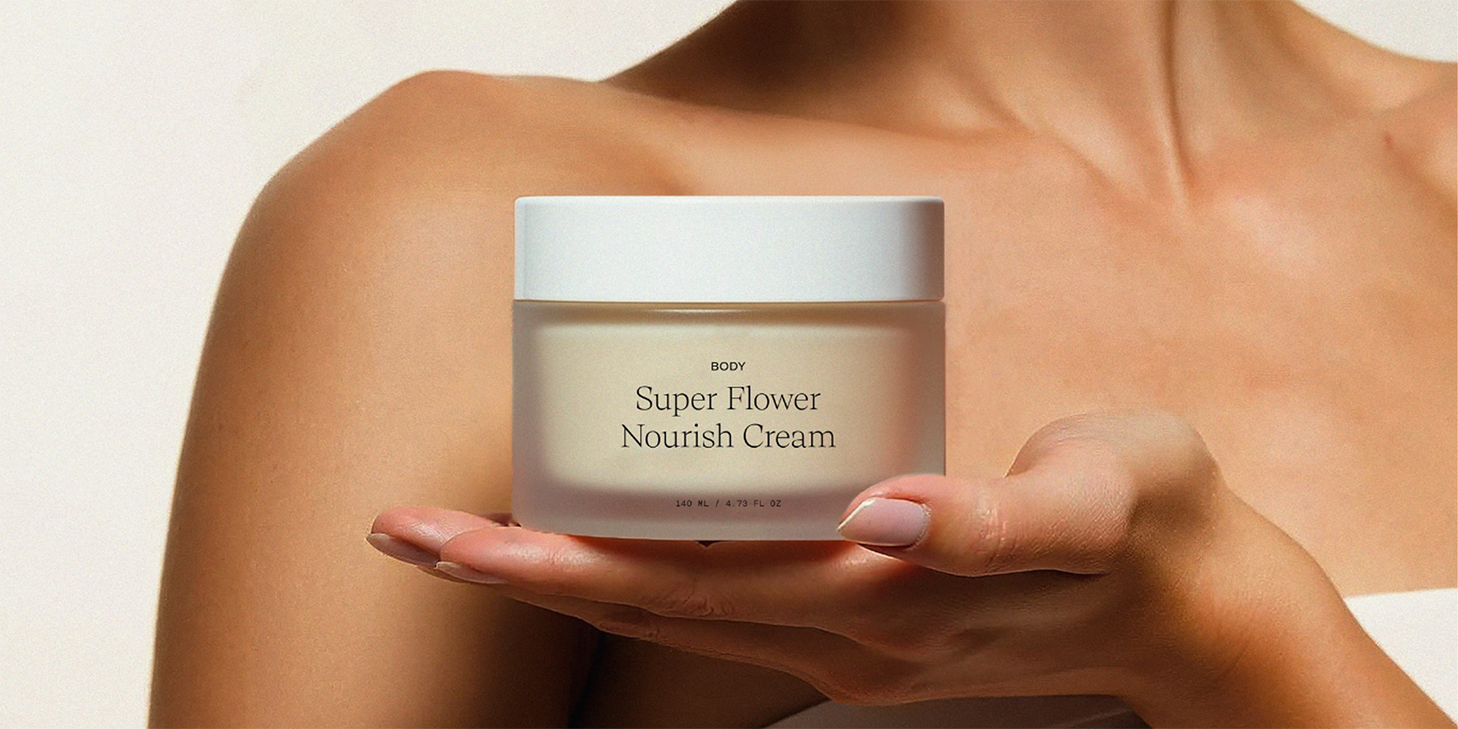

What do you get when you combine two of beauty’s biggest trends: body care and longevity? Garima Ahluwalia believes the answer is Ficus, her new brand aiming to become the AG1 of body care.
After almost two years in development, the brand is live with a single $84 product, Super Flower Nourish Cream, that merges Ayurvedic traditions with South Korean ingredient innovation and Western clinical formulation. The cream contains a 21% concentration of what Ficus describes as a “smart Ayurveda” complex featuring licorice, lotus and marigold, along with a 9% brightening complex and 11% hydration barrier seed complex.
“We are trying to build the most ambitious version of topical supplement skincare,” says Ahluwalia. “It’s the most antioxidant-dense cream you will find on the planet. I benchmarked it against 25 peers selling products from $30 all the way to $300.”

The idea for Ficus began to take shape while Ahluwalia was at CVS Health, where she served from 2018 to 2022 as senior director of omnichannel growth and transformation strategy for the retailer’s beauty portfolio. As the “skinification” of body care emerged, bringing facial skincare ingredients, multistep regimens and premium pricing to a historically commoditized category, she noticed a gap in the market for a more sophisticated approach to body care.
Before CVS, Ahluwalia held roles at Amazon, Lululemon, Boston Consulting Group and McKinsey & Co. She grew up in Kerala, India, a major center for Ayurveda, and her mother, Madhu, introduced her early to Ayurvedic traditions. Ahluwalia previously founded Ayurvedic skincare e-tailer Joly Beauty.
Informed by both science and traditional medicine from around the world, she views longevity as the next frontier for body care. Instead of centering the category on pampering or simple moisturization, Ficus is positioned around preventive skin health, with a focus on inflammation support, barrier strength and extending what the brand calls “skinspan,” a riff on the longevity movement’s concept of healthspan, or the years a person lives in good health.
Body care has recently been a key growth driver within skincare, which, according to market research firm Circana, was up 7% in prestige and 8% in mass in the first quarter this year. Meanwhile, market research firm Grand View Research projects the U.S. longevity wellness market will expand at a 6% compound annual growth rate from $6.35 billion in 2025 to $10.13 billion by 2033.
“We are trying to build the most ambitious version of topical supplement skincare.”
Ficus enters an increasingly crowded premium body care landscape populated by brands such as Nécessaire, Cyklar, Iota, Gente Beauty and Tronque. Ahluwalia foresees the category further bifurcating between consumers willing to shell out for higher-efficacy products and those sticking with lower-cost basics.
Ficus is targeting women in their 30s, 40s and beyond who’ve already upgraded their skincare and aesthetics routines, although she acknowledges convincing consumers to spend $84 on body cream requires a differentiated value proposition. She argues Super Flower Nourish Cream’s concentrated formulation and value on a price-per-ounce basis relative to competitors justify the premium price tag.
“You have to be very compelling in what you are offering because it’s a big ask for women to spend money to cover their body first thing in the morning,” says Ahluwalia. “Longevity is definitely where the growth is going to come from.”
Ficus is self-funded, with roughly $100,000 to $150,000 invested into development. As it tests the market, the brand initially ordered fewer than 10,000 units from its manufacturer. Ahluwalia opted to launch with a single product partly because of the costs associated with erecting a broader assortment, but also because a survey of 300 women indicated consumers still prefer streamlined, one-and-done body care products.
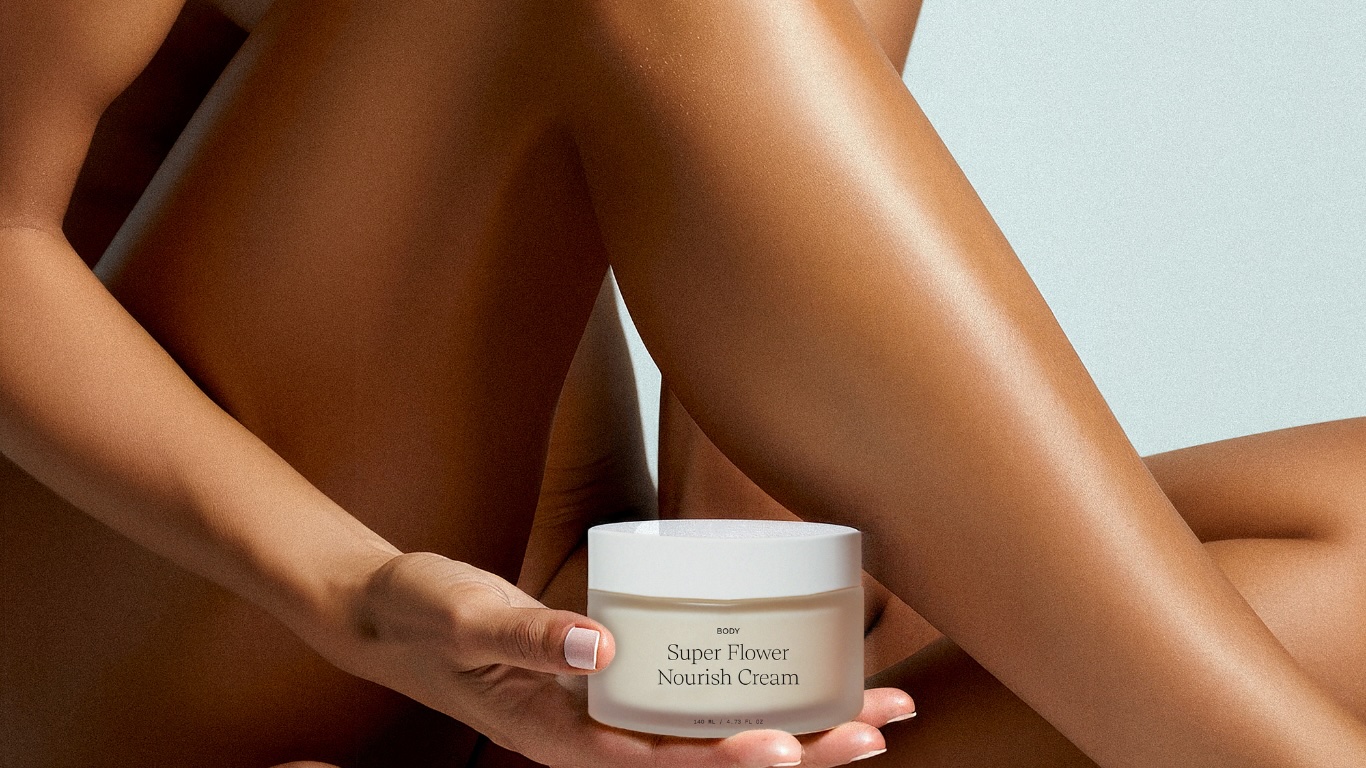
Ficus has nearly completed development on three additional launches, and a scalp treatment could eventually join the lineup, although the brand’s emphasis will remain on body care. However, Ficus isn’t trying to recreate the kind of elaborate multistep regimens common in facial skincare. Instead, future releases may revolve around different usage occasions, including bath products.
Ficus has partnered with Ember, an investment and advisory platform that typically works with consumer companies generating between $2 million and $20 million in revenue, but occasionally incubates earlier-stage startups. The brand tapped labs in Seoul and Los Angeles to formulate and produce Super Flower Nourish Cream, a process complicated by tariff hikes and the limited number of manufacturers able to handle highly concentrated formulas. It anticipates generating around $50,000 in its first quarter of availability. Next year, it could fundraise from friends, family members and angel investors to secure capital to fuel growth.
Ahluwalia named Ficus for the ficus plant, which she says is associated with resilience, wisdom and wellness. Launching direct-to-consumer, she envisions the brand expanding later into bathhouses, med-spas and dermatologists’ offices, where consumers may already be thinking about body wellness and preventive care. Longer term, she hopes to place the brand in beauty retailers such as Credo, Bluemercury and Sephora. For now, Ficus hasn’t delved into paid media, instead relying on brand collaborations, retail pop-ups and organic word of mouth to raise awareness.



Leave a Reply
You must be logged in to post a comment.