
Certainly, today’s beauty shopper loves a good deal, but they want much more than that. They seek proof, quality and a sense of control.
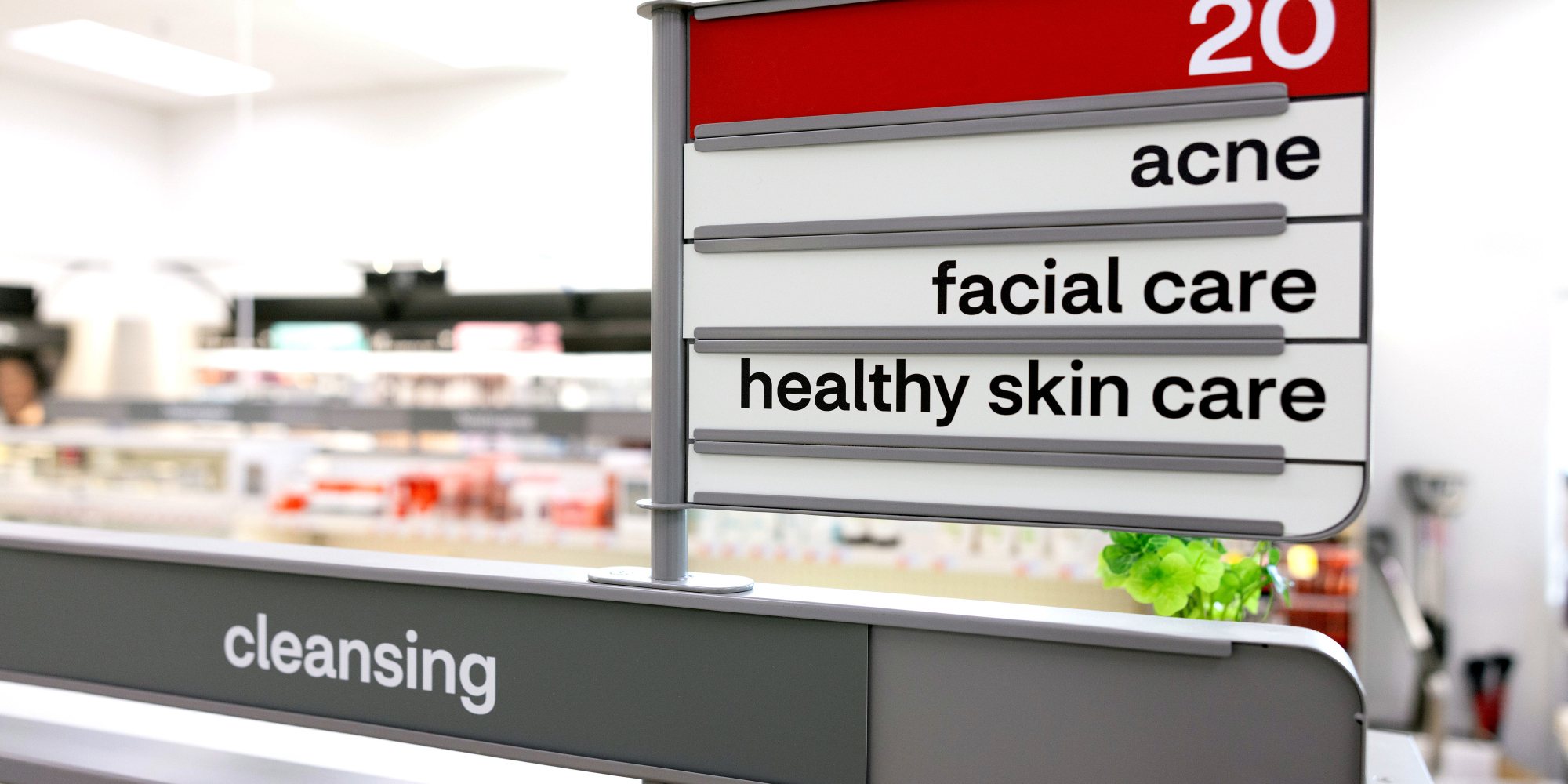
CVS is adjusting its beauty selection to respond to those growth drivers at its stores with efficacy-led skincare, community-informed curation and discovery-driven, low-commitment formats. The strategy builds on the drugstore retailer’s whole-body beauty initiative from last year, which aimed to position it at the forefront of functional beauty and health with an assortment spanning everything from science-backed acne care and scalp health to fragranced body washes and self-care treats.
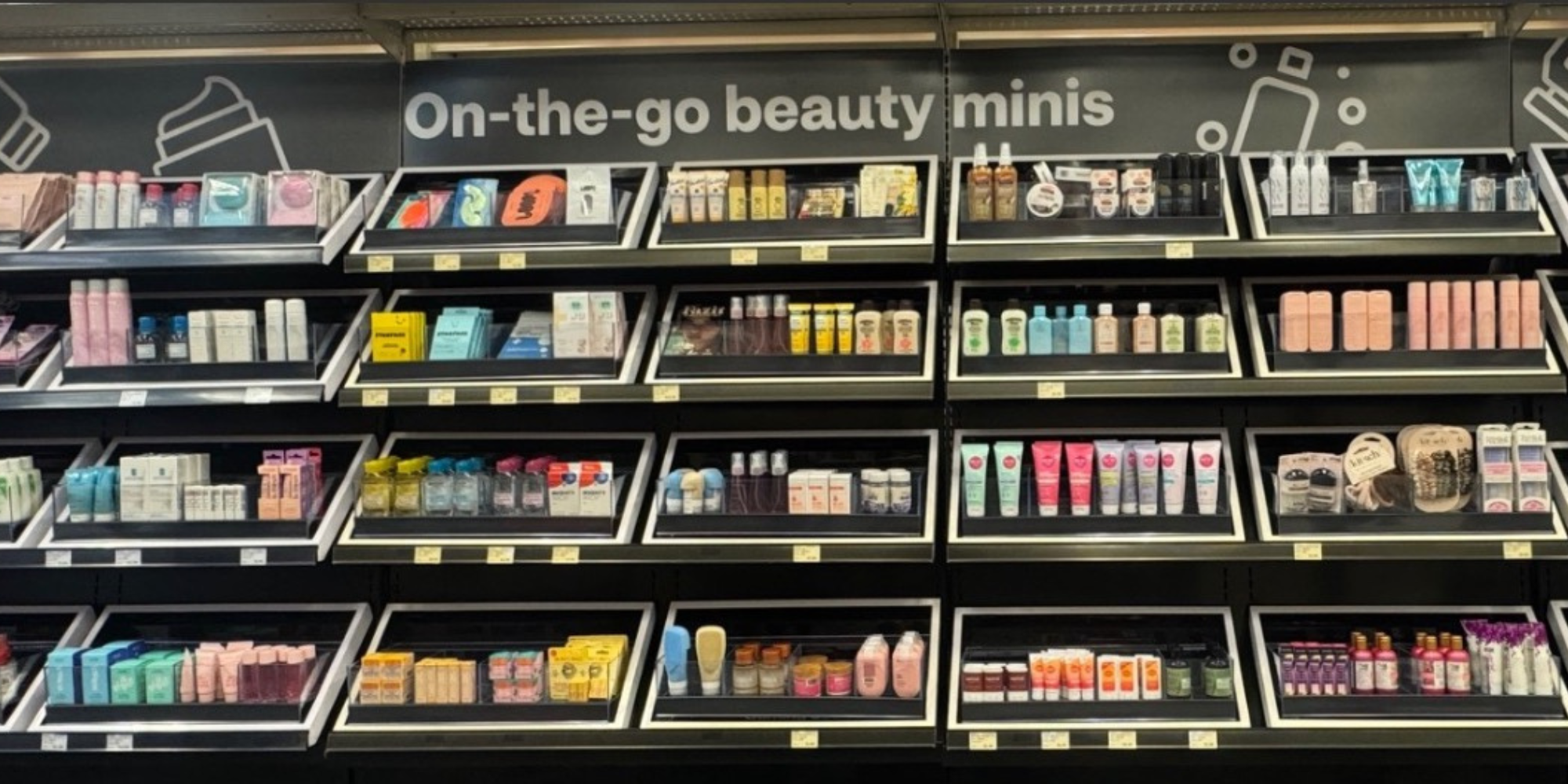
To keep pace with viral beauty trends, CVS launched an expanded “On The Go” assortment of beauty minis last October in 2,700 of its stores. The initiative will roll out to an additional 1,200 locations by the end of the second quarter. It also tapped New York dermatologist Camille Howard-Verović last year to sharpen its expertise in product trends and effective formulas, particularly within skin health.
CVS operates more than 7,000 locations nationwide and stocks about 9,000 beauty and wellness products from over 500 brands. It also runs roughly 33 Navarro Discount Pharmacy locations in South Florida, primarily catering to Hispanic shoppers.
Efforts to boost beauty and wellness are unfolding as CVS’s same-store sales rose 1.5% in the third quarter, the most recent period for which it has reported earnings, following a 3.4% increase in the second quarter. In the fourth quarter of 2024, same-store sales declined 1.2%.
“In 2025, for the total front of store including beauty, we grew customers, we grew trips, and we grew unit share, not just from the drug channel, but of the total market,” says Michelle LeBlanc, VP of merchandising for beauty, personal care and the Hispanic Center of Excellence at CVS. “That’s the way that we grade ourselves. The aperture is bigger than the drug channel.”
CVS has pulled ahead of rivals as drugstore chains have struggled under rising competition and mounting pharmacy costs. The company’s third-quarter revenue rose 7.8% to $102.9 billion, with its pharmacy and consumer wellness division, including retail, up 11.7% to $36.2 billion. Revenue for 2026 is expected to reach $400 billion. Previously, CVS implemented cost-cutting measures, including multiple rounds of layoffs and the shuttering of more than 1,000 stores.
Meanwhile, Walgreens went private in 2025 after being acquired by private equity firm Sycamore Partners and plans to close 1,200 stores over three years. Rite Aid declared bankruptcy twice and closed all of its U.S. stores last year.
Beauty Independent spoke with LeBlanc about how CVS is balancing essentials and experimentation, scaling its minis strategy, deepening its focus on derm-backed skincare and tailoring assortments to shopper needs.
How are you approaching the business this year?
We really are starting from a place of momentum. It allows us to build on the strategy that we’ve put in place and build on the strategic direction that we set last year. There will be an acceleration of our priorities anchored behind that go-to community, whole body beauty spot. We are so committed and focused on listening to our shoppers, and that was the starting point of our strategy refresh last year. We used the voice of our shopper to build an assortment, an experience and an authentic connection that met the shoppers’ needs.
What were smart investments in the category made last year?
I’ll give you three buckets. No. 1, our investment in really going deep in evaluating our assortment. We have continued to bring our shoppers everything from their essentials to their moments of luxury. You saw us accelerate how those assortments came to life in 2025, and you saw us exit some brands and you saw us bring in some new brands.
You’re going to see us continue to accelerate how those assortments pull through at the community level. We’ve been doing that in textured hair. We’ve been doing that in skin health. We do that through our Navarro stores, which have a very different assortment versus CVS. As we take learnings from our localization effort, you’re going to see us be able to take our curation of assortment in a much deeper local way through new tools and capabilities.
The next area I’d highlight I call them moments big and small. I’d use minis as the example here. Minis is a moment of value and discovery and indulgence for our shoppers. You think about the dynamics of the economic environment that we found ourselves in last year. People still want to indulge in beauty. Minis is the space that they are doing that.
Last year, we expanded that space to 2,700 stores, and it’s 12 feet on average. It’s a very meaningful impression of value moment for the shopper. That space is growing 700 times faster than the total quadrant. It is a huge accelerator of growth, and you’re going to see us push that even further in 2026. We’re going to an additional 1,200 stores by the end of Q2, and you’re just going to see us continue to bring in really trending brands like Peach & Lily, ColorWow, Avene, as well as essentials from brands like La Roche-Posay.
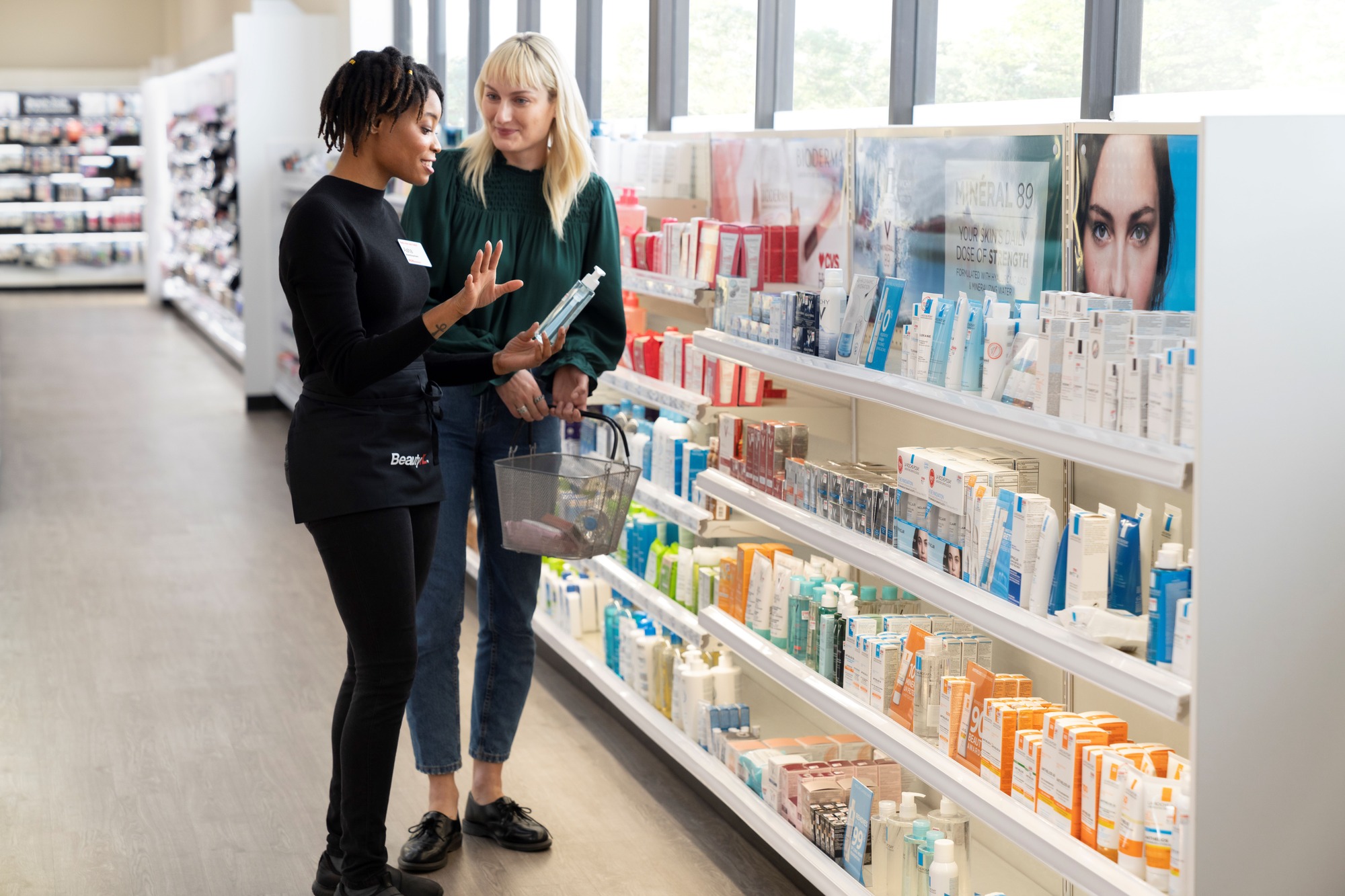
Continuing to fulfill an authentic role with our shoppers is another. We have this history of health-driven commitments that we’ve made for our shoppers. We’re going to continue to build an assortment that’s rooted in trust and balanced with approachable expertise. That comes through our beauty consultants. That comes through our partnership with our dermatologist advisor Dr. Camille Howard.
How did beauty categories perform last year at CVS?
There are so many new brand entrants that come into skin every year, and we’re seeing outsized growth across those brands. At the same time, we are seeing exponential growth year-over-year in those tried-and-true derm-backed brands like La Roche-Posay, RoC, Eucerin, Aquaphor and Neutrogena, like 10%-plus growth.
What does that tell me? That efficacy is currency in skin. Some of the new brands we’ve brought in like Loops and The Face Shop are growing, too. What I love to see is that, in that clinical skin space, we continue to lead. That’s area No. 1.
Area No. 2 is hair. Hair is just an extension of skin at this point. That is how the shopper is thinking about their hair now. We had incredible growth across our hair portfolio in 2025 and anchored in that is some of the new launches where we capture more than our fair share like CeraVe Skin or CeraVe Hair. We’ve seen great growth come from brands that really hone in on that health and wellness element when it comes to ingredients within their hair.
Taking it more macro than fragrances, I will just say scents in general had incredible growth in 2025. I would extend that from fragrances to body mist to personal cleansing. There’s just so much going on with scent profiles with the shopper. It’s a representation of where they are and what they need mentally.
What about makeup?
Color cosmetics would be a place where we needed to look inward a little bit and understand if we were keeping pace with the brands that were driving growth in the marketplace. There are a number of brands we expanded in 2025. Olive & June is a great example of an entrant into nail that has brought not only a younger shopper into our doors, but it’s also driving outsized growth within the nail segment that we were missing.
Same thing with brands like Milani, KimChi Beauty or NYX. We’ve really taken a surgical lens towards which brands we need to make sure that we’re keeping pace with and either expanding or bringing in net-new. That was really the focus for 2025. You’ll see more of that in 2026.
What areas of opportunity are you surfacing?
There is this resurgence of do-it-yourself. During COVID, everybody started to do more hair coloring and nails at home. Then, we all came out of COVID, returned to work, and you saw that pendulum swing back. What you’re seeing now is that we have normalized, but there is still this element of do-it-yourself. There is an opportunity embedded in that.
We recently just did a whole bunch of shopper interviews. What we heard a lot was, my beauty routine is an extension of my wellness routine. I think there is something therapeutic about DIY beauty. It’s broader now than your nails and your hair.
It’s a space that we’re really curious about, and you’ll see something get piloted in a couple of months like a do-it-yourself headquarters that pulls different moments together that starts to create something quite new. That goes back to the whole bringing moments to the shopper as an important piece of our strategy. It was minis last year. You can imagine a world in which perhaps it’s a do-it-yourself headquarters in 2026.
Also, we spend a lot of time talking about her beauty routine. I think we’ve left him behind. That is an interesting space that you’ll see us dip our toes into this year. What we’re hearing from him is that he often feels alienated in places to shop. The two places he says he feels comfortable to shop are online and my local drugstore. So, how do we use that insight, create a space for him and start to talk to him in a way that he feels represented?
What other notable shopping trends are you watching?
About a month ago, Kearney took me through a survey that they had done on beauty. One of the stats that was powerful to me was that 85% of the people that they interviewed ranked high-quality ingredients as important above price and above reviews.
We see that with our shoppers. We’ve got 700 beauty consultants. The majority of questions that they’re getting are no longer like, “Do you have this mascara that I saw that went viral on TikTok?” The questions that they are getting are tied to ingredients in skin health.
Like I said before, there’s a ton of new brand entrants within skin health, but we still see exponential growth. That’s because our shoppers, while, yes, they want to experiment, they also have their favorites and essentials. At CVS, we are the place for those essentials, and you could flip essentials with efficacy.
Another interesting trend is we’re shopping everywhere all at once, all at the same time. This concept of channels is dead, at least from a shopper perspective. I think we’ve spent a lot of time really building a seamless omni-shopping experience, and you’re seeing that start to really resonate with the shopper.
Last year, we started to see expanded consumption in very incremental purchases come through the delivery marketplaces like Uber Eats and DoorDash. On Thanksgiving, we had a spike in color cosmetics. So, how do we use that to our advantage in our go-to market strategy? That’s a place of interest for me in 2026.
Last year, CVS moved skincare to the front of the store in a handful of locations. How has that done?
You’re referencing a pilot that we internally called Blank Slate. If I break down what that pilot did, I will say there were three main chunks of work. One is we pulled skin health to lead the beauty and personal care quadrant. Two is we pulled skin together where it made sense by brand. We created brand shops across face, body, acne and everyday sun. The third piece of that was bringing derm brands together and highlighting that space through lighting and education.
We’re seeing really positive results coming out of that pilot. Moving forward, you will see in us taking elements of that and expanding it versus saying, what’s the next format? We have 7,000 stores. We have to be very surgical and thoughtful on that level of change.
What challenges could CVS face this year?
The fundamentals of retail haven’t changed. I always come back to that shoppers are looking for products that meet a need, want or desire. Shoppers are looking for an experience that matches the occasion of the shop, and that can be very different based on the day, time and person. Then, a shopper is looking for connection and personalization.
Right now, underneath those three fundamentals, things have 1,000% changed 10 times over: the pace of innovation, the pace of information, where they’re getting information, how they’re shopping. So, I’m not trying to minimize how much change has happened in retail, but if you actually think about it, those fundamentals remain unchanged.
As I think about the opportunities or the challenges ahead for 2026 and beyond, I still think it comes back to those fundamentals, making sure that we are obsessive about meeting the needs, wants and desires of our shopper through the curation of our assortment. It comes back to, have we created a seamless connected experience so that they might see something go viral on TikTok, go to cvs.com to make sure that it’s available in the store and get it through BOPIS?
People still want a human connection, too. How do we make sure, at the end of the day, the choices we’re making represent how we need to show up at that intersection of beauty and wellness? That’s the long term. You can’t quantify that, but that’s an intangible to who we are. I do think that drives retailer choice.