Bansk Group-Owned Solid Haircare Brand Ethique Reenters Target With A New Look And Efficacy Focus
Seven years after launching into 50 Target stores and about five years after leaving the chain, Ethique is reentering the retailer under new ownership with a refreshed look and strategy.
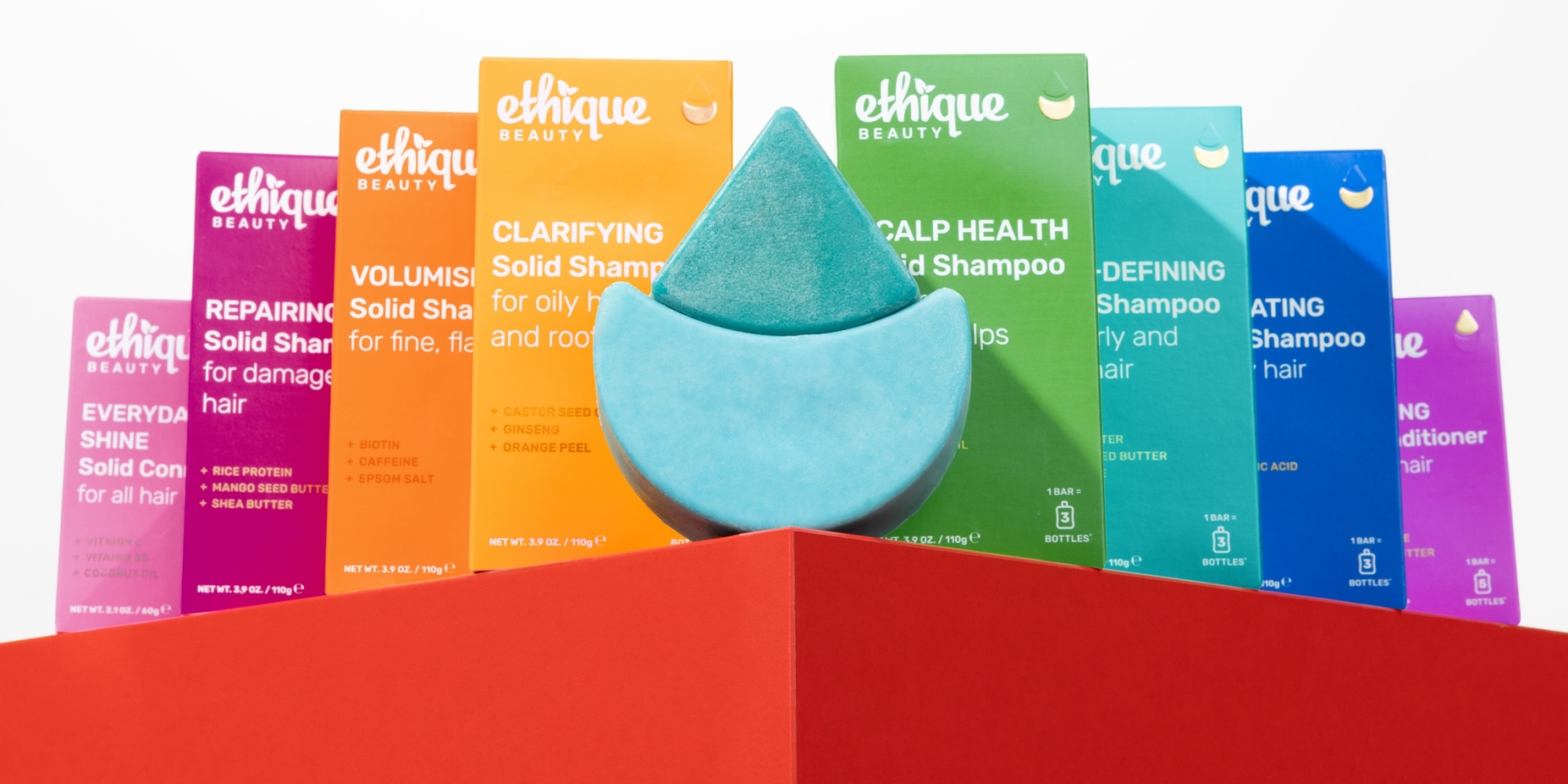
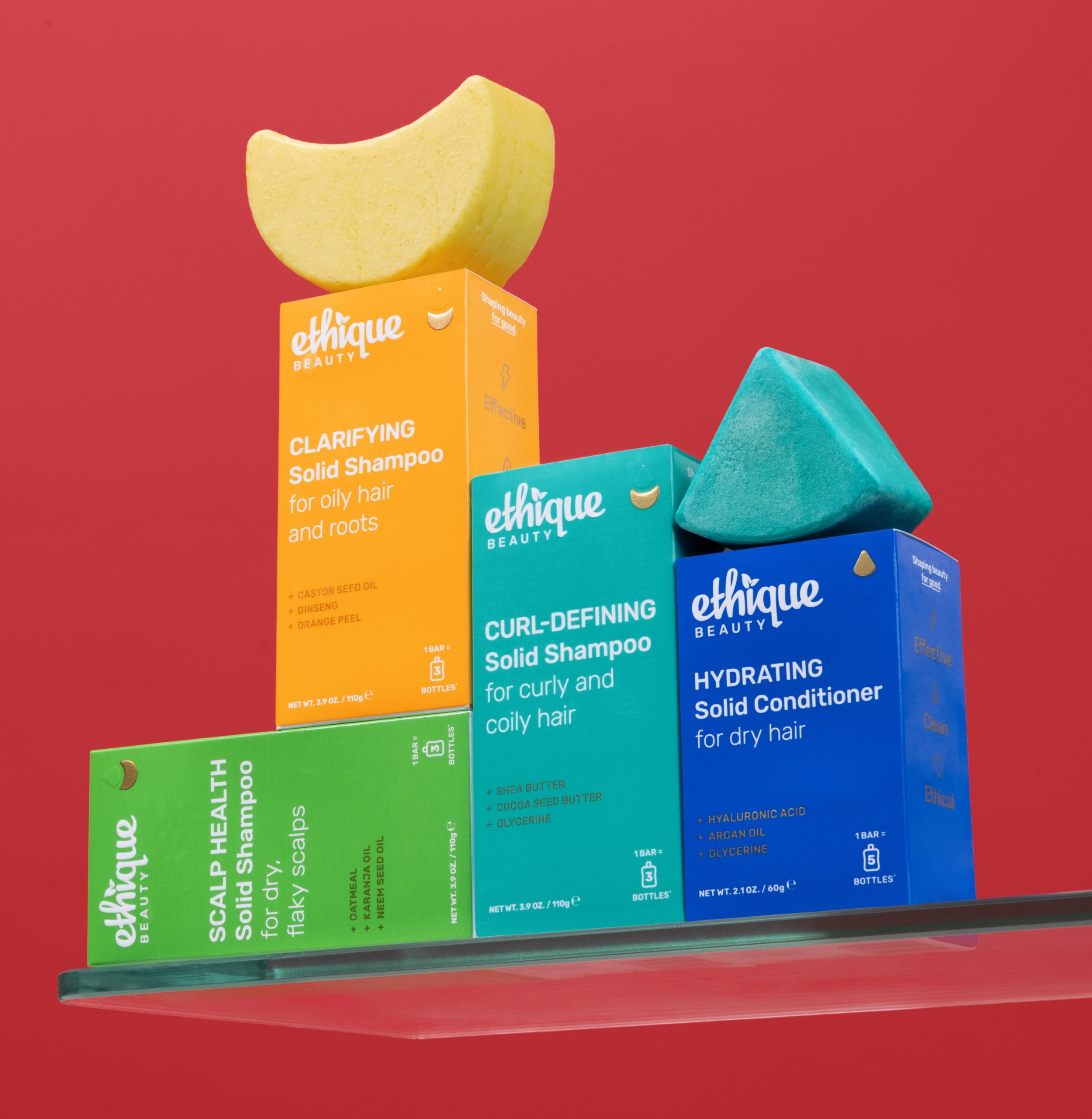
The solid haircare brand is heading to 953 Target doors with 14 stockkeeping units, including its bestselling Scalp Health and Clarifying Shampoo bars. Each bar retails for $14. Following Bansk Group’s 2020 acquisition of Ethique from founder Brianne West, the brand revamped its packaging, product names and solid haircare shapes and refocused its messaging on efficacy and value. The taglines “more actives, better hair” and “1 solid shampoo = 3 liquid bottles” will appear on Ethique’s Target shelf.
Previously, CEO Erica Cocilova, formerly CMO of Briogeo Hair Care, says the brand “went into Target with a limited-edition table opportunity, but the way the product was presented [wasn’t ideal]. It sat in a small square and the packaging didn’t clearly say who it was for, list ingredients or make claims. People didn’t really know how to shop it.” She adds, “Listen, I would love if sustainability was a major purchase driver, but I think we can all be really honest with ourselves. The thing that drives purchase, especially for haircare, which is such a personal thing, is effectiveness.”
Solid haircare has been a difficult sell to American consumers. Although there are a few standout brands, notably Dip and HiBar, the latter a line from beauty and retail industry veterans available at Target, the category has stayed niche. Globally, shampoo bars represented about 10% of the nearly $107 billion haircare market in 2024, according to market research firm Fortune Business Insights. In the United States, that percentage is slimmer, and brands like Superzero, a Sephora entrant that no longer operates a website, and Good Time, a now-defunct brand from the team behind Who Gives A Crap, have struggled.
Cocilova believes beauty has long operated in two camps: sustainable brands and buzzy ones. “Everyone sort of stayed in their lane,” she says. Now, she argues, the two worlds are converging. “You’re seeing brands like ours live on the same shelves as those that are exciting and fun, while also delivering something that makes consumers feel good about what they’re buying and its impact on the world.”
Along with its efficacy- and value-forward messaging, Ethique’s solid haircare shape is intended to ease consumers not familiar with solid formats into its products. Its shampoo is moon-shaped, and an image of the shape appears on Target displays. “One of the confusion points is, how do I use it?” says Cocilova. “We’ve made this shape so that it’s really clear you put it directly on your head. It demystifies things.”
Ethique estimates nearly 80% of its 20- to 45-year-old customers shop mass retail, particularly Target, a popular shopping destination for millennial moms. The brand is also stocked in 1,341 Ulta Beauty doors, across the full Whole Foods store network of roughly 530 doors and in select locations of Raley’s, Wegmans and Mom’s Organic Markets. Founded in New Zealand in 2012, Ethique was available in 22 countries and more than 6,860 stores in 2022. The brand is currently concentrating on North America as its primary growth market. Retail makes up 25% of Ethique’s revenue, but Cocilova expects that figure to increase exponentially with the Target partnership. The brand expects double-digit growth this year.
Social media, and specifically TikTok, is a key traffic driver for Ethique, with 83% of its customers surveyed noting social and influencers as their introductions to the brand. Social posting volume for the brand has increased 233% from 2024 to 2025, and its earned media value has doubled since its rebrand in 2024. EMV is a measure of the monetary worth of unpaid brand mentions and coverage.
Ethique expects to turn to direct-to-consumer distribution mostly for educational purposes and keeping in touch with members of its loyalty program comprised of 2,500 customers known as “eco champions.” The brand often taps them for feedback on new innovations. “The truth is that DTC s a very expensive channel to operate. I think anybody would tell you that, especially right now,” says Cocilova. “When it comes to acquiring customers, if someone so chooses to come to our DTC to purchase, that’s amazing, but what we will continue to do is make it a perfect place for our loyalty consumers and also a perfect education hub.”
Awareness is a big imperative for the coming year. Cocilova mentions that two seconds-long “Good Morning America” segments toward the end of 2025 and the beginning of 2026 garnered $600,000 in revenue and equated to around 35,000 units sold. “When we are in front of a crowd, any crowd, whether that be digitally or on TV or live in person, give us five to 10 seconds with these naked bars, and we’re talking about this story, we get insane reception,” she says. “So, we need to get ourselves out there, we need to be visible, and once we’re visible, we know people are really interested in buying and trying.”
West stepped down as CEO in 2023, when Cocilova was appointed to the position by Bansk Group, and is gearing up to launch Incrediballs, a line of dissolvable, waste-free drink balls designed to eliminate plastic bottles from beverage consumption, in February. Bansk Group’s portfolio houses beauty and personal care brands Amika, Eva NYC and Byoma, as well as Ethique. It recently closed its second fund at $1.45 billion, surpassing its $1 billion target, giving the private equity firm capital to support retail expansion and brand growth across its portfolio.
West was motivated to help eliminate plastic, and Ethique had prevented more than 28 million plastic bottles from being made and disposed of in landfills by the time she exited the brand. Ethique approximates that number has grown to 42 million plastic bottles.