


While the beauty industry has seen several high-profile acquisitions so far this year, overall deal volume is down from last year, though DC Advisory predicts strong M&A activity for the remainder of 2025 and into 2026.
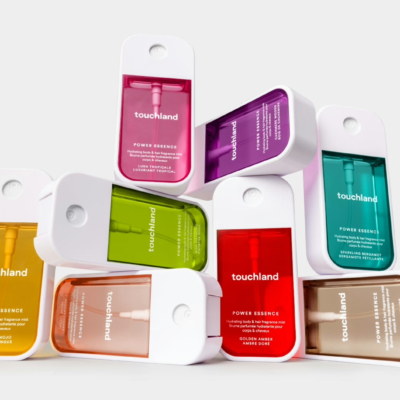
According to data from Mergermarket collected by the investment bank for a report on the state of global M&A, beauty recorded 27 transactions this year through July compared to 52 for the same period last year. Notable 2025 deals include Hindustan Unilever’s $350 million acquisition of a majority stake in Minimalist, Church & Dwight’s up to $880 million purchase of Touchland, and E.l.f. Beauty’s acquisition of Rhode valued at as much as $1 billion. In 2024, the total number of transactions was 90, a substantial dip from 152 in 2023 and 223 in 2022, and 2025 is on pace to fall short of that total unless activity accelerates.
DC Advisory is bullish on M&A activity accelerating due to multiple factors: a backlog of beauty assets at private equity and venture capital firms—the report notes that approximately 80 are held in British firms’ portfolios alone—pending corporate divestitures, continued appetite for beauty products, particularly among young consumers, and worldwide interest in investing in the United States.
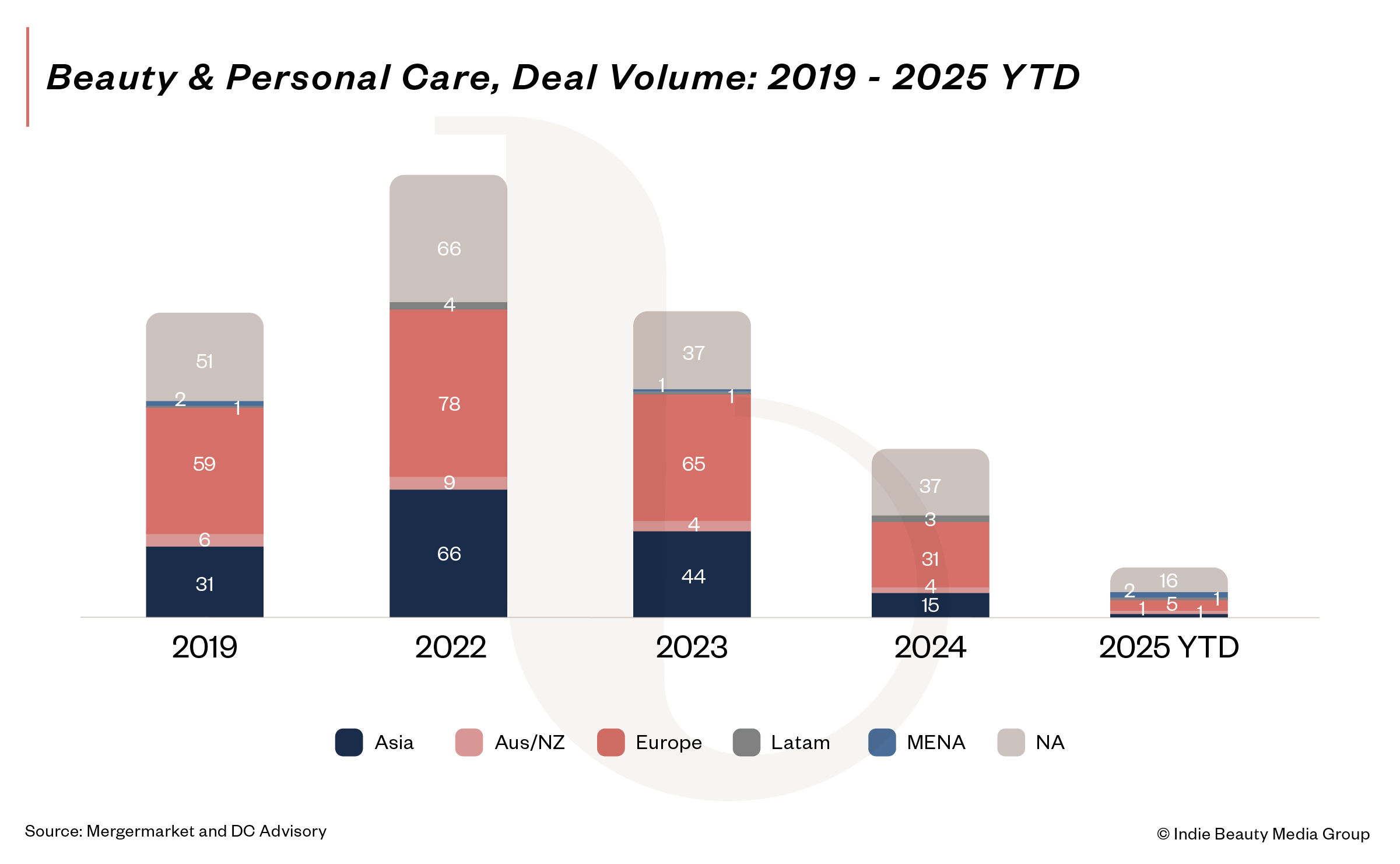
In the report, DC Advisory writes, “We are optimistic that we could see volumes surpassing those of recent years. We have observed a high level of capital raised and attractive brands owned by private equity for a prolonged period. As the pressure to exit builds for these quality assets, we anticipate exit momentum to grow as investors prioritize raising capital and keeping a clean balance sheet.”
Luc-Henry Rousselle, managing director of DC Advisory’s consumer, leisure and retail team with a focus on beauty, says, “Tariffs create a lot of uncertainty in the U.S. around the health of the U.S. consumer and the risk for demand if U.S. prices shoot up. What we are seeing from Asian investors is still a willingness to go into the U.S., which remains high growth and is larger and where a lot of the M&A activity is. They are looking to diversify as a lot feel they are overreliant on the Asian market. Certainly, we are also seeing interest from European companies less exposed to the U.S. market.”
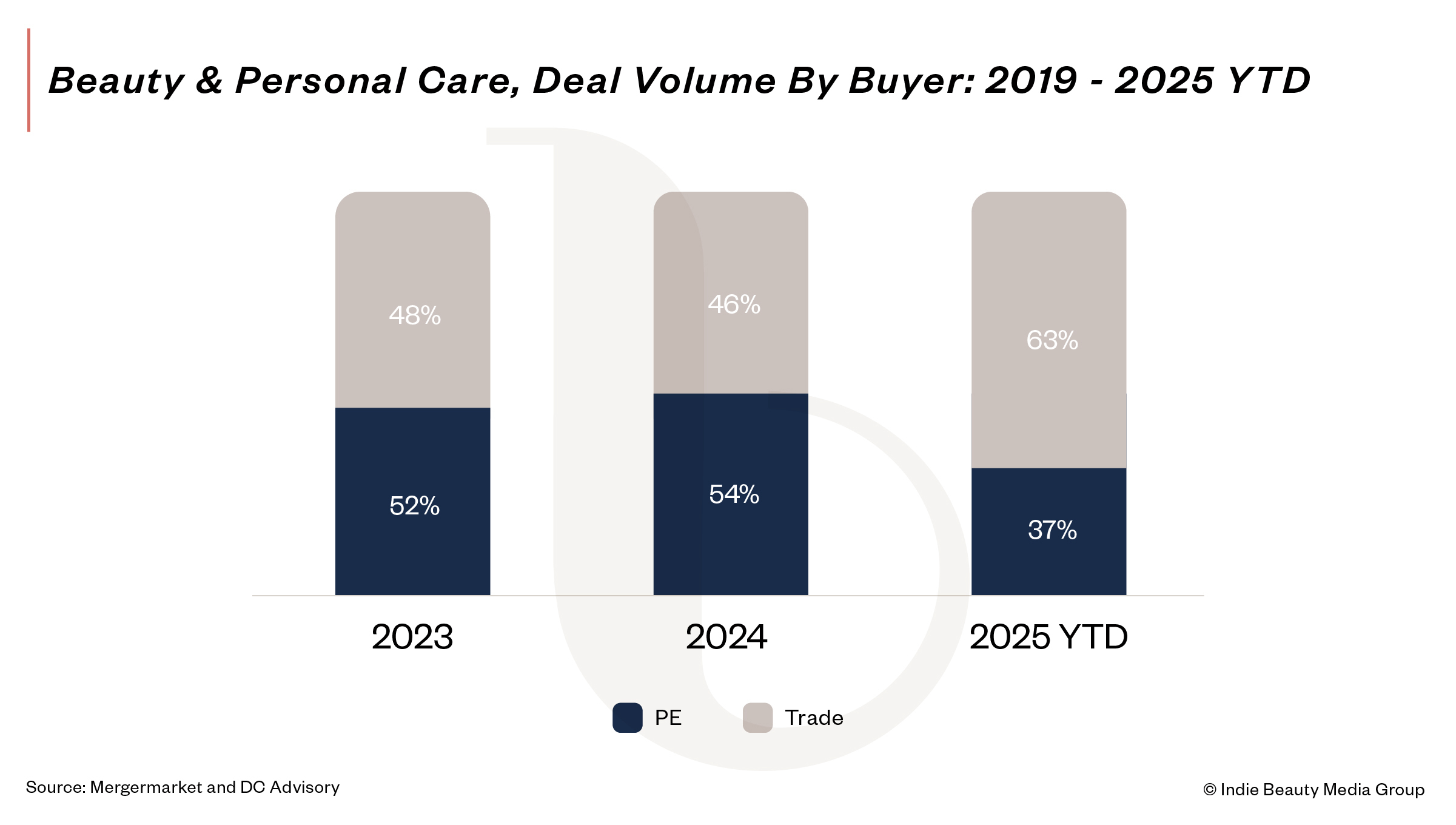
Distinct from 2023 and 2024, when private equity was responsible for a majority of beauty deals, strategic buyers have accounted for 63% of deals this year as corporations seek geographic and merchandise variety. South Korea is an exception, and private equity deals have dominated the country’s 2025 beauty transactions. A significant outlier was conglomerate Goodai Global’s $432 million acquisition of Seorin. The report reasons that private equity firms, although open to opportunities, are exhibiting caution given economic shakiness.
“We are optimistic that we could see volumes surpassing those of recent years.”
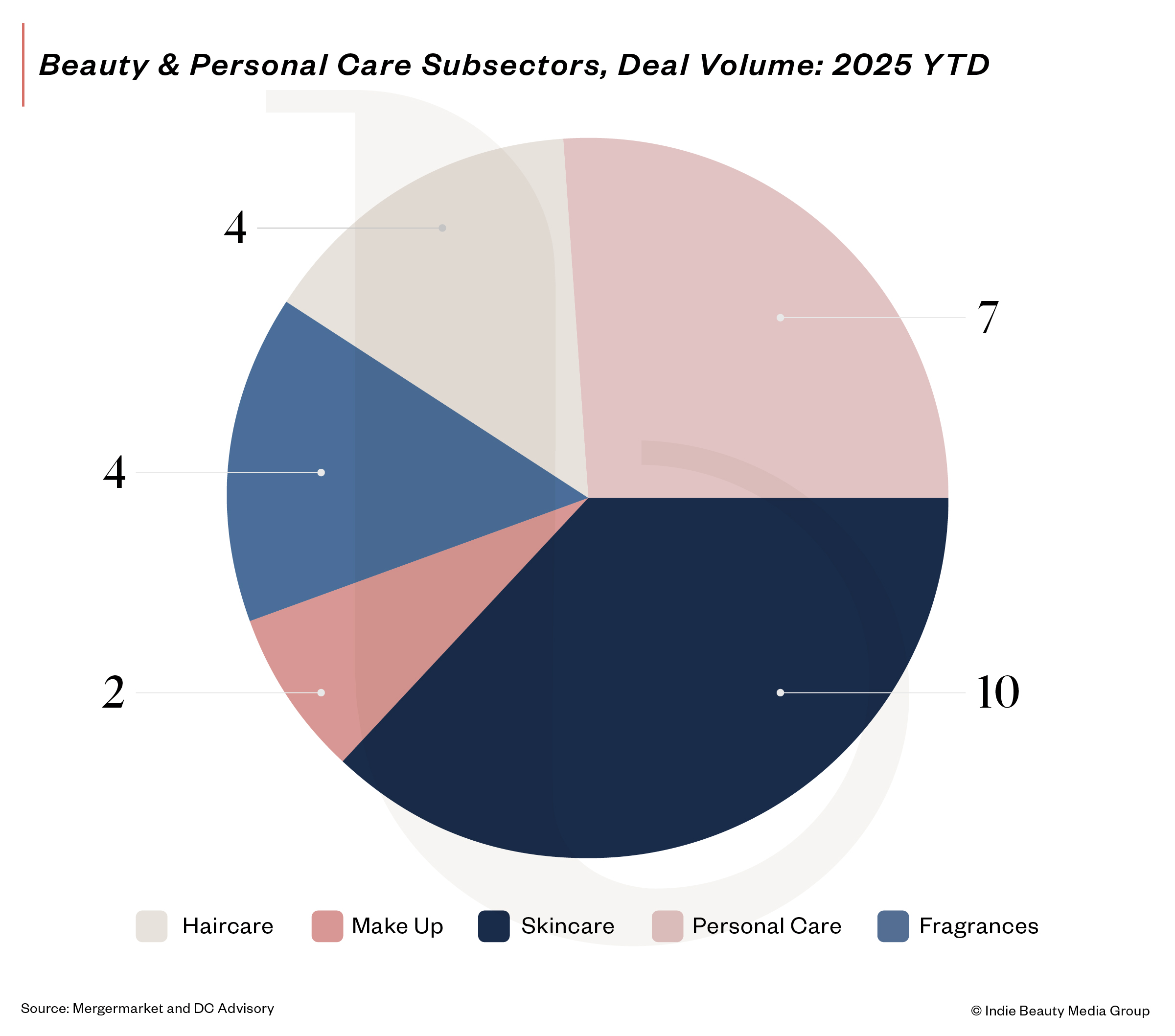
DC Advisory forecasts an uptick in M&A at the intersection of beauty, technology and wellness. The overlap could draw acquirers not accustomed to beauty transactions such as food and beverage or pharmaceutical companies. Science-backed skincare has been prominent M&A fodder, and 10 of the 27 deals this year are in the skincare category, which is expected to remain at the top of the beauty M&A heap. Personal care saw seven deals, fragrance four and haircare four.
Along with skincare, DC Advisory identifies fragrance and haircare as M&A magnets. This year, among the key fragrance deals were TSG Consumer’s investment in Phlur and Compagnie Léa Nature’s acquisition of a 60% controlling stake in Berdoues Parfums et Cosmétiques. L’Oréal’s estimated $1 billion pickup of Color Wow was a stunner in the haircare space, and private equity firm Blackstone invested in South Korean haircare company Juno.
“The luxury fragrance market has been booming over the last two years, especially in the U.S. The broadening demographic appeal – Gen Z currently represents 80% of fragrance users – combined with new consumption habits, have been the main drivers,” says DC Advisory. “Consumers are increasingly ‘wardrobing’ fragrances – buying multiple rather than sticking to one scent – to boost their mood and/or suit occasions. The consumer is becoming more of a collector and seeking niche and indie brands whilst maintaining luxury and uniqueness.”
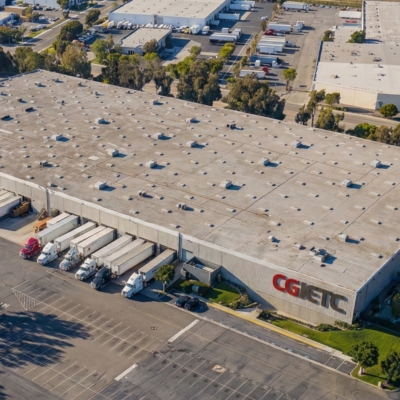
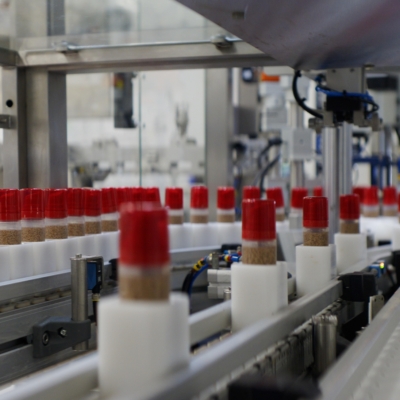
Contract manufacturer dealmaking hasn’t been as robust as previously imagined, but DC Advisory believes investment will increase in the beauty supply chain as companies try to onshore production. Quality skincare and haircare manufacturers are the biggest draw. Supply chain dealmaking hasn’t ceased entirely. In September, Bradford, a solid personal care product manufacturer, announced it purchased aerosol personal care product manufacturer Solo Laboratories.
Cosmetic contract manufacturing company Intercos Group is scouting the American market for skincare and haircare manufacturers to buy. Half of South Korea’s deal volume this year has been from original equipment or design manufacturers as financial players eye expansion of K-Beauty brands globally. In Europe, German pharmaceutical development company Health Group acquired contract manufacturer Beauty Products and British investment firm Schroders upped its stake in beauty manufacturer Creightons.
“The desire is still very high for the strategy of playing the track instead of the horse and being exposed to multiple brands. The desire is from private equity firms or existing platforms acquiring quality tuck-in acquisitions as a lot of these have roll-up strategies and are looking to consolidate within the sector,” says Rouselle. “However, what we have seen is a lack of available scaled assets like single platforms with $100 million-plus of top line.”
“The desire is still very high for the strategy of playing the track instead of the horse and being exposed to multiple brands.”
For beauty brands, there’s a valuation gap between premium assets and the rest. L’Oréal paid an estimated 9X revenue for Medik8, Church & Dwight paid 6.8X revenue for Touchland and E.l.f. Beauty paid around 5X revenue for Rhode. On the whole, in a report in July, investment bank Capstone Partners revealed beauty valuations have averaged 3.6X revenue and 13.5X EBITDA from 2022 through the first half of this year, outpacing the consumer packaged goods industry valuations of 1.9X revenue and 11.2X EBITDA for the like timespan.
Rouselle says, “If you have an asset that’s at scale, $75 million to $100 million-plus that’s growing over 30% that has over 20% EBITDA margins, and you have a beautiful brand, those types of assets will keep commanding very high valuations, especially if you are in the right category and right channel, but brands that fall below that, that’s when we start to see people having aspirational valuation expectations, and when the bids come out, they tend to be lower than what they expect.”
Exploring the international beauty M&A picture, South Korea is a deal hotbed, and there were 18 deals completed in the country last year worth roughly $1.6 billion. DC Advisory predicts South Korean deal volume and value this year will match last year. Private equity consortium led by Taekwang Industrial is acquiring a stake in beauty and personal care product maker Aekyung Industrial and private equity firm-owned cosmetics brand Perennebell is up for sale.
In India, DC Advisory finds there were 18 announced transactions between last year and the first half of this year, 11 involving private equity. Private equity has poured nearly $4 billion into the Indian beauty sector since 2020, but a lack of scaled-up assets has blunted dealmaking. That could change as new age brands commanding 68% of the sector mature. Minimalist, a premium skincare brand started in 2020 by Mohit Yadav and Rahul Yadav that’s likened to The Ordinary, provides an auspicious example.
DC Advisory says Hindustan Unilever’s purchase of the brand “has greatly impacted investor sentiment, demonstrating M&A as a credible exit pathway for the sector and, in our view, could set a precedent for future activity.”
Click here to learn more about Dealmaker Summit happening June 8 & 9 in New York.

Leave a Reply
You must be logged in to post a comment.