
This era of beauty M&A may be defined by a stark divide: bulk up or break apart.
Conglomerates are either doing sweeping deals to create amoebic organizations that take up landmass in their categories to squeeze out competition or shedding large portions of their portfolios that have become a drain.
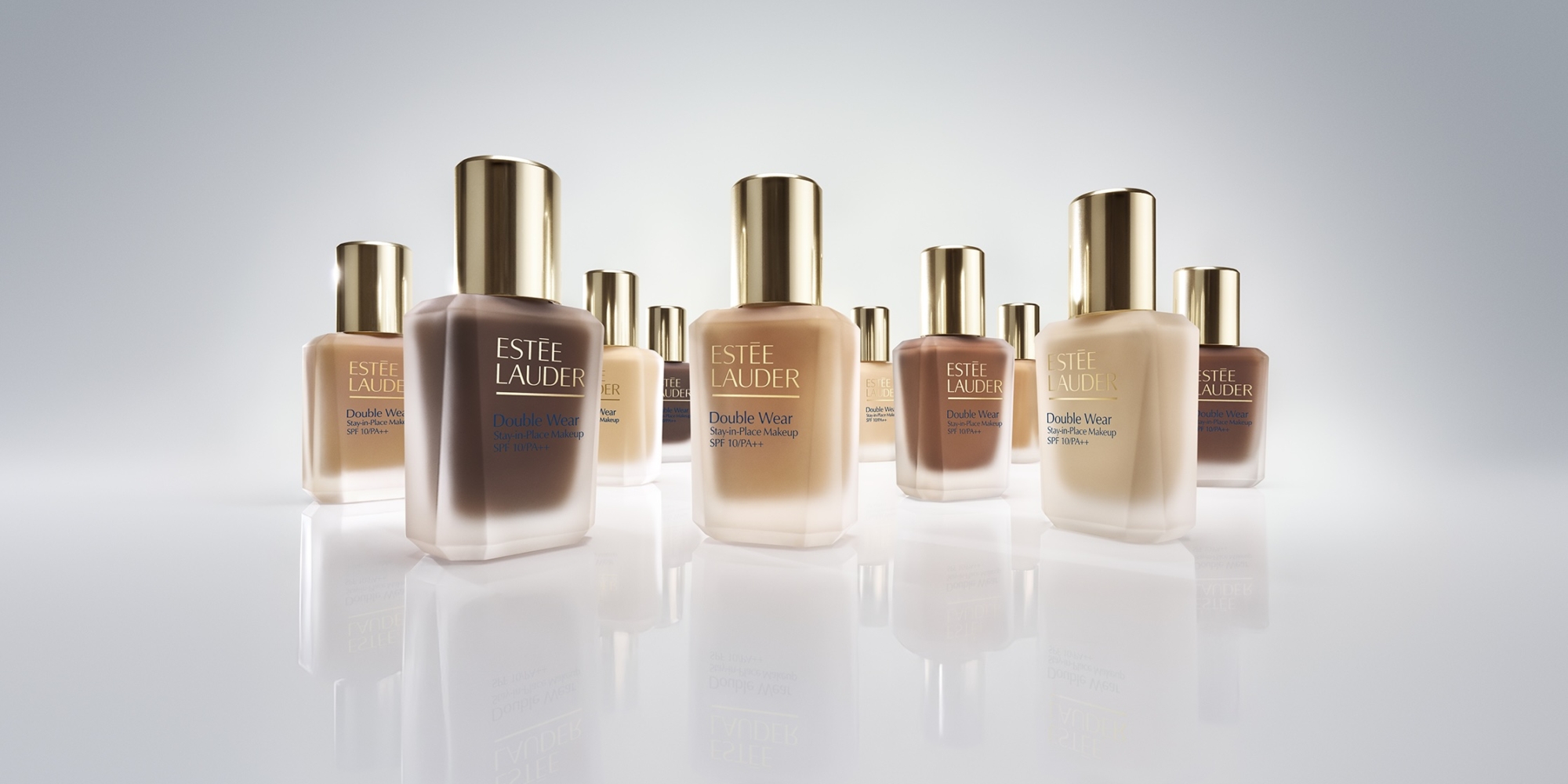
Taking a cue from L’Oréal’s roughly $4.7 billion deal to acquire Kering’s beauty division, The Estée Lauder Companies is reportedly exploring a deal with Puig that could forge a combined company with around 50 brands, a $40 billion market value and roughly $20 billion in annual sales. Responding to news of the possible transaction earlier this week, Puig’s stock rose in the mid-single digits, while Lauder’s fell by high-single digits.
The deal would give both companies a rare opportunity to gain massive scale in prestige beauty and a stronger position to battle L’Oréal. Lauder would benefit from Puig’s historic strength in fragrance—its portfolio includes Byredo and the perfume licenses for Rabanne, Carolina Herrera and Jean Paul Gaultier—and adds a formidable force in makeup with Charlotte Tilbury. The company has struggled in makeup, as its attempts to offload Too Faced and Smashbox suggest.
The market, however, saw the most upside for Puig, which is roughly a third of the size of Lauder by sales. The merger would provide it with greater presence in skincare, a category it has long tried to penetrate further, and a deeper global footprint.
A major obstacle to the deal could be governance. Puig and Lauder are controlled by founding families, complicating any agreement on leadership and structure. Beyond that, integrating a skincare-heavy, operationally centralized company with a fragrance-led group holding key licenses would be a significant test. Enormous integrations have a mixed track record in beauty (see Coty’s acquisition of 43 Procter & Gamble brands).
Industry insiders have also questioned what the deal would mean for brand stewardship at a time when challenger brands are siphoning market share from incumbents. Puig has developed a reputation as a strong home for brands like Charlotte Tilbury and Byredo, building on their DNA even within a larger organization. Lauder, by contrast, has struggled to integrate younger, fast-moving brands.
Although completion of the merger remains uncertain, for this edition of our ongoing No Stupid Questions series, we’re assessing its viability. We asked 13 investors, investment bankers and consultants the following: What do you see as the biggest benefits and drawbacks for each party? Can these two beauty juggernauts realistically integrate without losing focus? What does this deal signal about the state of growth in prestige beauty today? What are the future implications for M&A? Does it accelerate consolidation across the category or create new opportunities for smaller players?
-
 Nicole Fourgoux Operating Partner, Stride Consumer Partners
 The best way to understand the potential benefits and risks of a Lauder-Puig combination is to start with why L'Oréal has been able to outperform for so long. L’Oréal is uniquely diversified across three dimensions: distribution channels spanning mass, prestige, professional and derm; categories across skincare, haircare, makeup and fragrance; and geographies with true global scale.
That structure gives them a 360 view of the beauty landscape and the ability to respond to change in real time, shifting across categories, regions and channels as dynamics evolve. In a market defined by disruption, that flexibility is a significant competitive advantage.
By contrast, most beauty companies are more concentrated and therefore more exposed to swings in category demand, geographic volatility or channel shifts. From that perspective, the strategic appeal of a combination between The Estée Lauder Companies and Puig is clear. It would represent a step change in diversification for both companies.
The benefits for each side are distinct. For Estée Lauder, this is primarily about strengthening its position in fragrance, adding new engines of growth and broadening channel and geographic reach. For Puig, the upside is significantly greater scale, deeper skincare capabilities and accelerated access to the U.S. market through Estée Lauder’s infrastructure.
There are also meaningful synergies in brand building, particularly the opportunity to extend Puig’s fragrance-led brands into adjacent categories like makeup and skincare using Estée Lauder’s development and go-to-market capabilities, not dissimilar from what L'Oréal has been doing with brands like Valentino and Prada and is likely planning to do with the Kering licenses.
The drawbacks are equally clear. For Estée Lauder, the risk is timing and complexity, taking on a large integration while still in the middle of a turnaround. For Puig, the risk is losing some of the focus and brand stewardship that has been a source of its success within a larger, more complex organization.
That leads to the central question of integration. It is possible, but likely very complex to manage, given these are two organizations with different operating models, one more centralized and skincare-led, the other more decentralized and with a portfolio of key licenses, as well as strong founding family influence on both sides.
Success would require very clear governance, disciplined brand management and the ability to preserve speed in decision-making. Without that, scale can quickly become a disadvantage rather than an advantage.
Stepping back, this deal also says a lot about where prestige beauty is today. Growth is still there, but it is more uneven, more competitive and more expensive to capture. As a result, scale and diversification are becoming more important, not just to drive growth, but to protect against volatility across categories, geographies and channels.
In terms of M&A, this points to a more polarized market. At the top, it likely accelerates consolidation as large strategics look to build broader, more resilient platforms.
At the same time, it creates opportunity for smaller brands over the longer term, as larger platforms will continue to rely on new brands to fuel innovation, now across more diversified channels and geographies. Independent, founder-led brands tend to win on speed, brand clarity and cultural relevance, areas that larger conglomerates will need to address as they look to capture emerging consumer needs that their existing portfolios do not fully serve.
So, while a transaction like this may strengthen the competitive position of the combined company, it also reinforces a broader dynamic in beauty today: scale is increasingly valuable, but it is not sufficient. The winners will be the companies that can combine breadth with agility, not just size.
- Joël Palix Founder, Palix Unlimited
Scale is back at the center of the equation in prestige beauty, driven by a combination of structural factors:
- Slowing global growth
- Rising consumer acquisition costs, fueled by the concentration of social media platforms and tougher negotiations with increasingly globalized retailers
- Continued share gains from agile, fast-moving indie brands
Against this backdrop and faced with the dominance of L'Oréal Luxe (from 9 billion euros pre-Covid [or around $10 billion] to 13 billion to 14 [or around $14 billion to $15 billion] billion today, with powerful growth engines such as Creed, Gucci, Medik8, Aesop or Amouage), other industry leaders are under pressure to respond with bold, strategic moves.
For Estée Lauder, I think the rationale is quite clear. The deal would significantly strengthen its position in fragrance—the most dynamic category in prestige—through Puig’s portfolio (Rabanne, Carolina Herrera, Jean Paul Gaultier, Byredo).
It would also bring renewed momentum in makeup via Charlotte Tilbury, a category where Lauder has structurally underperformed. More broadly, it would inject growth, desirability and cultural relevance into a portfolio that has become heavy and uneven.
For Puig, the upside is more transformational in my opinion. It would gain scale in skincare, deepen its capabilities in Asia and access a truly global infrastructure. Crucially, it would accelerate its evolution from a fragrance-led group with key licenses into a fully diversified prestige beauty player.
However, I believe execution risks are significant. This is not a natural integration. Lauder is skincare-led, centralized and operationally heavy, while Puig is fragrance-driven, entrepreneurial and highly brand-centric. Bringing these cultures together without slowing down Puig or over-complicating Lauder will be challenging.
Governance is another key hurdle. Two founder-controlled groups with strong identities make alignment on leadership and decision-making complex. Puig has demonstrated its ability to scale brands while preserving their DNA. Lauder, by contrast, has struggled to integrate newer, more agile brands into its structure.
If the combined group adopts a federated model, preserving brand autonomy and avoiding over-centralization, the deal can create value. If not, it risks diluting the very strengths it seeks to acquire.
In essence, this is a high potential, but high-risk transaction, less about cost synergies and more about rebuilding growth engines through complementary strengths. The closest precedent remains the P&G beauty brands divestiture to Coty, which effectively tripled Coty’s size overnight, offering a clear reminder that scale alone does not create value, disciplined integration does.
- Marissa Lepor Managing Director, The Sage Group
The beauty industry is never short of surprises! Estée Lauder has been evaluating its strategic priorities in recent years, and while acquiring Puig might not be the most straightforward strategy, I find it quite compelling. Both businesses have a strong heritage, with founding families and a commitment to expert-led brands.
While each brand in their respective portfolios is unique, both companies have successful brands across key beauty categories: skincare, makeup, fragrance, etc. Estée Lauder has more experience in the professional haircare sector with Aveda and Bumble and Bumble, while Puig has more experience in licensed fragrance. Both are robust verticals that could be built out over time through strategic internal investments and curated acquisitions.
Further, there are parallel success stories across each portfolio. For example, it’s likely that makeup brands MAC (Estée Lauder) and Charlotte Tilbury (Puig) could complement each other within a portfolio, just as Clinique (Estée Lauder) and Dr. Sturm (Puig) could be complementary from a skincare perspective.
Interestingly, both Estée Lauder and Puig have had significant success in fragrance. Le Labo and Jo Malone are strong brands in the Estée Lauder portfolio, with differentiated positioning and omnichannel distribution, including owned retail stores, paralleling Puig’s success with Byredo. As I mentioned, Puig has also seen significant success with licensed fragrances such as Rabanne, Carolina Herrera, and Jean Paul Gaultier, a strategy that Estée Lauder has deprioritized over time.
Will this drive more M&A? In the near term, an acquisition of Puig would likely lead to a focus on integrating the existing portfolios, with perhaps some divestments along the way.
But in the long term, yes, I do think this is exciting from an M&A perspective. There are only a handful of strategic buyers that can afford $1 billion-plus acquisitions and a combined Estée Lauder–Puig would be a formidable acquirer of larger beauty brands, especially those with a differentiated perspective and a strong, expert-led vision.
- Colleen Funkey Founder, Grey Zebra Consumer Insights & Brand Strategy Consulting
Much of the discussion so far has focused on the business risks and opportunities of a potential integration. What’s missing is a clear view of how an integration would actually improve the consumer experience. Beauty companies exist because beauty consumers have needs to meet, be that functional or emotional, and they seek out brands that address those needs in a relevant and meaningful way.
By definition, that means brands will win if they have a clearly defined audience for whom they meet specific needs in a way that feels like a fit for consumers. Another way to think about relevancy is whether your brand would pass the “T-shirt’” test. In other words, would your consumer proudly wear your brand name because they feel genuinely aligned with what it represents?
If we shift our perspective to consider what a potential integration of ELC and Puig means for consumers, we see both benefits and risks. On the upside, consumers gain access to more brand options that enter their purchasing ecosystem enabled by broader distribution. Some consumer groups would suddenly get access to new and interesting brands, and the shopping experience might feel more holistic versus fragmented across different categories.
The drawback might be that things start to feel the same over time as consumers increasingly see similar product formats and overlapping trends across brands. Brands that once felt unique and special—as brand health trackers call “a brand for someone like me”—could start to lose their distinctiveness due to an erosion of what made those brands resonate in the first place.
For consumers, the benefits are greater access and potentially a more seamless experience. The downside is a sea of sameness with brands that begin to feel interchangeable and lack emotional pull. Beauty is inherently expressive, rooted in individuality. When brands start to blur together, the emotional connection with the consumer breaks down.
The real challenge for any combined house of brands will be maintaining consumer relevancy while the organization gets even bigger. Consumer centricity is the foundation of the category, so the question for both parties to consider: What, exactly, is in it for the consumer?
- Elizabeth Lim Strategic Advisor & Brand Strategist
The potential combination of The Estée Lauder Companies and Puig signals a more deliberate shift in prestige beauty. This is not scale for the sake of size, but a strategic rebalancing toward the categories and capabilities defining modern growth.
A more balanced portfolio for the next phase of growth:
For Lauder, this is about strengthening cultural and category relevance. Puig brings authority in fragrance, one of the most resilient and emotionally driven segments, with brands like Byredo, Carolina Herrera and Jean Paul Gaultier. The addition of Charlotte Tilbury introduces renewed momentum in the makeup category for the company.
For Puig, the opportunity is transformational: greater exposure to skincare and a broader global platform position that enables the company to participate more fully across the prestige beauty ecosystem.
Where alignment will matter most:
This brings together two family-influenced organizations with strong identities and long-term perspectives. Alignment on governance and decision-making will be critical.
Just as important is reconciling operating philosophies. Lauder’s scale-driven structure and Puig’s brand-centric approach each represent strengths. The integration challenge will be to preserve both without compromising speed or clarity.
Execution will define success:
The advantage lies in selective integration. The opportunity is to build a more flexible model that supports distinct brand voices while leveraging shared capabilities where they add value.
If approached with discipline, this could mark an evolution in how large beauty companies operate.
A signal of where prestige beauty is heading:
This moment reflects a broader recalibration. Growth is concentrating in specific categories, and leading players are adjusting accordingly.
Moves like L'Oréal’s acquisition of Kering Beauté assets reinforce the same direction. Scale is increasingly defined by the strength and diversity of growth engines, not just portfolio size.
At the same time, Lauder’s acquisition of Tom Ford and Puig’s deep ties to designer-led houses point to something broader. This is not just a beauty consolidation story. It begins to move the combined company closer to a luxury platform model, positioning it not only against L’Oréal, but increasingly in the orbit of LVMH.
Implications for the broader landscape:
At the top, consolidation is likely to accelerate as companies sharpen their positioning.
At the same time, increased scale often creates whitespace. Emerging brands that are culturally fluent and highly focused will continue to capture attention and shape the next phase of innovation.
Bottom line:
This has the potential to be a defining move for the overall beauty landscape. Success will depend on maintaining clarity of vision, protecting brand equity and building an organization designed for how beauty is evolving today.
- Manica Blain Founder, Top Knot Ventures
I can see the strategic logic, even if neither business is exactly flush with cash right now. In some ways, this feels like a case of one plus one potentially equaling three and not because the businesses are identical, but because they’re complementary. Puig brings real strength in fragrance and founder-led brand-building, while Estée Lauder brings global scale and a much deeper legacy in skincare.
What a combination like this could unlock—and I think this part is underappreciated—is the ability to use the combined entity’s equity as a more powerful currency for future M&A. Even if balance sheets are constrained, a larger, more diversified platform can be more credible in pursuing add-on acquisitions, particularly in a market where founders are increasingly open to partial liquidity or strategic partnerships rather than full exits.
I also think of the number of color brands on the market that haven't found a home yet. Could a combined Puig-ELC entity be a stronger home for some of these assets?
That said, the larger the deal, the more complicated. Integration risk here is real, especially given how different the two operating models are, and the fact that Lauder is still very much in the middle of its own reset. Scale can be an advantage, but it can just as easily become a distraction.
There’s also a cultural layer here that I don’t think is insignificant. Estée Lauder has gone through a period of meaningful leadership turnover over the past several years, and, fairly or unfairly, there’s been a narrative in the market around cultural challenges within the organization.
It’s worth noting that Stéphane de La Faverie is still relatively early in his tenure, and much of that context predates him. If anything, you could argue that a transformative transaction of this scale, particularly one that introduces a different operating DNA, could align with a broader effort to reset and re-energize the culture. Not a guaranteed fix, but potentially a meaningful catalyst.
What I find particularly interesting, though, is that, for all their differences, these are also two of the very few true beauty behemoths that took early, meaningful bets on Ayurveda, Estée through Forest Essentials and Puig through Kama Ayurveda.
And you can see a similar pattern in how Estée moved early on Deciem. Less than a decade ago, it was a relatively small, unconventional bet, but today Deciem represents one of the most significant pieces of Estée Lauder’s skincare portfolio. That’s not a coincidence. It suggests that both organizations, in their own way, understand that small, non-obvious bets can become very big businesses, very quickly.
So, to me, the bigger question isn’t just whether this deal creates scale; it’s whether this deal enhances the combined entity's ability to continue spotting and backing those kinds of opportunities and white spaces early and creates the kind of environment where those brands, and the people building them, actually want to stay. I think that's where the next wave of growth in prestige beauty is coming from.
- Gloria Luna Principal and COO, The Glow Group
Rewind to October 2025 when L’Oréal acquired the Kering Beauty portfolio. It was apparent even then that its implications would reach far beyond the L’Oréal and Kering universes, though the full impact was hard to grasp in the moment. Fast forward to 2026, and the industry is now buzzing about a mega‑merger between Estée Lauder and Puig.
The strategic advantages to both for category diversification and expanded global reach are clear. What is less clear is the path to integrating two very diverse organizations. Some cite concerns about Lauder losing focus on their “Beauty Reimagined” strategy just as it’s trying to reignite growth and profitability.
For Puig, the timing is notable given its recent CEO transition. A successful integration would require Lauder to preserve the independence and creative edge of Puig’s brands, something Puig has historically done well. And with both companies rooted in family heritage, there’s potential for cultural alignment that could ease the transition.
At a macro level, these moves signal a new phase in beauty M&A. The biggest players aren’t buying brands for quick wins anymore. They’re building platforms designed to withstand volatility.
L’Oréal’s Kering deal and the Estée Lauder-Puig discussions reflect a shift toward rebalancing portfolios rather than simply expanding them. This accelerates consolidation at the top while creating fresh opportunities for niche innovators to lean into what makes them unique. The pressure is rising for every brand to pick a lane: scale up or specialize.
- Shamin Walsh Managing Director, BAM Ventures
Both sides have a legitimate strategic rationale, but, like any merger, it all comes down to execution. For Lauder, the deal fills a critical gap in fragrance, which is the industry's fastest-growing category and a notable weak spot for them.
For Puig, it unlocks the skincare capabilities and global distribution infrastructure it can't replicate on its own. Combining a larger company with established scale with a smaller one that's proven it can move quickly and steward brands with real creative integrity theoretically makes sense if they each respect and draw on each other's strengths.
The risk is that strategic logic rarely survives contact with integration. These companies have very different cultures, both organizationally and in heritage. Lauder runs a centralized infrastructure, whereas core to Puig's success is a decentralized, brand-centric model.
Lauder is also mid-turnaround, which could present either another layer of complexity or an opportunity. On one hand, a company already eliminating thousands of roles may find it more efficient to integrate, removing redundancies across both entities in one reorganization. On the other, managing a turnaround and a merger are both enormous feats independently, let alone simultaneously.
I think the transaction ultimately reflects why enterprises keep choosing a buy over build approach. It's extremely hard to create a brand with double-digit year-over-year growth and to take full advantage of new channels like TikTok when you have layers of process and decision-making. Acquisition enables large players to maintain market dominance when they've reached a size where they can't go zero to one anymore.
This deal also reinforces the endurance of smaller brands. Indie brands are better at creating an original emotional connection with consumers, and the acquisitive need of conglomerates to ensure their portfolios don't grow stale will continue to provide a path to liquidity and growth for the ones that break through.
Ultimately, where this succeeds or fails will come down to how effectively these two leverage scale where it truly serves an advantage while preserving the core elements of what's made Puig's brands special to date.
- Lindy Firstenberg Director, Beauty, Health and Wellness, AlixPartners
Marriage 101: (A) What do you have in common to ground your relationship? (B) What do you bring to the table to complement one another? (C) Can both parties overlook those less desirable parts for decades to come? (D) Does the union make sense within the context?
(A) Common ground: ELC and Puig are, at their core, family businesses. That remains true today in terms of how each company treats their employees, defines office culture, delivers meaningful benefits and uplifts those within. Up at those prestigious price points, the companies are in good company with each other. They’ve been in talks for over a decade for a reason.
(B) Complementary assets: ELC is bringing noteworthy R&D, robust manufacturing and (perhaps overly) strong Chinese distribution. Puig is bringing (lots of) fragrance, Charlotte Tilbury and strong European distribution. For ELC, this is an easy way to start cleaning up its color cosmetics business (RIP Smashbox and Too Faced) and beefing up fragrance. For Puig, this is a chance to gain truly global reach overnight and a promotion from the Championship to the Premiere League (for my fellow football fans).
(C) Has the turnaround of ELC’s operating model been successful or could this become a fragrance- and Tilbury-colored gloss to cover up some older chapped lips? A big wedding does give people something to talk about, but there is the risk that, after the chairs are put away, their joint reliance on department stores and other archaic channels is laid bare.
(D) Environmental context: It boils down to: How do you compete with the pure horsepower of the largest beauty conglomerate, L’Oréal? Right now: M&A. Beauty in 2026 is about either being agile, innovative and speedy or outmatching on scale. At the end of the day, the answers to A, B, C, D should yield a (very) viable, fruitful marriage. Perhaps at this point the urban legend of the Coty <> P&G union gone wrong has been overplayed, but it’s worth noting the potential pitfalls.
These mergers come down to integration. That includes the sexy stuff: vision, strategy, innovation, inspiration, but, often more importantly, the less sexy stuff: systems, governance, operating model, S&OP. The dynamic gets interesting when consolidation happens at the mega-co level.
As the giants bulk up, the middle market players get squeezed, conglomerates like Shiseido and Coty. That pressure, in turn, creates opportunity for emerging players: nouveaux strategic and challenger brands can move faster, play smarter, and use a bit of jiu‑jitsu to outmaneuver and outpace those above them, regardless of how those unions up top shake out.
- Wendy Salisko Co-Founder, WADE Advisory
Right now, in beauty M&A, you are seeing that you either bulk up and try to own the map or you break apart and get honest about what no longer fits in your portfolio. A potential Lauder/Puig deal is that tension playing out in real time.
From afar, the logic is clean. Lauder gets the fragrance and modern color engine it hasn't been able to build organically. Puig gets skincare scale and global infrastructure it's been chasing for years. But, in my mind, this is still two family-controlled groups, different operating models and a lot of brands that will be competing for the same investment dollars and leadership bandwidth. Clean logic doesn't necessarily mean clean execution.
For Lauder, the appeal is obvious. A fast way to shift the portfolio toward high-growth fragrance and artistry-led makeup and to look more relevant next to L'Oréal in the eyes of retailers, travel retail and investors. But here's the risk I see. They're still working through a leadership transition, margin recovery and China exposure, and if you haven't finished cleaning up your core foundations and brand operations and you stack a mega-consolidation on top, all the energy goes into the integration instead of the markets and the business. I've seen it happen.
The integration plan looks great, but there's so much noise and so many competing priorities that things aren't focused and disciplined, and nobody catches it or actions it until it shows up in the numbers. And, look, Lauder's track record integrating fast-moving, founder-driven brands is mixed at best. If Charlotte Tilbury and Byredo get pulled into a slower, more centralized system, the edge you bought can evaporate fast.
What hasn't been said enough is what this means for retailers. Sephora and Ulta have spent years reducing dependency on any single vendor. When one supplier gets too big, we don't see retailers embracing the beast, we see them diversifying away from it. The deal that looks like a power move from the outside may give retailers a reason to accelerate the next wave of emerging brands onto their shelves.
For Puig, the upside is bigger. They get an instant upgrade in skincare, scale, distribution. Overall, a faster route to the top tier of global beauty than building brand by brand.
The trade-off, to me, is identity. Puig has earned a real reputation as a good home for modern luxury brands, a place where founders still have room to breathe. Inside a much bigger, more complex entity, that culture gets harder to protect every single quarter. And with two founding families around the table, you have to get crystal clear on who actually calls the shots and which brands get investment. Otherwise, you have teams circling in confusion with every decision, every budget cycle, every quarter.
And founders are watching this closely. They care less about the synergy deck and more about what a combined Lauder/Puig signals for how culture-forward brands get treated inside big beauty. If the combined group becomes known for portfolio sprawl and slow decision-making, the best emerging brands will quietly look elsewhere. They'll go to luxury groups, private equity or just stay independent longer with outside growth capital.
A deal designed to make the group more relevant could end up making it a less attractive home for exactly the brands it will need next. If you're a founder, stop watching this from the sidelines. Get your house in order: know your unit economics, have a clear channel strategy and be able to tell your story in two minutes without a deck. The capital is still there for founders who show up ready and operationally clean.
Zoom out and this deal tells you where prestige beauty growth is really heading. It's moving toward multi-category portfolios with global distribution, massive data infrastructure and strong retail media muscle. A Lauder/Puig marriage would accelerate consolidation at the top, but it also blows open more white space at the edges for the smaller guys.
And a bigger portfolio alone doesn't close the real capability gap. The moat right now is first-party data and the ability to actually know your consumer and market to them personally, and neither group has fully cracked that. You can own 50 brands and still get outmaneuvered by a smaller player who knows their consumer better and moves faster.
When companies this size are busy integrating, they get slower and distracted, but retailers still need freshness, and consumers still reward brands that speak clearly to specific needs and identities. Founders in this environment who are building focused, culturally sharp brands with clean operating models will still get noticed and win.
The harder question nobody is asking is whether getting bigger at the top actually fixes the real problem. The consumer is changing. They used to buy aspirationally. Now, they're buying functionally. They want efficacy, value, and a brand that actually gets them, not a big name and a high price tag. You can't portfolio-scale your way out of a demand shift. The real work is rebuilding relevance with a consumer who shops differently now, and a merger this size pushes that work further down the road. It doesn't do the work for you.
Sure, the deal is the headline, but what we are all really watching is the era of bolting on brands and calling it a strategy coming to an end. The winners will be the ones who know exactly what they are, what they're not and have the discipline to operate that way. We've drifted so far from operational rigor and foundational priorities. It's time for a reckoning.
- Mike Duda Managing Partner, Bullish
The scale is fascinating. The biggest benefit for Lauder would be immediate fragrance strength and a stronger relevance play with younger prestige consumers. The biggest benefit for Puig would be greater skincare exposure and a broader global platform outside Europe.
The bigger signal is that prestige beauty is entering a new M&A phase. Conglomerates increasingly believe they need either greater scale in the categories that are working or a willingness to part with assets that are no longer pulling their weight.
But transactions of this scale almost always look cleaner on paper than they do in-market. Both companies come with deeply rooted family control dynamics, which could make governance as complicated as integration. A combined company could play out like “Succession” on steroids.
- Ricardo Quintero Co-Founder and President, Care Skincare
The strategic logic for both sides is real. Estée Lauder picks up strength in fragrance brands and franchises, including Byredo, one of the most compelling niche fragrance brands built in the last two decades, and Charlotte Tilbury, one of the most covetable assets in prestige beauty. Puig gains broader distribution in regions where they are underrepresented.
Both benefit from supply chain synergies, greater economies of scale and broader access to talent. For Puig, whose EBITDA margins of roughly 21% dwarf EL's current 15%, this deal accelerates global scale from a position of genuine financial strength. For EL, this is a defensive move. With L'Oréal pulling further ahead following the Kering Beauty acquisition, standing still was not an option.
EL's current 6% share of premium fragrance is simply not competitive. A combined entity lifts that to roughly 15%, putting them in second place behind L'Oréal at 16%. The strategic rationale is sound. The question is whether EL has the organizational capacity to execute it.
The board question is the most underexamined risk of this deal. Two families at the same table, with different cultures, different histories and different definitions of control, will be a challenge.
Wall Street's initial verdict was unambiguous. EL shares fell nearly 8% on announcement day and another 9.5% the following day, erasing approximately $4.9 billion in market capitalization in 48 hours, a company once worth over $100 billion now trading roughly 60% below its 2021 highs. Puig shares rose 13.4%, adding approximately €1.2 billion in market value.
Barclays published a note titled "First Glance, Doesn't Make Scents." Jefferies acknowledged roughly 15% earnings per share accretion pre-synergy, but noted the deal was less compelling from a portfolio construction standpoint. These numbers tell the story: This is Puig's gain and EL's risk. Can these two beauty juggernauts realistically integrate without losing focus?
Merger success is usually obtained when the cultures of the two organizations are mutually coherent and there is alignment on key values and practices. On both counts, this will be hard. At EL, CEO Stéphane de La Faverie is in the middle of its largest restructuring in the company's history. The added complexity of this merger will test his leadership team in ways that are difficult to fully anticipate.
Puig brings its own cultural complexity. The family retains overwhelming voting control, and Marc Puig stepping down as CEO just days before the merger announcement adds transition uncertainty to an already complex situation.
The central challenge is decision rights and connected directly to that is the most important question of all: Who will be the guardians of brand equity? Ben Gorham built Byredo's cult following and cultural credibility from the ground up and departed in mid-2025. The brand enters this merger without its creative soul and without the protection of its founder. Does Charlotte Tilbury lose its edge inside a larger bureaucracy? Do the Puig fragrance brands lose their exclusivity?
These questions go to the heart of what makes these brands valuable, and history offers very few encouraging examples of how well large organizations protect what made smaller ones great. What does this deal signal about the state of growth in prestige beauty today? The market is still growing, but the easy growth is behind us. Scale is increasingly seen as the answer to a market that is more competitive, more fragmented and more uncertain by the quarter, but scale is not a strategy.
Skincare, historically EL's core engine, has slowed considerably, with sales declining 12% in the most recent quarter. Fragrance is the current bright spot, but it has been riding a post-pandemic trading up cycle, and the combined entity would derive roughly 33% of sales from fragrance, up from EL's current 18%. That is a concentrated bet. If that cycle turns, the earnings impact could be destabilizing for a company already carrying significant debt.
The China rebalancing is a genuine structural benefit. Reducing Asia exposure from roughly 50% to 35% of sales corrects a dangerous concentration that has hurt EL for several years. But the broader shift toward masstige alternatives, and value-driven choices among younger consumers is a structural challenge that no merger addresses. In beauty, size can work against you just as easily as it works for you.
What are the future implications for M&A? The window is narrowing. Bigger players will get bigger, and as the major players turn inward to manage their own integration challenges, the opportunity for smaller brands to find a strategic home will compress, all against a geopolitical backdrop and macroeconomic uncertainty that makes bold moves harder to justify.
The retail dynamic is not getting enough attention. Sephora will push hard on exclusivity and margin. Ulta, aggressively expanding its prestige offer, will use this as an opportunity to renegotiate terms. Department stores, already fighting for relevance, have the least leverage but the most to lose if the combined entity rationalizes its retail footprint. Space and location in store are finite, and every retailer will use that limit aggressively. The negotiation will be bruising. Coty, already facing an existential challenge with the impending loss of its Gucci license, is the most exposed mid-tier player in the category right now.
For independent brands the picture is more nuanced. The giants need what they cannot manufacture themselves, and the most differentiated independents just became considerably more valuable. But with both EL and Puig distracted by integration for years, not months, the smartest founders will use that window to build brand desirability while strengthening margins and profitability and be very deliberate about who they eventually invite to the table.
The central question this deal leaves unanswered is whether it actually serves EL shareholders in the long run or whether it is a strategically necessary but operationally overwhelming move made at the worst possible moment. The market has already offered its initial verdict. If the deal goes through, the next few years will determine whether it was right.
- Wendy Nicholson Managing Director, Global Investment Banking, Baird
We see the biggest drawback to a combination of these companies as one of timing. Estée has an awful lot on its plate right now, in terms of (i) getting its core business back to a place of healthy growth, (ii) shedding the brands that it has earmarked for divestiture and (iii) stabilizing the ship in terms of culture given the massive layoffs and restructuring that Estée has undergone in the last couple of years.
Hopefully, the macro backdrop will continue to recover such that both the China market and the travel retail business can continue to improve, which would be important tailwinds for Estée Lauder’s growth and profitability.
We see the biggest benefit to be the creation of a larger, more diversified platform that can hopefully leverage the best of what each business brings to the marriage, whether it be specific brands, category presence, geographic exposure or corporate culture. Once combined, this will be a more balanced and diversified business than either company has been in the past. It will also hopefully create a more liquid stock, which would particularly benefit the existing Puig shareholders.
The question of integration is an interesting one because the reality is that Estée has seemingly never really prioritized the true integration of its acquisitions. William Lauder has spoken before about the fact that a degree of “sibling rivalry” can be a healthy thing, and that under the Estée umbrella, one important goal has been to maintain the DNA of acquired brands while also having individual brands—both those that have been internally created and those that have been acquired—learn from the successes and mistakes from other brands in the Estée family.
With regard to future implications for M&A, this merger will likely mean that the combined entity needs to put their heads down for a while and thus will likely not be looking to acquire other brands for some time to come.
That said, we believe that the combined Estée/Puig company will absolutely be back in the game as an acquirer over time. The combined company will need more relevant makeup brands, and we believe they should be bigger in haircare, too. Size is not a deterrent to M&A; just look at how active L’Oreal has been over the last year.
If you have a question you'd like Beauty Independent to ask investors, investment bankers, consultants and founders, send it to [email protected].


Leave a Reply
You must be logged in to post a comment.