
Count the beauty industry among the non-skeptics when it comes to artificial intelligence.
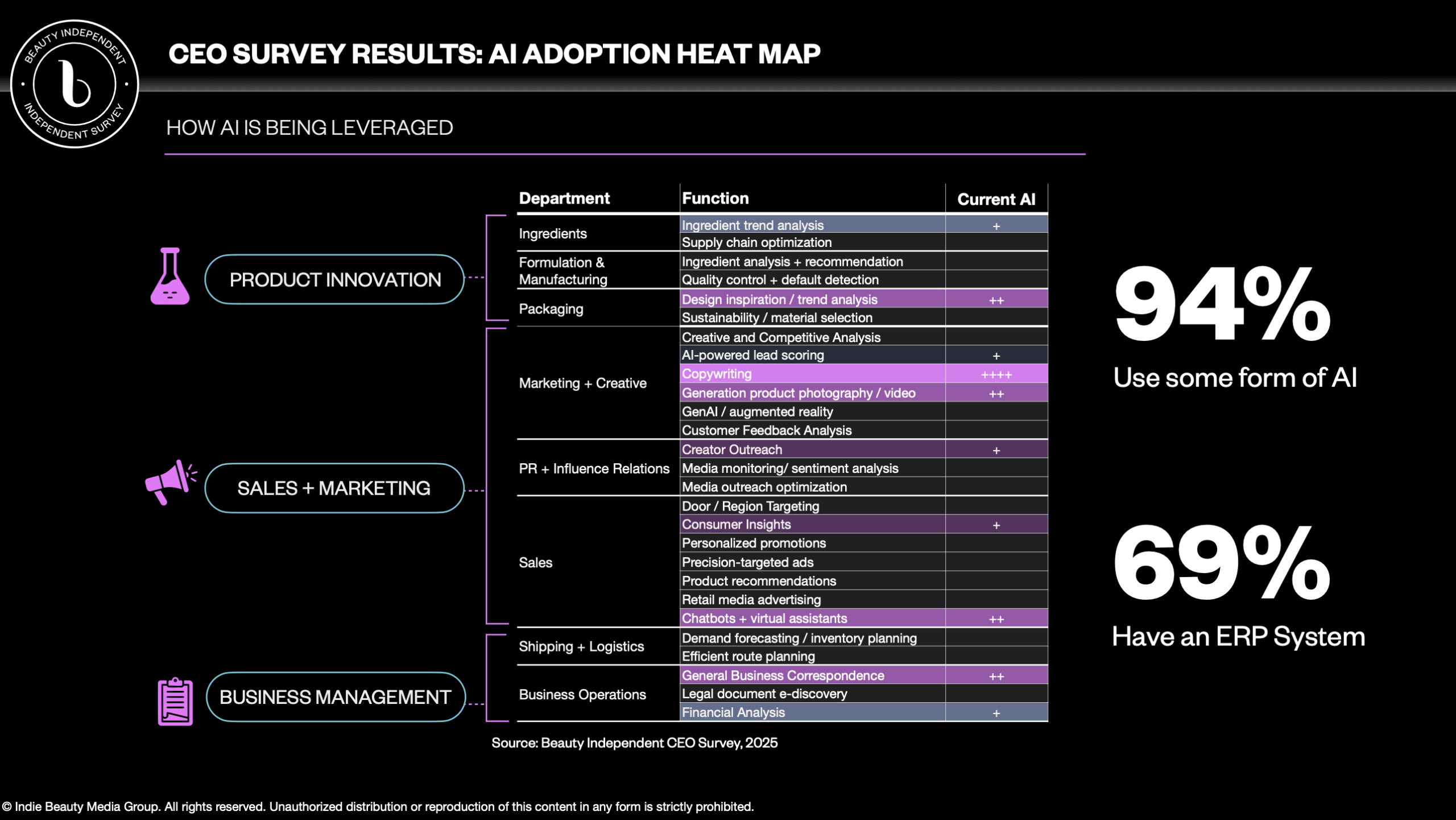
According to a survey of beauty brand CEOs by Beauty Independent parent company Indie Beauty Media Group, 94% say they’re using AI in some form, although implementation varies widely. In certain functions, like copywriting and chatbot assistance, penetration is nearly complete, whereas in other areas such as supply chain optimization or regional targeting adoption is next to zero.
Beauty Independent founder and publisher Nader Naeymi-Rad argued at Beauty Independent’s Tech*AI Summit in New York City earlier this month that brands are missing opportunities. “Everything you do now is underpinned by technology,” he said. AI can’t sit at the bottom of a board deck under “other business,” it has to be a named initiative owned at the top.
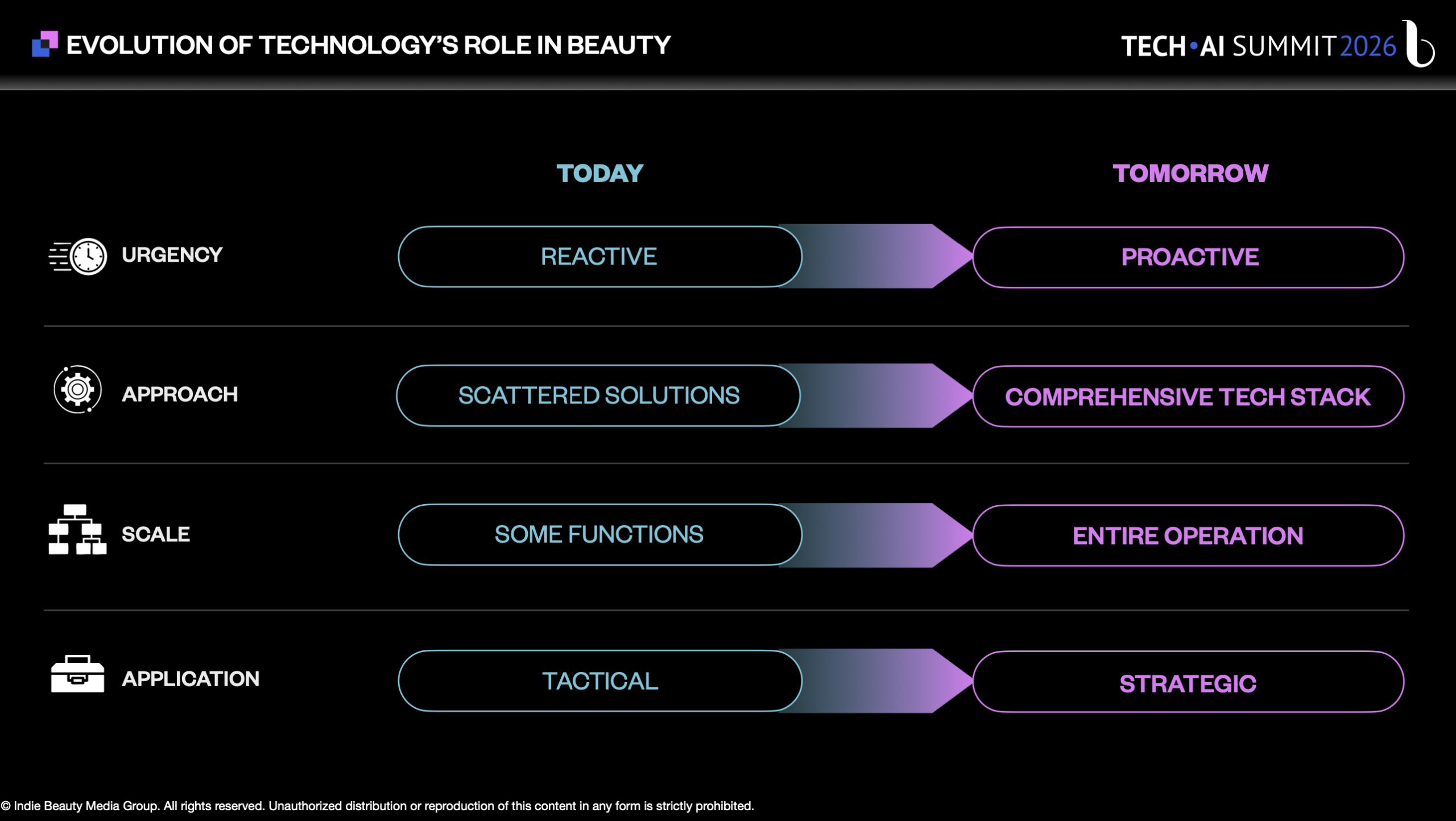
The possibilities are vast, but Naeymi-Rad zeroes in on five categories where AI can help businesses: eliminating work that can be automated, increasing the productivity of existing employees, substituting steps that can be completed digitally, driving innovation and generating insights from data. “Moving forward, the urgency needs to be there, from reactive to proactive,” he says. “Scattered solutions need to become part of a cohesive strategy.”
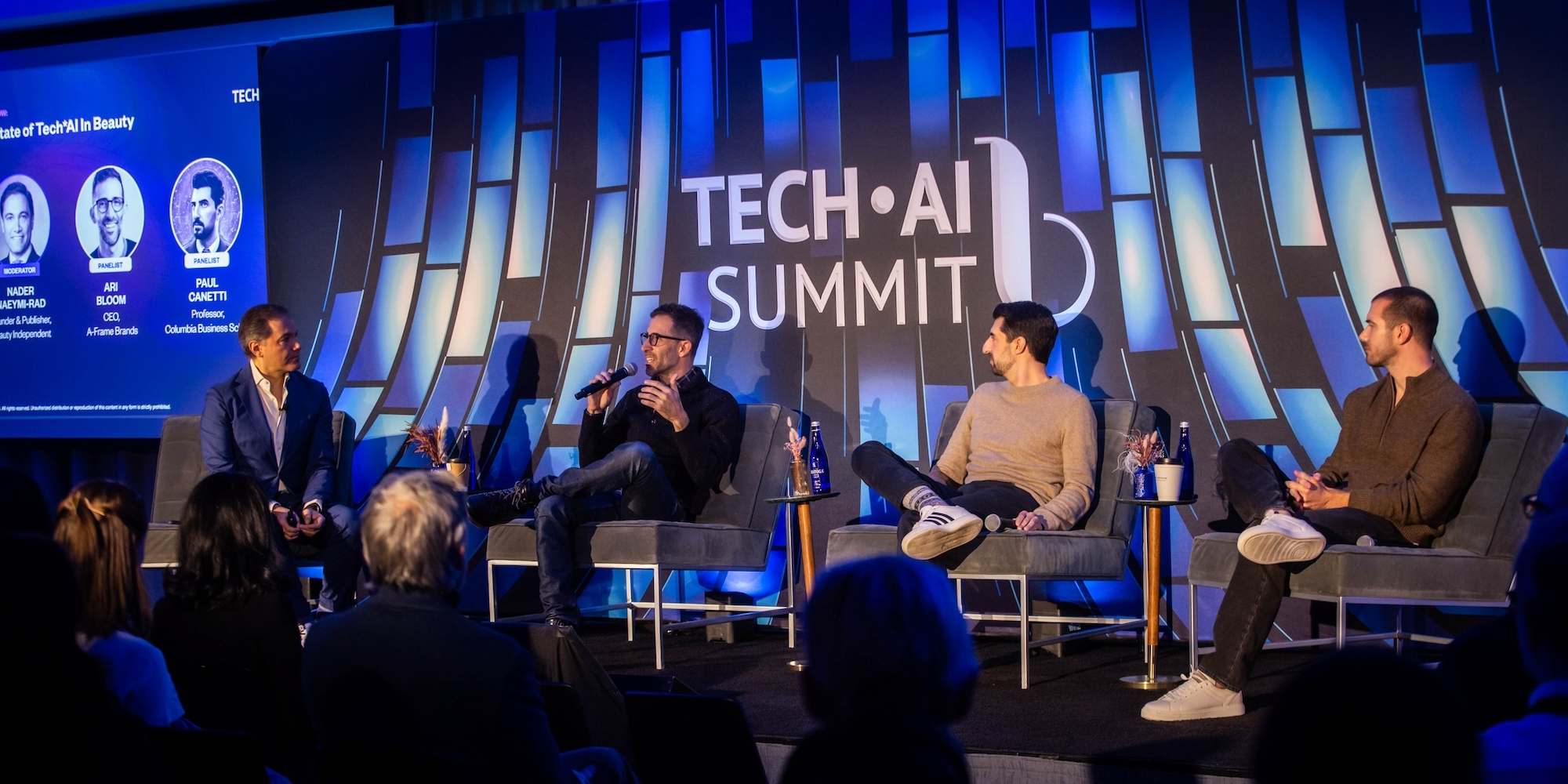
At the summit, Naeymi-Rad was joined for a panel discussion by Ari Bloom, CEO of A-Frame Brands, Paul Canetti, professor at Columbia Business School, and Kevin Gould, co-founder of Glamnetic and INH Hair, to dig further into the state of AI in beauty. Ahead, we break down that conversation and highlight how AI is being used across retail and influencer relations, why brands should consider appointing an AI lead and the importance of pruning and iterating tools.
Assign An AI Lead
Having a lead focused on the growing and ever-changing AI landscape is becoming paramount for companies. Gould recently made his vice president of customer experience that person. Previously, he’d given a general directive to his team to use AI, but admits he didn’t provide enough context on what they should be doing. He recounts that he “went back to the drawing board and said, OK, we need to make one person the owner of this, and then that person will go and empower the different team members and show them and prompt them.”
A-Frame Brands hired a CTO who examined the low-skill tasks that high-skill workers were doing and how they could be automated. Bloom says, “It was very simple, basic stuff that he was able to uncover that we were working a lot slower than we had to.”
Bloom adds that founders shouldn’t just hire somebody to guide AI and sit on their hands for the rest of the year. Instead, they should continue their own learning. In fact, one of the first questions he asked his CTO was, “How do you learn AI?” His answer? He asks AI.
Bloom says, “I didn’t hire him and say, ‘Okay, go figure this out.’ I said, ‘First, teach me.’” He elaborates, “We cannot delegate the expertise of this technology to other people. You also have to learn it and master it yourself, and I think sometimes you just need somebody to train you.”
Apply AI Across The Business
Bloom’s team uses AI for market intelligence, pitch decks, product development and managing suppliers and partners. He specifically highlights AI-driven focus groups, which he estimates have allowed the team to work 50 times faster. “What would’ve taken weeks or months for us and a lot of subjectivity takes literally a minute,” he says. “It’s completely changed the way that we work.”
Bloom’s retail and sales team taps ChatGPT and Claude to evaluate packaging, branding and product assortment for prospective new partnerships. He says, “We’ll say, ‘Hey, assist this from a customer perception standpoint. What should we be thinking about that we’re not thinking about in terms of how our packaging and SKUs stand out against the category in retail?’”
Canetti created the AI scheduling company Skej, which offers an assistant for booking meetings. He explains that the tool can help pull future revenue into the present. Outlining his theory called time compression, he says, “It’s not just that scheduling meetings is annoying because you have to email people back and forth and you save some time, but that, if every meeting gets booked a little bit sooner, every sales meeting happens a week earlier than it would have across your whole organization, then every deal closes earlier, and you’re recognizing that revenue a little bit sooner.”
Gould’s company spends more than $30 million a year on marketing and works with around 4,000 creators a month. He mentions Grin, Yuka AI and Skeepers as some of the AI tools his team uses for influencer affiliate and outreach efforts. AppLovin is one the team uses to create and diversify content, which Gould says has become even more important with Meta’s AI-driven ad-retrieval engine Andromeda.
“It used to be you could take a format of an ad and then we chop up five different versions of that, that doesn’t work anymore,” he says. “It’s really favoring the velocity of content diversity because they’re hyper targeting via the AI, so it’s made it a lot more difficult for brands from a content creation perspective.”
Trial, Prune And Lean In
Gould’s team is subscribed to more than 90 software tools and tries five to 10 new AI platforms each month. The tools are reviewed monthly to determine which justify continued investment and which should be cut.
“We export from QuickBooks. We put it into an easy-to-read Excel with not only what are the costs month over month to see if there’s fluctuations, but also a notation around what the hell does this thing actually do,” he says. “I think you can have software creep come up really quickly in your company, and it’s important to cut these things fast.”
Bloom says, “To protect your moat, you constantly have to be iterating and innovating and reinventing what you’re doing in your business every year.”
While some founders may be concerned about feeding AI tools sensitive company information, panelists suggested hesitation around the technology is fading as adoption accelerates. Canetti notes it’s no different than people once resisting putting their credit card information online because they believed it was unsafe. He says, “I can pretty much guarantee we all got over that.”
If a brand operates in the proprietary space, Gould understands why certain information should remain under wraps. He’s not worried about that with his own company, though. “For us, it’s really about identifying trends, it’s about getting product to market quickly, reading results and reacting,” he says. “I’m less concerned about IP products and I’m much more concerned about doing it better than everybody else.”
Bloom adds that AI is a technology businesses ultimately have to lean into. “Are there going to be some data issues? Potentially, it’s hard to say,” he says. “We’ve decided to trust it, whether that will be a problem someday, I think not, but it’s possible we take that small risk.”