Are Grüns And Rhode Outliers Or A New Blueprint For Building Billion-Dollar Brands Faster?

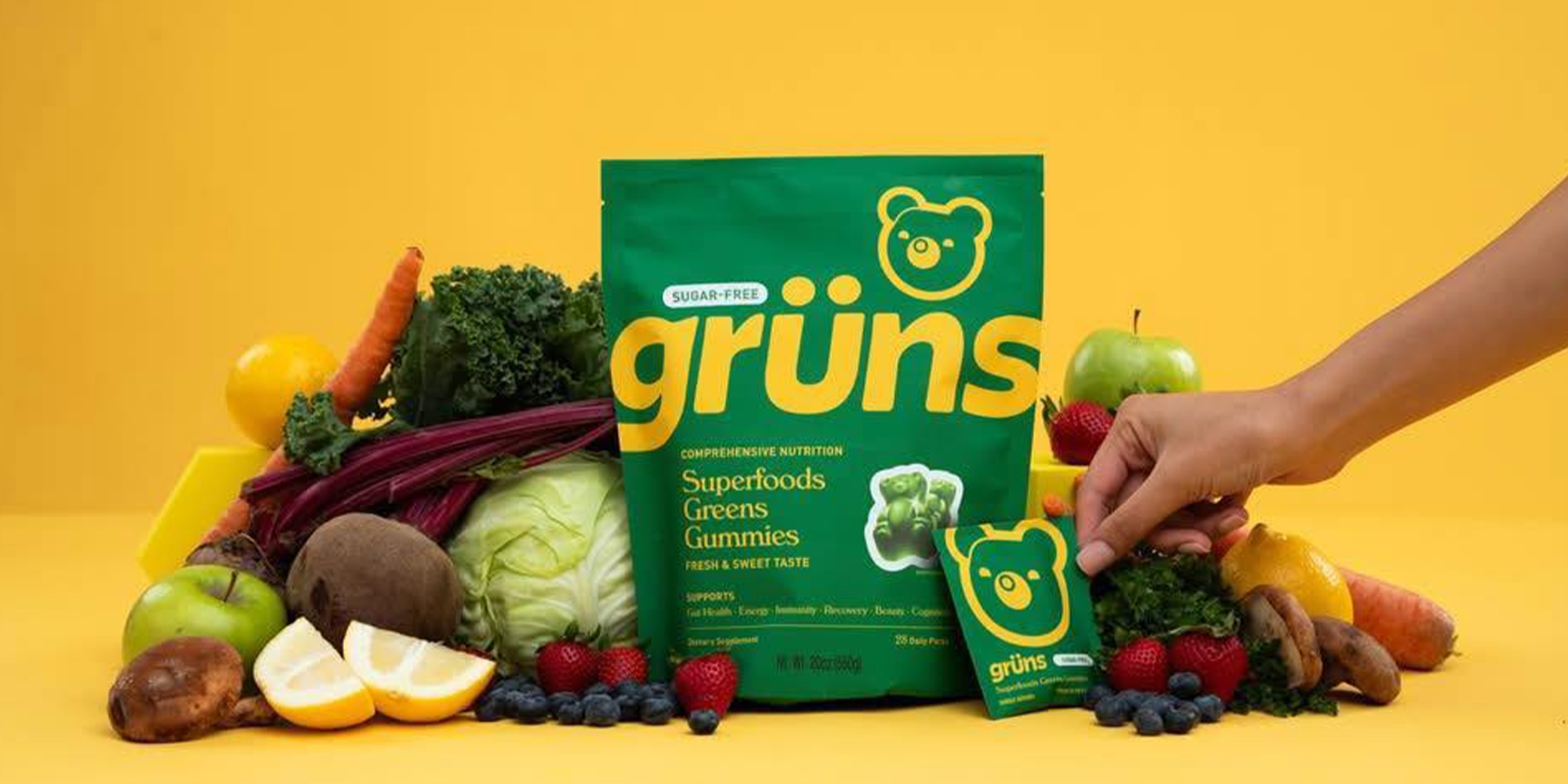
After Unilever’s $1.2 billion acquisition of Grüns, a supplement brand that grew to over $300 million in less than three years and represents one of the fastest inception-to-unicorn sale trajectories in consumer packaged goods, made headlines last week, Drew Fallon, co-founder and CEO of artificial intelligence-powered financial platform Iris Finance, asked a seemingly simple question on X: “Why are these consumer brands growing so fast?”
Coupled with Rhode’s rapid path to exit—it took just over three years to sell to E.l.f. Beauty for roughly $1 billion—we found ourselves asking the same thing. For this edition of our ongoing series posing questions relevant to indie beauty, we put that question to seven investors, along with a few follow-ups:
Do you think the conditions enabling today’s breakout consumer brands to scale so quickly will persist? What does that mean for the pace, profile and pricing of beauty and wellness M&A going forward? And what would you say to an emerging brand aiming to follow in Grüns’ or Rhode’s footsteps?
-
 Scott Norton Consumer Venture Investor and Founder, Sir Kensington’s
 Conditions enabling today’s breakout consumer brands to scale quickly will not only persist, but will accelerate. Why? Three reasons:
- Changing Consumer Demands: America’s core consumer class is in the midst of a 50-year transformation from a monoculture into a collection of subcultures. The internet and social media have accelerated this along with the forces of increased ethnic diversity, political polarization and income inequality. These changes are challenging the model of big CPG players, which defined their models in the age of a large middle class and the TV industrial complex, leaving opportunities for more agile startup brands to find “riches in niches.”
- Retailer Eagerness: 10 years ago, mass retailers needed to see demonstrated demand in specialty retailers before deciding to stock a product. Now, Target and Walmart evaluate and test new brands much earlier, offering meaningful door counts based on DTC performance or marketing visibility. I’m seeing brands reach $20 million in sales faster than ever before rather than spending half a decade to slowly compound distribution.
- Capital Availability: When we started Sir Kensington’s in 2010, there were no consumer seed funds, but there are now dozens of firms managing billions of dollars who invest between seed and growth stage. Capital formation has ticked up in the last year, as the number of recent $1 billion-plus outcomes across beauty, food and wellness is changing the narrative that $500 million is the ceiling for successful consumer exits.
That said, while it’s never been easier to start a brand, that doesn’t mean it’s any easier to finish. M&A by strategics will continue to be cyclical, waxing and waning with the macroeconomic backdrop, Wall Street’s relative preference for growth versus profit and the internal attention it takes to integrate other recent M&A. For these reasons, I expect M&A in beauty and wellness will continue to grow, but won’t necessarily be consistent or limitless.
I think we are going to continue to see the ratio of independent, breakout consumer brands reaching scale compared to the number of large-cap strategics continue to grow. There will be more brands which would historically be strong acquisition candidates than can be digested by the biggest players, so non-traditional buyers will emerge and more brands will choose to go public, stay independent and create their own multi-brand platform strategy. E.l.f. Beauty is actually a good example of this since it was less than nine years into its life as a public company when it bought Rhode for 25% of its market cap at the time, hardly just a bolt-on.
So, for the next generation of brand builders, cultivate relationships with other scaled challengers in complementary categories to broaden your options and build for the long term.
- Nicole Fourgoux Operating Partner, Stride Consumer Partners
Speed gets you noticed, but the quality and durability of the brand you are building is what ultimately gets deals done. The speed at which brands like Grüns or Rhode have scaled is striking, but it is not happening in a vacuum. It reflects a fundamental shift in how consumer brands are built and scaled today.
First, distribution and the funnel have fundamentally collapsed. Platforms like TikTok Shop, Amazon and broader creator ecosystems now allow brands to move from awareness to conversion almost instantly, often within the same piece of content. This has removed many of the traditional constraints on how quickly a brand can scale.
Second, the rise of creator- and founder-led brands has transformed how product-market fit is achieved. Founders today can build in public, test and refine positioning in real time, and leverage built-in audiences to accelerate adoption. In some cases, this creates a structural advantage that significantly compresses the time to scale.
Against that backdrop, it is important not to mistake speed for the objective. The goal is to build great brands. Speed is simply an outcome when the right conditions come together.
In some cases, brands scale rapidly because they catch a powerful consumer wave at exactly the right moment, as Grüns did within the broader shift toward wellness, supplementation and convenience. In others, they benefit from structural advantages, such as a founder with significant reach and cultural influence. However, those are accelerants, not substitutes for fundamentals.
Sustainable growth is typically driven by clear positioning aligned with a durable and expanding consumer movement. At the same time, true brand building still takes time. Establishing trust, demonstrating repeatable product performance and building emotional connection with consumers are processes that cannot be fully compressed, regardless of how efficient modern distribution and marketing tools have become.
There is also a potential downside to speed, particularly from an acquirer’s perspective. Buyers looking to build portfolios of brands that can thrive over the long term will question the sustainability of very rapid early growth. The key issue is whether performance is driven by a structural shift in consumer behavior or a more transient wave of momentum.
In that context, speed can obscure the underlying quality of the business. Developing a truly differentiated positioning and a durable point of difference takes time, requiring repeated proof of product performance, consistent brand building and the establishment of trust with consumers.
As a result, while breakout growth can command attention and premium valuations, it also drives greater scrutiny in diligence, particularly around repeat purchase, retention, and the resilience of demand. Looking ahead, the tools that enable rapid scaling will persist, but the bar will continue to rise. M&A will reward brands that combine speed with quality of growth, with increasing focus on brand clarity and differentiation, cohort retention and margin profile over topline velocity alone.
- Adam Louras Partner, Mercenary
It is entirely possible that these two unicorns are just that—unicorns. In general, I believe that luck and timing are the primary difference makers between "good" brands and unicorns.
Can their success be replicated? Possibly. But I'm not convinced there is an obvious playbook for emerging brands to follow that makes them a unicorn. Rather, there are several broad themes they can follow that give them a much better shot at becoming one.
Speaking specifically about Grüns:
1. The king is dead, long live the king: Choose a high growth, large (>$1 billion) category and attack the throne. The idea of a "greens" supplement has taken on many forms over the years. I was a big fan of Naked Juice Green Machine Smoothies back in the day before I realized they had a gillion pounds of sugar in each bottle, but I don't think anyone can argue that, objectively, Athletic Greens AG-1 truly owned the consumer mindshare of "greens" in recent memory. They were the king.
While AG-1 never saw a major decline in sales, its sales growth decelerated dramatically with the emergence of Grüns. Did Grüns take their lunch money or did Grüns benefit from a myriad of bad press levied at AG-1, from heavy metal scares to "scam" chants on Reddit? All of the above. Timing and luck helped a lot, but they still chose to attack a large, fast-growing category with a product offering similar benefits.
2. Format can unlock massive growth: A salad in a bottle that now fits in your pocket. If we take it at face value that all (or most) people want to incorporate more greens into their diet, then it logically follows that the options for doing so are currently lacking (or undesirable). People want to eat greens in different, convenient formats, not as complete replacements for each other, but for diversity to avoid palate fatigue. AG-1 made things easy.
Take a scoop of powder, throw it in your Owala with some water and head out the door. Grüns made things even easier (and maybe even more fun) by letting you grab a bag of candy while you head out the door. What will be the next format that could grow this category even further?
We are currently developing a "greens gel" product for Everyday Athlete that will deliver a farmer's market's worth of produce in a compact 45-gram pouch and taste like a kiwi-banana smoothie. We think this will be another great option for getting more greens into people's lives.
3. Uncompromising taste that's shockingly healthy. V1.0 of the wellness product craze was focused mostly on clean label and health benefits. Protein pasta? Sure, but it tasted like clay.
V2.0 of wellness products emerging now deliver on the health benefits, but they still taste like the unhealthy incumbent brand. Grüns ensured their product was delicious and craveable in addition to providing functional value. Never lose focus on the ultimate reason people consume things frequently because they taste good!
- Daniel Faierman Partner, Habitat Partners
The conditions enabling breakout scaling will persist, and if anything, the structural tailwinds are strengthening. The core issue is that large CPG has a deeply embedded innovation problem that won't self-correct.
The incentive architecture at most majors is fundamentally misaligned. Brand managers operate on 12- to 18-month promotion cycles, meaning a new "CEO" of a brand rotates in every couple of years with little institutional continuity or appetite for asymmetric bets. I lived through this at the beginning of my career.
Meanwhile, the media environment has permanently shifted the cost and speed of brand-building. The influencer economy and organic content distribution (often across novel digital channels) have democratized reach in a way that has no historical parallel.
Grüns scaled to over $300 million in revenue in under three years not because it had a superior distribution network. It got there because it cracked a behavioral insight and rode a content wave that put it in front of millions of consumers with LTV/CAC dynamics intact. Creator ecosystems, short-form video and community-driven commerce are only becoming more sophisticated and AI-enabled.
The pace of deals will likely accelerate. Large strategics are increasingly comfortable writing checks for brands with short operating histories, simply because the quality of signal from modern DTC metrics is much higher than it used to be. You can see retention curves, repeat purchase rates and organic NPS in real time. The profile of acquisition targets will continue to skew younger and faster.
On pricing, I'd actually push back on the assumption that these are premium outliers commanding anomalous multiples. Forbes estimated Unilever's Grüns valuation at roughly 4X trailing revenue, and Rhode transacted at approximately 3.7X to 4.7X revenue, depending on how you treat the earnout. Neither is dramatically outside the historical range for high-growth CPG assets.
What the market is doing is rational. Any premium a buyer might pay for velocity of growth is largely offset by the vintage risk discount applied to a brand with a two- to three-year operating history. You simply don't know how durable the customer base is, whether the founder's creative engine is repeatable post-acquisition or how the brand behaves through a full economic cycle. Those are real risks, and sophisticated buyers are pricing them in. The multiples look eye-catching because of the absolute dollar figures, not because the underlying math is particularly generous.
The single most important thing an emerging brand can build is a content engine, and organic reach should be the north star, not paid. Paid acquisition can manufacture growth, but it doesn't build the kind of community defensibility that makes a brand acquisition-worthy. What made Grüns and Rhode compelling to buyers wasn't just revenue; it was the evidence of genuine consumer affinity. Grüns had over 95,000 five-star reviews and 95% of customers using the product four to six times per week. That's not a paid media story.
But content alone isn't enough if the organization can't move fast enough to sustain it. The brands that win are built by teams of owners, not employees, who operate with genuine velocity: constantly iterating on product, reading community signals in real time and making decisions in days rather than quarters. The org structure and incentive model of the team matters as much as the product insight.
- Tyler Morgan Principal, BFG Partners
Brands like Grüns and Rhode are scaling quickly because they combine native demand creation (social, creator-led) with products that fit high-frequency use cases, allowing them to convert and repurchase faster than prior cohorts. That said, BFG would view much of this growth as environmentally aided rather than structurally guaranteed, particularly as CAC normalizes and competition crowds the same channels.
Going forward, M&A will likely bifurcate sharply. A small set of scaled, profitable, multi-channel brands will command premium outcomes, while subscale or purely DTC-driven brands struggle to transact.
For founders, I would say the implication is optimize early for LTV:CAC durability, retail velocity and margin expansion because strategic buyers increasingly underwrite earnings quality, not just growth. Brands that manufacture ways for consumers to use the product upwards of four-plus times a week and engrain themselves as a daily habit will be incredibly valuable.
- Rich Gersten Co-Founder and Managing Partner, True Beauty Ventures
The conditions that have enabled certain consumer brands to scale at extraordinary speed will likely persist, but that does not mean every fast-growing brand will command a premium exit. For a strategic or financial buyer, rapid growth alone is never enough. A potential acquirer has to believe the growth is sustainable, that the brand can endure well beyond its initial viral moment, and that it has the ingredients of a lasting franchise rather than a one-hit wonder.
In some cases, rapid scaling can actually create more diligence questions, especially if it is unclear whether demand is repeatable, channel economics are healthy or the brand has matured operationally as quickly as revenue growth suggests.
That is why the quality of growth matters as much as the speed of growth. A brand that scales quickly while also demonstrating strong EBITDA margins, healthy repeat and disciplined customer acquisition will be valued very differently from a brand that effectively bought its growth and remains only marginally profitable or, even worse, meaningfully unprofitable even at scale.
Buyers want evidence that growth is not being propped up by unsustainable marketing spend, excessive discounting or temporary founder-driven buzz. They want to see a business that can keep growing post-acquisition, with real consumer loyalty, strong unit economics and a clear path to becoming an enduring brand.
For emerging beauty and wellness brands hoping to follow in the footsteps of the fastest breakout stories, the goal should not be speed for its own sake. The real objective is to build a brand that scales with durability, proves it can convert awareness into repeatable demand and gives a future acquirer confidence that the best years are still ahead. That is what separates a fast-growing brand from a truly valuable one.
- Odile Roujol Founding Partner, Fab Co-Creation Studio Ventures
We are talking about two different business models and categories. Rhode is a celebrity brand, benefiting from organic growth thanks to the founder's social media community and becoming a hot brand. People were proud to show they were customers, and it had exceptional EBITDA before being purchased and signing with retailers, with no marketing spend.
Grüns signed very quickly with multiple retailers excited by its initial fast growth in DTC and benefited from GLP-1 users’ interest in improving metabolic health. It must be compelling to achieve the repeat purchase rates they have.
Nobody knows whether these brands will continue delivering extraordinary years after signing numerous retail partnerships and, in Rhode’s case, retaining the founder, or whether they are outliers that eventually return to more standard growth and EBITDA levels.
Inspired by their exits, here’s my advice to founders and emerging brands:
Discipline And Community Building
I believe the future belongs to founders having discipline in their product roadmap, developing and testing in a rigorous way, and taking the time to build their community and DTC business before signing retail partners. Be the best at what you do. CACs are high now, whether on Amazon or other channels/social media.
Understand Your Audience And Customers
You need state-of-the-art skills in content and performance in addition to a unique brand. Know your core customers (behaviors/interests/context) extremely well and establish feedback loops to adapt to customer needs. Only then can you scale without making mistakes.
If it takes more years, it could turn into an advantage if a brand stays agile, does not lose momentum, and takes the opportunity to increase EBITDA with a solid approach.
If you have a question you'd like Beauty Independent to ask beauty and wellness investors, send it to [email protected].