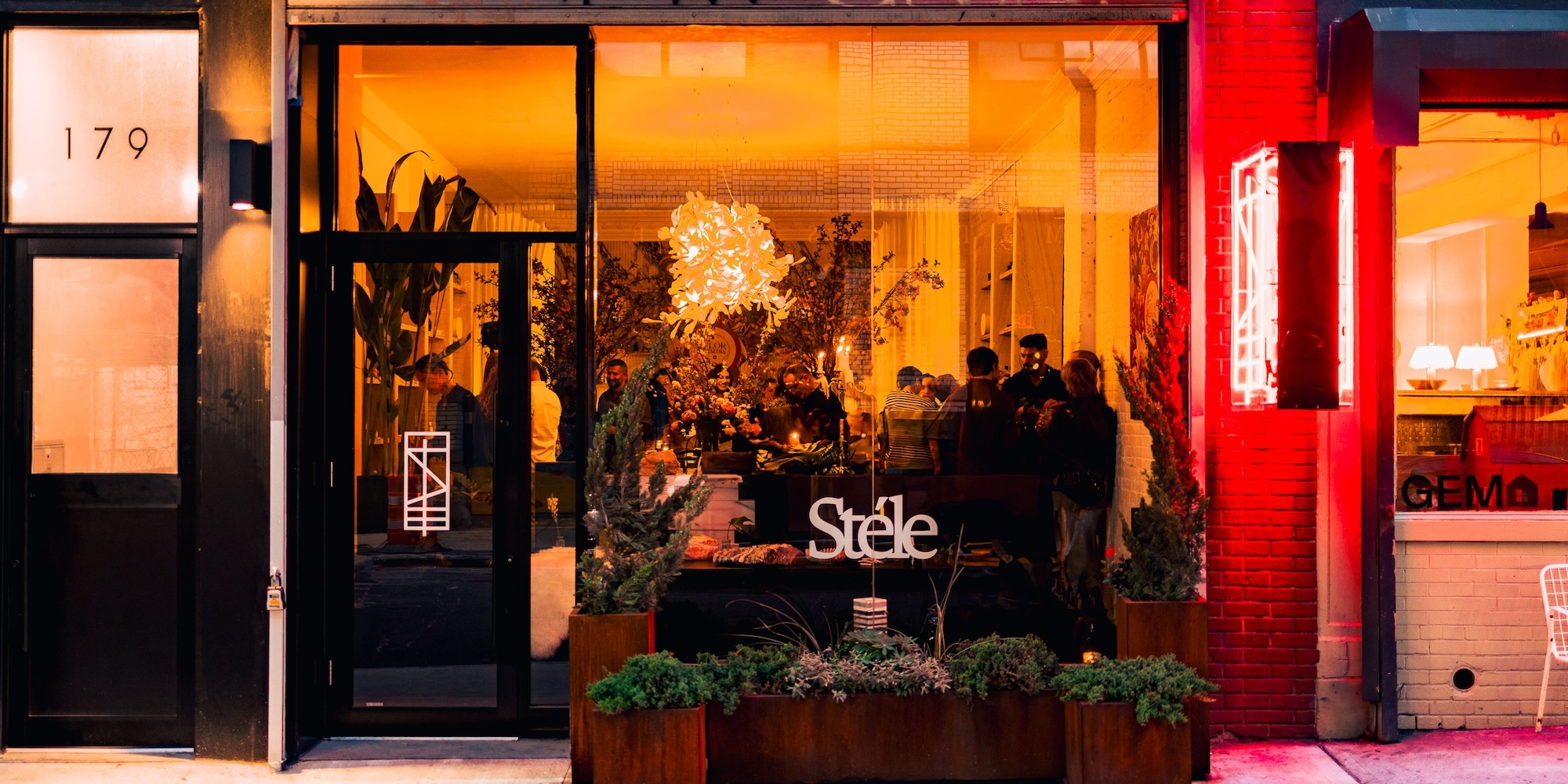

Founded by Matt Belanger and Jake Levy in April 2024, New York retailer Stéle, which has locations in Manhattan and Brooklyn, has quickly become one of the most influential independent perfumeries in the country.
It’s built its reputation on instinct-driven curation, direct relationships with founders and perfumers, and a near-total rejection of distributor-led sameness. The result is a fragrance destination that feels less like a store and more like a point of view. One that collectors, perfumers and, increasingly, competitors are watching closely.
The approach is not only winning affection; it’s producing sales. In 2025, Stéle’s revenue is up 262% year over year, according to the co-founders, with traffic surging both online and in-store. The retailer now carries more than 140 brands from around the world, introduced steadily throughout the year rather than via rigid launch calendars, and has hosted nearly 40 events in its stores this year alone.
As fragrance continues its recent growth streak, Levy believes the category will reach a stabilization phase, when infatuation with scent will become the new normal. Then, he predicts, it will accelerate. “Most people don’t wear fragrance, so once it can prove that it’s sustainable, I think we’re going to see massive growth in the future,” says Levy. “It’s going to become part of day-to-day life, but we’re not there yet.”
Ahead, Levy and Belanger dish about what the future of fragrance holds, from fewer exclusives to an increase in obscure perfume notes.
Artisanal Perfumery Will Gain Ground
One of the most significant shifts Belanger and Levy see is related to their business’s growth. They argue independent perfumery will no longer be a niche within a niche. “If you studied most of the places pre-Stéle, and I would say even half a year ago, you would see most perfumeries skewed 80% mainstream, 20% independent artisanal,” says Levy. “Now, it’s more 40%/60%.”
Stéle was conceived with the idea that a fragrance store doesn’t need corporate-backed pillars to survive. Belanger and Levy bet that artistry and founder-led storytelling could sustain a retail business. This year, to carry out that bet, they stopped working with distributors. Instead, they have direct relationships with brands.
Belanger explains Stéle avoids distributors because they often push the same catalogue to different stores, prompting copycat collections. “We’ve proven that you don’t need Baccarat Rouge 540, you don’t need Amouage,” says Levy. “You need to bring in artistry and interesting products and things that resonate with people and stand by it.”
Stéle’s philosophy has proven contagious. New fragrance stores are opening across the country, with many adhering to a similar independent-first model. “Usually what happens is corporations grow bigger, they metastasize, they take things over,” says Levy. “So, the fact that viable businesses are opening and succeeding at the moment that aren’t holding private-equity backed brands is a rise of something. It’s seismic.”
The 50-ml. Bottle Will Become The New Standard
Fragrance collectors are the engine of the artisanal fragrance business, and Stéle has detected that they generally prefer 50-ml. bottles to the 100-ml. that have been standard. The smaller, comparably affordable sizes allow them to populate their fragrance wardrobes with multiple choices and support changing up their fragrance wearing from day to day. Belanger says, “They want bottles that will not live past their lifetime.”
Brands are responding to the shift by reducing bottle size, while at the same time maintaining a high bar for bottle design. Collectors demand a bottle they can show off. “It’s not just a generic bottle,” says Belanger. “If a brand makes sure that their 50s look as good as their 100s, they’re going to move a heavy amount of 50s.”
Spicy, Flor-mand And Unfamiliar Notes Will Propel Olfactive Palettes
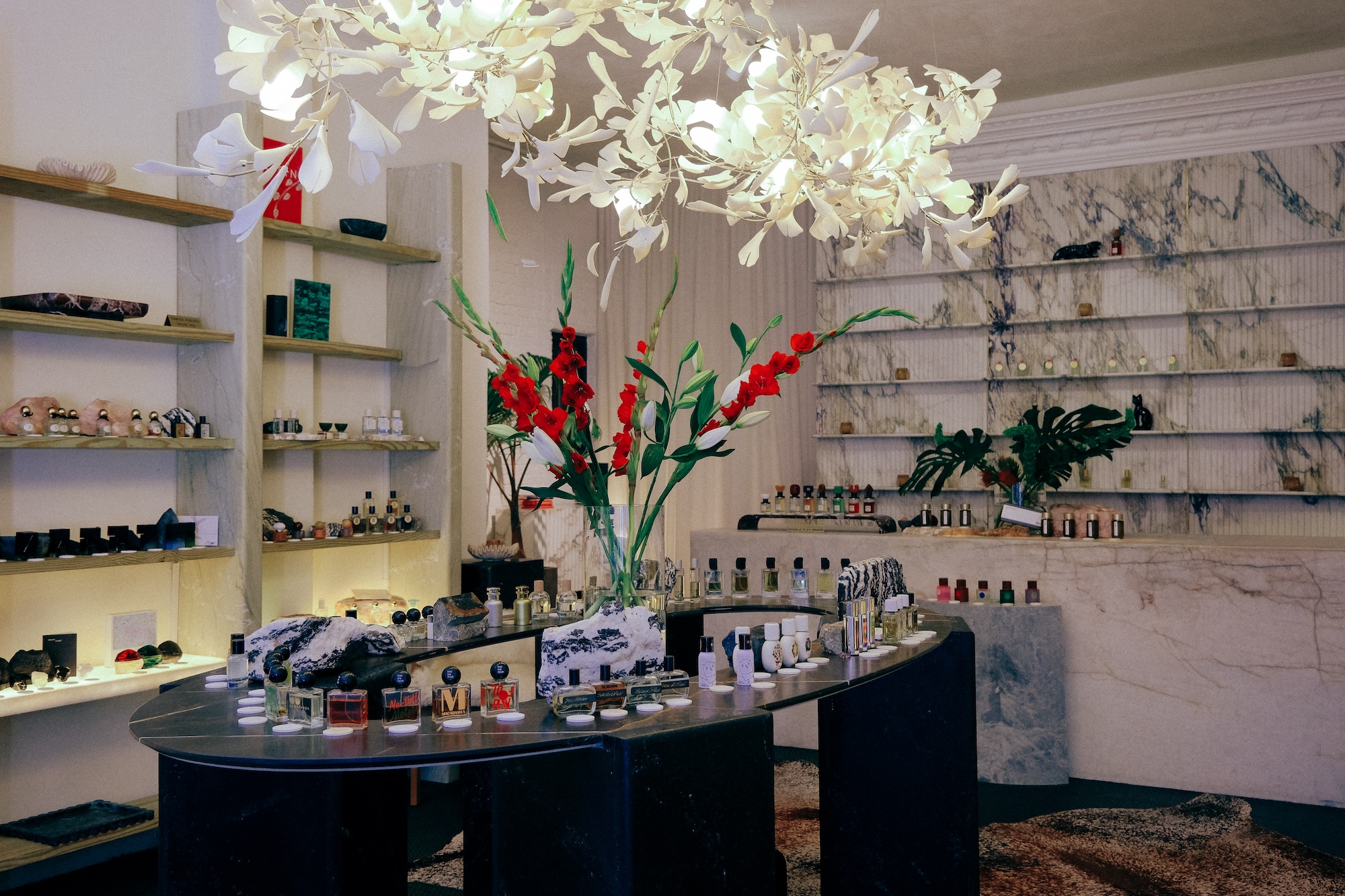
On the olfactive front, Stéle has clocked momentum for warm, expressive and slightly unclassifiable fragrance notes. Spice-forward compositions and floral gourmands, what Levy refers to as “flor-mands,” are gaining traction, particularly when they balance comfort with modernity. Belanger and Levy call out June Thirtieth’s OG scent as an example of a floral, fruity musk. The brand went live at Stéle on Nov. 14 and sold out three times in its debut month. Ormaie’s 32° includes flor-mand notes of pear, coconut and tuberose.
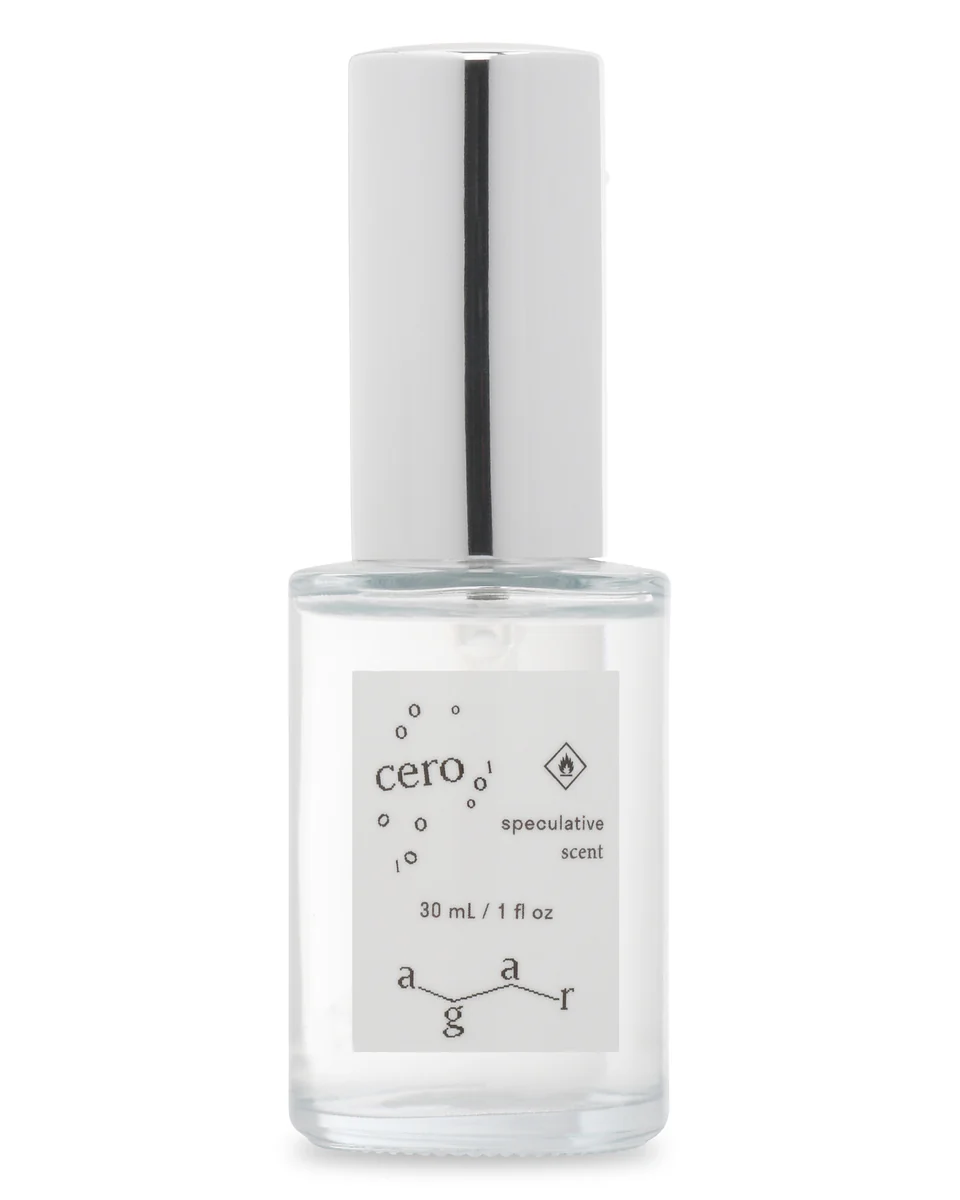
Perfumers are broadening their olfactive palettes beyond recognizable accords for unusual expressions of the modern, natural and dream worlds. Agar Olfactory’s Cero is an example, and it features notes of hot fax machine, mouse pad, Mac carcass and tattered wire.
“We just put a brand into our system where the note was ‘sunshine,’ and I love that,” says Belanger. “Perfumers are coming up with new expressions of what something smells like, which I think is very unique and interesting.”
Consumers Will Resist Algorithm-Ready Fragrances
As independent perfumery flexes its muscles, Belanger and Levy anticipate that customers will become wearier of fragrances rooted in social listening to suit algorithms. “People aren’t looking to be another data point,” says Levy. “They’re looking to get off the spreadsheet, and I think that unique concepts are seeing their day in the sun and getting into bigger spaces.”
Belanger and Levy are skeptical about brand and product creation derived from artificial intelligence, not because AI is entirely valueless, but because it tends toward sameness. They see that manifest most clearly in large fragrance lines with 20 or 30 stockkeeping units that are frequently slight variations on a single theme.
“When you deal with a system that is built to output based on profit margins, based on circular data, you are left with soulless products,” says Levy. Belanger chimes in, “Honestly, they’re just boring.”
Retail Exclusivity Will Lose Its Power
Belanger and Levy foresee retail exclusivity losing relevance. “It was an early 2000s move that retailers used to fight for exclusives, but now it’s a big open world,” says Levy. “You can always find something, so the exclusivity is almost just greedy and not attractive.”
Belanger adds that exclusivity restrictions shut brands out of potentially beneficial opportunities. He says, “We don’t like the idea of, we found you so you’re stuck with us forever.”
And Belanger highlights that exclusivity arrangements can harm customers’ experiences if, for example, salespeople push exclusives. He says, “I don’t think a customer needs an exclusive to think that something is special, they need to connect with it.”
Stéle will send customers to neighboring fragrance stores if it doesn’t have a product its customers are looking for. “I think it’s shifted away from tying down a customer based on supply chains, and it’s more turned into, how can I give this customer an amazing experience?” says Belanger. “How can I be there for them? How can I be a good business person? How can I be a good community member?”
Fragrance Marketing Will Shift From Sex To Style
Belanger and Levy forecast the fragrance category will move away from overtly sexualized, tongue-in-cheek marketing toward more fashion-led marketing. “You used to see a lot of ‘panty-dropper’ content in the early 2000s and mid 2010s,” says Levy. “Now, it’s shifting to more fashion-forward content, more elegant content.”
He identifies brands such as Lore, Merit, The Maker and Glossier as leading the charge, saying, “Each approaches fragrance like a fashion house, emphasizing individuality over seduction.” The marketing style has particular appeal to gen Z fragrance consumers. “They want to look good, they want to be stylish,” says Levy. “They collect clothing, they collect fragrances, they collect aesthetic.”
Bottle design is following suit. Customers want personality, not just a clean bottle with a smattering of writing. “The minimalist era is fading, and brands are embracing bold, expressive bottles,” says Belanger. “It’s maximalism at its finest. Creators are thinking beyond the traditional round cap that has dominated the past few years.”





Leave a Reply
You must be logged in to post a comment.