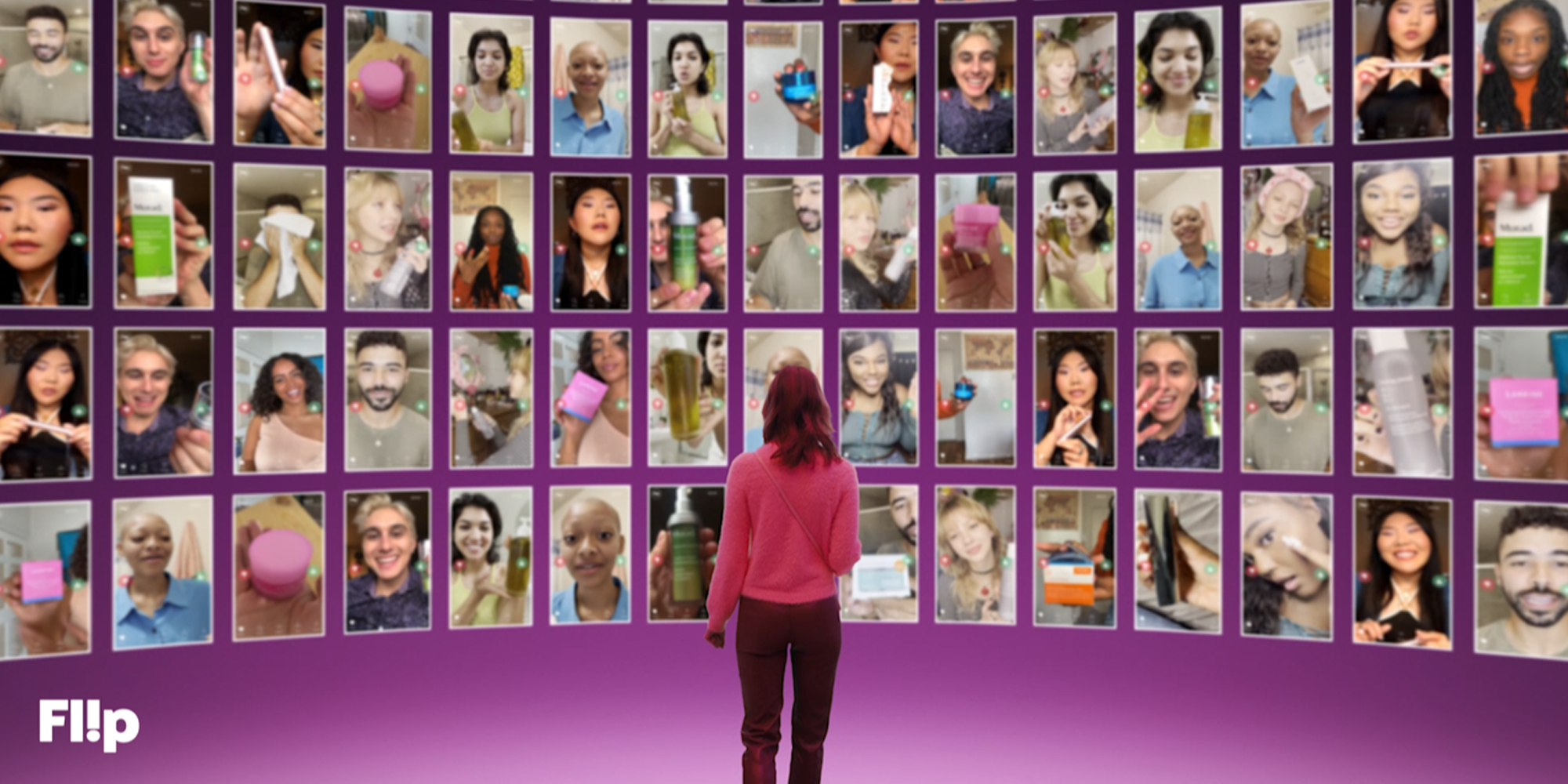

Flip, the social shopping app that raised roughly $240 million and was valued at over $1 billion just 16 months ago, has abruptly shuttered, leaving creators and brands scrambling to recover unpaid earnings.
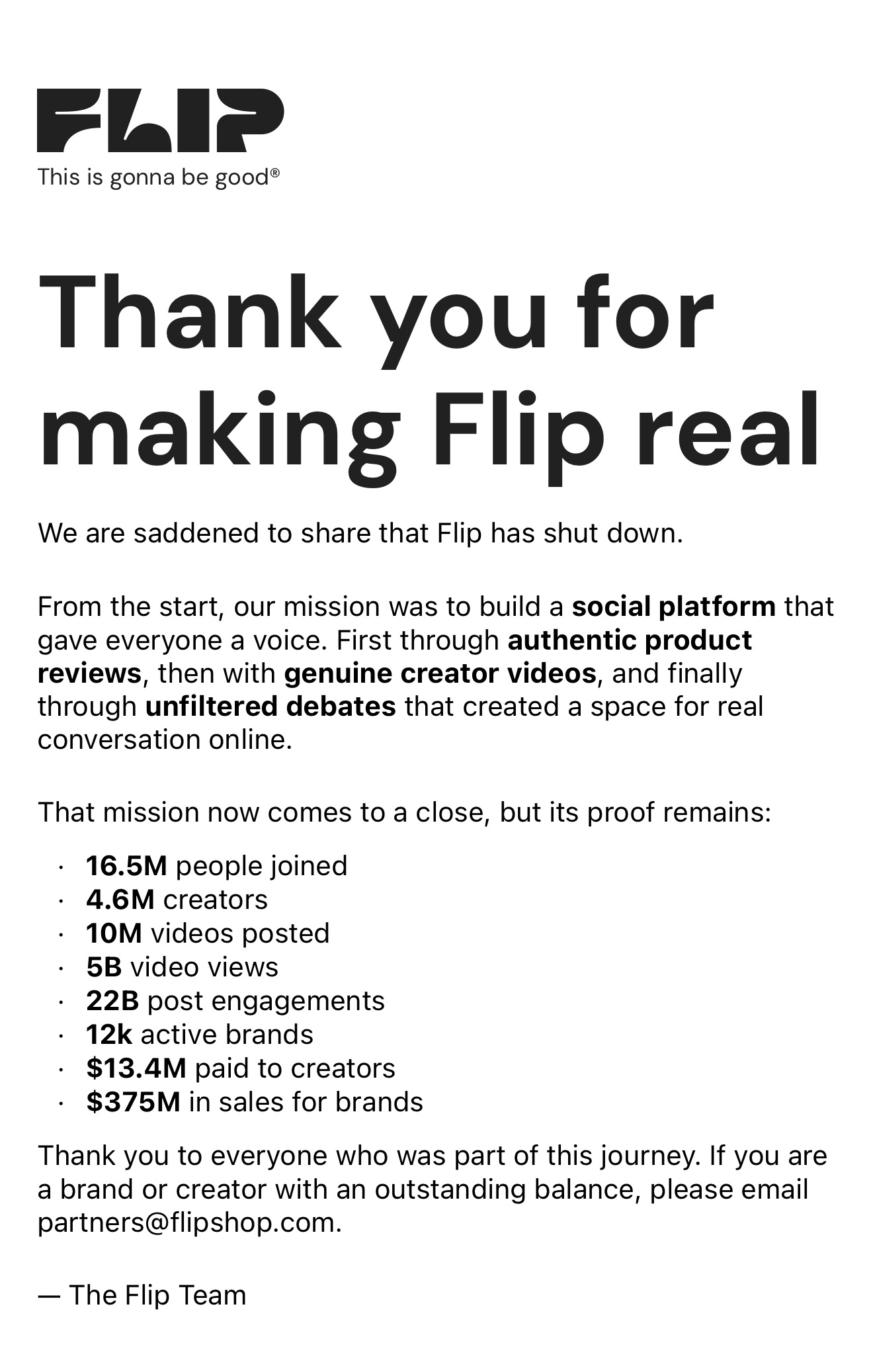
On Friday, users who opened the app were greeted with a message that read, “We are saddened to share that Flip has shut down. From the start, our mission was to build a social platform that gave everyone a voice. First through authentic product reviews, then with genuine creator videos, and finally through unfiltered debates that created a space for real conversation online.
That mission now comes to a close, but its proof remains:
- 16.5M people joined
- 4.6M creators
- 10M videos posted
- 5B video views
- 22B post engagements
- 12k active brands
- $13.4M paid to creators
- $375M in sales for brands
Thank you to everyone who was part of this journey. If you are a brand or creator with an outstanding balance, please email partners@flipshop.com.”
Launched by technology entrepreneur Noor Agha to much fanfare in 2021, Flip aimed to flip the script on beauty e-commerce through shoppable livestreams and short-form product reviews two years before TikTok Shop swiftly became the market leader in social commerce. It gained early momentum with users for beauty video reviews featuring scores of beauty brands like Hourglass, Honest Beauty, Goop, Cover Girl, Kate Somerville, Coola and E.l.f. Cosmetics.
However, the app struggled as TikTok Shop took off—with TikTok’s revenue hitting $48 billion in the second quarter and its user base at nearly 2 billion globally, owner ByteDance is now seeking a valuation of $330 billion—and the company tried to compete by pursuing what content creators have characterized as unsustainable growth tactics such as steep referral rewards, free product giveaways and incentives for uploading phone contacts. Flip isn’t the only livestream commerce enterprise to go under. Supergreat, Newness and Sune, a venture from the owner of QVC and HSN, previously vanished.
Flip was valued at $1.05 billion in April 2024 when it raised $144 million in series C funding and acquired social commerce company Curated for $300 million in stock. All told, it raised an estimated $236 million from investors Streamlined Ventures, WestCap, AppLovin, Mubadala, the sovereign wealth fund of Abu Dhabi, and more, but the windfall couldn’t save it from succumbing to competitive pressure.
Frustrated with Flip on its way out, content creators and brands have flocked to TikTok and Instagram to vent about the social shopping app not notifying them about its closure ahead of time. Content creators are complaining that payments were getting harder to secure from Flip in recent months and that it wasn’t communicating effectively.
Brands have expressed similar sentiments and are opening up about money they haven’t received from Flip. In a TikTok video by content creator Alexis Bice about Flip’s abrupt shutdown, skincare brand Delicate Daisys Skincare commented, “Horrible they didn’t inform Brands either. Unacceptable! They owe us a few thousand dollars in sales.”
Content creators posted reviews of the products they purchased via Flip and received pay for video views when other shoppers bought products through their reviews and when they viewed and reacted to videos from other creators. The app garnered over 1 million downloads in 2021 and had roughly 2 million active users in its first 18 months on the market, with some generating as much as $5,000 a month in revenue.
Flip’s customer acquisition started to lag as TikTok Shop exploded in the United States and it pursued aggressive tactics in a desperate attempt to keep pace. The tactics gave it a reputation for giving away free cash. In October 2023, it rolled out a referral program that awarded referrers and new users up to $150 in credit to use on the app, which caused customer acquisition to promptly soar by a triple-digit percentage. Users were also incentivized to scroll through in-app advertisements to generate coupon cash that they could use toward purchases.
In perhaps its most eyebrow-raising move, Flip encouraged new users to sync their phone contacts to it to receive further rewards. “Flip shows me that if I got everyone in my contacts list to sign up, I’d get $40,730 in credit,” wrote Suzy Weiss in a November 2023 article published on The Free Press. “It’s like a Ponzi scheme except, it seems, we’re all just spending Abu Dhabi’s money.”
Earlier this year, Flip rolled out a creator fund to provide up to $100 million worth of equity to participating creators over the next five years. It aimed to distribute up to $1 million per day for the first 30 days of the program, according to the publication TechCrunch. Grants ranged from $6,000 to $100,000 depending on a creator’s engagement level.
Fears over the U.S. potentially banning TikTok caused another surge of new Flip users in January this year, when it received 580,000 downloads. According to data reported by TechCrunch, the app gained 250,000 new users a day, with people spending an average of 35 minutes on it daily. The influx of new users pushed Flip to the No. 10 spot in Apple’s U.S. App Store that month. However, downloads tanked by February.
Users largely attribute Flip’s demise to its cash free-for-all business model. In an Instagram video uploaded on Aug. 29, a Flip creator with the handle “mostlycreativeartistry” disclosed that she made $10,000 on the app in just a few months and that Flip was the only social media app that paid creators per view without any followers. She said, “Everyone kept wondering how it was sustainable because they were paying out so much money.”
Christopher Cosey, another Flip creator, explained in a YouTube video on Aug. 31 that users would receive $1,000 worth of free products for every $250 they spent on the app. He said, “It’s a combination of an unsustainable financial model on top of the amount of people that flocked to the app that was unexpected because the more people, the more stuff you’re giving out for free.”
Up until earlier this year, Flip had ambitious goals. Eduardo Vivas, COO and board member at Flip, told TechCrunch in January that the company was hoping to go public in the future. He said, “We are focused on becoming a more full-featured, dynamic social commerce platform building on the base we have today, which is now clearly working.”


Leave a Reply
You must be logged in to post a comment.