
The holiday shopping season isn’t over yet, but haircare is emerging as its beauty frontrunner so far.
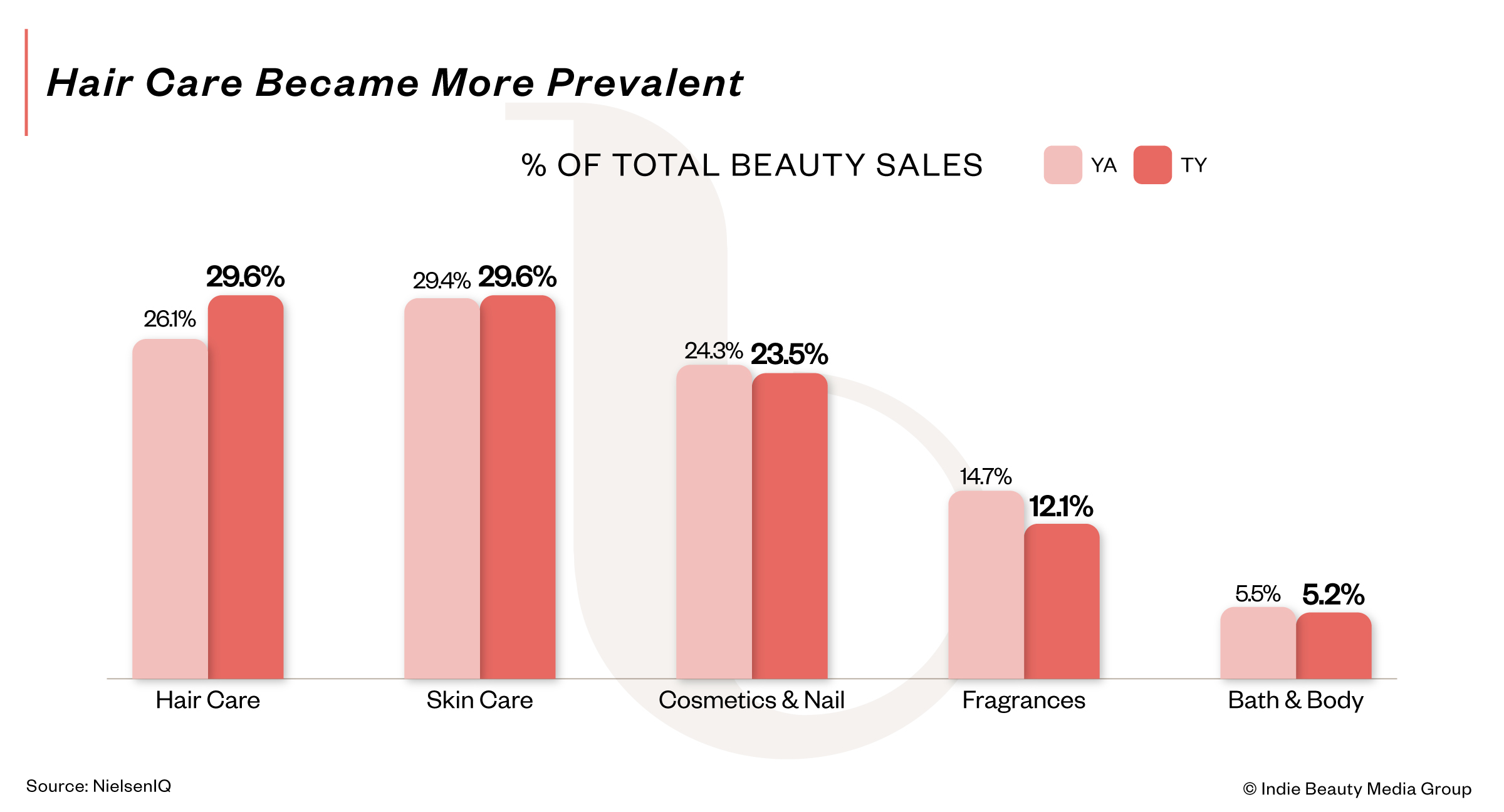
Haircare’s share of total online beauty sales from Nov. 27 through Dec. 1 rose to 29.6% from 26.1% last year, and skincare clocked in at 29.6% share of online beauty sales, up from 29.4% last year, according to consumer intelligence firm NielsenIQ. Haircare was the top-selling beauty category on Amazon and TikTok Shop and the second-bestselling beauty category on Ulta Beauty and Target’s websites. Amazon accounted for 60% of all haircare sales for the period. During Black Friday last year, the e-commerce giant drove 50% of total online haircare purchases.
Cosmetics and nail, fragrance, and bath and body underperformed compared with last year, coming in at 23.5%, 12.1% and 5.2%, respectively. Gen X and millennials drove about 63% of online beauty sales, with baby boomers and gen Z shoppers’ portions each contributing around 18.5%. Shoppers making between $75,000 and $100,000 in yearly income produced the most digital gains in beauty, accounting for nearly 13% of sales.
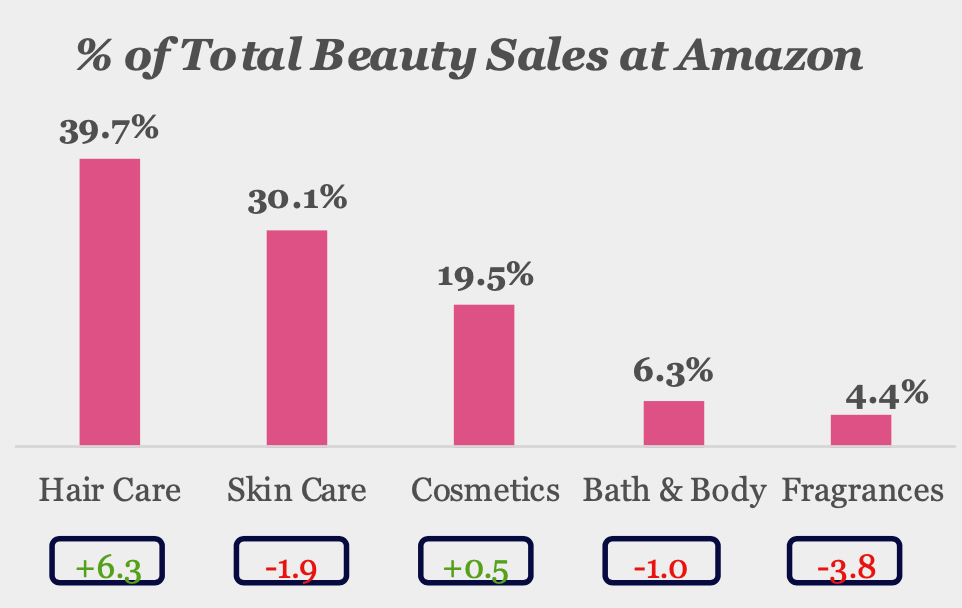
On Amazon specifically, haircare accounted for 39.7% of beauty sales over Black Friday/Cyber Monday, up 6.3% from 2024. Skincare came in second at 30.1%, a decline of almost 2%, with facial skincare, body lotions, lip balms, eye creams and hand lotions seeing the most resonance with customers. Makeup sales on the platform rose by .5% to 19.5% of total beauty sales. Bath and body and fragrances trailed behind, both dipping in year-over-year sales. Medicube and Sol de Janeiro were clear winners Amazon, according to a report from beauty e-commerce agency Navigo Marketing on Black Friday, with K- Beauty, masks and lip stains trending upward.
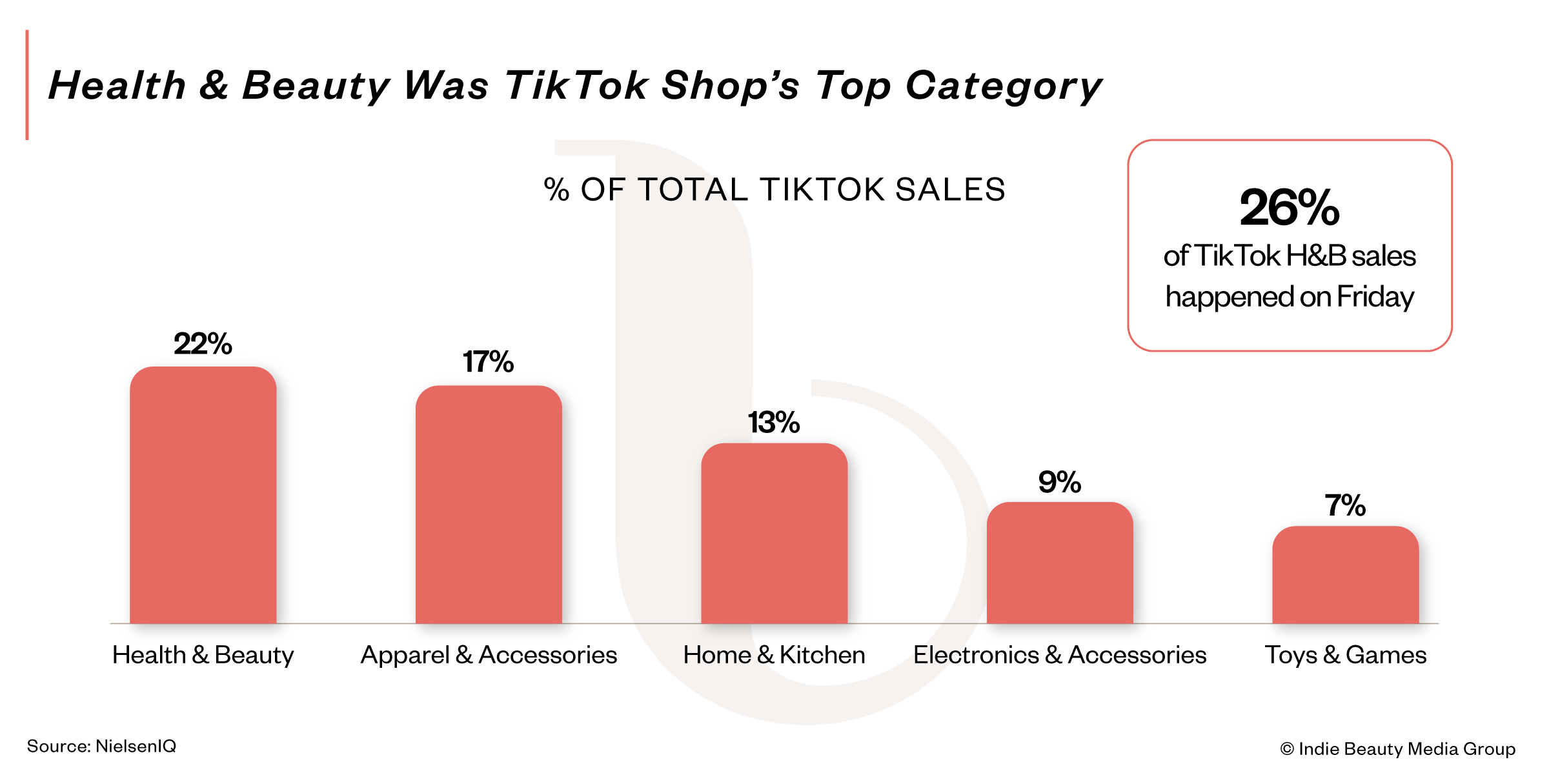
On TikTok Shop, where health and beauty was the top-performing category over Black Friday/Cyber Monday at 22% of total sales, haircare surged by 32.5%, with styling products fueling the majority of growth, per NIQ. Skincare sales rose 27.3%, makeup and nails 24.9%, and fragrances and bath and body 11.6% and 3.7%, respectively. The platform raked in a staggering $500 million in sales in the four days between Black Friday and Cyber Monday, with 50% more shoppers flocking to it for deals and livestream sales than last year.
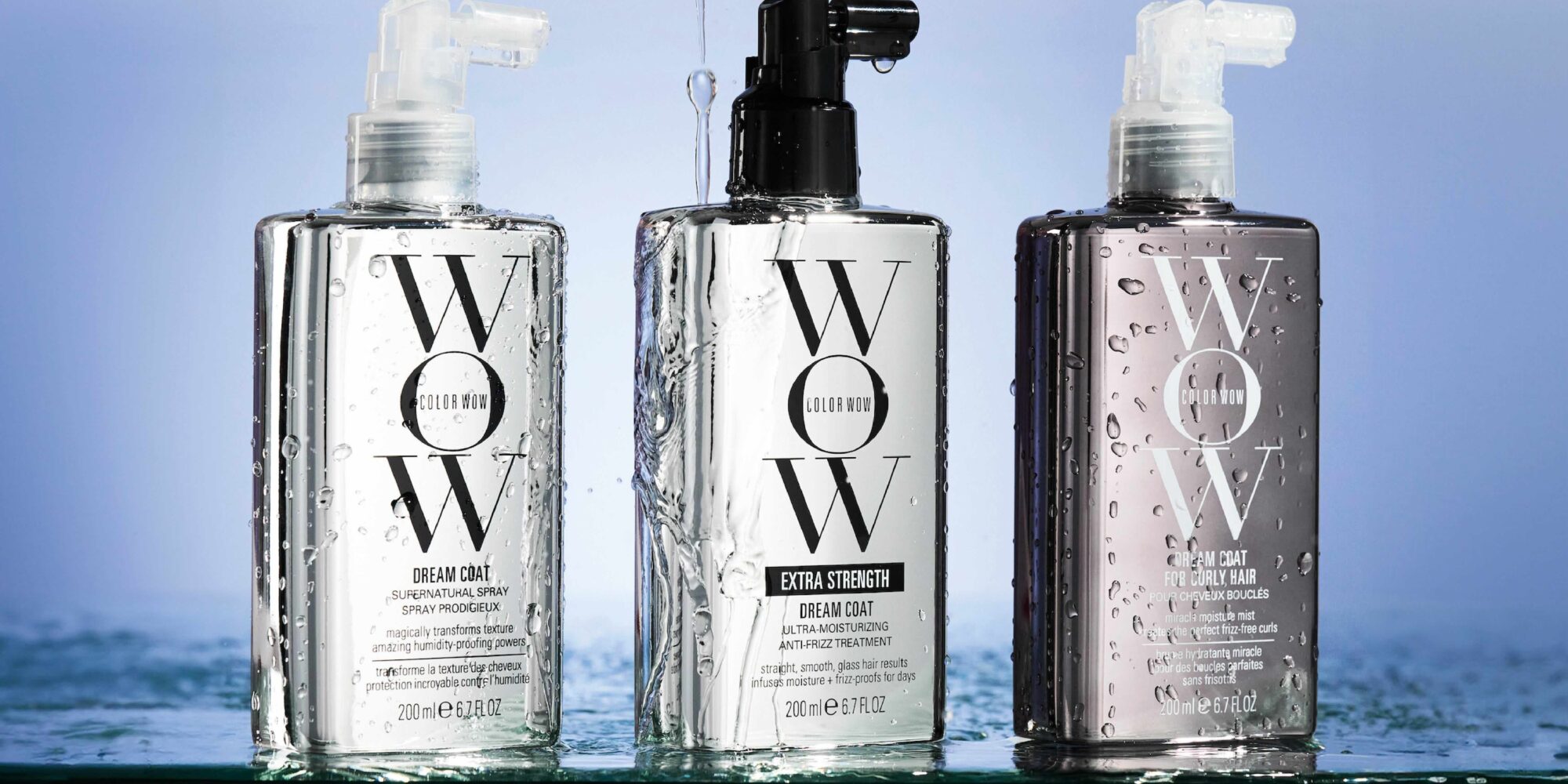
NIQ data finds styling products, treatments, shampoos, conditioners, hair loss products and bundles fueled the majority of haircare’s growth, with tools and color products registering a yearly decline in sales compared to last year. Haircare tools saw traction with holiday shoppers looking to score deals. Shark’s FlexStyle, Dyson’s Airwrap Multi-Styler and Olaplex’s Wash and Shine kit were a few of the top-performing hair products by dollars. ColorWow’s Dream Coat, Olaplex’s Bonding Oil, Chi’s 44 Iron Guard Thermal Protection Spray and Nizoral’s Anti-Dandruff Shampoo moved the most units. Kérastase, Kitsch and L’Oréal hair products performed strongly as well.
“Shoppers were very interested in hair tools during the sale, seeking value for big ticket items that make perfect holiday gifts, or even self-gifts,” says Laura Gill, director of NielsenIQ’s beauty vertical. “Consumers are using their expertise on both what to shop and when to shop. We’re seeing more volume shift into sale timeframes throughout the year, which speaks to shoppers’ prowess in navigating deals.”
Sonia Summers, founder and CEO of retail field team agency Beauty Barrage, points out that haircare consumers shopped with increased intentionality this year, a trend that bled into other categories, too. “They weren’t browsing as much, they were buying,” she says. “That maturity in consumer behavior combined with…compelling value propositions is why haircare didn’t just perform well during Black Friday, it led.”
Noting that haircare naturally lends itself to high replenishment cycles, Summers argues that Black Friday was the ideal moment for shoppers to stock up and buy gifts as haircare brands leaned into jumbo sizes, routine-based bundles and targeted discounts. “Our teams heard repeatedly that shoppers viewed these offers as a way to ‘lock in’ premium haircare at a more accessible price point,” she says. “That perceived return on investment is critical in haircare, especially as the category continues to level up with innovation.”
Ye Jin, fractional CMO at body care and haircare brand RoyceDerm, argues that haircare’s holiday dominance is largely driven by “structural demand rather than short-term promotional tactics. Consumers were more inclined to purchase complete scalp therapy systems or routine-based treatments rather than single SKUs, which amplified order size and overall category performance,” she says. RoyceDerm’s Black Friday sales increased between 40% and 60% versus baseline periods, while order volume rose by approximately 50%.
Haircare’s holiday blowout tops off an already strong year for the category. According to market research firm Circana, prestige haircare sales increased 8% between January and September, the highest growth rate of any beauty category, to land at $3.5 billion. All prestige hair segments are up for the year, while the category notched a robust performance in the mass market.
Taking a broader omnichannel view, Circana’s Black Friday beauty data tells a slightly different story than NIQ. It estimated that prestige beauty sales reached nearly $1.1 billion, with advances in both dollars and units across the major beauty categories. Skincare had the strongest growth rate over Black Friday/Cyber Monday, with fragrance accounting for 35% of total beauty sales. Treatment products fueled most of haircare gains, with serums and masks up double digits in sales. Makeup gift sets also advanced by double digits. Circana noted that stores claimed the highest percentage of sales on Black Friday, and online channels drove unit growth.
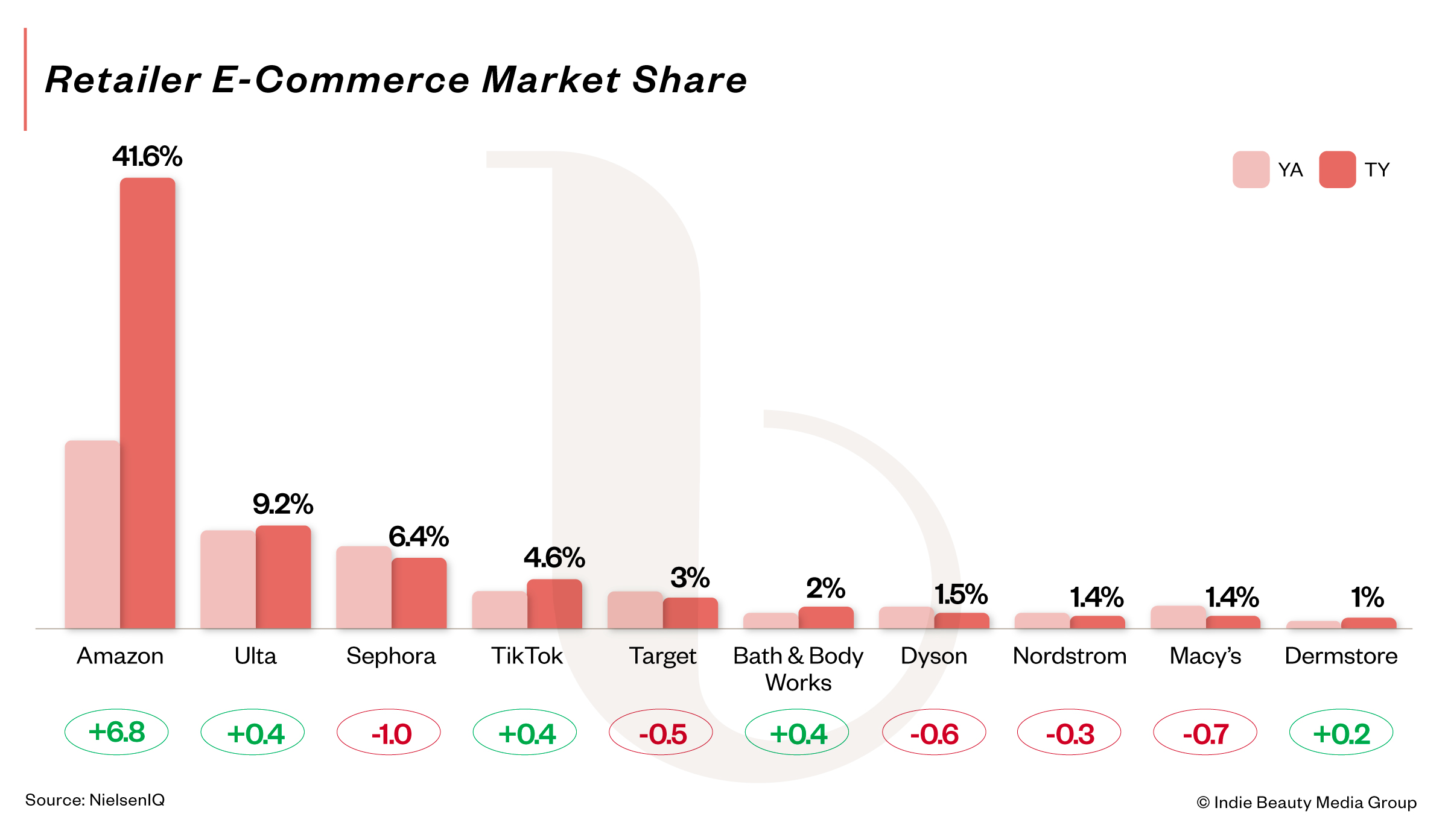
Amazon, Ulta, TikTok Shop, Bath & Body Works and Dermstore grew their market share during Black Friday weekend, with Amazon far in the lead, per NielsenIQ. It claimed 41.6% of online beauty sales, boosting its market share by 6.3%. Ulta gained .4% in market share, claiming 9.2% of online beauty sales, and TikTok Shop moved up 1.2% with 4.6% of sales. While Sephora advanced its online sales by 6.4%, it ceded 1% in market share over Black Friday/Cyber Monday.
According to Navigo, organic visibility was up across Amazon, Ulta and Sephora websites during Black Friday/Cyber Monday, with sponsored activity up at Ulta and down on Amazon and Sephora. At Ulta, dermatologist-loved skincare brands La Roche Posay, CeraVe and Aquaphor generated the most the momentum along with affordable gifts from Tree Hut, Ulta Collection and Ulta in-house brand Sweet and Shimmer. Hair tools, a historically challenged category at Ulta, were big draws, and press-on nails, hair perfume and tattoo cover-up registered high search volume online.
“Brands that brought clear claims, bundle value, and gifting options saw instant traction [at Ulta],” writes Meredith Matthes, account director at Navigo, in the agency’s report. Turning to Sephora, she continues, “Sephora’s customer is emotionally driven. They buy what they trust and what their community validates. Prestige loyalty always outweighs discount strategy here.”
Sol de Janeiro, The Ordinary, Rare Beauty, Fenty and Kérastase held momentum at Sephora, but Sephora Collection led the charge with shoppers, pinning down a 6.1% share of Sephora sales. A few top-selling products included Summer Fridays Lip Butter Balm and Shark FlexStyle. Search demand centered on hair perfume, lip gloss, body wash, makeup brushes and replenishment items.