After Raising Funding And Nearing $40M In Sales, Snif Talks New Subbrand, Fragrances As Toys And The Category’s Future

Amid the ongoing fragrance boom, an open question in the beauty industry is: Which indie brands will achieve enough scale and renown to be category leaders and sustain success even when the boom ends?
Phlur’s acquisition by TSG Consumer Partners in July is one answer, demonstrating upstart fragrance brands can strike significant deals. Many people are putting their money on Snif to be next. To be specific, investors from VMG Partners, Sugar Capital, Maveron, Adapt Ventures, Gaingels, Uncommon Denominator and more are banking on the brand, which closed a nearly $15.8 million funding round in June, bringing its estimated funding total to over $27 million.
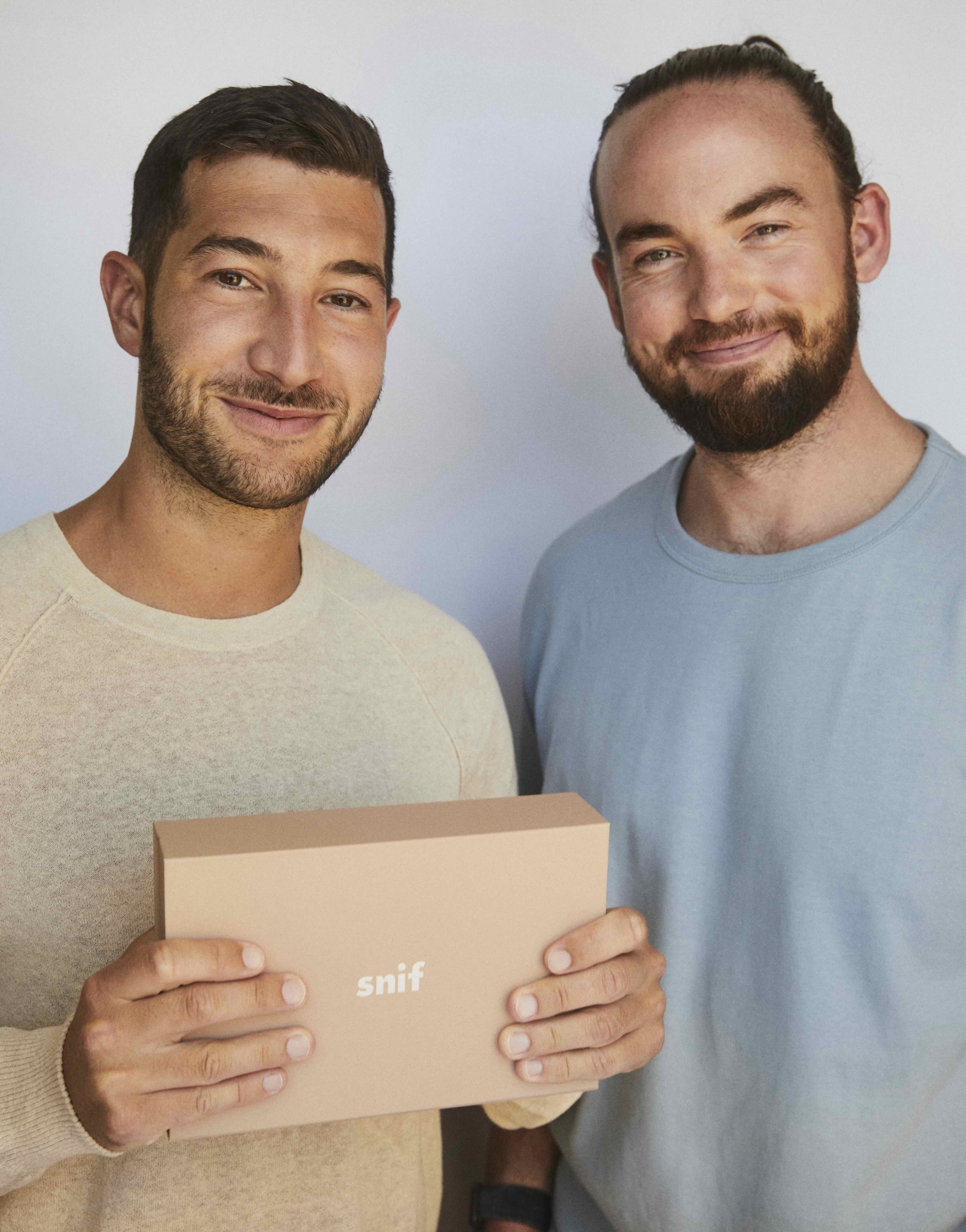
In a fragmented landscape, the investors saw signs that Snif, the brand founded in 2020 by Bryan Edwards and Phil Riportella and known for masstige positioning, zeitgeist-y collaborations and a try‑before‑you‑buy online program, was pulling ahead. According to the brand, it’s on pace to achieve triple-digit growth this year and generate $40 million in sales, while notching an above 50% repeat purchase rate in direct-to-consumer distribution.
After launching at Ulta Beauty in 2023 as part of the retailer’s Sparked platform for emerging brands, Snif rolled out to all Ulta locations in the United States in 2024 and added Ulta Mexico to its retail roster in August this year. Today, 60% of Snif’s sales are from DTC, with the remainder from retail, but Edwards projects retail will hit about 50% of sales by yearend.
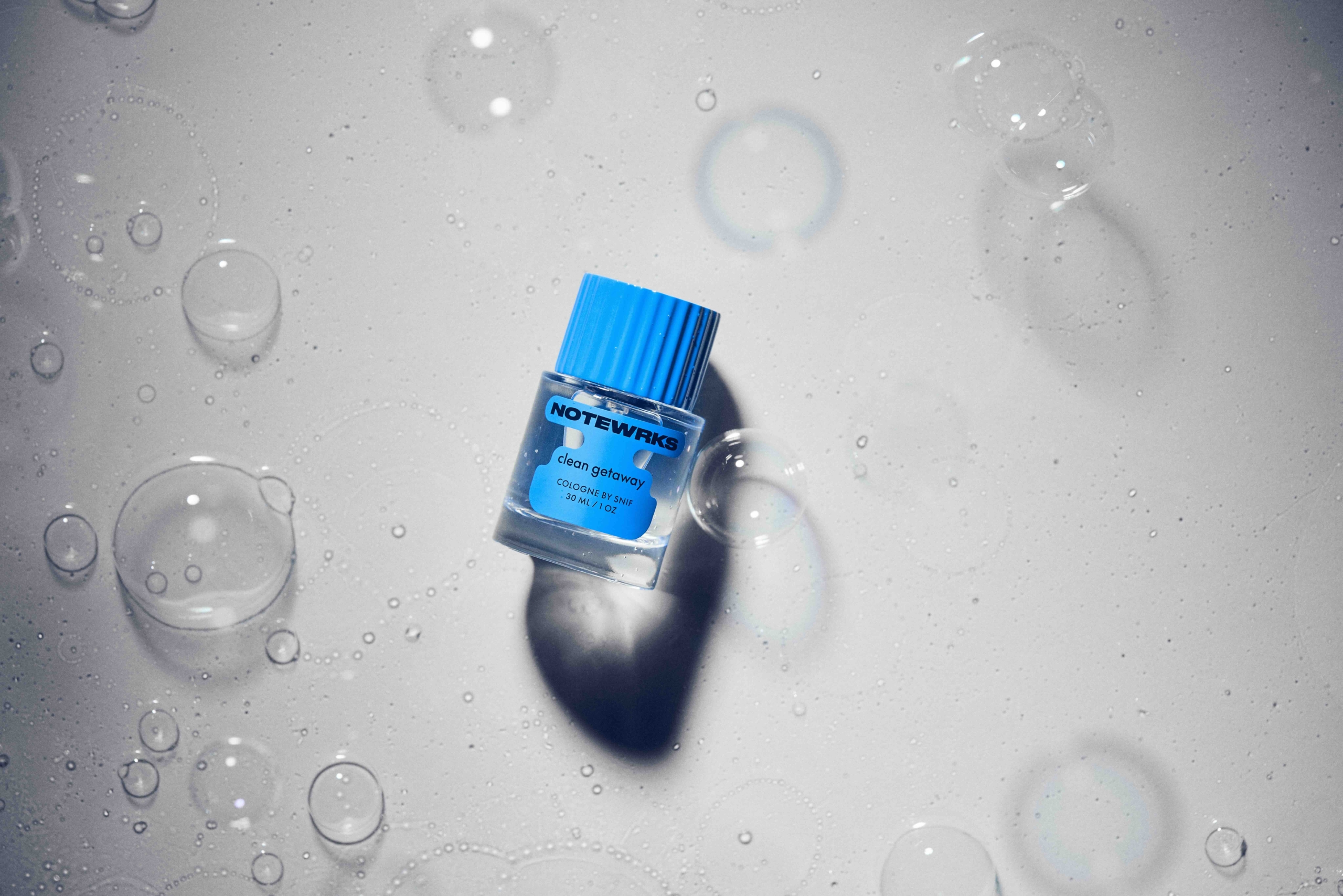
In a fast-moving market, Snif is revving up to accelerate its advantages. On Dec. 4, it’s introducing Notewrks, a subbrand aimed at gen Z and alpha guys. In the price range of Snif’s scents, which are $65 for a 1-oz. size, its debut fragrances will include Clean Getaway, Room for Dessert and Sunny Is a Feeling.
“The fragrances are a reskinning of traditional colognes. They are not a Sauvage. They are not a fougere. I mean, there’s a take on fougere, but it is not barbershop clean,” says Edwards. “It is not your dad’s cologne. We felt we had license to as a brand to redefine what cologne means for a younger male consumer.”
Beauty Independent talked to Edwards about the rationale for starting a subbrand, why he’s more nervous about it than any other launch, Snif’s decision to go into Ulta, its value proposition, collaboration strategies and the future of fragrance.
Walk us through the risks and rewards of launching a subbrand.
This is actually the second subbrand that we’ve launched under the Snif umbrella. The first was a subbrand called Nonoses, which has become known as our secret menu. We launched that at the very end of 2022. What we learned from that subbrand launch was what compelled us to do something separate and unique to launch men’s.
Back then, we didn’t know what we were doing. We were very inspired to do something unique and creative around secret menu and Nonoses. From that, some of our most commercially viable scents were born. The reason wonderful things came out of that is because it was a big creative risk. We didn’t focus on necessarily commercializing it right out of the gate. What we learned is that, if you can let a brand build and you do it for the right reasons, good can come out of that.
We launched one of our first SKUs from secret menu, Crumb Couture, into all doors at Ulta over the summer. That was the first time we had done a transition of one of our subbrand scents into omnichannel. Crumb Couture is one of the bestselling scents for us in Ulta this year. It’s foreshadowing because more secret menu scents are coming to Ulta early next year. So, given the learnings we had around subbrand building, we were thinking about what the next big move was going to be for us.
Explain the big move you are making.
A lot of how we evaluate brand decisions is around what everyone else isn’t doing or the bigger houses won’t necessarily touch or what feels antiquated. Especially over the past year, there’s been a lot of press and data to suggest that the younger gen Z male, even the gen alpha male consumer, was getting more involved in the fragrance.
Snif has always been about developing genderless fragrances. We are about a 75/25 split between women and men. We know women buy a lot for men, so it’s not a true comparison, but the fact of the matter is, when you look at ulta.com or go into the store at Ulta right now—I’m just using them as a proxy—there’s nothing accessible for men.
There is no masstige or below scent brand that exists within Ulta or Sephora. On a per ounce basis, there’s nothing less than like $90. Most of the development happens within prestige or above within colognes. When you walk into Ulta, it’s Sauvage and Dior.
We realized that there was a white space. The premise of Snif has always been super high-quality formulas, accessible price points and differentiated olfactive scent profiles. We looked at that premise and were like, what’s going on in cologne? Given the experience with secret menu, we felt it should be its own lane.
What do you see as the trajectory of Notewrks?
We have high expectations that we can build a whole new revenue stream, not just for us online, but also for our retail partners. We are launching this on DTC because, part of the alignment that even we’ve had with our partners at Ulta, is that this is a creative risk.
I’ve never been this nervous about a launch before because everyone, whether it’s in our investor network or in the industry, has always said that men’s is tough. But when I hear that I’m like, ooh, that sounds like an opportunity. We want to put this to the world and see how people not only respond to the creative and the identity of the brand, but also respond to the fragrances.
What has your research told you about the gen Z fragrance consumer, and how are you responding to that?
There were two insights that we uncovered that we thought that really informed how we thought about. The first was around collectability. When we would speak to our customers about how the men in their life interacted with fragrance, there was a lot of collecting happening, almost like the way that you collect Pokemon cards. They wanted to try to collect them all. We call it the “toyification” of fragrance.
We want the bottles to feel collectible. We want them to feel familiar, but also like they can be something you could put on your shelf, and they would not only stand out, but you want to collect them all. Each fragrance has a unique color palette to it. Every bottle will always have a different color.
The Snif customer is familiar with fragrance language and concentrations, EDTs, EDPs. It’s a little intimidating to go to a guy and be like, “Oh, here’s a peach skin scent. I know you’re going to smell good, just trust me. Even though it doesn’t say cologne on the bottle and it doesn’t look masculine, I think it’s going to work on you.” We think that’s a harder sell. We are choosing to call them colognes, although they’re not going to smell like your dad’s cologne. We are using that word so that it feels comfortable for the consumer.
Can you elaborate on the toyification of fragrance?
A pancake fragrance is our bestselling SKU also this year. Why is a pancake fragrance one of the bestsellers? People are using it for fun. They want to play with it in the same way that kids want toys. Adults want toys. We’re leaning into something that’s very high quality, but it’s not the serious angle that fragrance has historically been. When we unpack that more, we just feel like the world is very, very serious.
People considering Snif, the No. 1 thing they classify Snif as is fun. We like that lane because there’s not a lot of other brands that are going as hard through fun as we are.
If they aren’t already invested in fragrance, most investors in beauty are exploring it. What do you think they’re getting about the market and what are they missing?
I think most funds have picked their horse that they’re making their bet on. In general, as investors to think about beauty as a portfolio, there are certain segments that you want to make sure that you absolutely play in. It is insane if you are a late stage or I would even say an early-stage investor that doesn’t have a bet on fragrance given it’s the hottest segment within beauty.
As a later-stage investment, we have proof of concept, product-market fit and omnichannel distribution. That has de-risked anything that would happen if the market would change. Given the appetite that we saw going through fundraising, it made me feel like we needed to expand the breadth of our expertise in terms of category because it felt like we were close to the top.
As a very fragrance-forward brand early on, it made me think about category expansion to enter other segments of beauty that could help it not only help grow, but expand our customer base. Every day, there’s a new brand coming out that’s launching a fragrance that could be a dupe. Given how competitive it is and how clustered, we need to make moves into other places to diversify our portfolio and go where everyone else isn’t going.
A lot of investors want brands to go to Sephora because that’s the main path for American beauty brands to big exits. How do you look at the expectations for Snif and the decision to go with Ulta?
Historically, especially within fragrance, Sephora had been the preferred partner. Our perspective was that it was such a crowded market and a very specific kind of customer with Sephora that it didn’t make sense for our brand.
The reason that Snif has worked at Ulta is because the Ulta customer is looking for a more accessible option. To Ulta’s credit, they have given us the space to be able to show our brand in a way that Sephora I don’t think would ever have allowed us to. They probably felt like they were playing from behind a little bit within fragrance. So, they wanted to make bets on brands that help them grow their category. They made a bet on us, and they’ve continued to make bets on other exclusive brands, too.
The mass market has seen more growth in fragrance than prestige lately. Can you be more of a mass play or even have another brand in mass?
When you look at mass fragrance, there’s not been a lot of innovation. It is a lot of the same old, stodgy olfactive profiles. The quality is not great. They’re not clean. There’s a big white space within mass.
Through existing categories, primarily through body mists, we feel like we can go after more of a mass customer. We play within masstige. Our travel-size body mist is $22. We feel we’re close to the price point for a mass customer to be able to access.
We’re in the midst of a fragrance boom. When do you think it will end?
I don’t think it will end. Fragrance has proven to be quite recession proof. We have set ourselves up from a portfolio, pricing and offering standpoint to be able to weather any storm that comes.
There are so many new brands, and it is an incredibly fragmented space. I don’t know if there is enough funding and or consumer appetite for everybody to sustain. I could see there could be a pruning of the competitive set. Brands that understand their customer the best, provide something unique and differentiated and also have the right economics and distribution will be the ones that survive. There’s only so much room on the shelf.
Last week, Estée Lauder CEO Stéphane de La Faverie said fragrance will be a core part of the company’s turnaround and growth strategy. What does that mean to you?
It must be really hard for Estée Lauder to acquire a younger customer. When I see an interest in fragrance, to me that feels like there’s potential for a more active M&A environment or even honestly co-creation or collaboration. I could see one of the portfolio companies within Lauder potentially being a partner for us to create something exciting with.
Even think about legacy retailers and what Salt & Stone did with Aritzia. I think about a brand, even I don’t know, Gap, and us being able to collaborate with them and take something older and be able to try to make it feel new again. I generally think this is a rising-tide-lifts-all-boats scenario.
What was your most successful collaboration?
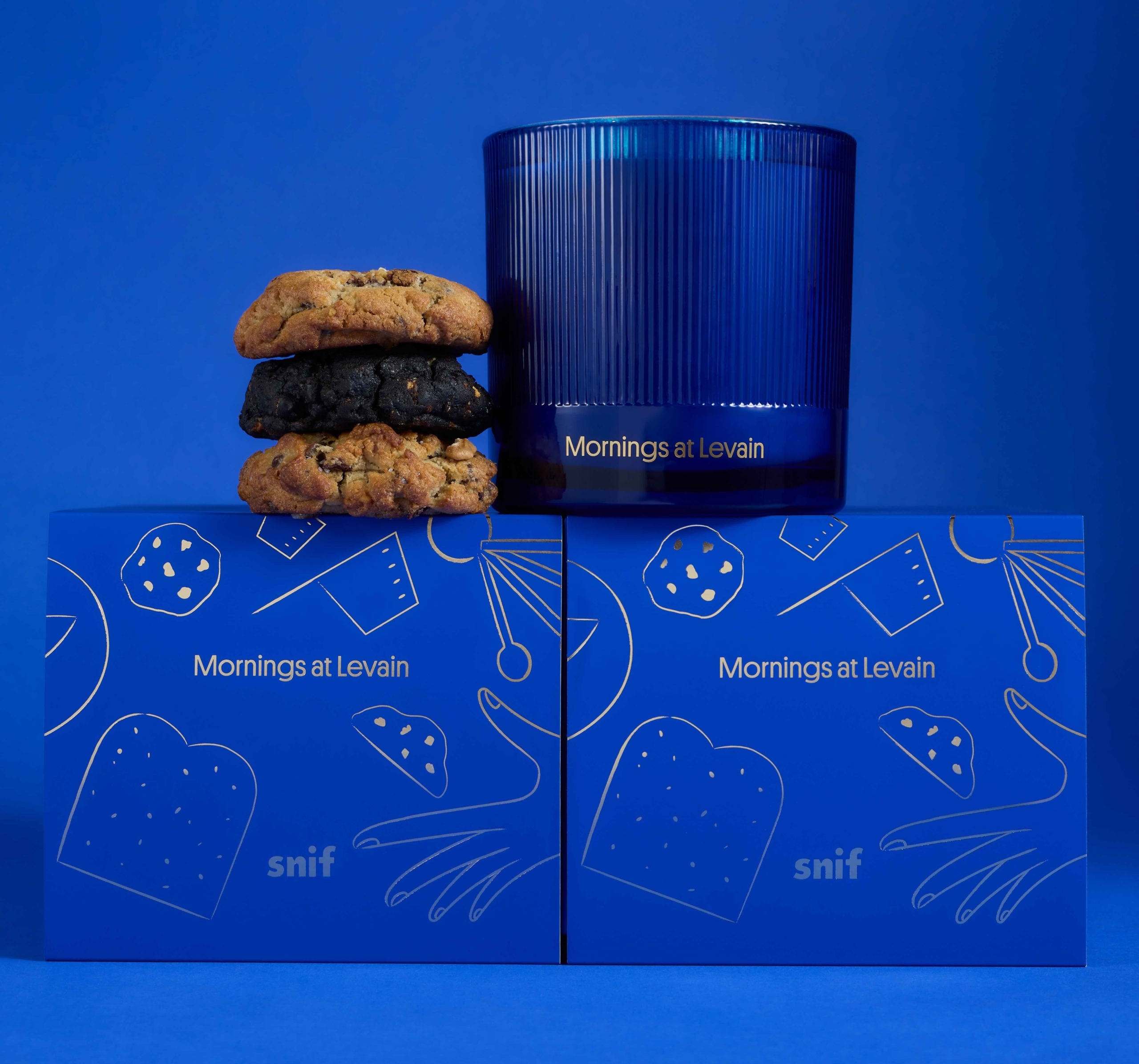
The Levain collaboration for us, which is our most recent, has been a very cool experience. Levain is a 30-year-old heritage brand that has continued to stay relevant and is still founder-led with Pam [Weekes] and Connie [McDonald]. That was validation that the brand Levain, who cares so much about the quality of their product, was willing to partner with us. That is proof point that the brand has license to partner with a variety of different partners.
When I think about some of the most successful collaborations that we’ve had, one that comes to mind is with Monet McMichael. We launched a product called Rose Era last July, which is still one of the top sellers at Ulta for us. We partnered with an up-and-coming beauty creator to create a scent and not only launch it as a capsule online, but see what power that could bring to omnichannel. When we launched that product last summer, it was the No. 1 selling fragrance the month of the launch of July.
Obviously, celebrity has always been involved in fragrance, but the same way that we’ve re-skinned brand identity and olfactive in fragrance, we have reskinned what it means to collaborate and partner with celebrity in fragrance. We bring our creators and our partners into the development process, so it’s not like we’re just slapping on a face and doing a licensing deal.
How have your customer acquisition channels been shifting?
Our channel mix over the years has been pretty consistent. About 50% of our sales come from organic and earned channels. This past quarter, it was more like 60% of our sales came from earned and organic. The rest is coming from more traditional paid media—Facebook, TikTok, all of that. Within the paid space, there’s obviously Meta and Instagram, then the Wild West that is TikTok Shop.
We experiment on TikTok Shop, and that is a source of growth for us going forward on the organic and earned side. The hack for us has been around identifying the best content creator partners or brand partners to be able to co-create fragrances with because those have proven to be not only exciting awareness moments, but big conversion moments for us.
It’s a big strategic priority for us to make sure that we rank at the top on any generative AI engine. It’s important for us to remain relevant, especially where people are doing most of their research and most of their discovery.
Tell us more about your experimentation on TikTok Shop.
It feels like it’s a discount channel. Our most successful days we’re running flash deals, free shipping or when we do Lives. There’s a connotation that, if a Live is happening, there’s a good deal.
The key to our success on TikTok Shop has been around seeding. We feel like having an effective gifting program opens up the opportunity to work with a lot of micro-creators on the platform. Being able to work with more micro-creators, that means more content. Once you have more content out there, the chances of something going viral really increase.
We’re also experimenting with different product profiles. We think some of our competitors have had success at lower price point products and getting the right piece of content. We’re experimenting with different price points on there, but also other formats like we’ve experimented with laundry, we’re experimenting with body, too. We’re trying to do a little bit of everything given the fact it feels like a channel where people are just looking for the best, earliest deal.
Value is important to Snif customers. How do you interpret and communicate that?
The way that I interpret that is price is paramount. When we price a 1-oz. bottle of fragrance, that’s at $65. When I look at other 1-oz. competitors, they’re $80, $90. There’s a splitting of the customer that’s happening where they can get just as good quality at this masstige price point. If they’re not going to buy it there, then they’re probably going to be a prestige customer.
I wonder, what happens in the middle? What happens to the $95, the low $100 bottle? Is there a place for that anymore, especially when we believe that our value prop, especially on quality and performance, is even better than what you would buy at those purgatory prestige price points?
This interview has been edited for clarity and brevity. The headline was modified on Monday, Oct. 20 at the request of the brand.