
With formula ownership an increasing priority, SOS Beauty, the brand incubation firm that counts Patrick Ta, Shani Darden Skin Care, Ouai and Merit among its clients, is launching NuLaboratories to develop formulas for breakthrough beauty products and enable brands to secure intellectual property.
The for-hire formulation house represents the next phase of growth for SOS Beauty, which expanded its services during the pandemic as demand rose for research and development, design, sourcing and more. It also aligns with a growing appetite in the beauty industry for brands to own their formulas. Formulas have historically been controlled by contract manufacturers as tools to retain clients, but companies are increasingly moving to own them as investors prize differentiated IP and pursue greater manufacturing mobility in a sector where receptivity to small brands is limited and closures and acquisitions can sever brand relationships.
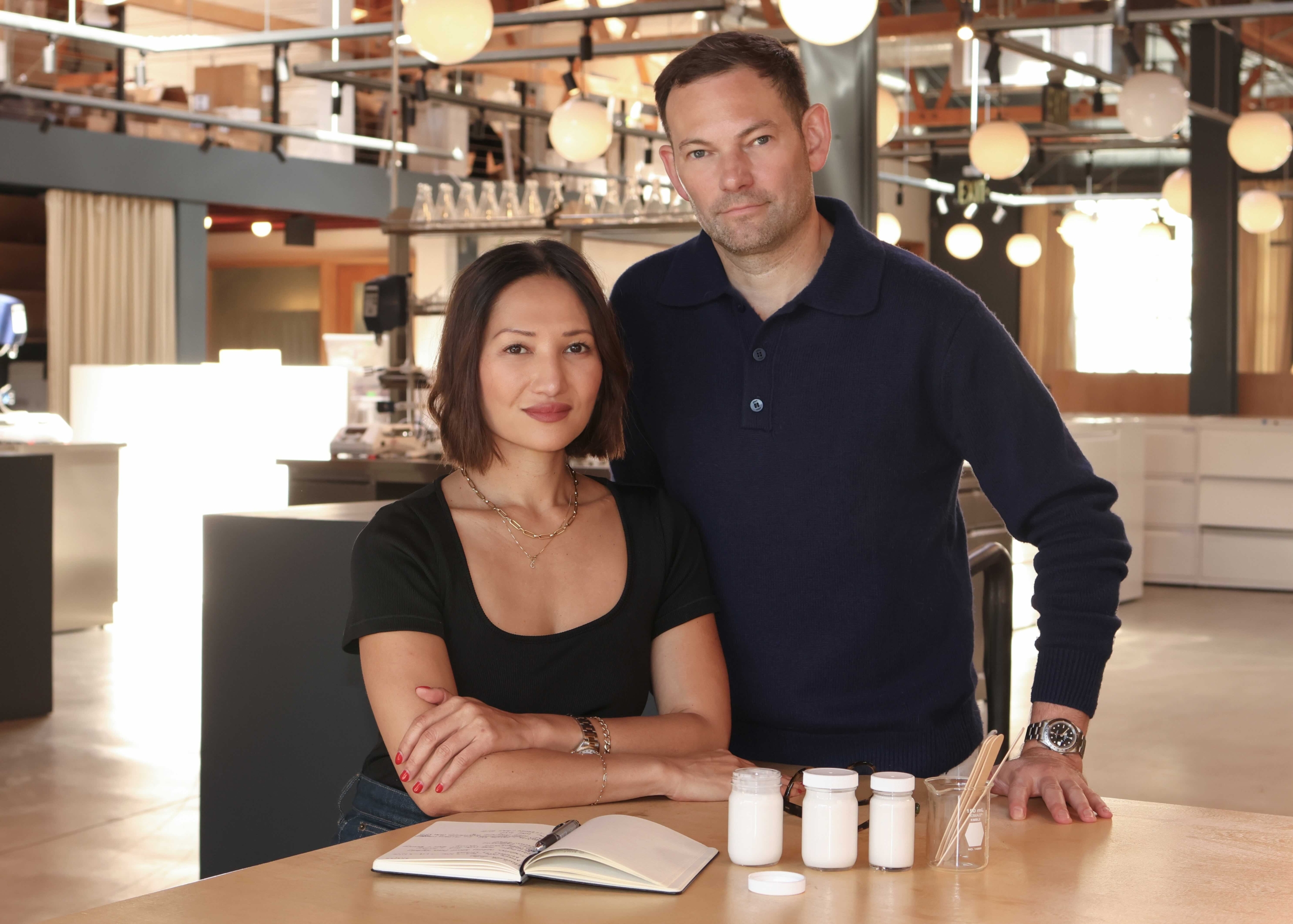
“It’s basically having your own R&D team outsourced,” says Dustin Cash, co-founder of NuLaboratories and SOS Beauty. “We contract with brands that have an idea or no idea at all and help them to formulate a complete new piece of IP that they own, and then we can help them tech transfer that IP to the manufacturing site of choice, and they can run with it from there. What it really does is help to break away the IP lockdown that CMs typically have on the formulas.”
Brand founders are turning to AI platforms to generate formulas, but Cash and Valledor emphasize that AI lacks the expertise to test, refine and verify that formulations are stable and manufacturable. NuLaboratories handles a wide array of formulas across skincare, body care, haircare, home, pet care and color cosmetics, excluding pressed powder.
Its rate starts at $20,000, depending on formula complexity and scope, and formula development usually takes four to six months. Beyond formulation, NuLaboratories can assist with regulatory review, reverse engineering, raw material research, cost optimization and pilot batch troubleshooting. At the end of development, brands retain 100% ownership of their formulas and related documentation like manufacturing procedures and supplier information. SOS Beauty’s full brand incubation tends to take around two years.
While it might sound easy to transfer a complete formula to a contract manufacturer, there are numerous issues that can inhibit execution. The formula could wind up being pricier than the formulator calculated, brands may lack the processing instructions required to reproduce it, the preferred contract manufacturer may not have the equipment or ingredients to pull it off or the combination of the two may be untenable. Indie brands have lost tens of thousands of dollars on formulas that couldn’t scale up.
NuLaboratories’ formulation process is intended to stave off those issues. It asks clients for target cost of goods and secures quotes from three contract manufacturers to pin down the cost to produce the formula. Offering a “back-of-the-napkin” benchmark for founders, Cash estimates the cost of goods for prestige beauty products should land at about 15% of the retail price. With mass products, that can go up to 20%.
“It’s basically having your own R&D team outsourced.”
Charlene Valledor, his co-founder at SOS Beauty and NuLaboratories and former director of product development at Hourglass and EM Cosmetics, says, “A lot of our customers don’t have an idea of how to even figure out cost of goods. We like to encourage them to look at: What are your favorite products out there? What are your benchmarks? If you want a brand that’s going to be at Sephora, let’s just say you want to compete with YSL, which has a $65 foundation. If you want your cost of goods to be 10%, that’s about $6.”
NuLaboratories pledges that the formulas it develops are viable for contract manufacturers to produce. It accounts for manufacturing realities such as mixing instructions and processing requirements to ensure successful tech transfers, delivering stabilized, quality control-tested formulas appropriate for scale.
Valledor recommends brands not simply evaluate manufacturers on price alone. “Go to see their site and make sure that you feel comfortable and it’s a good fit,” she says. “We have several different partners in manufacturing because all the projects are different. There might be a project that’s smaller in terms of volume, but it needs closer communication and faster response time, so that’s the right partner for that brand. We might have a brand ordering 100,000 units that needs consistency across those units. In that case, lead times are longer, and the manufacturer is more buttoned up in terms of process.”
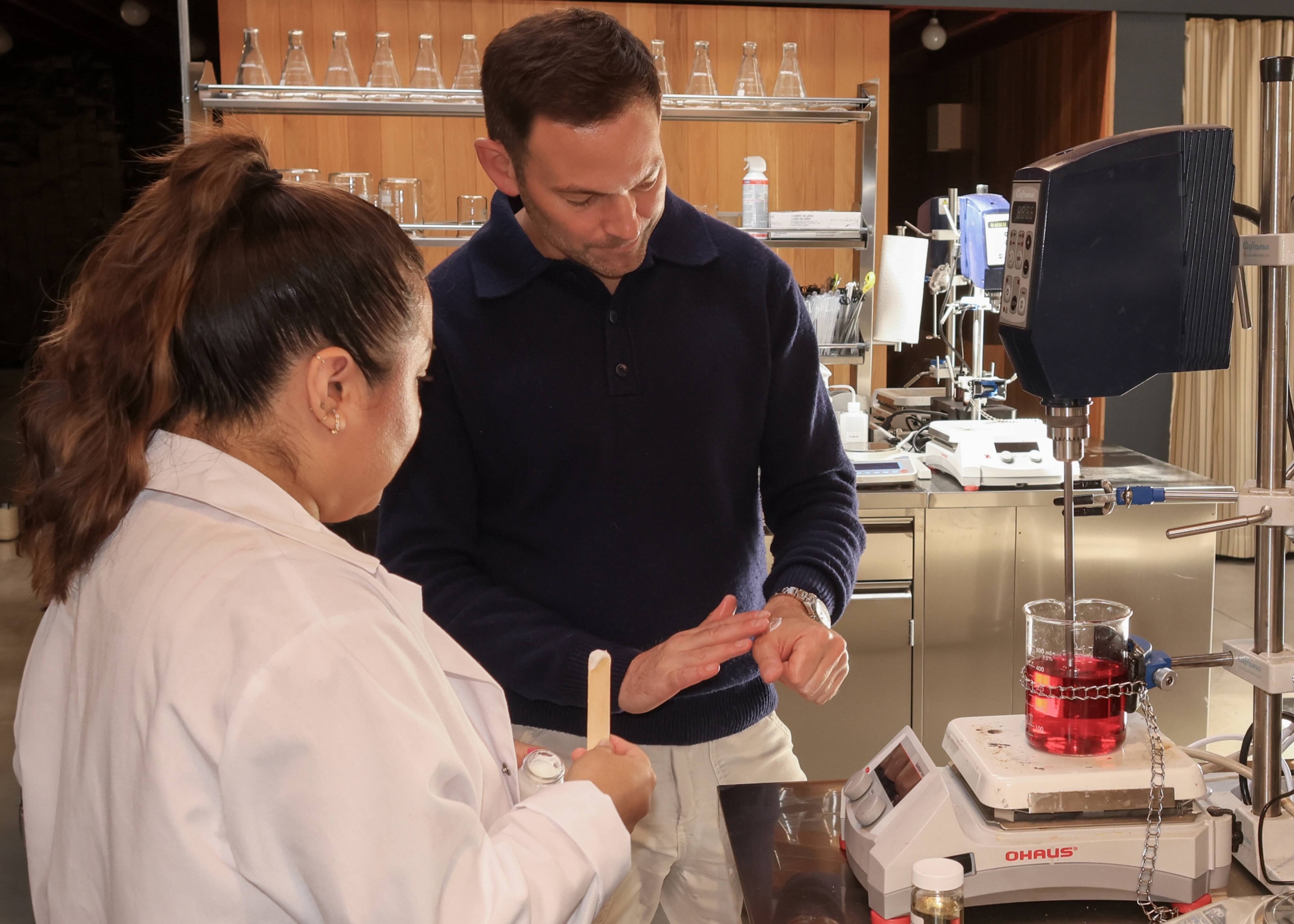
In recent years, the number of specialist formulation firms and cosmetic chemist freelancers has increased as cosmetic chemists look to generate higher incomes than they encounter inside manufacturers, make names for themselves on social media and respond to the proliferation of indie brands. Cash and Valledor, both alums of the haircare brand Alterna, launched SOS Beauty a decade ago after Valledor attended Ipsy’s former beauty festival Gen Beauty and understood that a new wave of digital-savvy brands was nigh.
At SOS Beauty, the team has expanded to over 20 members, and it generally operates on a retainer model and partners with around 10 clients at a time. NuLaboratories is a separate company, but it shares talent. Its team includes Jake Rosener, who previously held product innovation and development roles at Lancer Skincare and iS Clinical and leads R&D; Diana Madrid, who was formerly in executive and operational roles at RainShadow Labs and Hatchbeauty and oversees product and operations; and Marlene Lopez, a product development manager.
“People need access to be able to innovate without having $10 million and private equity backing. We really feel for brand founders trying to do something out there, and it’s hard for them to get the attention that we need,” says Valledor. “We have the experience, history and a lot of established brands that we’re working with, so we can only imagine what it’s like to be trying to start something today.”
Assessing their pipeline, Valledor and Cash report strong inflow in haircare and sun care, particularly as sun protection proliferates across beauty categories. She says, “The world of SPF is tricky to navigate, but that’s one trend we don’t see going anywhere.”