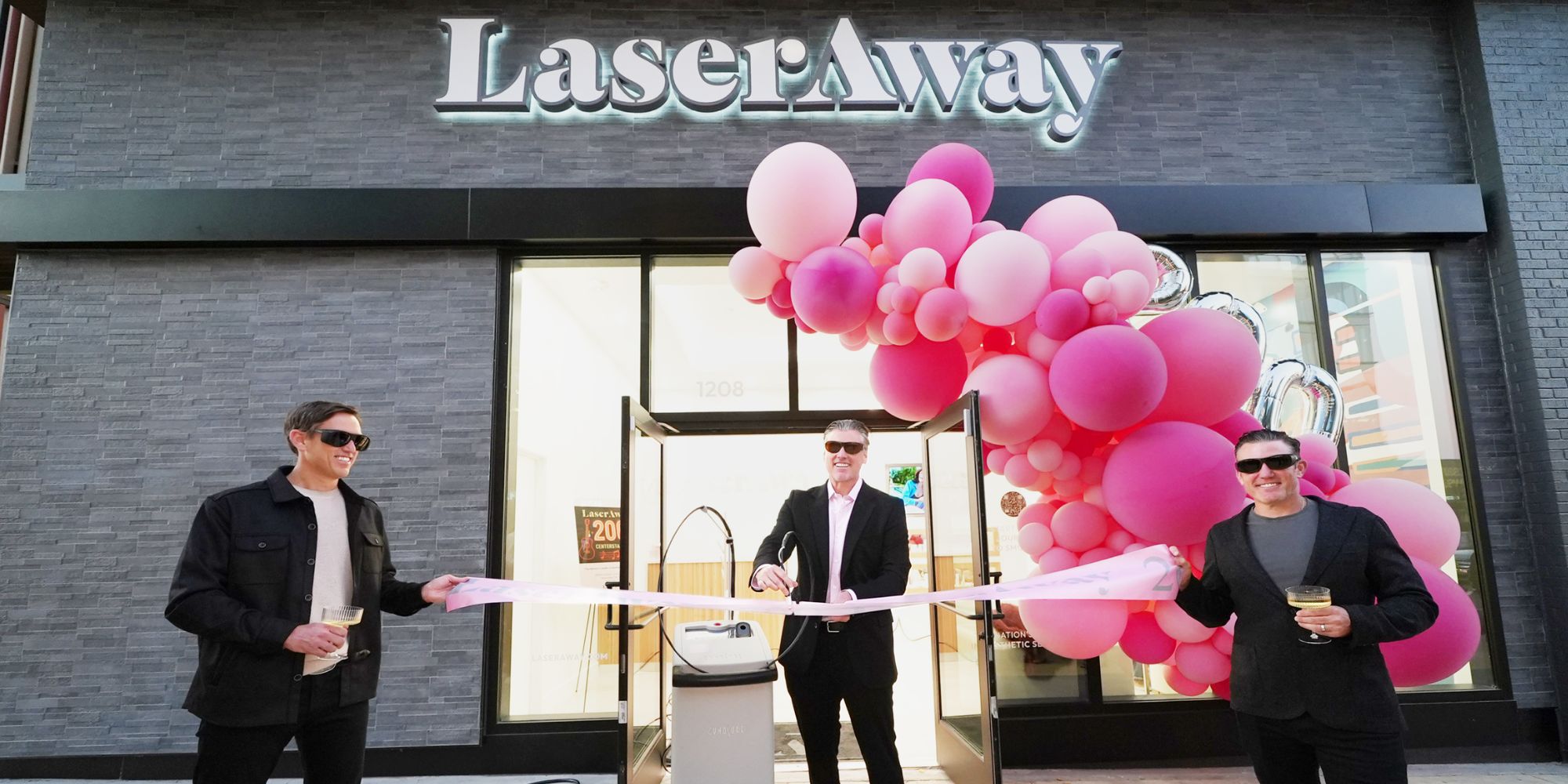

Founded in 2005 by brothers Scott, Brock and Todd Heckmann with physician Roy Winston, and focused on nonsurgical laser and injectable treatments, LaserAway has become the country’s largest aesthetics chain, reaching more than 200 locations across 35 states with zero closures, a milestone unheard of in the med-spa business.
“People think growth is about speed,” says Scott Heckmann. “For us, it’s always been about durability, building something that can’t be knocked down by trends or the economy.”
LaserAway’s momentum accelerated in 2022 when Ares Management Corp.’s private equity group reportedly invested more than $70 million to fuel multistate expansion, upgrade infrastructure and deepen training programs and recruitment. The company’s trajectory offers a blueprint for scaling in an industry where regional players, franchise systems and private equity-backed rollups often spread quickly, only to subsequently contract.
The nation’s leading provider of laser hair removal, LaserAway also offers SkinFitness treatments featuring the Clear + Brilliant laser, Potenza RF microneedling and the HydraFacial, body-contouring services such as CoolSculpting, and injectables like Botox and Xeomin. Pricing starts at $99 and goes up to $649 for select treatments. In 2023, Heckmann told the publication Glossy that about half of LaserAway’s revenue is from non-laser services.
Below, Heckmann shares the principles that carried LaserAway from a single West Hollywood location to a national network.
1. Build for national scale long before you go national.
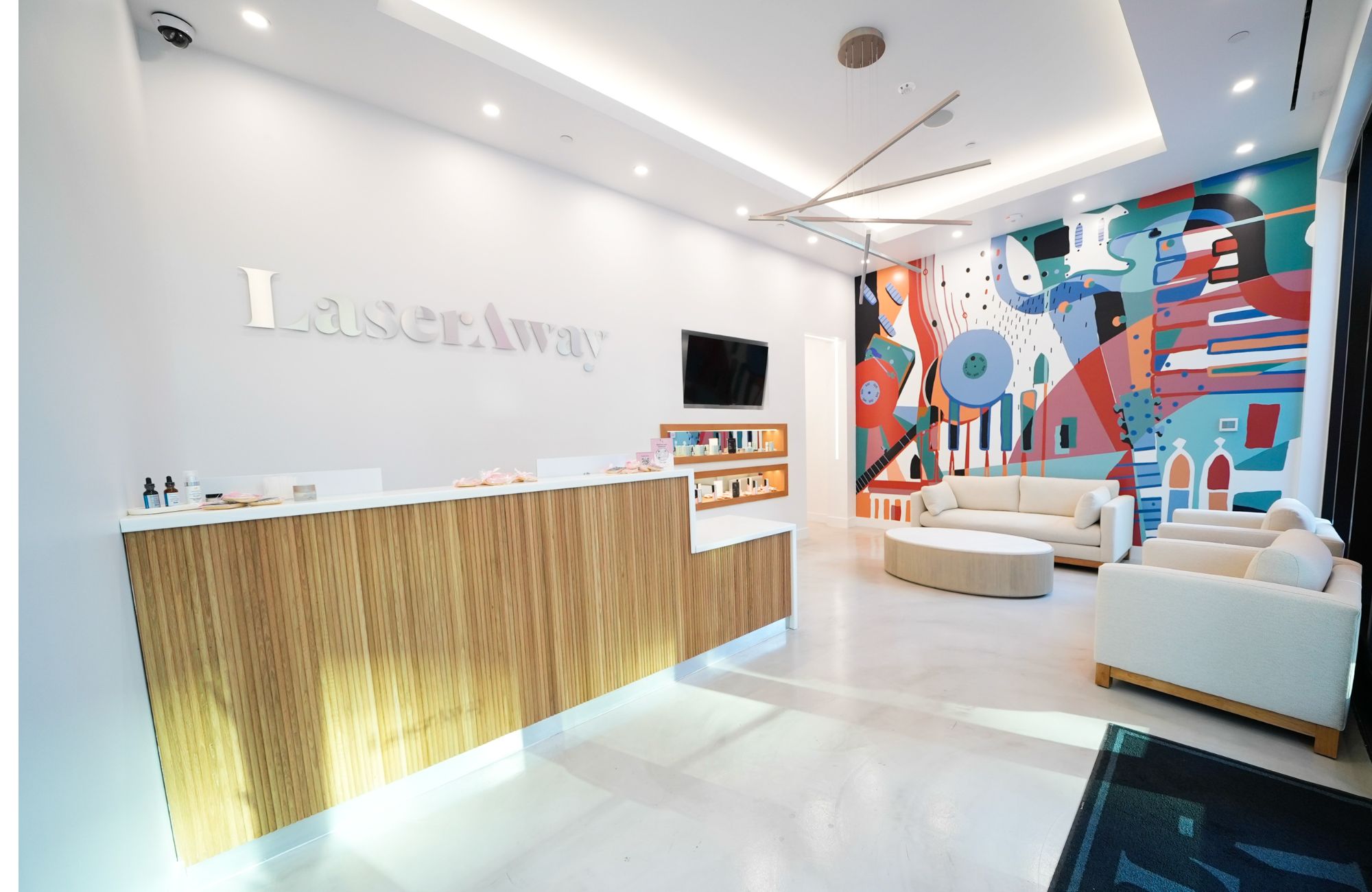
LaserAway’s foundation was set years before it had a multistate footprint. “We standardized everything early—clinical protocols, training, guest flow, even how the front desk greets you,” says Heckmann. “That discipline made the hundredth store feel like the first.”
Instead of retrofitting systems later, LaserAway treated every decision as if it needed to be replicated across the country. Its upfront commitment to documentation, repeatability and a physician-led structure enabled scale without losing control. The company operates with board-certified dermatologists providing oversight, while treatments are carried out by licensed medical professionals such as registered nurses, nurse practitioners and physician associates.
2. Localize strategically through location clusters.
“We knew very early that if we couldn’t train people fast, consistently and safely, we couldn’t scale,” says Heckmann. “Training is the business.”
LaserAway paired its approach to training with a deliberate clustering strategy for its locations. Instead of scattering them in distant markets, it opened in dense pockets. For example, it planted locations in the Los Angeles communities of West Hollywood, Sherman Oaks, Santa Monica, Marina del Rey and Westwood, and in San Diego from Hillcrest to La Jolla to Carlsbad. Clusters allow clinical and operations teams to support multiple locations, strengthen word-of-mouth marketing and create a consistent patient experience across neighborhoods.
The tight geographic model, supported by cross-trained nurses, has become a structural advantage as the med-spa industry faces a staffing crunch. While competitors faced employee turnover, inconsistency and uneven outcomes, LaserAway’s localized networks have kept performance stable.
3. Scale through focus, not breadth.
Med-spas often chase trending treatments—threads, niche devices, regenerative add-ons. LaserAway has grown by doing the opposite. “The most powerful word in scaling is ‘no.’ If a treatment doesn’t fit our standards, isn’t clinically sound or can’t be replicated across 200 locations, we won’t offer it,” says Heckmann. “You can’t chase hype if you want to last 20 years. Trends come and go. Infrastructure stays.”
Saying no has preserved operational simplicity and clinical quality. The company has maintained physician oversight, strict nurse-led protocols and conservative treatment adoption, which fosters trust and enables replication. Today, LaserAway has a tight selection of services. Amid device booms, the rise of GLP-1 use and changing patient expectations, it resisted reactive pivots, bringing in treatments only when they met safety and scalability benchmarks.
“Putting medicine in retail was weird in 2005, but people trusted us because we earned it,” says Heckmann. “We did four or five things really well and people were genuinely impressed with how good the laser treatments were.”
4. Use data to decide where to grow.
LaserAway’s streak of zero closures is rooted in rigorous market modeling. It analyzes every potential region through competition, psychographics, labor availability and retention curves. Heckmann says, “We don’t open markets because they sound good. We open markets where the data says we can win for the long haul.”
The disciplined approach has helped LaserAway avoid overexpansion traps that have toppled franchise and PE-backed networks and facilitates a consistent brand experience across 200 clinics. As Heckmann describes it, LaserAway is “the brand you can walk into blindfolded and know you’re in a LaserAway.” Brand consistency acts as a control system, reducing acquisition costs, improving retention and making clinics instantly trustworthy.
The company’s data-first discipline was tested with the risky move to enter New York City. LaserAway opened in a Flatiron space on East 19th Street in 2016. Heckmann says, “I didn’t really know much about New York, and it’s extremely expensive, but our model requires street-front, walk-by retail.”
The data showed the risk was justifiable. Heckmann says, “LaserAway does well where there are a lot of young people in a dense area where incomes are good.”
Flatiron’s demographic profile matched LaserAway’s stipulations perfectly and the location became a breakout success. LaserAway currently counts roughly 40 locations in the Tri-State Area, one of its strongest clusters.
5. Maintain leadership continuity and advocate for clinicians.
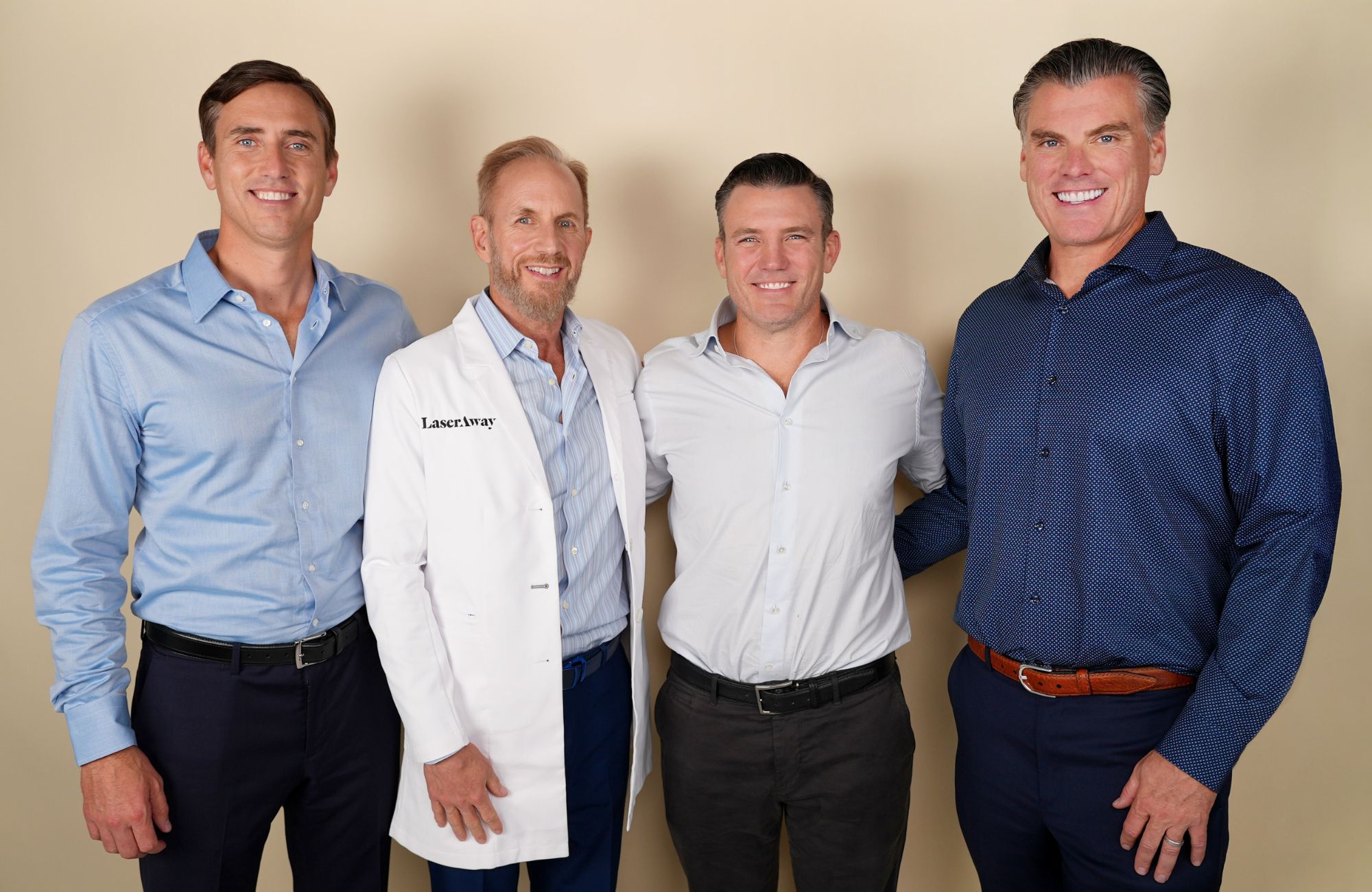
LaserAway’s long-term identity is anchored by leadership continuity. “It’s been the same leadership for 20 years,” says Heckmann. “Me, Brock and Todd, my brothers, Dr. Winston and Marla [Esposito, VP of sales], who was our first employee and now leads our sales side. There’s never been a major shift in who we are or what we want to do. We wake up every day and execute.”
Equally important is the company’s unwavering advocacy for clinicians. Though med-spas operate in retail settings, nurses are trained for clinical environments, a tension LaserAway addresses head-on. Heckmann says, “Even though it’s cash-pay and has a retail feel, you must stay true to the clinical setting nurses want to work in.”
That clarity has become a competitive advantage. By protecting clinicians’ ability to focus on patient care and making that a cultural non-negotiable, LaserAway has achieved persistent outcomes and stellar nurse retention at scale. In a category where turnover can destabilize growth and guest experience, prioritizing clinician dignity, autonomy and patient-first values has been a boon for quality.