
Target’s bestselling skincare brands in the first quarter reveal a category driven by distinctiveness, routine utility, accessibility and impulse appeal rather than any single product trend or positioning strategy.
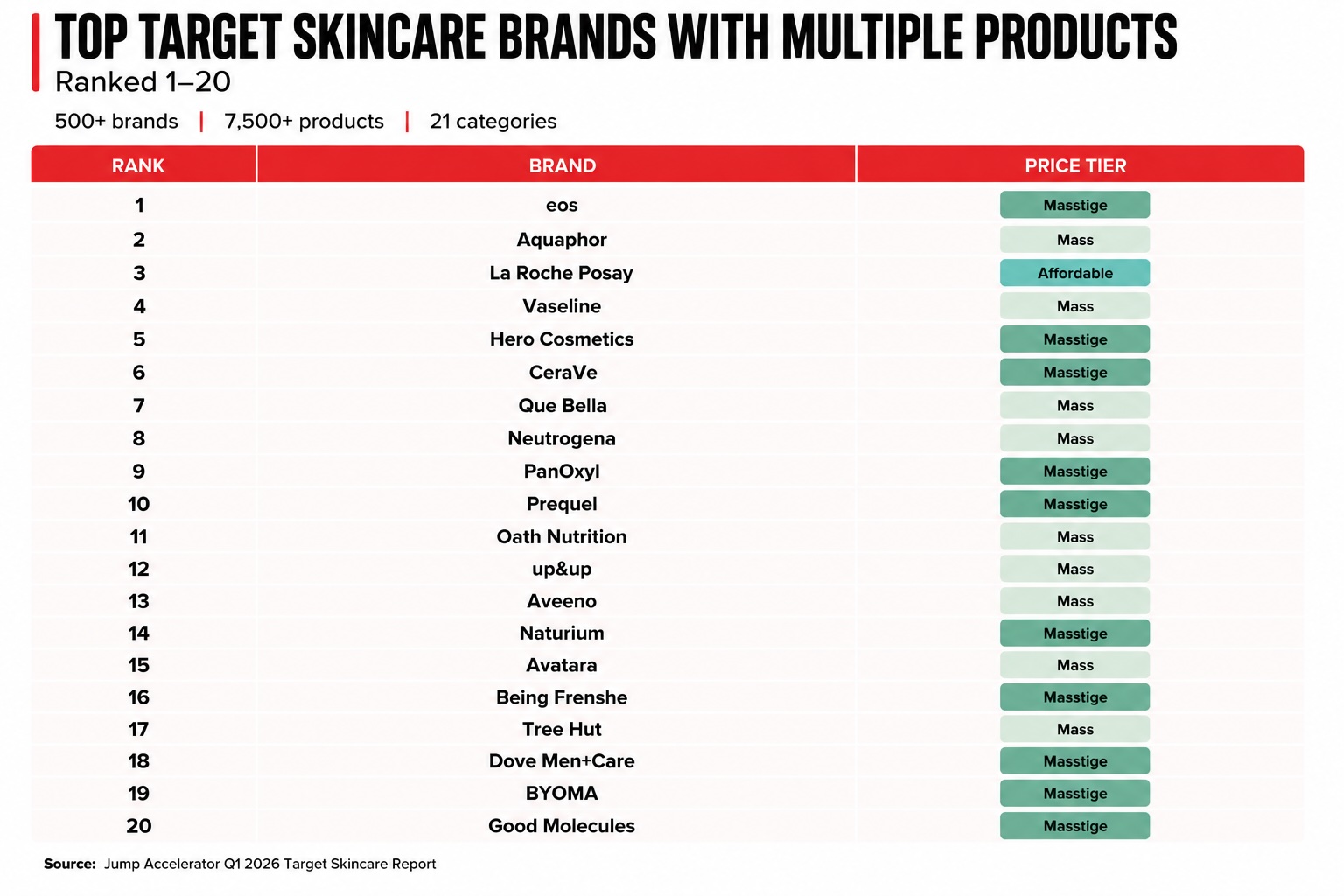
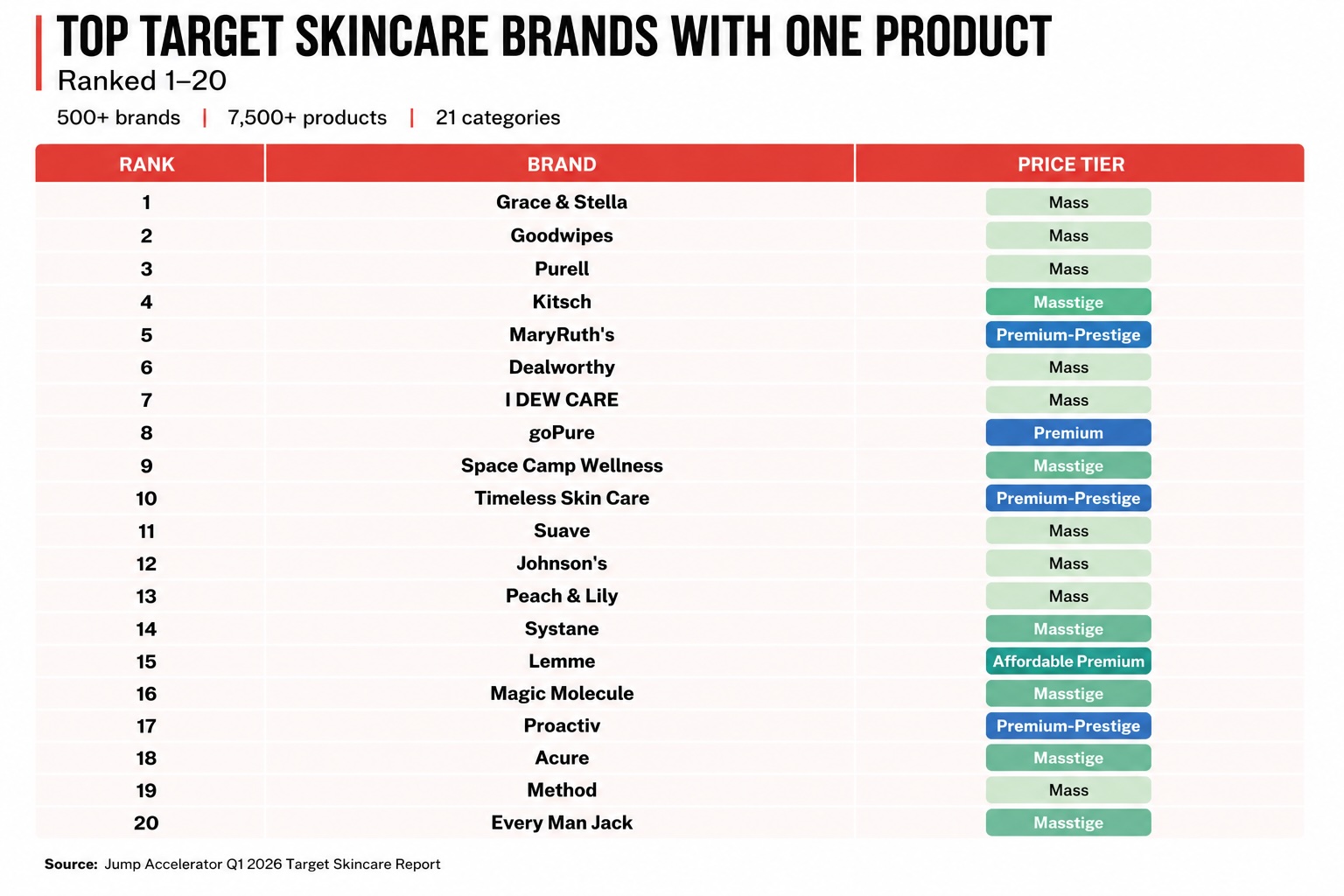
According to a new report from growth advisory and retail intelligence firm Jump Accelerator, Eos, Aquaphor, La Roche-Posay, Vaseline and Mighty Patch maker Hero Cosmetics rank among the top five skincare brands based on performance across multiple products. Among brands ranking based on one standout product, Grace & Stella, Goodwipes, Purell, Kitsch and MaryRuth’s hold the top five spots.
The rankings come as Target leans on beauty as it struggles with persistent discretionary spending pressures. Its 2025 net sales dipped 1.7% to $104.8 billion, although beauty remained one of its stronger categories. More than half of Target shoppers purchase beauty products, according to a recent Women’s Wear Daily interview with Amanda Nusz, SVP of merchandising, essentials and beauty at Target. This fall, the chain plans to replace its Ulta Beauty in-store shops with Beauty Studio concepts in around 600 stores.
“The top 20 brands are mostly not hard-core skincare brands,” says Rohit Banota, founder of Jump Accelerator. “They are a mix of fragrance, body wash, body care and skincare. The consumers are looking for value.”
Jump Accelerator’s rankings are directional estimates based on an analysis of more than 500 skincare brands and 7,500 products at Target during the first quarter. For overall brand rankings, the firm evaluated brands based on placements within Target’s top 1,000 skincare stockkeeping units, assigning greater emphasis to products appearing in higher-ranking positions, particularly within the top 50 and top 100 SKUs.
Because retailers generally don’t disclose competitive unit-level sales data, the rankings rely on product placement estimates using AI tools supplemented by retailer reports, third-party research and brand feedback. Jump Accelerator classifies products into pricing tiers spanning mass (under $10), masstige ($11 to $20), affordable ($21 to $30), affordable premium ($31 to $35), premium ($36 to $40), premium prestige ($41 to $50), prestige ($51 to $60), prestige luxe ($61 to $80) and luxe (above $80).
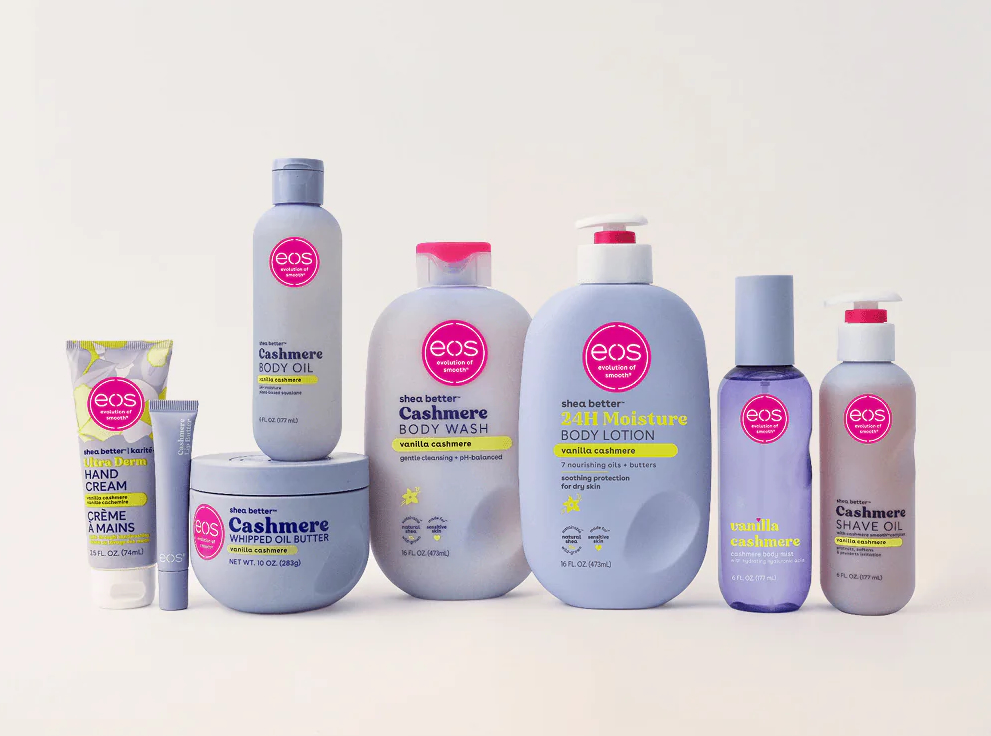
The firm divides Target’s skincare brands into several archetypes, including “heritage utility” brands like Aquaphor and Vaseline that benefit from habitual replenishment; “legacy clinical” players like La Roche-Posay, CeraVe and Neutrogena with broad distribution and extensive assortments; and “indie/category-precise” brands like Eos, Hero Cosmetics and Prequel that have built momentum around differentiated formats, specific use cases and standout products. The rankings suggest Target shoppers respond to immediately recognizable hero products rather than sprawling assortments or complex routines.
Banota says, “What shoppers can understand instantly tends to win at Target.” He adds, “Format and fragrance help with impulse sales plus memorability.”
“What shoppers can understand instantly tends to win at Target.”
Despite a push toward premium offerings, Target’s skincare assortment remains heavily concentrated in lower price tiers. Jump Accelerator estimates about 55 mass brands and 48 masstige brands make up the overwhelming majority of the 112 multi-product skincare brands in its rankings. About nine fall into affordable premium or prestige categories.
Among the top 40 facial skincare SKUs at Target, mass and masstige products dominate, accounting for 35% and 30% of the rankings, respectively, while the wider market of 217 brands skews more heavily toward masstige and affordable tiers. The imbalance points to potential whitespace in higher-priced, treatment-oriented skincare categories.
Jump Accelerator identifies five key areas of opportunity in Target’s skincare assortment: facial serums, with only four serum SKUs appearing in the top 100; ingestible wellness products at lower price points; dedicated men’s skincare, with no men’s products in the top 50 facial SKUs; daily routine-oriented sunscreen; and affordable K-Beauty items. Target’s top men’s skincare brands are Dove Men+Care, Harry’s, Duke Cannon, Old Spice and Every Man Jack, per Jump Accelerator.
“Serums and treatments have been a big trend, but they are sold with proper education and trial. Target hasn’t been doing that as much, but that doesn’t mean Target shoppers won’t buy serums and treatments,” says Banota. “I would argue very strongly that there is a case for serums and treatments sold at masstige. The Ordinary is one of the top 30 brands at Target.”
Target has embraced the convergence of wellness and skincare and K-Beauty’s latest wave, with seven supplement brands appearing within the retailer’s leading skincare SKUs and nine K-Beauty brands ranking within the top 1,000 products. Skin1004, Mediheal, Tonymoly, Haruharu Wonder, Numbuzin and Sungboon Editor are brands fueling K-Beauty sales at Target. Some of the K-Beauty brands in the rankings, including Sungboon Editor, were distributed through Target’s Ulta shop-in-shop partnership during the first quarter.
Jump Accelerator names Prequel, Sungboon Editor, Oath Nutrition, Byoma, Bubble and Starface as brands to watch. Olive International-owned K-Beauty brand Sungboon Editor has gone viral with its Deep Collagen Power Boosting Mask, which retails for about $5. Clean Skin Club’s Disposable Face Towel XL 50-count pack is the highest-priced indie SKU in the top 40 cleanser rankings at $18. From incubator The Center, Prequel’s Gleanser is the second-highest-priced indie cleanser SKU at roughly $15.
Banota believes Target’s Beauty Studio concept could move existing shoppers into affordable premium, premium and premium prestige tiers and attract prestige consumers new to the retailer. He notes the strategy depends on gradually encouraging shoppers to trade up and leveraging the elevated Beauty Studio experience to broaden Target’s beauty audience.
“It has been rather difficult to tell a story at Target,” says Banota. “It’s not a discovery platform, which it plans to change with the Target Beauty Studio.”
Jump Accelerator’s full report on the top skincare brands at Target from the first quarter can be purchased here.