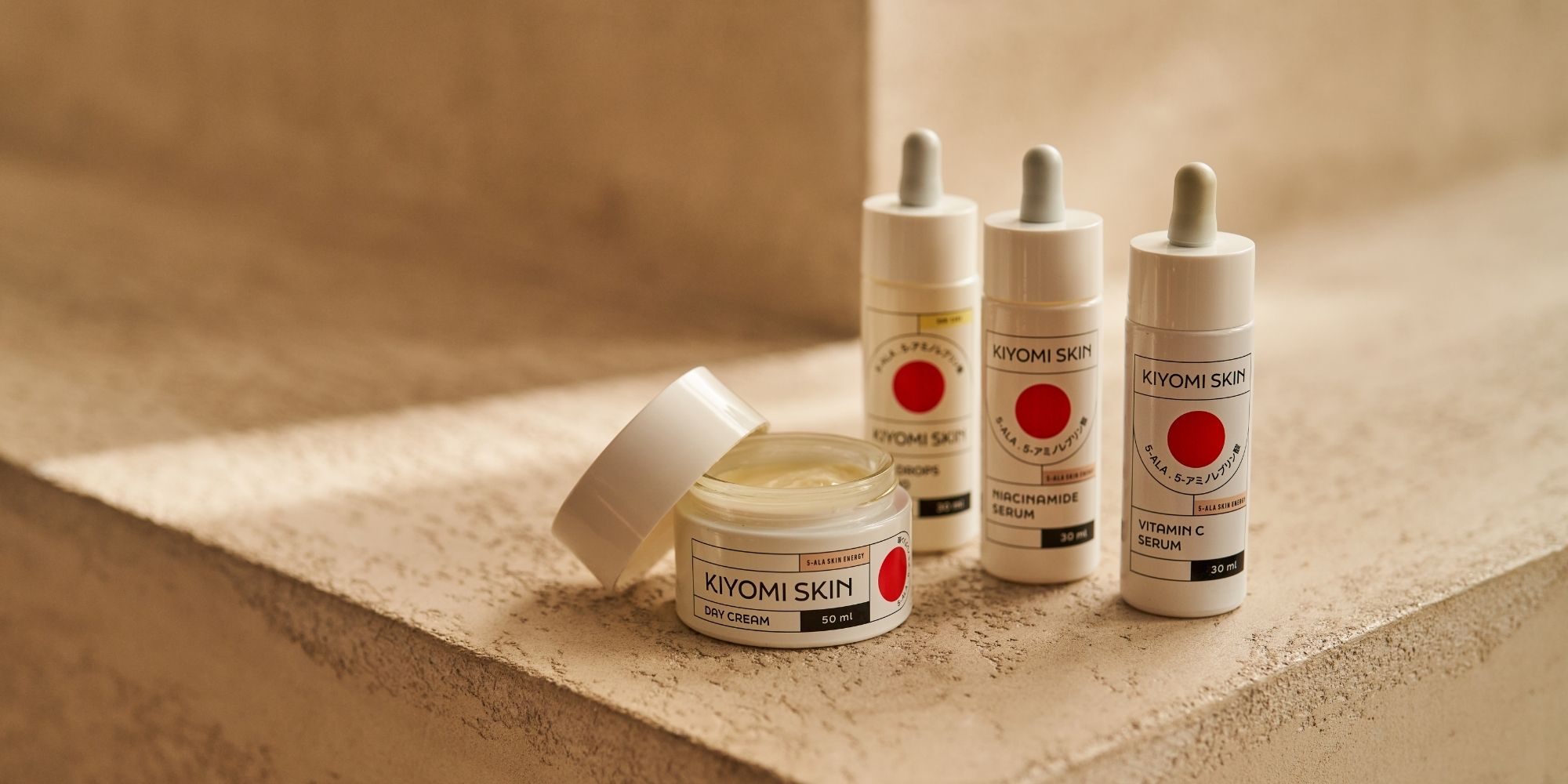

As skincare shifts from surface-level fixes to deeper biological support, a growing cohort of brands is rethinking what’s happening in the skin as aging, stress and imbalance take hold. For Kiyomi Skin, the answer lies at the cellular level, specifically in energy metabolism and mitochondrial function.
Founded by Daniel Struve, the brand is built around a single, science-backed ingredient: 5-aminolevulinic acid or 5-ALA. Kiyomi Skin operates under SBI Cosmetics & Health, a Japanese group founded to commercialize 5-aminolevulinic acid (5-ALA) across consumer categories, with Kiyomi Skin serving as its flagship skincare expression.
Long studied in Japan across pharmaceuticals, functional foods and cosmetics, 5-ALA plays a foundational role in the body’s energy systems. While the ingredient remains relatively under the radar in Western beauty markets, Struve believes its moment is approaching as skincare increasingly aligns with longevity science.
“Skin today is under constant energetic strain,” explains Struve. “UV exposure, pollution, inflammation and the natural decline in mitochondrial performance with age all tax the skin’s ability to function optimally.”
Unlike antioxidants or peptides, which act further downstream, 5-ALA acts at the beginning of a critical biological pathway. It’s a naturally occurring amino acid and the first building block in heme synthesis. Heme is essential for oxygen utilization and energy metabolism, particularly within mitochondria.
“5-ALA doesn’t create energy itself,” says Struve. “It enables the infrastructure that makes energy production possible. Without it, the pathway simply doesn’t start.”
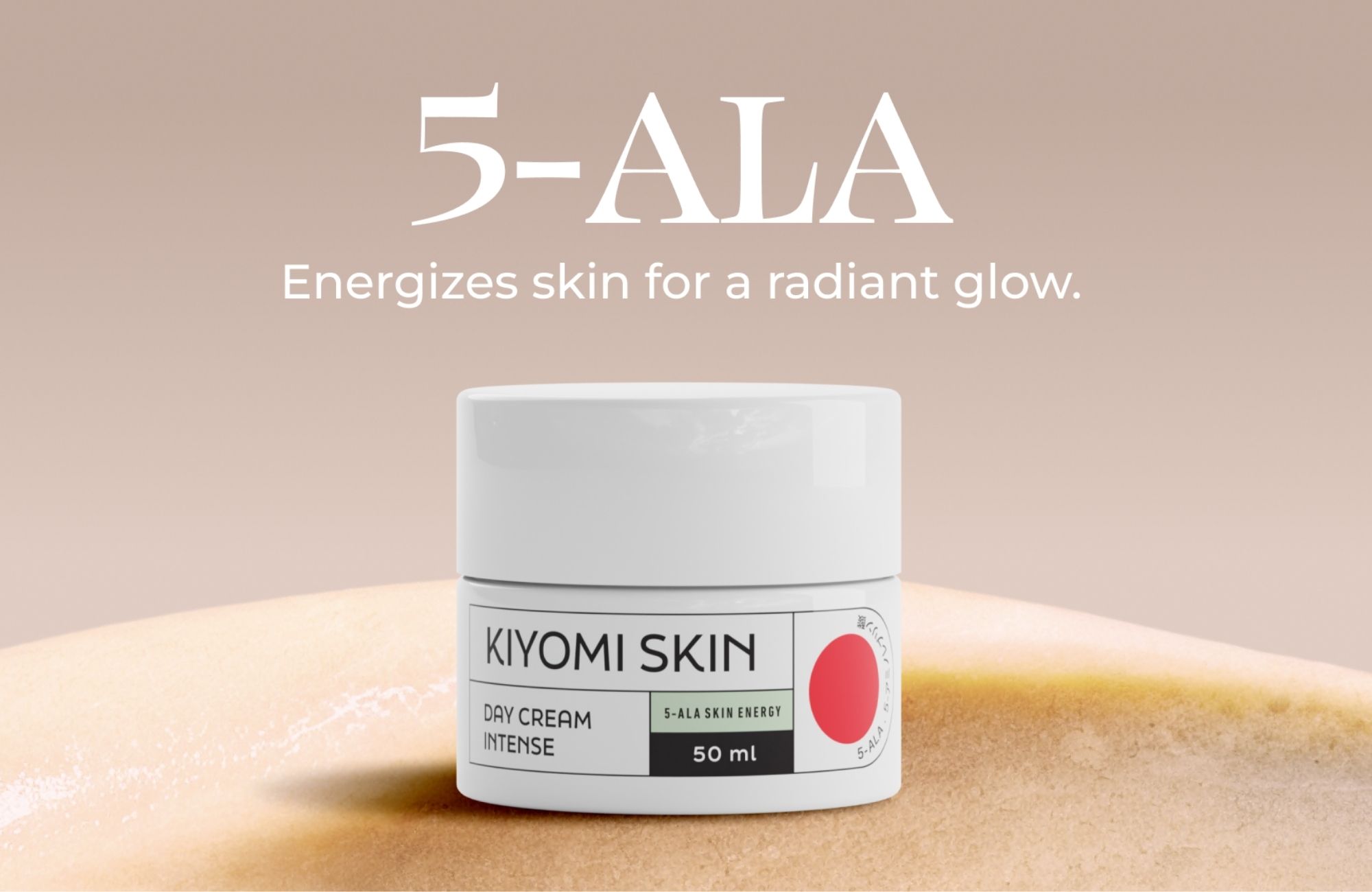
That distinction is central to how Kiyomi Skin positions the ingredient. Many skincare actives help protect cells or send signals, but they rely on cells already having sufficient energy to respond.
“Antioxidants protect, peptides instruct, but 5-ALA helps cells power themselves,” says Struve. “This makes it less about temporary stimulation and more about improving the skin’s underlying capacity to function, adapt and renew.”
Because nearly every skin function depends on energy, improvements at the mitochondrial level tend to show up gradually. According to Struve, supporting cellular energy translates into more consistent radiance, improved texture and greater resilience over time.
“When cells have the energy they need, repair processes speed up, barrier function improves, and turnover becomes more efficient,” he says. “There’s also metabolic water, which is produced naturally during energy generation. That internal hydration contributes to skin that looks plumper and fresher, not just temporarily hydrated on the surface.”
A recent double-blind study of 5-ALA–based skincare found improvements in skin hydration and a visible reduction in wrinkles after four weeks, providing clinical support for the role of cellular energy in skin appearance and function.
Importantly, Kiyomi Skin’s approach avoids forcing or overstimulating the skin. “This isn’t about pushing skin into overdrive or creating a quick boost,” says Struve. “It’s about restoring the skin’s capacity to perform its normal functions well. When that happens, the skin looks healthier, more balanced and naturally revitalized.”
The brand’s philosophy aligns with a broader reframing of aging in beauty, one that prioritizes resilience and long-term function over reversal.
“We all age, and that’s something to acknowledge rather than fight,” says Struve. “What we can do is support the biological processes that allow skin to function optimally over time. Cellular energy sits at the center of that idea. Without energy, skin can’t repair itself, maintain balance or adapt to stress.”
Despite decades of research and widespread use in Japan, 5-ALA has faced practical barriers in Western markets. The ingredient exists in different forms depending on application. The pharmaceutical form, 5-ALA hydrochloride, isn’t water-stable and is unsuitable for cosmetics. The cosmetic-appropriate form, 5-ALA phosphate, was guarded for years by patent protection, limiting global availability.
Regulatory complexity played a role, too. In both Europe and the United States, ingredients with pharmaceutical histories face higher scrutiny when introduced into supplements or cosmetics, slowing adoption despite strong clinical data. The result is that 5-ALA’s obscurity has been driven less by scientific limitations and more by formulation, patent and regulatory barriers.

Kiyomi Skin served as Struve’s entry point into beauty, but the cellular energy thesis quickly extended beyond facial skincare. Haircare is another avenue for the brand as Japanese clinical data comparing 5-ALA with placebo and minoxidil revealed compelling outcomes related to hair biology.
“Hair follicles are among the most energy-demanding tissues in the body,” says Struve. “Once we started thinking in terms of cellular energy, scalp care became an obvious extension.”
That insight led to the launch of Genki Haircare in Germany, a market chosen for adhering to robust European Union regulatory standards and having an unmet appetite for innovation in haircare.
The rollout surfaced a notable consumer insight. Struve says, “We learned that men, in particular, are actively searching for new, effective solutions that offer tangible benefits, especially for hair health and hair growth.”
Within SBI Cosmetics & Health, the long-term vision is clear. The focus is on non-drug, non-plant applications of 5-ALA phosphate with iron, with plans that stretch from skincare and haircare into supplements and functional foods.
“Our ambition is to build and shape the market for cosmetics, haircare, supplements and, over time, broader wellbeing products,” says Struve. “Supporting cellular energy at a fundamental level can deliver real, long-term benefits, particularly when it comes to healthy aging.”