AS Beauty Co-Founder Joey Shamah On Beauty M&A, Shuttering Mally Beauty And Cover FX And What Comes Next
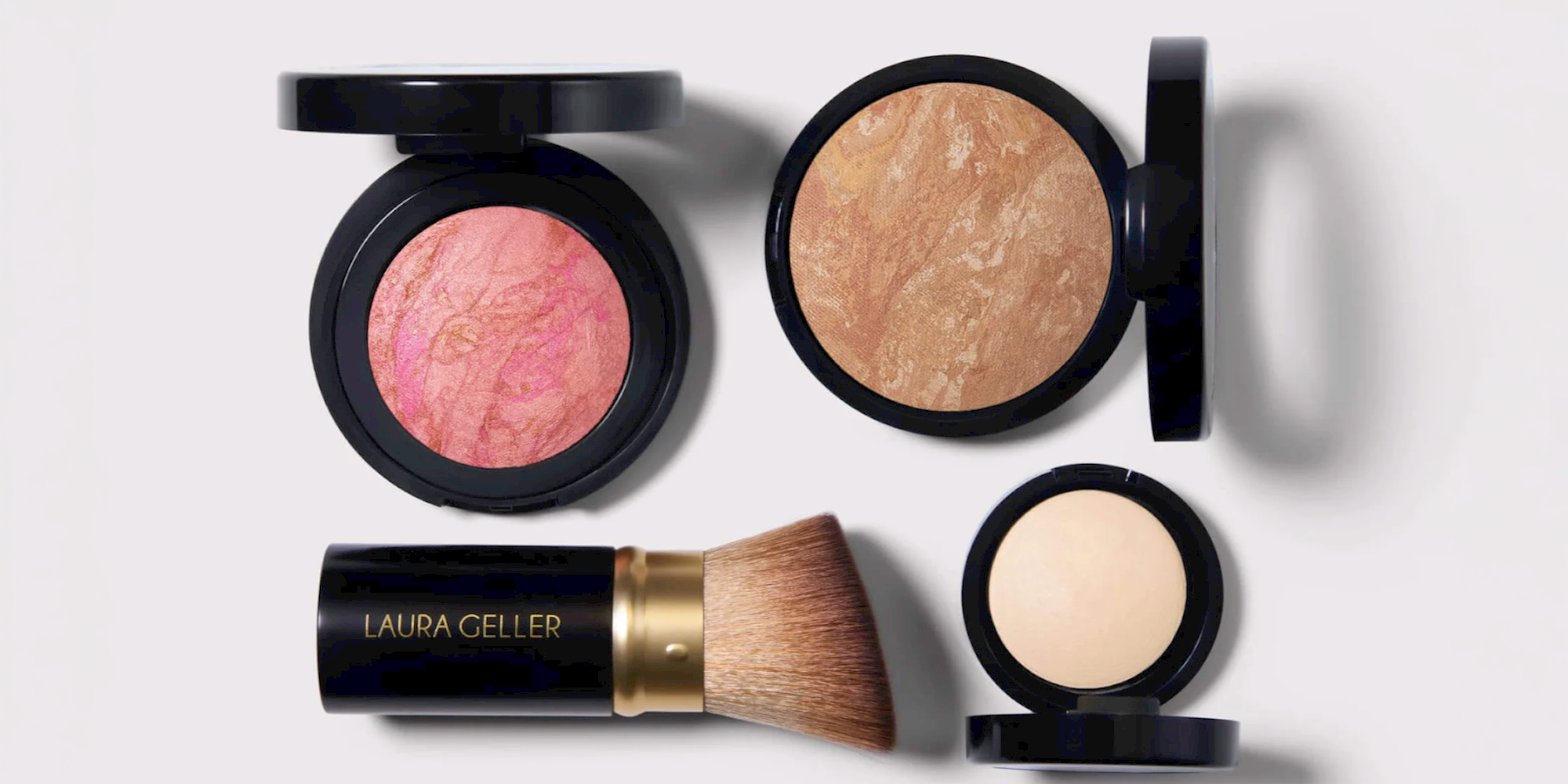
Around for more than a quarter century, Laura Geller Beauty has had four owners and countless pivots, but one core demographic: gen X and baby boomer women.
After AS Beauty acquired assets from ill-fated platform company Glansaol, including Laura Geller and Julep, out of bankruptcy in 2019 for $18 million, it pulled Laura Geller out of Ulta Beauty and Sephora, a decision AS Beauty CEO and co-founder Joey Shamah highlights as emblematic of the company’s fearlessness in taking a step back to push a brand forward. “We couldn’t make it profitable,” he says.
Last year, with Laura Geller on much firmer footing—the brand’s sales have multiplied roughly 10X since AS Beauty took over to surpass $300 million, with the company’s overall sales topping $500 million—it returned to Ulta and Sephora. Meanwhile, AS Beauty recently shuttered Cover FX and Mally Beauty, another sign that it’s not afraid to make big moves when it determines they’re right for business.
“Our big aha moment at AS Beauty was really leaning in on the mature woman makeup and not trying to be a makeup for a younger demographic. That’s what set this whole path in motion,” says Shamah, the co-founder of E.l.f. Cosmetics who established lifestyle licensing company Fit For Life in 2016 before starting AS Beauty with his father Alan and Victor and Ralph Azrak. “I think our expertise in the mature woman gives us the ability to speak to a different demographic online, which is less crowded and gives us better CAC efficiencies.”
Today, AS Beauty is doubling down on its strongest brands—Laura Geller, Julep and Bliss—as it prepares for its next phase of growth. The company is actively looking to add another brand to its portfolio, prioritizing scale and categories where it believes its digital-first operating model can unlock value as it continues to build on Laura Geller’s momentum across direct-to-consumer, Amazon, QVC and selective retail.
In a wide-ranging conversation with Beauty Independent, Shamah discusses the calculus behind shuttering Cover FX and Mally Beauty, how AS Beauty evaluates acquisition opportunities, what synergies work (and don’t) at a platform company, beauty’s normalizing M&A, the forecast for the industry and a brand that got away.
Take us into the decision to close Mally Beauty and Cover FX.
When we look at how strong our Laura business is, how strong our Bliss business is and what Julep’s doing, it was a function of where we want to focus. There were operational challenges around Cover FX and Mally Beauty that were surmountable, but the juice wasn’t necessarily worth the squeeze. It would take a long time. There were issues in terms of average order size, product assortment across the brands, as well as the health of our DTC businesses on those two businesses.
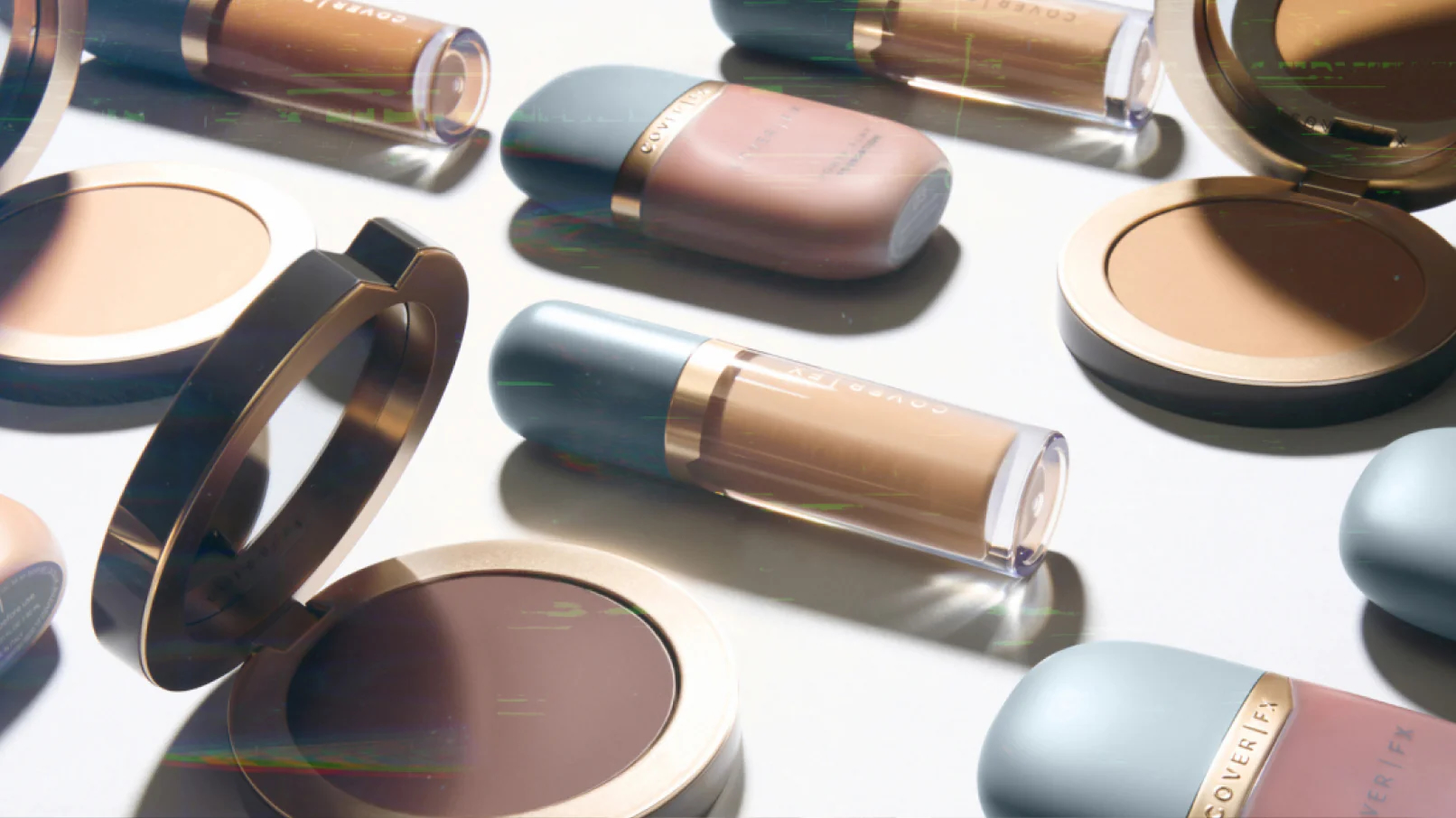
Cover FX wasn’t getting the customer sentiment for her to come back. We had the three complexion foundations and, outside of that, there wasn’t much there. When we bought the company, it took us a long time to relaunch it, and by then it was just too late. We had a path to X amount of repeat customers, and it was getting there, but we said it’s just too expensive, and we cut the cord. We’re really focused on finding profitable ways of growing our successful businesses.
In your business, knowing when to pull the plug must be part of it. What criteria do you use to decide whether to keep going or move on?
We don’t expect to bat 1,000, but we do expect to be smarter at every transaction. All the transactions we’ve done, including the Cover FX and Mally Beauty transactions, were very profitable for us. We bought them in a way where we got a lot of inventory. We monetized that inventory. We had a going concern for many years. The brands did a lot more business than our purchase price, so we’re very happy with what we did.
I don’t know that there’s a right time, and it’s never easy, especially when you have the founder involved. We made the decision, and it took some time to play through as we sold out inventory and wound down. I think it was done at the right time.
How has the DTC math changed from years back?
There are three components that you need to look at when you’re doing DTC sales: customer acquisition costs, average order value and lifetime value. Something we pride ourselves on at AS Beauty is we’re first-order profitable. We’re not really relying on the lifetime value.
We’ve seen CACs rise significantly. What makes Laura unique is that because we’re speaking to a more mature woman, it’s a less crowded field and our CAC is lower. We’ve been able to maintain first-order profitability because we’ve raised our AOV a little bit, as well as efficiencies around our repeat customers.
On the Mally side, we didn’t have the right AOV. Because the assortment wasn’t wide enough, our AOV was too low and didn’t grow the way it needed to. Our CAC was too high as a percentage of the overall value of the order.
One of the mysteries with the over-40 customer is where you find her digitally and bring her into a brand. What have you learned, and can retailers like Sephora attract her despite their younger skew?
A big push for Laura in 2025 was TikTok Shop. A lot of people are skeptical that the 40-plus customer is on TikTok Shop. Fast forward 12 months, we are the No. 3 beauty brand on TikTok Shop because she is there.
The same is true with Sephora. There’s a plethora of brands catering to the mature woman. She’s there, and if she’s not there alone, she’s there with her kids. Sephora will continue to win by offering something for more people instead of offering more solutions for the same people.
What about TikTok Shop as heavy discount platform and Amazon becoming a bigger force in beauty? How do you think about discounts while maintaining profitability?
Amazon and TikTok are very different, and I’ll answer them differently. I don’t like the heavy discounting that’s been done on TikTok Shop. What I like is the authenticity that’s coming from higher-performing influencers. I like the engagement and the education.
TikTok as a sales channel is evolving. It’s very challenging, not just the heavy discounting, but also affiliate commissions, media and platform fees. There are a lot of expenses. At Laura, 45% to 52% of sales go toward a combination of platform fees, affiliate commissions and media amplification. As a marketing channel, it’s exciting because it’s driving content creation that historically was done internally or through agencies, and you’re getting content that can be used both on TikTok and across other platforms.
I think discounting is going to come down because it’s very hard to maintain profitability. It’s not impossible, but it’s hard. As TikTok Shop becomes less of a sales channel and more of an information channel, that will then have a halo effect on other mediums, whether it be driving people to your traditional brick-and-mortar, Amazon or your own DTC.
Amazon, on the other hand, is your third beauty destination. It’s become a great place to discover, but more importantly, it’s a great place to replenish. I think a lot of our customer acquisition that happens on our DTC or QVC refills at Amazon because you don’t need to build that AOV, you don’t need to build a free shipping threshold. You’ll get it tomorrow. People feel comfortable there, especially the older demographic who may be a Prime customer.
With Laura Geller, what’s your marketing spend as a percentage of sales?
It’s in the high 30s, and [sales are roughly split] about 40% DTC, 30% Amazon and 30% QVC.
What would you like to add to your portfolio at AS Beauty?
I’d like to add brands of scale. Mally and Cover FX were much smaller brands. When we got to Bliss, it was a different level of scale, about $50 million in retail sales. Now that we’ve grown and our know-how has grown, we’re looking for brands north of $50 million in wholesale run rate.
We’re focused on color, skin and hair. From a digital perspective, we look closely at whether you can build enough average order value, where customer acquisition costs land and how much search volume exists on Amazon.
There’s a lot out there. In 2025, we thought we’d see more deal flow and we didn’t. In 2026, we’re seeing much more activity, and I’m very confident that, by the end of 2026, our business will look very different than it does today. We want to do one deal of scale that can be very impactful.
The businesses we’re looking at may be sizable, but not high growth. Some have plateaued, some are older brands, and some may have declined a bit. That’s where we feel there’s enough historical brand equity for us to get in the driver’s seat.
Many of these brands are challenged not because of the business itself, but because of the balance sheet. There may be debt or private equity may need to move on. We’re not looking at distressed assets per se. We’re looking at legacy brands we can operate efficiently and unlock value over the short and long term.
We’re not private equity buyers. We don’t approach deals through free cash flow models the way a strategic might. We look at how much operating leverage we can add to unlock value. There are many older brands that need a home, and that can be us.
A lot of beauty brands are on the market right now, from Estée Lauder reportedly exploring options for Too Faced and Smashbox to Coty’s portfolio and private equity–backed brands seeking exits. As you look at the next wave of acquisitions, what do companies need to do differently to avoid the divestiture cycle we’re seeing today?
It’s a very broad question, but we think about it a few ways. Operational efficiency and leverage are big ones. The bigger we are, the more leverage we have as an operator. If we can do 2X the amount of sales, we can see 4X the amount of profitability.
Digital-first is also a major factor, not because it’s trendy, but because that’s how we grew up. When I launched E.l.f., we started digital-first by accident, and that approach is what really took us to the next level at AS Beauty.
Retail is still important, but it’s about playing responsibly. You don’t need to be in every door. You need to be in the right doors, with the right promotions, and with gross-to-net that makes sense. You have to walk before you run. If you rush into every door, pay for fixtures everywhere and the product doesn’t work, that can put a brand out of business. Operating smarter, slower and more efficiently is how we win.
Is there anything you are doing with AI that’s impactful?
On a personal level, yes. It’s like my best friend. Depending on the day, it’s ChatGPT or Gemini. But I think it’s going to take time to really seep into an organization.
We’re a very nimble company, and we adapt quickly. We have an AI consultant, we hold open office hours around AI, and we encourage our teams to embrace it. That said, I don’t think we’ve seen meaningful operational benefits yet. We’re not ignoring it. We recently launched a new planning software (Oracle) with AI modules built in, but I haven’t personally been in the software.
What are we going to see with beauty M&A this year?
You’re going to see a lot of things trade that have had higher expectations trade at a lower valuation than they initially anticipated. If ‘24 was the year of no deals, and ‘25 was the year of some big deals, ‘26 will be the year of normalized deals.
A lot of people hit the market and didn’t get what they wanted, while a few people hit the market and got what they wanted and then some. I remember when I was on the other side selling E.l.f., you get out there and you think you’re going to get it and the deal changes 16 times, but you’re really committed to getting a deal done. I think some of these companies are just going to be like, OK, this is the new reality, and we’re just going to do a deal at this point.
I think there are going to continue to be divestitures. The big strategics are going to focus on the bigger stuff and being bigger and better at what they do.
What’s your forecast for the beauty industry this year?
It’s infectious right now. Everybody’s obsessed. People are continuing to test and fall in love with brands. Beauty, health and wellness are becoming like a bucket. People care more about taking care of themselves. There are ways that they can curtail spending, whether it be restaurant or fashion spending. But when it comes to beauty, people are leaning in.
Is Julep closing? If not, what’s the future for it?
Julep is not closing. We’re really looking at it to be the blend of simplicity and K-Beauty. Eyeshadow 101 is our No. 1 franchise. It’s all about simple beauty. You can take it out of your bag and do your beauty in a few minutes. That really resonates with the Amazon customer, and the wide shade ranges we have offer a nice assortment so people can buy new shades and they’re not very expensive. The Julep eye franchise is going to continue to grow, and we’ll build around that, leveraging easy no makeup makeup.
How do you view your role at AS Beauty?
I pride myself on being not a micromanager. I like to give my team a lot of autonomy, partly because that’s just my personality. I don’t really get involved in the details. I like the fact that I can be more strategic when I’m not in the weeds.
When you’re in the weeds, you understand the operational challenges that you have to overcome. When you’re more strategic, you can set the path in motion and then it’s up to the executors to really execute. We have a fantastic leadership team at our company across our different cross-functional teams, and they know how to figure it out, but sometimes they get stuck in the weeds, and they don’t think about long term. Where you have executives that sit as more strategic thinkers and then more operational thinkers, I think it’s a very good balance as we look to the future.
What unique skills does the company have as a turnaround specialist?
Lean organization, conviction, we move fast. We don’t have a lot of red tape. We have 140 people in a New York office, but people that come here and say, “AS Beauty, it’s so refreshing.” We get things done. We don’t sit on stuff. We just move. We’re not always making the right decision, but we’re always making a decision. Sometimes it works and sometimes it doesn’t, but at least we’re not sitting there circling the hoop.
Additionally, we have a very strong focus on profitability because the profit is our profit. We’re not reporting on EBITDA. We don’t have external stakeholders. We are managing it like an entrepreneur. That really allows us to make sure we’re getting the most out of every dollar.
In platform companies, we often hear that they don’t actually realize the synergies that are expected. How can you make sure a platform lives up to synergy expectations?
We spent the better part of 2025 trying to figure that out. That’s what led to some of our decisions to sideline Cover and Mally. We restructured the company, understanding that there are synergistic functions, and there are also functions that need to be brand specific. Back-office, finance and things, they could be shared. When it comes to marketing, branding, DTC and even PD, that needs to be its own silo.
If you asked me two years ago, I would’ve thought, our DTC team can handle that, our Amazon team can handle that, our PD team can handle that, but it’s about bandwidth, function, discipline and making sure that you’re being realistic about it. There’s efficiencies, and there’s transferred knowledge. So, if we know something on our DTC at Laura Geller, how can we apply that to Bliss? But I think they do need to be run as different silos.
Is there a brand you wish you had bought?
A brand called Biossance that was part of the Amyris portfolio. We were in that conversation and then at the last minute we decided not to. We didn’t know enough about it. That was the one I look back at that would’ve been interesting for us. It was sizable from a sales perspective, but I think we’re really happy where we are.
There are other brands like Biossance. For example, the precursor to Biossance was Algenist.
We almost bought that one, too.
Look, what we really value is sales run rate. To build a brand from zero to $10 million is really hard. To build a brand from $10 million to $50 million is harder. To build a brand or to stabilize and monetize a brand that’s $50 million-plus, I don’t want to say it’s easier, but there’s more meat on the bone. Now that we’re bigger, we can play in that game. That’s really where we’re focused.
This interview has been edited slightly for clarity and brevity.

Leave a Reply
You must be logged in to post a comment.