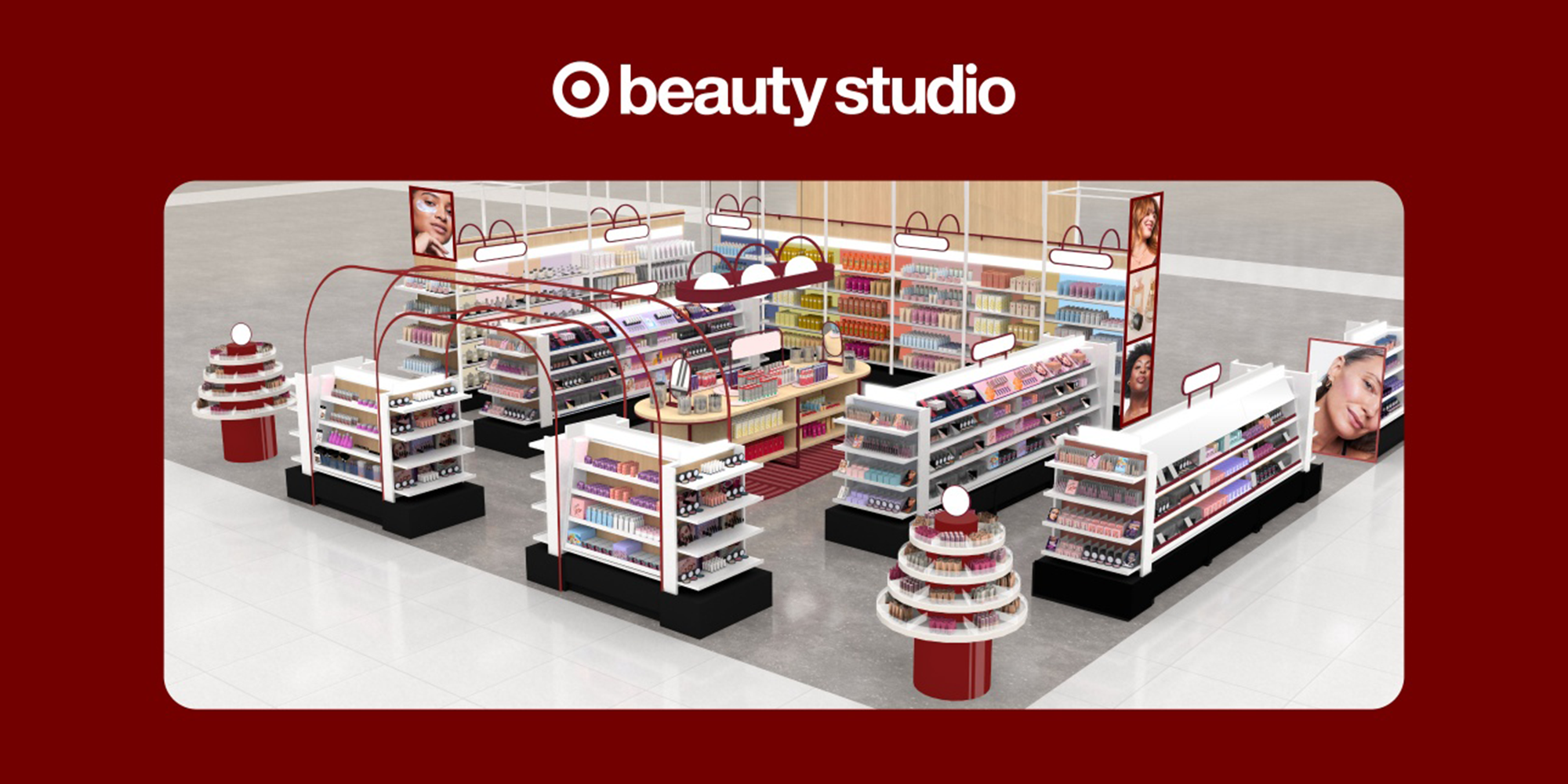
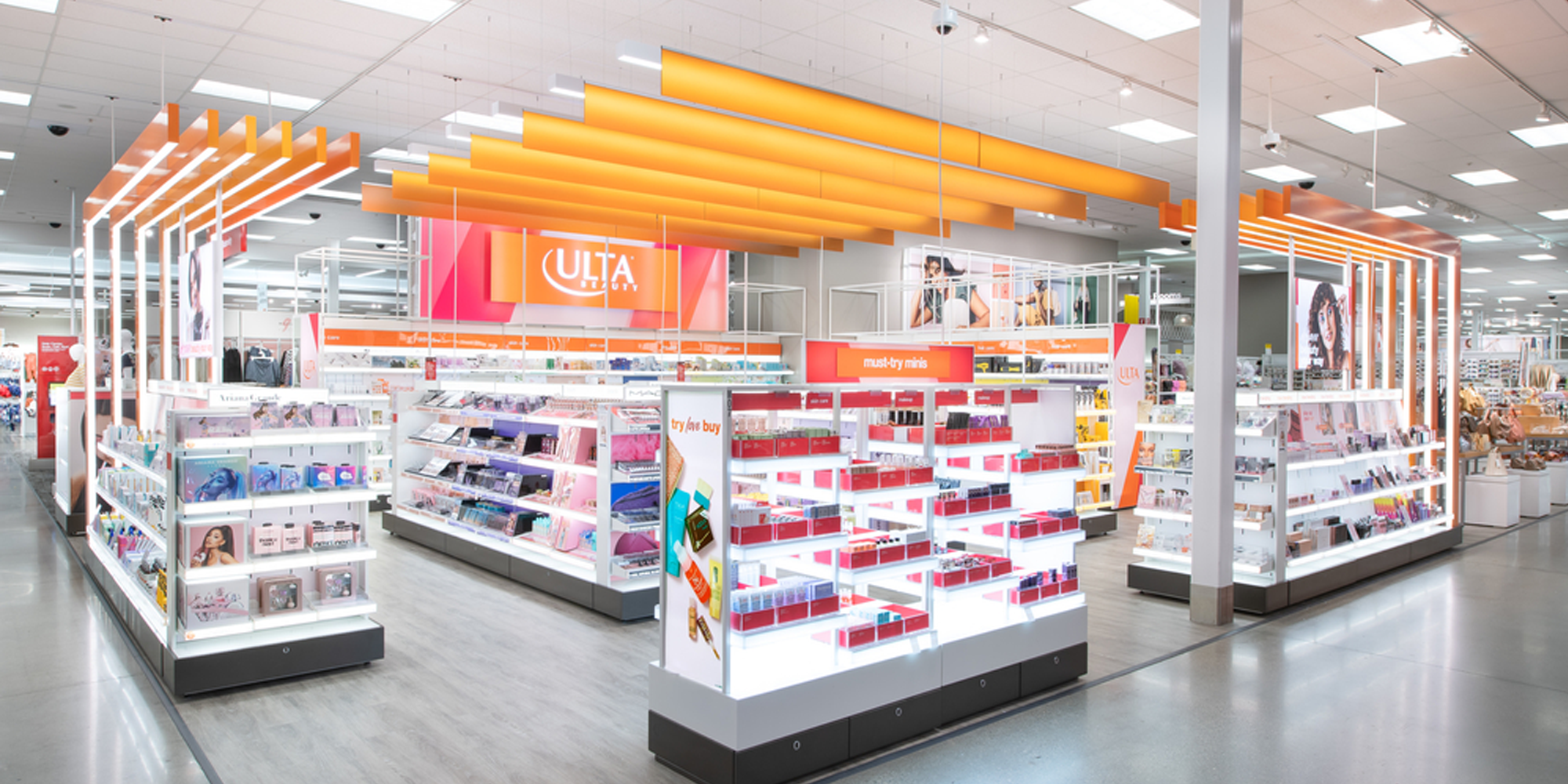
Target is replacing its Ulta Beauty shop-in-shops with a new prestige beauty assortment launching in more than 600 stores this fall as the big-box retailer invests heavily to revive growth.
Called Target Beauty Studio, the in-store destination will be placed in existing beauty departments and feature innovative and trend-driven products. On Wednesday, the retailer disclosed it will house 80 yet-to-be-named brands, including 60 new-to-Target skincare, haircare, fragrance and color cosmetics brands. There are plans to expand Beauty Studio to more locations in the future. Target’s 2,000th store in the United States is set to open later this month.
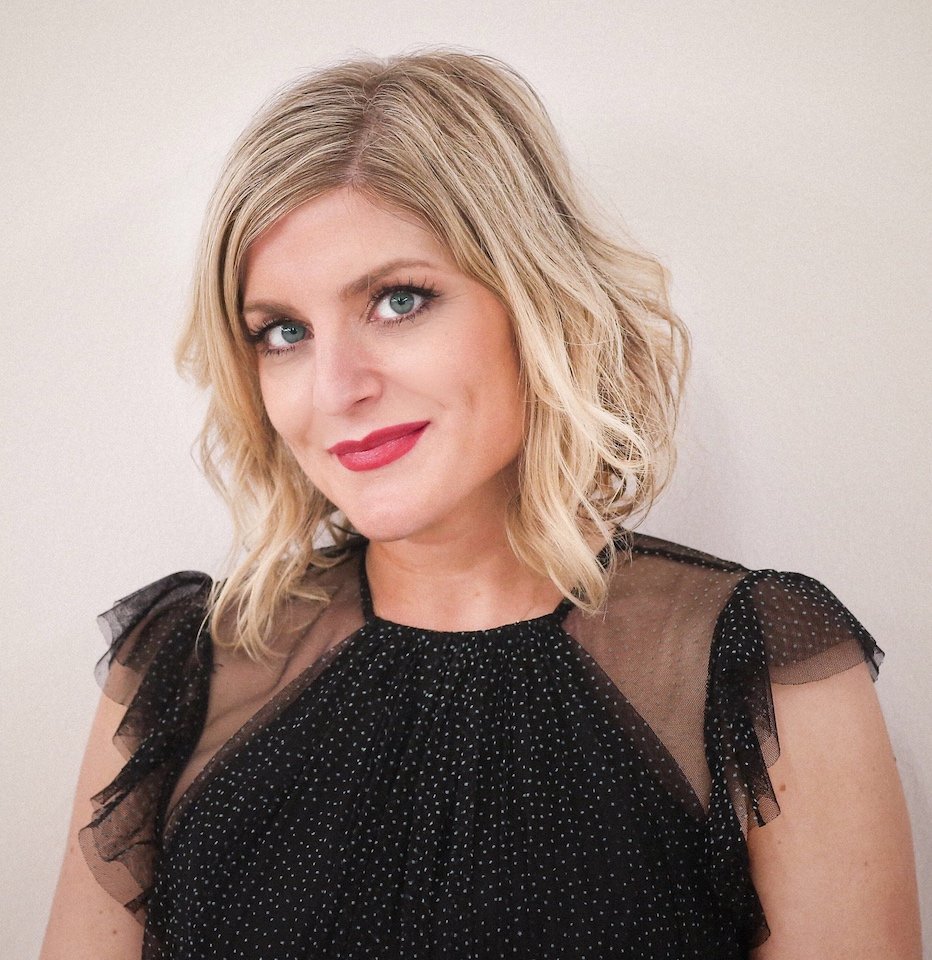
“With Target Beauty Studio, consumers will discover incredible prestige brands, an elevated experience and personalized support to easily find something new and exciting every time they shop at Target,” says Amanda Nusz, SVP of merchandising, essentials and beauty at Target, in a statement.
At an uncertain economic moment when higher-income households are driving a disproportionate share of beauty spending, Target is banking on its ability to merchandise prestige brands in a way that resonates with its shoppers and on strong demand for higher-priced beauty products in its environment despite the underperformance of the Ulta partnership. As Target’s sales have slipped, beauty has been a bright spot, and more than half of Target customers purchase beauty products, according to a Nusz interview with Women’s Wear Daily.
Target is trying not to repeat the mistakes from its experience with Ulta, where inconsistent staffing, inventory levels and education are believed to have been detrimental to sales. It’s enhancing the environment with trial, education, fixtures and technology to justify bigger beauty purchases and live up to prestige-style service. However, resistance to higher prices at a value-oriented retailer, unfamiliarity with certain brands and the possibility of sales cannibalization rather than incremental growth remain steep challenges. Big-box retailers and drugstore chains in the U.S. have long sought to make higher-end beauty an incremental source of growth in their stores with limited results, though Walmart, like Target, continues to pursue the opportunity with BeautySpace, a partnership that began with Space NK in 2022.
Leilah Mundt, founder of Crème Collective, a brand development and retail sales consultancy with clients entering Beauty Studio, says, “They learned a lot of lessons through the Ulta partnership, and I think they’re prepared to double down on this and make it exceptional. They’re allowing the brands to come in with a full expression.”
Amy Kapolnek, founder of brand growth consultancy The Fwrd Group, says, “By removing the limitations that came with the Ulta partnership…Target now has the flexibility to curate the brands and lean into marketing that aligns with its vision. In the partnership with Ulta, Target had to carry brands in the shop-in-shop that were already in Ulta’s portfolio. Because Ulta ultimately controlled the assortment, Target couldn’t easily introduce other brands within that prestige section unless Ulta carried them first and gave permission to Target to stock them.”
With the Beauty Studio rollout, Target is focusing on full omnichannel integration. Products in the assortment will be available on Target’s website and app as well as in stores, and shoppers can earn rewards through the retailer’s loyalty program, Target Circle, with new beauty-specific Target Circle offerings across the channels.
Signage and special merchandising displays will be used to differentiate Beauty Studio from the rest of Target’s beauty section, providing in-depth ingredient information, trend and brand deep dives and more. Kapolnek suggests the curated, experiential studio format reflects how people are shopping today, “especially as social media platforms like TikTok drive interest in specific trends, brands, ingredients and product innovations.”
Target’s Beauty Studio shop-in-shops will be staffed by dedicated beauty team members trained by the brands to provide meaningful guidance and recommendations to shoppers. Beauty industry experts maintain the staff will make or break a brand’s launch in the concept.
“In beauty especially, store associates often rely on brands’ own ambassadors as a resource, both for shopper engagement and to stay up to date on new products, education and brand storytelling,” says Sonia Summers, CEO of retail sales agency Beauty Barrage. “The brands that treat this environment as a hybrid between mass retail and prestige, investing in education, field teams and in-store engagement, will likely see the strongest results.”
Beauty industry veteran and fractional CMO Anna Vale agrees. “Knowledgeable associates are what make a space feel credible rather than simply a nicer fixture update,” she says. “Having the shopping experience staffed well will be pivotal in its success.”
At mass-market retailers like Target, a major barrier to a prestige beauty-style setting is products locked up to prevent theft. The tactic inhibits browsing and discovery, not to mention sales. Kapolnek says, “The success of this concept will likely depend on whether Target can strike the right balance between security and accessibility through studio design, staffed teams and/or secure tester solutions that still allow shoppers to interact with products.”
The Beauty Studio is part of a larger push by Target into beauty and wellness. In February, it announced that it would onboard 2,000 new products and 50 new brands, double the amount from the prior year, to its beauty assortment. Approximately 90% of the new products were priced under $20. The month prior, it unveiled a 30% jump in its wellness assortment, the third year in a row it’s done so. Beauty sales have doubled at Target since 2019.
“They learned a lot of lessons through the Ulta partnership.”
Beauty Studio is also part of Target’s strategic multiyear growth plan, which includes an incremental $2 billion investment this year split between about $1 billion in additional capital expenditures and $1 billion in operating investments. It’s slated to open more than 30 new stores, remodel more than 130 locations and upgrade the company’s supply chain and technology. After the announcement of the plan on Tuesday, Target’s shares rose 6.7%.
Beauty is one of six key categories Target is leaning into to turn around its business. The others are health and wellness, baby, home, women’s style and food and beverage. In the fourth quarter last year, Target reported net sales of $30.5 billion, down 1.5% year over year, with comparable sales falling 2.5% and store sales declining 3.9%. Digital sales rose 1.9%. For the full year, net sales slipped 1.7% to $104.8 billion. In 2026, Target projects net sales growth in a range around 2%.
Target’s partnership with Ulta, announced in 2020 and launched in 2021, grew to more than 600 shop-in-shops, but its promise didn’t fully materialize. It didn’t have a profound effect on Target’s bottom line, either. Could the Beauty Studio concept? Beauty industry insiders conclude it could.
Kapolnek identifies basket size expansion rather than new customer traffic as the biggest possible upside for Beauty Studio. “Target already has massive weekly foot traffic, and beauty is one of the few retail categories that consistently drives repeat purchases and higher-margin sales,” she says. “Elevating the assortment and creating a more compelling discovery environment could encourage customers who are already in-store for everyday essentials to also shop prestige beauty.”
Mundt argues the assortment could give exposure to a broader array of brands, notably brands from diverse founders that have historically struggled to gain entree into traditional big-box structures. Target has been under fire for rolling back diversity, equity and inclusion efforts, Mundt says this more prestige section allows Target to embrace more diverse brands in a way that traditional big-box merchandising makes difficult.
“They can be a little bit more creative and show people that they’re embracing diversity and diverse brands and diverse cultures,” says Mundt. “I think it’s a real opportunity for them.”