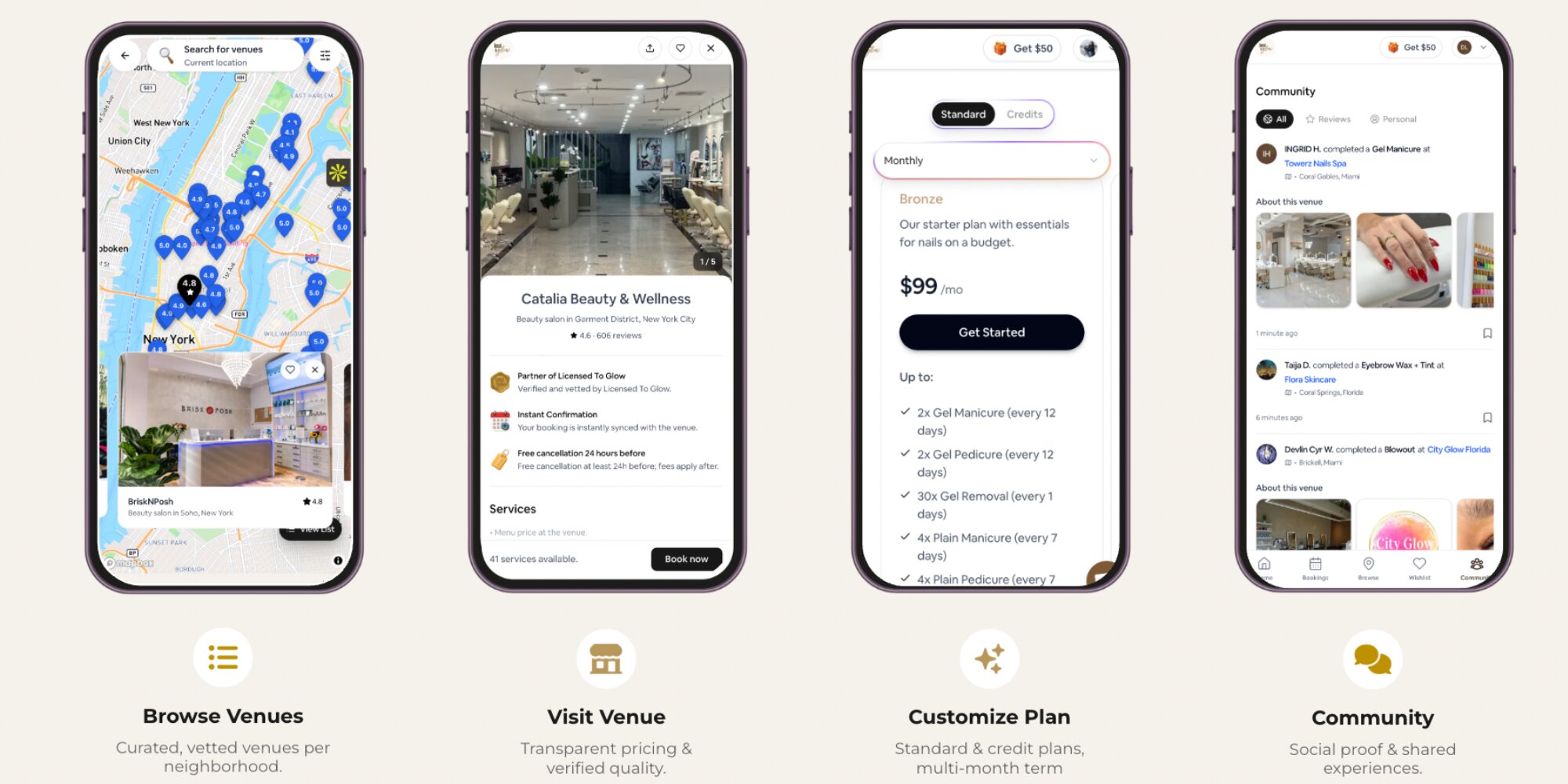

The newest beauty buzz on TikTok isn’t about a viral cream or tinted lip balm. It’s about Licensed To Glow, a beauty service membership platform.
In just under a year, the company has signed up roughly 50,000 members and onboarded about 500 service providers in cities like New York, Los Angeles, Miami, Chicago and Houston. Its core audience is post-college gen Z women frequenting salons and spas several times a month for affordable blowouts, manicures, waxing services and more.
In a market crowded with platforms like GlossGenius, StyleSeat and ClassPass, Licensed To Glow stands out with a membership model designed to lower costs for customers and drive recurring revenue for providers. The company operates as a two-sided marketplace, with members paying monthly fees for in-network services while providers gain steadier bookings, an attractive proposition when budget-conscious customers stretch the time between visits.
“Our goal is to provide the most affordable beauty membership for anybody that regularly goes for beauty maintenance services,” says Odette Yang, co-founder and CEO of Licensed To Glow. “Think about it as insurance but for beauty. You pay a monthly premium…and then all the in-network services are free. This also allows all the businesses that we work with to create predictability in their revenue stream.”
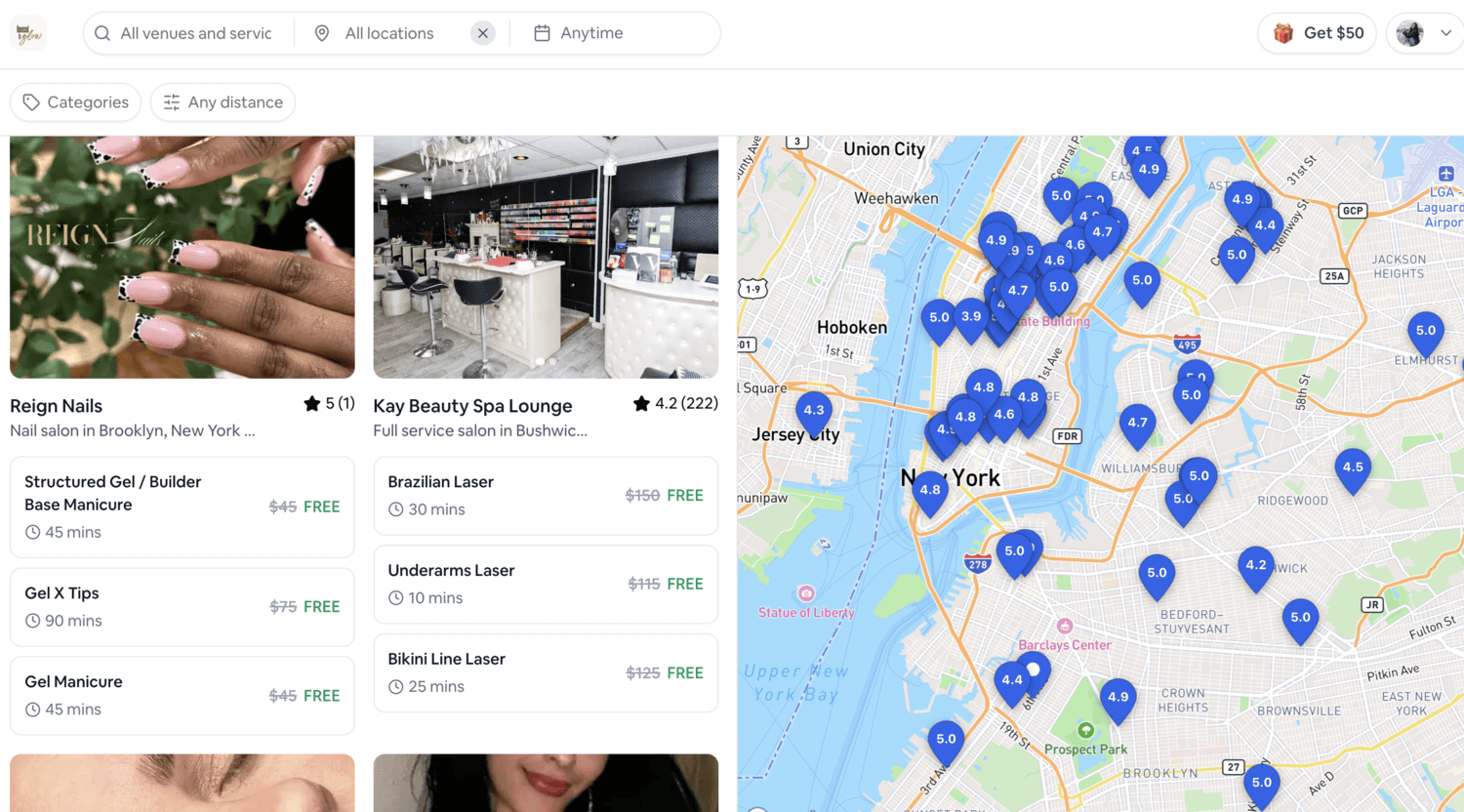
Licensed To Glow’s subscription tiers are built around services that require regular upkeep and encourage repeat visits. Monthly membership tiers start at $99 per month for nail services and scale up to $499 per month for waxing, hair, nail services, massages and facials. Higher-priced services like hair color, extensions and lash services sit in more premium tiers, but the bulk of demand is concentrated in blowouts, manicures and pedicures. Lash lifts are emerging as a fast-growing category.
Licensed To Glow’s most popular tier, Gold, is priced at $199 per month and includes four blowouts, one brow thread or wax, two shaves or beard trims, one women’s or two men’s haircuts, two gel manicures, one Brazilian or bikini wax, one underarm wax and one lip wax. Members pay nothing at checkout for services covered under their plan, but are expected to cover tips. Licensed To Glow is free for salons and service providers to join, with the company generating most of its revenue from subscription fees. Yang says men are joining the platform in growing numbers to book grooming services like haircuts and beard trims.
Licensed To Glow offers à la carte services that allow members to upgrade across the menu without changing membership tiers, although Yang says most customers still opt for monthly plans. Customers can book aesthetic treatments such as Botox, filler, body contouring and IV drips à la carte.
“You can get Botox for as cheap as $8 a unit. You can get fillers for as cheap as $200 per syringe,” says Yang. “It’s more of a luxury item that a core segment of our consumers may not be able to afford. This is going to be a really affordable way to keep it part of your routine.”
Licensed To Glow is raising awareness almost entirely through organic social media. On TikTok, it has close to 25,000 followers and leans into user-generated content, customer testimonials and before-and-after transformations. It employs about 20 marketing interns who regularly visit salons and providers to create videos showcasing trends, services and partner businesses. The content doubles as a customer acquisition tool and as marketing for providers, a key incentive to join the platform.
“Our goal is to provide the most affordable beauty membership.”
That content strategy feeds into a broader word-of-mouth engine. About 20% of Licensed To Glow’s customer base comes through its referral program, where members receive $50 for each referral and first-time users get 15% off their subscription.
Yang’s push to turn beauty services from a transactional business into a recurring one is rooted in her professional experience. A former investment banker at Goldman Sachs and Evercore, she worked as a social media influencer in college, partnering with local brick-and-mortar beauty businesses to spotlight their services. Through conversations with owners, she quickly identified retention as a common pain point.
“One in two customers come in, they don’t come back. They come back just one time, and it’s an incredibly transactional business model,” she says. “You have recurring fees, you have recurring costs of labor, but when more than 50% of your business is transactional, how are you ever going to know how to project your business? How are you supposed to run a profitable brick-and-mortar business? And that’s the core issue that I wanted to solve for.”
Investors are buying into Licensed To Glow’s broader ambitions. In 2024, the startup raised $1.7 million in pre-seed funding from Behind Genius Ventures and Colle Capital, along with angel investors. The company plans to build a suite of B2B tools with the long-term objective of becoming a “business-in-a-box” platform for service providers, handling everything from bookings and marketing to operations and back-office functions. Co-founder and CTO Dylan Le previously worked as a software engineer at Google, Meta and Citadel.
Yang says the idea is for service providers eventually to say, “’Hey, I’m really, really good at doing nails. If I list on Licensed To Glow, I don’t have to worry about my taxes. I don’t have to worry about my insurance or my website. I just have to be really, really good at nails, and Licensed To Glow fills up my books and does everything for me.’”