
QVC Group, parent company of live-shopping trailblazers QVC and HSN, filed for bankruptcy last week following years of financial decline, underscoring that early movers must adapt or be left behind as beauty retail and live shopping increasingly move online to social commerce platforms like TikTok Shop.
For beauty brands, the filing is less about bankruptcy mechanics than what it reveals about channel fragility. Once one of the beauty industry’s most powerful volume drivers, QVC helped build live commerce, yet still lost ground as discovery shifted to mobile, social and creator-led shopping. Its decline in relevance is a cautionary tale for retailers and brands alike.
“QVC pioneered live shopping, but the center of gravity in beauty discovery shifted faster than their model could,” says Lane Barrocas, a beauty retail consultant. “Their business was built on linear TV, long‑form storytelling and a loyal 45-plus customer, strengths that became constraints once discovery moved to mobile, short‑form, and creator‑led content. QVC didn’t lose to TikTok because TikTok invented live shopping. They lost because TikTok reinvented the audience.”
QVC isn’t disappearing. It’s slated to emerge from bankruptcy in 90 days as part of a prepackaged Chapter 11 process designed to slash its debt from $6.6 billion to $1.3 billion. In the meantime, it’s continuing normal operations with sufficient cash flow. Vendors, suppliers and unsecured creditors are expected to be paid in full, with no planned layoffs or furloughs.
QVC’s scale and halo effect across distribution were key to its beauty industry importance. QVC once touted reach to more than 350 million households globally. IT Cosmetics, whose success on QVC was instrumental in its $1.2 billion sale to L’Oréal, sold over $1 billion in products across more than 1,000 QVC livestreams. In 2020, QVC reported that an average of 17,470 beauty products were sold daily through its livestreams.
Volume alone hasn’t been enough to keep pace. With a distribution model dependent on cable television, less exposure on digital channels and a mature customer base, QVC has ceded ground in a format it effectively created. During Black Friday/Cyber Monday last year, livestreams on TikTok Shop generated 1.6 billion views and boosted sales growth for brands and creators by 84%. According to NielsenIQ, TikTok Shop’s U.S. health and beauty sales have surpassed $4.4 billion, making it the country’s No. 4 beauty e-commerce retailer.
QVC’s revenue dropped 35% between 2020 and 2025, from $14.18 billion to $9.23 billion. Since 2021, its stock price has fallen 99%. The company’s active customer base shrank from 8.1 million in 2023 to about 7 million in September last year. In 2025, roughly 97% of sales came from repeat buyers, who spent an average of $896, down from $1,460 the year before. By comparison, Momentum Works estimates TikTok Shop’s U.S. gross merchandise value climbed 68% to $15.1 billion in 2025.
Christine Russo, host of retail and fashion podcast “What Just Happened,” argues that QVC’s ultimate downfall is its lack of channel diversification. “Channel diversification, including expanding the host roster, is an absolutely necessary strategy,” she says. “UGC, creators, influencers are the path for them to not only modernize the business but to build a pipeline of customers.”
The cost of live shopping with studios, hosts, set designers and technical crew has compounded QVC’s financial strain. “Your GPM or GMV per mille has to be incredibly efficient to justify conducting it in the first place,” says Kelsie Johnston, founder of agentic commerce advisory firm KJT Ventures and former GM of beauty at TikTok Shop. “For TikTok, it’s been reported that live revenue only comprises about 10% to 15% of platform GMV. Going all in on live as a single tactic is a fast track to a painful margin story.”
“The center of gravity in beauty discovery shifted faster than their model could.”
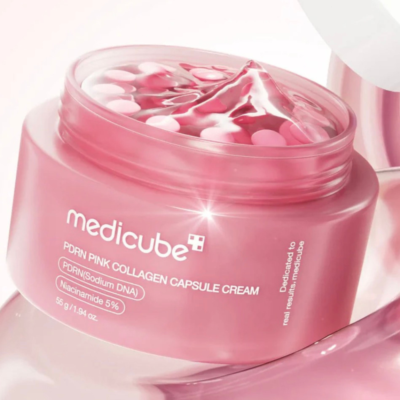
Realizing the writing on the wall, QVC expanded into live social shopping in 2024 when it debuted the first 24/7 live shopping channel on TikTok Shop, claiming that 74,000 TikTok creators featured QVC items through shoppable shows. In November last year, it emerged as the highest-earning store on TikTok Shop, generating over $25 million in revenue and overtaking K-Beauty powerhouse Medicube at $22.46 million. QVC’s TikTok Shop debut came around the same time the company shuttered Sune, a livestreaming app it launched in 2023 in a bid to draw in younger shoppers.
“Their recent traction on TikTok Shop is real, but it arrived after years of audience decline and underinvestment in mobile-native formats,” says Barrocas, pointing out that cable TV, not TV itself, is dead. “Streaming environments like Prime Video are already testing shoppable overlays during live sports and entertainment. That’s a format where QVC’s storytelling DNA could translate far more naturally than on linear cable.”
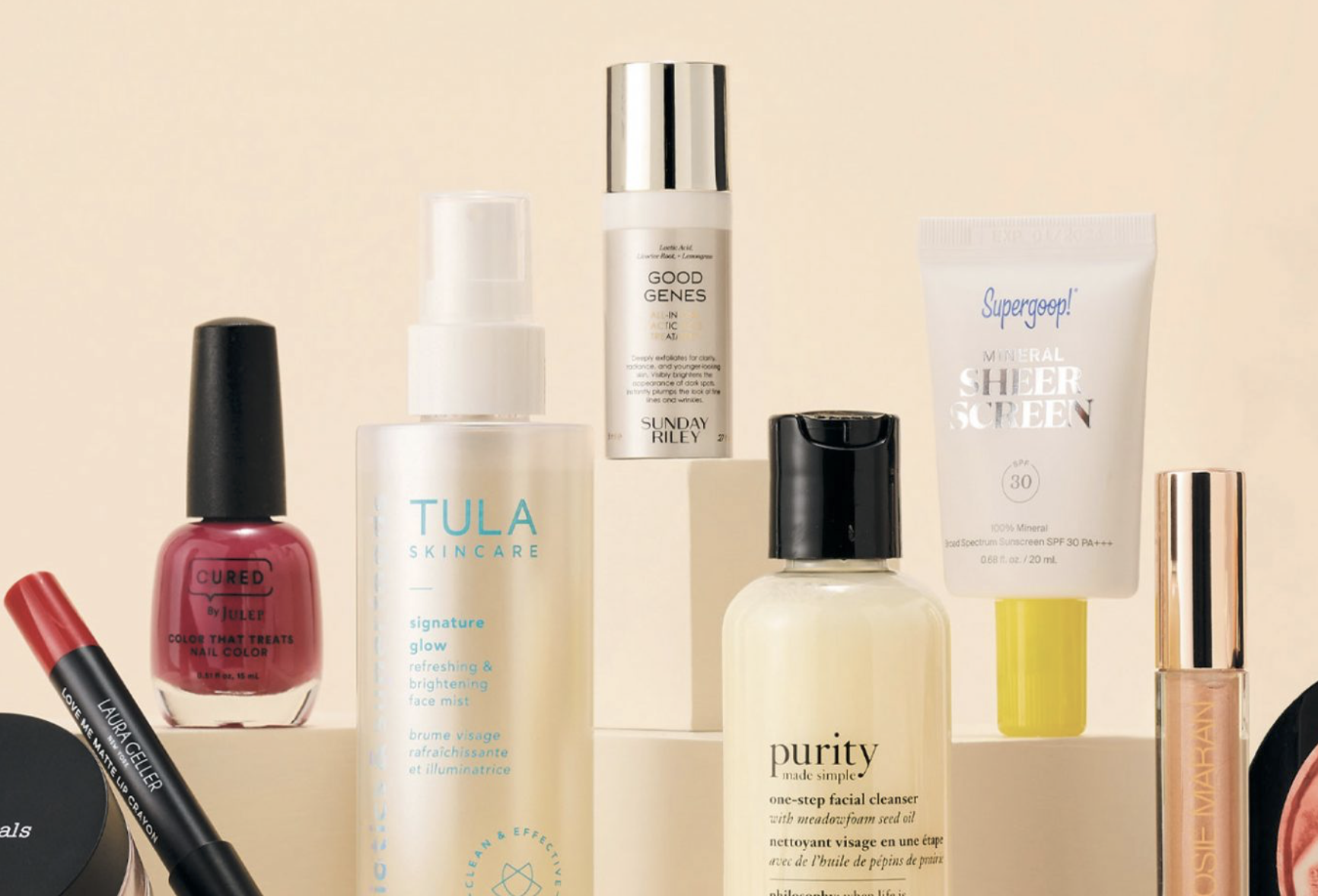
QVC may be losing relevance, but it remains a meaningful beauty channel. During the company’s third quarter last year, beauty comprised about 15% of total revenue or roughly $330 million versus home’s 40% and apparel’s 20%. Earlier this year, the network introduced new beauty brands including K18, Make Time Wellness, Karma and Medicine Mama. Top beauty brands on the network include Bare Minerals, Laura Geller, Tarte, Doll 10, No Makeup Makeup, RMS Beauty, Beekman1802, Josie Maran, Elemis, Tatcha and Benefit Cosmetics.
For top-performing beauty brands on QVC, Russo figures the company’s bankruptcy will likely have minimal impact provided it continues paying vendors on time. She says, “This is a protection filing, not a liquidation.”
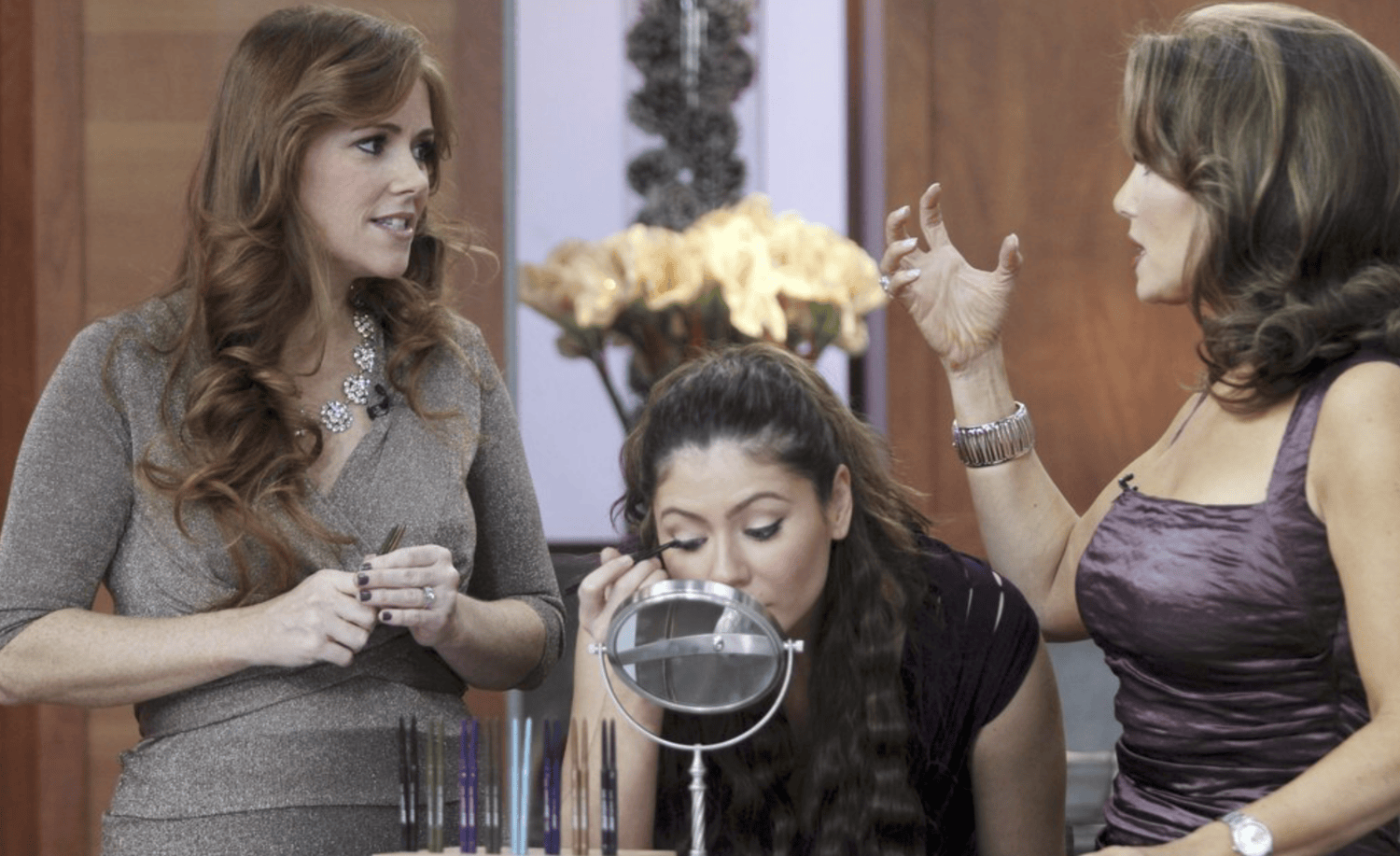
For brands watching QVC’s slide, the real story may be where live shopping goes next. Johnston predicts brands will start bringing live shopping capabilities in-house over the next five years. According to eMarketer, livestream sales in the U.S. jumped nearly 50% in 2025 to $14.64 billion.
Johnston advises, “Manage a mixed P&L. You need to approach your business model like a portfolio management exercise.”
The shift to live shopping is already reframing how brands think about control, ownership and where purchases happen. “If I were a new brand not currently on QVC, I would focus on other avenues of DTC growth…and owning those customer relations,” says Murphy Bishop, founder of now-closed skincare brand The Better Skin Co. “Any brand can stream now, they simply need to invest in what’s needed to make it count.”