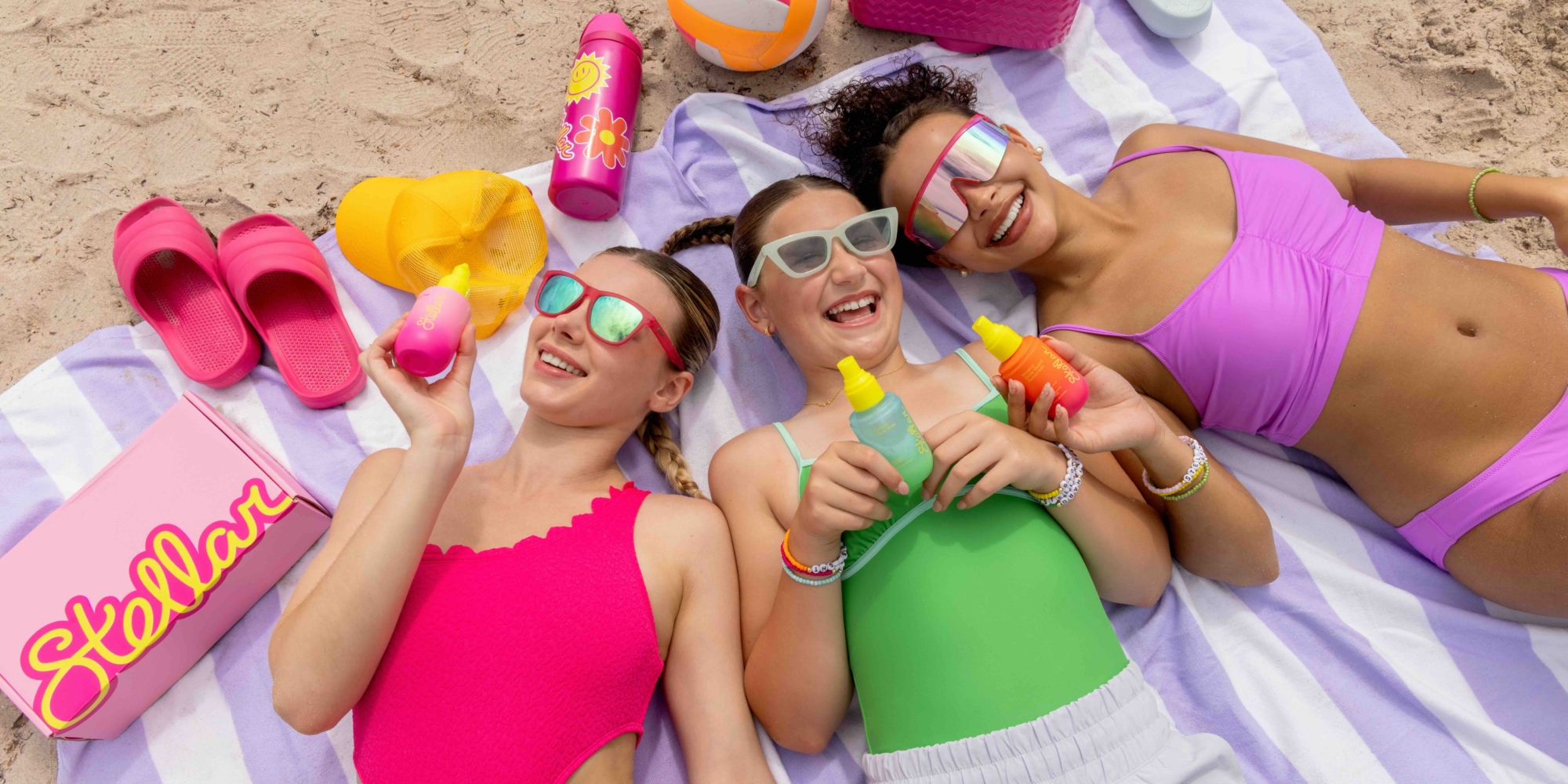

Most elementary school students assigned a school project might build a papier-mâché volcano, a makeshift compass or a simple electrical circuit, but in an era when Sephora-obsessed teens and tweens have become a beauty industry fixation, Stella Dorazio’s class project at age 9 involved skincare and ultimately led to her launching Stellar Beauty Co., the latest brand with a gen alpha founder at the helm.
Now 12 years old, Dorazio is speaking directly to her peers with the brand. An enthusiastic golfer who’s equally comfortable on the course and in front of the camera (she stars in Stellar’s posts on TikTok, where the brand has quickly amassed nearly 5,000 followers and 11,400 likes), she designed Stellar for active girls who are in the sun, on a court or field, in the pool or hanging out with friends. Of course, artsy and bookish types are welcome, too.
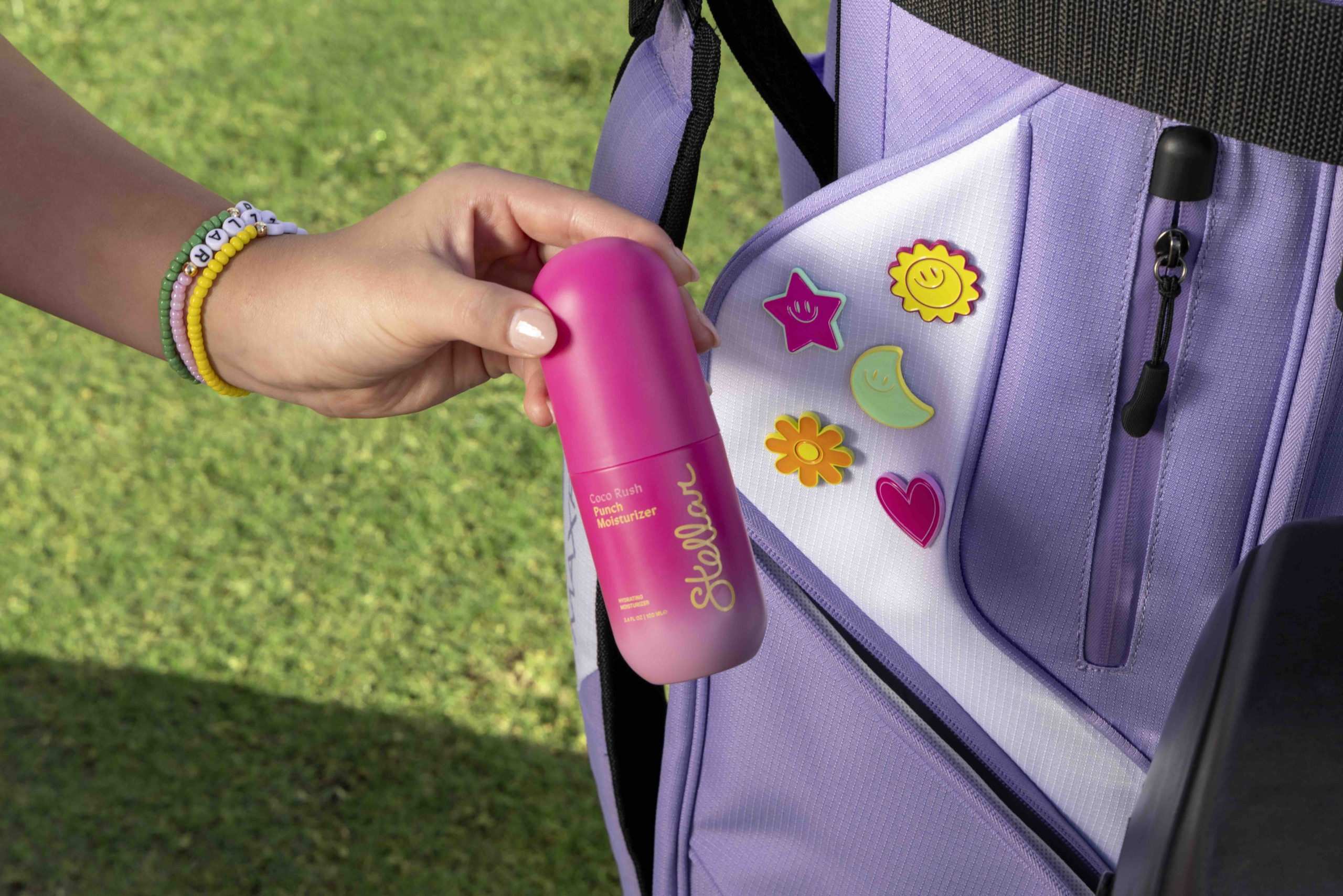
Stellar is launching direct-to-consumer with four products priced from $12 to $27: Splash Face Mist, Passion Pop Smash Cleanser, Coco Rush Punch Moisturizer and Glow Guard SPF 50. The product lineup is organized around what the brand calls a “prep, play, post” routine, encouraging girls to cleanse before activities, protect their skin with sunscreen during them and refresh afterward.
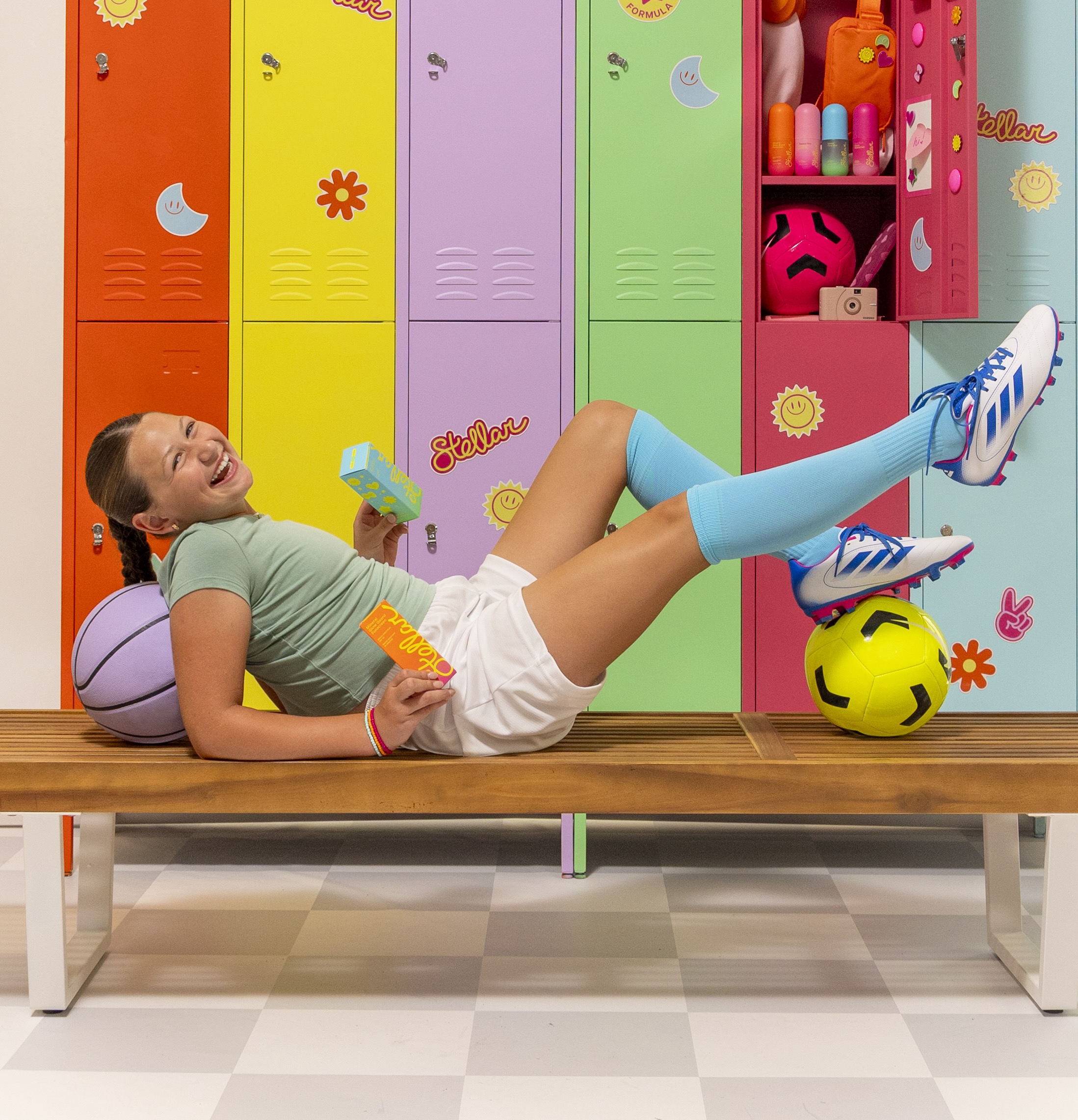
Reflecting Stella’s bright personality, the products come in packaging featuring vibrant shades of blue, pink, yellow, green and orange. Their names draw inspiration from golf terms.
“We want to help girls keep their skin safe from the sun, [especially] those who are always outside and on the go,” says Stella. Russell says Stellar is an opportunity “to educate them about taking care of bodies from an athlete’s point of view, where you work out but then you have to recover and also educating them about sunscreen and taking care of their skin.”
Stellar is the latest in a small but growing cohort of gen alpha-founded beauty brands, including Sincerely Yours and Yes Day, as the generation increasingly driving beauty trends starts beauty businesses. The germ for Yes Day was planted when founder Coco Granderson attended an after-school fashion class at Unincorporated Life. Sixteen-year-old Salish Matter and her father, Jordan, two of YouTube’s biggest family creators, launched Sincerely Yours at Sephora last year.
“People are looking to others who have direct experience,” says Brandy Walker, a brand community consultant. “A 12-year-old who is experiencing acne for the first time is the best person to talk to a 12-year-old experiencing acne for the first time; we’re looking for people who can meet us where we are in our experiences.”
Gen alpha founders are breaking into a heavily scrutinized category. When the Sephora kids craze exploded into the mainstream in early 2024, controversy erupted over age-appropriate skincare ingredients and marketing to young consumers. The controversy reached policymakers, and Sephora agreed to have brands disclose whether products are suitable for consumers under age 13 following action by the Connecticut attorney general.
Stella and her mother Mallory worked together on product research, formulation and packaging. Mallory emphasizes Stellar’s products have to pass “the mom test.” A challenge in selling beauty products to minors is that brands have to convince both parents and their offspring to make the purchase. In the FAQ section on its website, Stellar says, “We believe that the right time to start skincare is when a parent is ready to build a simple routine with their tween/teen.”
“A 12-year-old who is experiencing acne for the first time is the best person to talk to a 12-year-old experiencing acne for the first time.”
Stellar, which describes itself as clean, safe and gentle, formulates with ingredients such as aloe vera, cucumber, shea butter, seaweed, hyaluronic acid, allantoin, glycerin, green tea, avocado, safflower and coconut oils. It avoids retinoids and parabens. The brand refers to its dermatologist-tested formulations as Glow Safe, a designation it uses to signal products are suitable for younger consumers.
Mallory and Russell previously ran businesses in construction and real estate development. They’ve self-funded Stellar. Mallory views the brand as an opportunity to bond with her daughter. Stella has fond memories of being in a pack-and-play and watching her mother do her skincare and makeup.
Stella belongs to a generation embracing beauty earlier than those before it. According to Boston Consulting Group, American consumers begin buying beauty products at an average age of 12, a year earlier than they did a decade ago. Teens account for about 10% of the beauty market in the United States or roughly $5 billion in annual sales.
Although young consumers remain a crucial beauty demographic, the explosive growth of the Sephora kids phenomenon has moderated. NielsenIQ data cited by Women’s Wear Daily shows facial skincare sales among households with children ages 13 to 17 rose 26.7% in 2023, but growth slowed to 8.9% in the 12 months ended in April.
The market has attracted entrepreneurs of all ages. Alongside brands founded by gen alpha entrepreneurs like Stellar, Sincerely Yours and Yes Day are companies such as Bubble and Evereden, which were launched by adult founders Shai Eisenman and Kimberley Ho, respectively, to serve younger consumers.
Stella is bringing her young founder’s perspective to marketing. At a recent golf tournament, she handed out Stellar’s collectible pin badges and stickers that double as golf ball markers to fellow competitors. The collectibles, which the brand encourages customers to trade and collect, extend Stellar beyond skincare into the social rituals surrounding youth sports.
Walker says, “Once upon a time it may have been odd for children to hold certain high-level positions or even think about founding companies, but that’s not the case anymore.”

Leave a Reply
You must be logged in to post a comment.