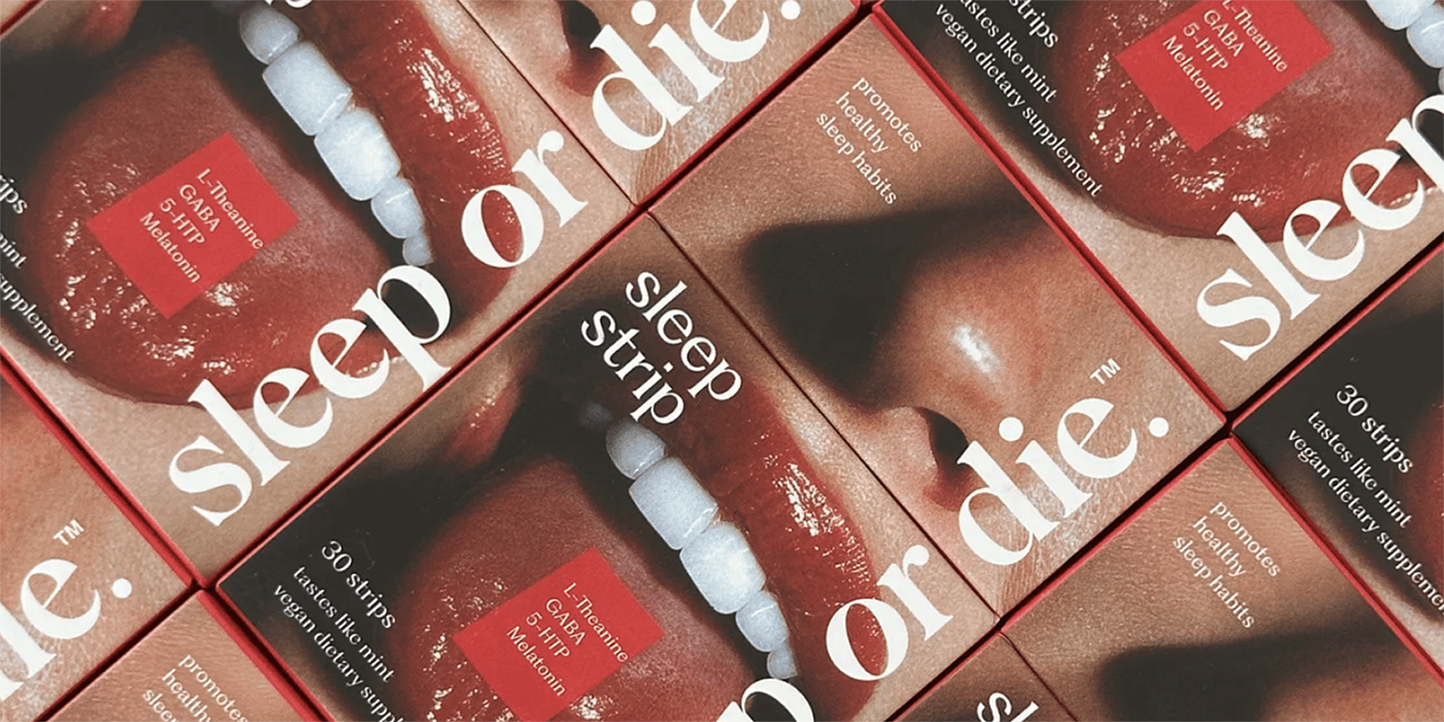

Before its flagship product, Sleep Strips, even launched, Sleep Or Die amassed a 4,000-person waitlist and a 500-member community of loyal fans known as the Zombie Club by embracing a rebellious brand identity that’s more reminiscent of a punk band than a wellness startup, an approach that helped it secure $1 million in seed funding from True Beauty Ventures.
Sleep Or Die’s quick rise demonstrates that, despite a noisy consumer packaged goods market, brands can still make noise if they look and behave differently from the crowd. The brand isn’t afraid to lean into anti-wellness messaging—yes, its cigarette box-style packaging for Sleep Strips is intentional—turn to its community for input or think deeply about the economics of marketing and product concepts. The result is outsized attention without forcing the brand to chase consumers in a costly digital environment.
Founder and CEO Lauren Sudeyko, who previously worked in account management and marketing at PepsiCo and Google, initiated the Zombie Club shortly after introducing Sleep Or Die’s first product, Sleep Tape, last year by posting a simple Instagram Story asking consumers for assistance. As she developed Sleep Strips, she recruited followers into beta-testing cohorts, mailed samples herself and collected feedback through surveys and WhatsApp groups.
Launched in January with the tagline “welcome to the strip club,” Sleep Strips went through multiple rounds of vetting with the Zombie Club until the product received a 90% “would buy as is today” score in customer surveys. At the same time, Sudeyko started sharing the process of creating the product on LinkedIn and her Substack, “Dead Tired Diaries.” A LinkedIn post spotlighting Sleep Strips’s packaging reached more than 180,000 people within a few days.
Generating buzz was only part of the challenge. Just days before Sleep Strips launched, Sudeyko partnered with Nobody Knows Studio to overhaul the brand’s website. The agency designed the site around the mindset of a late-night consumer searching for sleep relief. It amplified Sleep Or Die’s bold visual identity by enlarging product imagery, simplifying navigation and using conversational typography to reinforce the brand’s cheeky tone. The goal was to remove friction rather than increase complexity.
“Ultimately, the best design strategy is the one that gets out of the way of the customer,” says Katrina Lainsbury, founder and creative director of Nobody Knows Studio. She adds, “We knew our customer: someone scrolling before bed, maybe even at 2 a.m., desperate for a solution to a broken sleep routine. They aren’t looking for an elaborate brand journey. They’re looking for an exit strategy from their insomnia.”

The effort paid off. Along with the roughly 4,000 people on the waitlist for the product, Sleep Or Die drew more than 20,000 website visitors in the month leading up to the debut of Sleep Strips, giving it a sizable audience to convert into subscribers from the jump. Sleep Strips contains 30 dissolvable strips with ingredients commonly used to support sleep like melatonin, GABA, L-Theanine and 5-HTP.
“This is one of the most insane brand builds we have seen all year,” writes Ayal Pascal, head of beauty at Bold Brands Co., on his Substack “Beauty MarketingIQ.” “Product is everything when you’re not an influencer. The Sleep Strips launch, with its cigarette box packaging and genuinely different offering, drove more growth than any single post or campaign.”
Creating a dedicated community of customer-fans has allowed Sleep Or Die to gain traction without big spending. The brand has dedicated only a few hundred dollars to Meta advertising. There’s no formal influencer strategy nor is it available yet on TikTok Shop. Instead, growth has come primarily through organic content, customer referrals, earned media and engagement.
“A logo or a flashy influencer or a celebrity posting about us, that doesn’t really matter,” says Sudeyko. “We’re vying for human connection.”
That philosophy has guided Sleep Or Die from the outset. Rather than hiring an outside branding agency, Sudeyko created the brand’s identity herself in Canva. She assembled a mood board of Pinterest images, fonts, colors and words centered not on sleep, but on how she wanted consumers to feel. The exercise led to an unconventional conclusion: Instead of making women feel calmer, Sleep Or Die would make them feel sexy, an insight that has influenced everything from the brand’s visuals to its tone of voice.
“We are going to own the bedside table.”
“I started by talking to women about how they felt about sleep,” she says. “They were frustrated, they were tired, they felt unseen in the category and they felt guilty when it came to sleep aids. What if they felt badass? What if they felt sexy? The more that I went into the feeling I wanted them to have, everything else started to fall into place.”
Sleep Or Die’s target customer isn’t the stereotypical wellness obsessive. The brand homes in on three core consumer archetypes: gen Z women navigating digital fatigue, millennial professionals juggling demanding careers and social lives and new mothers struggling with sleep deprivation. Those customers also serve as the brand’s de facto product team and advisory board. The brand’s badass positioning speaks to a shift Sudeyko detects away from what she describes as the perfectionism of modern wellness culture.
As evidence of the shift, she says, “Smoking is back in a big way, but the way smoking is back is it’s a rebellion on the oversaturation of wellness culture.”
Substack is a channel at the heart of Sleep Or Die’s growth strategy. Sudeyko first began her Substack to document her entrepreneurial journey, but it’s evolved into one of the brand’s most powerful acquisition and community-building tools. Paid subscribers voted on packaging concepts and were automatically put on the Sleep Strips waitlist.
“The newsletter IS the launch funnel. She turned a $5/month subscription into a first-access pass, which means people are literally paying to be first in line for the product. That’s a CRM mechanic most brands with dedicated marketing teams haven’t figured out,” writes Pascal. “The lesson isn’t ‘start a Substack.’ The lesson is that building in public on an owned platform is doing triple duty: it builds founder authority, it creates a direct-access audience, and it converts readers into customers.”
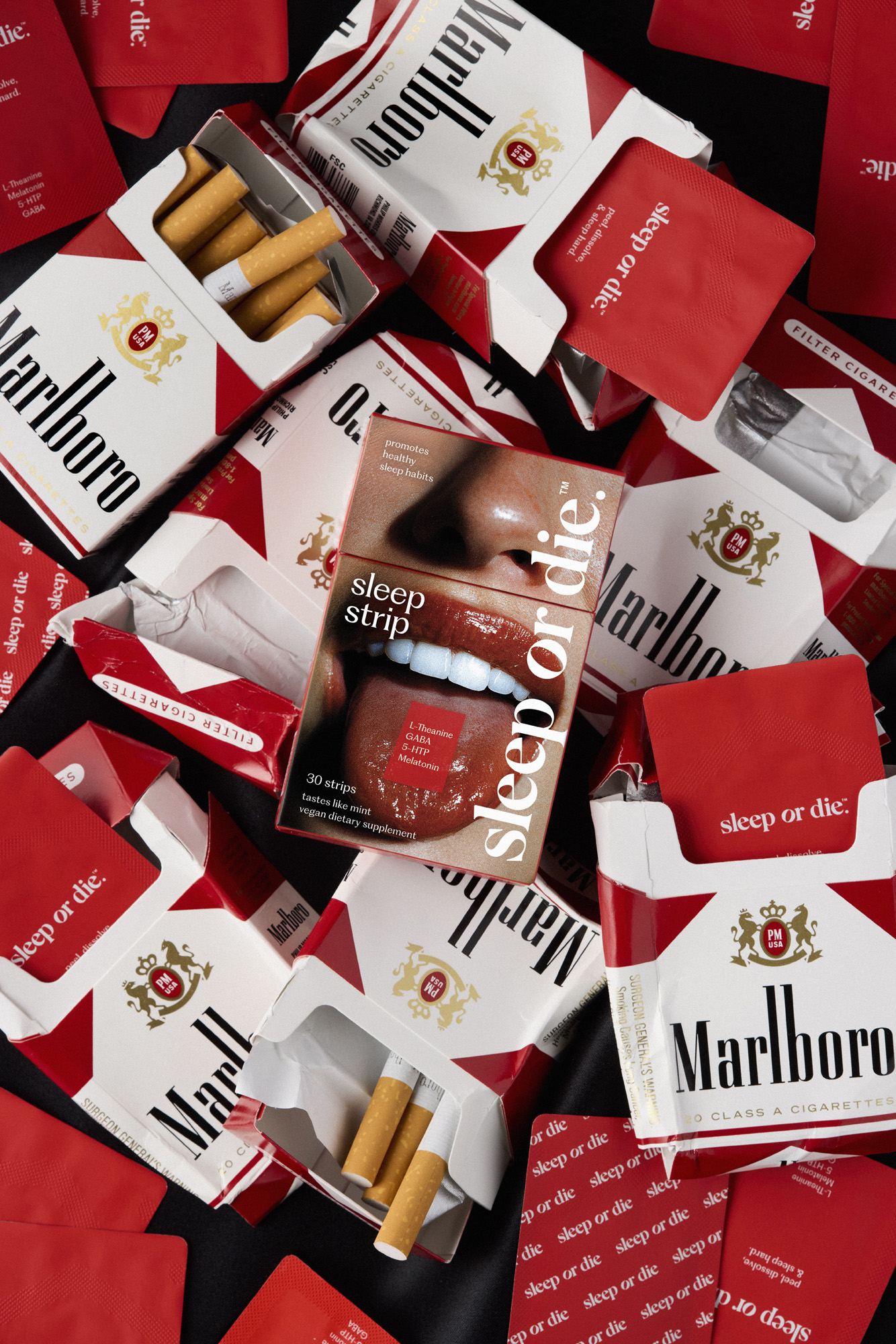
Beyond marketing efficiency, the economics of Sleep Or Die are aided by its product format choices. Sleep Strips are lightweight, easy to ship and encourage repeat purchases, characteristics that make them attractive from a customer acquisition and operational standpoint. Priced at $54 for one pack, customers who subscribe to Sleep Strips can save up to 10%, 20% and 30% for packs of one, two and three.
Sudeyko says, “It wins across every single category in terms of an amazing brand: a product that works, operationally scalable and incredible margins.”
Until recently, Sleep Or Die was bootstrapped through Google shares that Sudeyko sold after her tenure at the technology giant ended. Initially uninterested in fundraising, Sudeyko reconsidered when orders for Sleep Strips began arriving from Brazil, Saudi Arabia, Switzerland, France, Australia and elsewhere.
Sleep Or Die has raised $1.5 million and counting. On top of the $1 million from True Beauty Ventures, backer of brands like Sofie Pavitt Face, Dieux, The 7 Virtues, Caliray and Hung Vanngo Beauty, Sudeyko has tapped Annie Evans, co-founder of Dream Ventures, and Kelley Arena, founder of Golden Hour Ventures, to organize a special purpose vehicle (SPV) pooling investments from smaller backers.
Although several investment firms expressed interest in Sleep Or Die, Sudeyko chose True Beauty Ventures because of its belief in the brand. “They were on the waitlist,” she says. “They bought on launch day.”
Looking ahead, Sleep Or Die is developing further strip formulations and exploring products that address both falling asleep and staying asleep. Sudeyko says, “We are going to own the bedside table.”