
Launching at Sephora is only the beginning, not the end goal, of building a sustainable beauty brand. In acknowledgment of that reality, the beauty specialty retailer is revamping its Accelerate program for emerging brands to focus less on access and more on operational readiness and long-term viability.
The updated curriculum for the six-month program features courses on scaling a business as well as brand launch fundamentals, with operations, finance, media training, team building and strategic planning among the areas of focus. Along with the curriculum changes, Accelerate’s timing is shifting, too. For the next cohort, applications opened March 2 and closed March 31 to coincide with Sephora’s annual United States Brand Summit and Impact Summit, a departure from Accelerate’s previous schedule, when applications and cohort announcements typically occurred later in the year. Members of the cohort are slated to be revealed this summer.
Carolyn Bojanowski, EVP of merchandising at Sephora in the United States, says the refined Accelerate program will take a “holistic view of brand building,” providing founders with a broader support system designed to extend beyond the curriculum. She notes the timing shift integrates the program more deeply into Sephora’s ecosystem and emphasizes the retailer drew heavily from its industry partner network and Accelerate alumni community to shape a program that is more personalized and adaptable.
“Our updated curriculum recognizes that no two brands or founder journeys are the same. It takes a holistic view of brand building, equipping founders with the tools to define, own, and refine their unique point of view while building toward scale,” she says. “The reality is it’s incredibly challenging for indie brands to build and sustain momentum, so if we can play a meaningful role in their long-term success, whether at Sephora or beyond, that’s the impact we’re focused on driving.”
Brands will continue to receive individualized mentorship from Sephora executives, industry leaders and Sephora brand founders during their participation in Accelerate. Beauty industry veterans, including Tatcha founder Vicky Tsai, Tower 28 founder Amy Liu, Caliray founder Wende Zomnir and Briogeo founder Nancy Twine, have served as mentors.
The updates to Accelerate are being implemented as emerging beauty brands increasingly have alternative pathways to scale before entering prestige retail. Indie beauty brands account for roughly a third of the U.S. beauty market and continue siphoning share from legacy players as consumers gravitate toward newer, more nimble brands. According to NielsenIQ data reported by Beauty Independent earlier this year, indie brands represented about 32% of the $125 billion U.S. beauty and personal care market in the 52-week period ended Nov. 1, 2025.
Amazon and TikTok Shop, in particular, have lowered barriers to entry by allowing brands to launch faster and more cheaply than through traditional brick-and-mortar distribution, where inventory commitments, merchandising expectations and marketing support can require hundreds of thousands to millions of dollars in spending. As a result, specialty retailers are under greater pressure to ensure emerging brands are operationally prepared before rolling out to stores.
Several young brands that launched at Sephora in recent years, including Ami Colé, Community Sixty-Six and Sweat Cosmetics, which rebranded as Hustle Beauty, have closed, underscoring the challenges indie brands with limited name recognition face in beauty specialty retail, where many competitors are well-capitalized.
Since Accelerate launched in 2016, 41 brands across skincare, makeup, haircare and fragrance have graduated from the program, with more than half launching into Sephora stores and online. The retailer evaluates Accelerate brands on operational readiness, innovation pipelines and consumer alignment before determining whether they’re ready to launch with it. Alumni include Eadem, Kulfi, Bounce Curl, Topicals, The 7 Virtues, Maed, Basma, Fara Homidi, Lion Pose, Inde Wild, 4 AM, Oui The People and Range Beauty.
Bojanowski says, “The high caliber of our applicant pool reflects not only the program’s impact for the founders, but also the demand for brands that reflect today’s dynamic landscape.”
“If we can play a meaningful role in long-term success, whether at Sephora or beyond, that’s the impact we’re focused on driving.”
There’s no standard rollout strategy for Accelerate brands or any brands breaking into Sephora’s universe, for that matter. However, many are placed online before entering stores. Bojanowski explains the online-first approach allows Sephora to move quicker, gather customer insights and refine positioning before taking bigger bets on brick-and-mortar distribution.
She says, “There is not a one-size-fits-all approach, as launch strategies are tailored to best support each brand’s needs.”
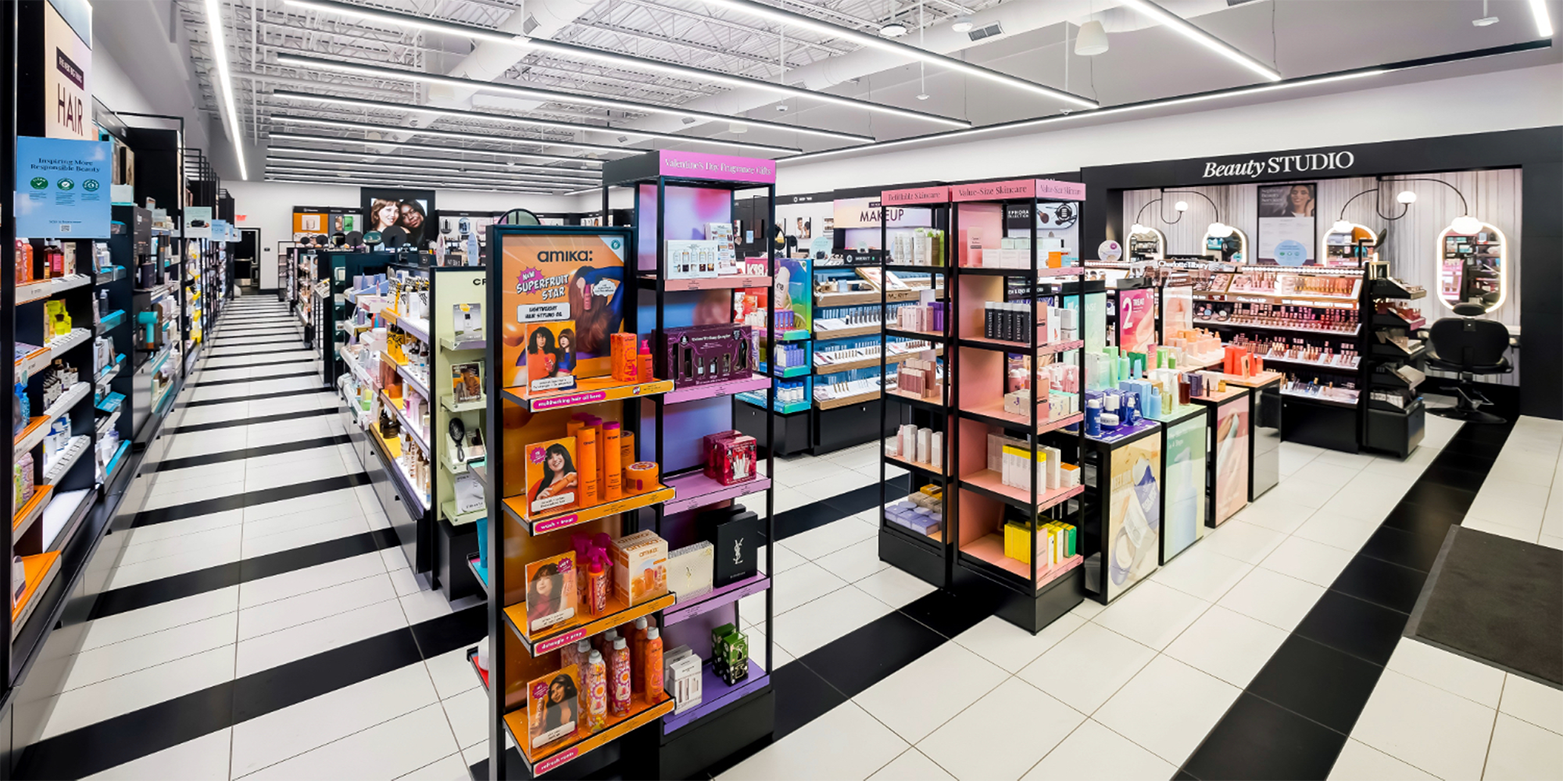
One of Sephora’s most visible launch vehicles is The Next Big Thing assortment, a merchandising display housing products from emerging brands in high-traffic settings. Accelerate brands are also highlighted during key marketing periods like Valentine’s Day, Mother’s Day and holiday campaigns as well as social and category-specific storytelling initiatives.
Sephora previously revamped Accelerate in 2021, when it pivoted its focus exclusively on brands from founders of color as part of its commitment to the Fifteen Percent Pledge. Sephora stresses founders from all backgrounds are welcome to apply.
Bojanowski says, “Success in the next five years looks much like it has previously: finding new voices to make the beauty world a more welcoming place for all.”
According to Sephora, the selection process at Accelerate mirrors the selection process for its assortment: identifying brands with differentiated products, strong brand vision and a unique perspective. Those standards still hold, but Bojanowski says the retailer has become more intentional about embedding that thinking throughout the company to ensure it consistently identifies emerging brands with the greatest potential. “That consistency is part of the ‘secret sauce’ behind what makes Sephora, Sephora,” she says.
Sephora isn’t the only beauty retailer aiming to nurture emerging brands before they hit the mainstream. Launched in 2022 in partnership with the Fifteen Percent Pledge, Ulta’s MUSE Accelerator has graduated 32 brands from its 10-week retail readiness and mentorship program so far, and awarded over $1.5 million in direct funding to them. Established in 2018, Sally Beauty’s Cultivate program has similarly offered mentorship, funding and potential retail distribution to emerging beauty founders. Walmart and Target have run programs Walmart Start, Target Accelerators and Target Takeoff.
The evolution of Accelerate comes as Sephora continues to outperform much of the luxury market. Selective Retailing, the Louis Vuitton Moët Hennessy division that includes Sephora, DFS and Le Bon Marché, posted 4% organic revenue growth in the first quarter, ahead of the company overall, which grew 1% organically during the period.


Leave a Reply
You must be logged in to post a comment.