
Beauty Bay has taken down its website as the gen Z-loved beauty e-tailer moves toward a potential administration process, the British equivalent of Chapter 11 bankruptcy protection, after years of declining sales, a development that highlights the difficult economics of multi-brand online beauty retail as competition intensifies and customer acquisition costs rise.
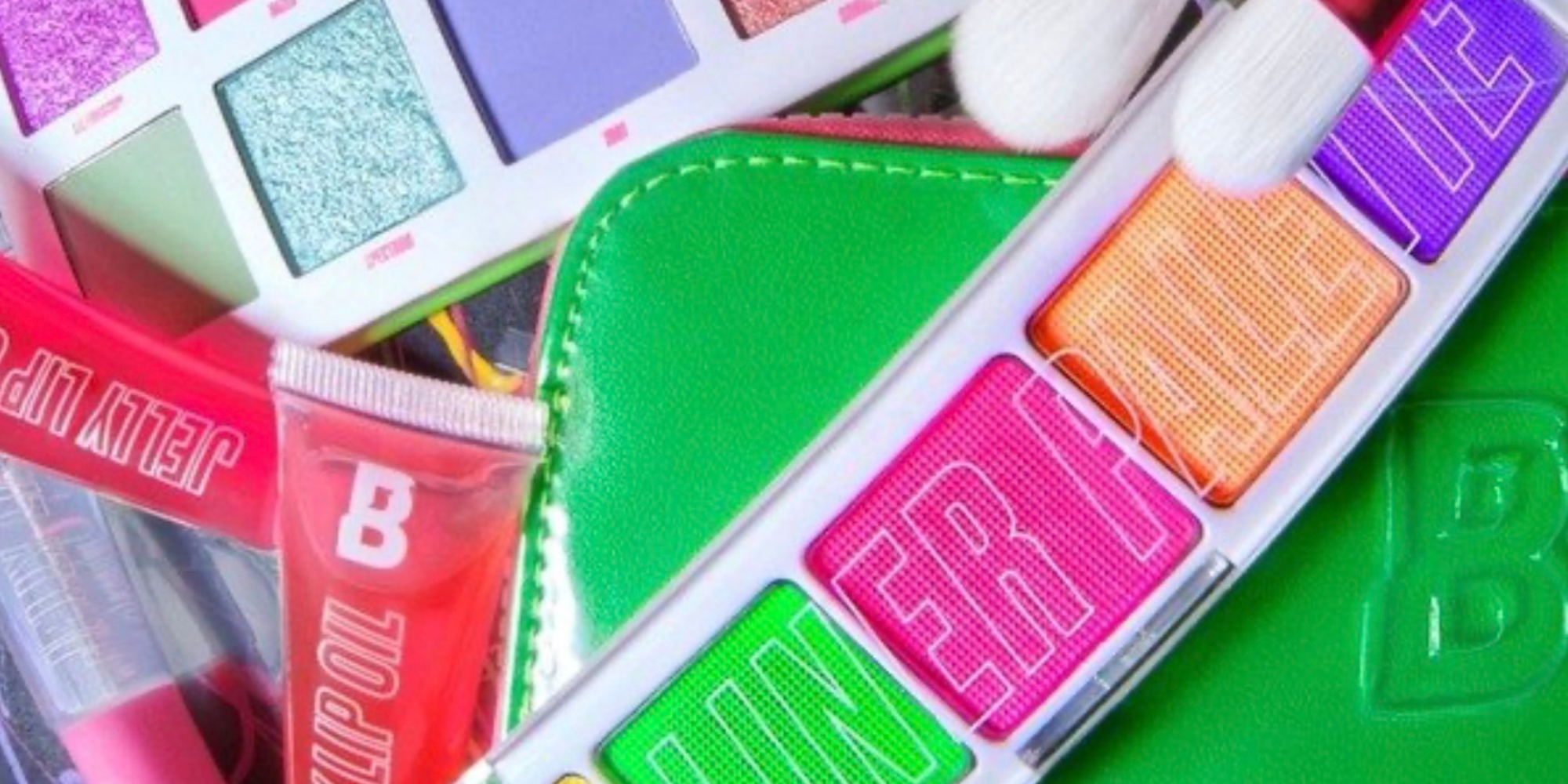
The e-tailer, which tells visitors to its website that it’s “offline” and will “be back shortly,” has filed a notice of intent to appoint administrators, a process that will give it a window of about 10 days of protection from creditors as it searches for a buyer or investor to save the company. Sky News reported last month that Beauty Bay appointed advisers from consultancy firm Interpath to undertake a strategic review. Beauty Bay carries more than 200 international brands, including Dose of Colors, BH Cosmetics, Ofra Cosmetics, Juvia’s Place, Nabla Cosmetics, Lunar Beauty, Laneige, Clinique, MAC and Anastasia Beverly Hills, and its own in-house brand By Beauty Bay, best known for bold eyeshadow palettes.
A Beauty Bay spokesperson told Cosmetics Business that the company has been battling strong headwinds over the past year. “Cost inflation and fragile consumer confidence have had a heavy impact on customer spend,” the spokesperson said. “Over recent weeks, we have been working closely with our stakeholders to find a path forward, including exploring options for sale and investment, with the aim of putting in place a stable financial platform upon which we can continue to build.”
Despite the beauty industry’s relative resilience, Beauty Bay’s stumbles come as online and offline beauty retailers grapple with Amazon’s surging presence in the category, TikTok’s growing role in product discovery and rising costs for digital operations. Farfetch shuttered its beauty business in 2023 less than two years after entering the category through its acquisition of luxury beauty retailer Violet Grey, which it later sold. In 2024, Net-a-Porter ended a third-party beauty assortment in favor of an affiliate model, and beauty investments haven’t insulated Ssense from profitability problems and layoffs. The Canadian company entered creditor protection under a restructuring process this year, allowing the founding Atallah brothers to retain control as it reorganized.
Discussing multi-brand online retailers, Joel Palix, founder of boutique beauty advisory firm Palix Unlimited and the former CEO of Feelunique, an e-tailer acquired by Sephora in 2021, says, “They don’t own the product brand, they don’t own the customer and increasingly they don’t own the traffic. Add high return rates, constant promotions and logistics inflation and the model becomes more fragile. I see brands invest more in their own DTC and TikTok, meaning multi-brand retailers lose both differentiation and margin.”

According to e-commerce experts, gross margins for online retailers usually hover between 30% and 45%. With marketing costs taking up roughly 20% to 35% of sales and fulfillment another 10% to 15%, online retailers’ operating margins are scant at best.
“They often land between negative mid-single digits and low positive single digits. Compare that to direct-to-consumer beauty brands, which frequently operate at 70% to 85% gross margins,” says Malte Karstan, an e-commerce, retail and luxury goods consultant. “That delta becomes existential when customer acquisition costs rise.”
Margin structure is not the only stressor. Shifts in distribution power have weakened multi-brand e-tailers’ standing in the beauty ecosystem. Alongside competition from TikTok Shop and Amazon, Beauty Bay is contending with omnichannel retailers such as Superdrug, Space NK and Sephora expanding their physical and digital footprints in the United Kingdom. Sephora has been rapidly rebuilding its presence in the country after reentering the market in 2021 through its acquisition of Feelunique.
“Brands no longer depend on digital retailers for distribution,” says Karstan. “The middle of the market is hollowing out.”
Aaron Chatterley, co-founder of teen skincare brand Indu and Feelunique, argues Beauty Bay has historically had trouble differentiating itself from other British pure-play beauty e-tailers like Feelunique, Cult Beauty and Lookfantastic. The latter two were purchased by The Hut Group in 2021 and 2010, respectively. Chatterley says, “They missed the boat on the strategic consolidation we saw as Sephora and THG [The Hut Group] subsequently acquired those stronger players and further strengthened their position with resources and better omni-channel capabilities.”
For the year ended March 2024, the last year that Beauty Bay filed full year accounts, the e-tailer achieved a turnover of 78.1 million pounds or roughly $105.3 million, up 3.4% from the prior year. In 2022 and 2023, respectively, turnover at Beauty Bay had declined by 31% and 19% to land at 93 million pounds and 75.5 million pounds or roughly $125 million and $101.8 million. In 2022, Beauty Bay abandoned plans for an initial public offering. Launched in 1999 as Fragrance Bay, Beauty Bay is owned and operated by brothers Arron and David Gabbie. According to financial tracking company Tracxn, Beauty Bay hasn’t raised institutional funding.
To survive, experts conclude beauty e-tailers must combine retail assortment with a media component and data with private-label merchandise, exclusivity and a tight promotional strategy. With e-commerce growth outpacing brick-and-mortar growth, there could be room for online players to course-correct. Palix points to international platforms like Nykaa, Flaconi, MyOrigines and Notino as examples of strong e-commerce companies. He says, “I believe hybrid media-commerce platforms with stronger differentiation will find audiences and success.”
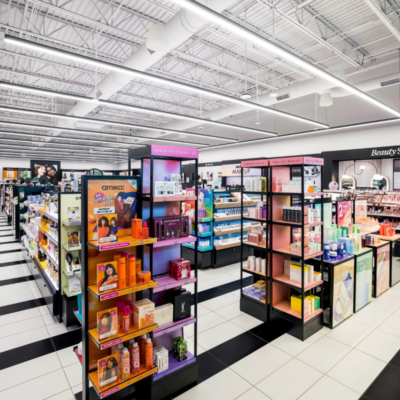
Going omnichannel can boost growth and differentiation for e-commerce companies. Considered the largest online beauty retailer in Europe, Notino operates about 26 stores throughout the Czech Republic, Slovakia, Poland, Hungary, Austria, Romania, Bulgaria and Ukraine. Australian beauty e-commerce destination Adore Beauty recently made the jump to physical stores when it opened a Melbourne location last year. It plans to open 25 more locations by 2028. For the year ended June 2025, Adore hit record profitability, with earnings before interest, taxes, depreciation and amortization (EBITDA) climbing 67.8% and revenue advancing 1.6% to 198.8 million in Australian dollars or roughly $140 million.
For the e-tailers that don’t adapt, further closures or consolidation may be inevitable. British beauty e-commerce company Naturismo was scooped up by French beauty retailer Oh My Cream last year after failing to pay vendors. “Some distressed assets may be acquired for their customer databases, fulfillment infrastructure or owned brands,” says Karstan. “At the same time, larger retail or beauty groups may not need to acquire at all. They can simply absorb share through traffic reallocation.”
However, Chatterley asserts that high customer crossover with potential acquirers could make beauty e-commerce companies unattractive targets for purchase in the future. He says, “With tightening margins, increasing marketing costs and competition like Sephora in the market, the financial acquirers are unlikely to have the appetite for that level of risk.”


Leave a Reply
You must be logged in to post a comment.