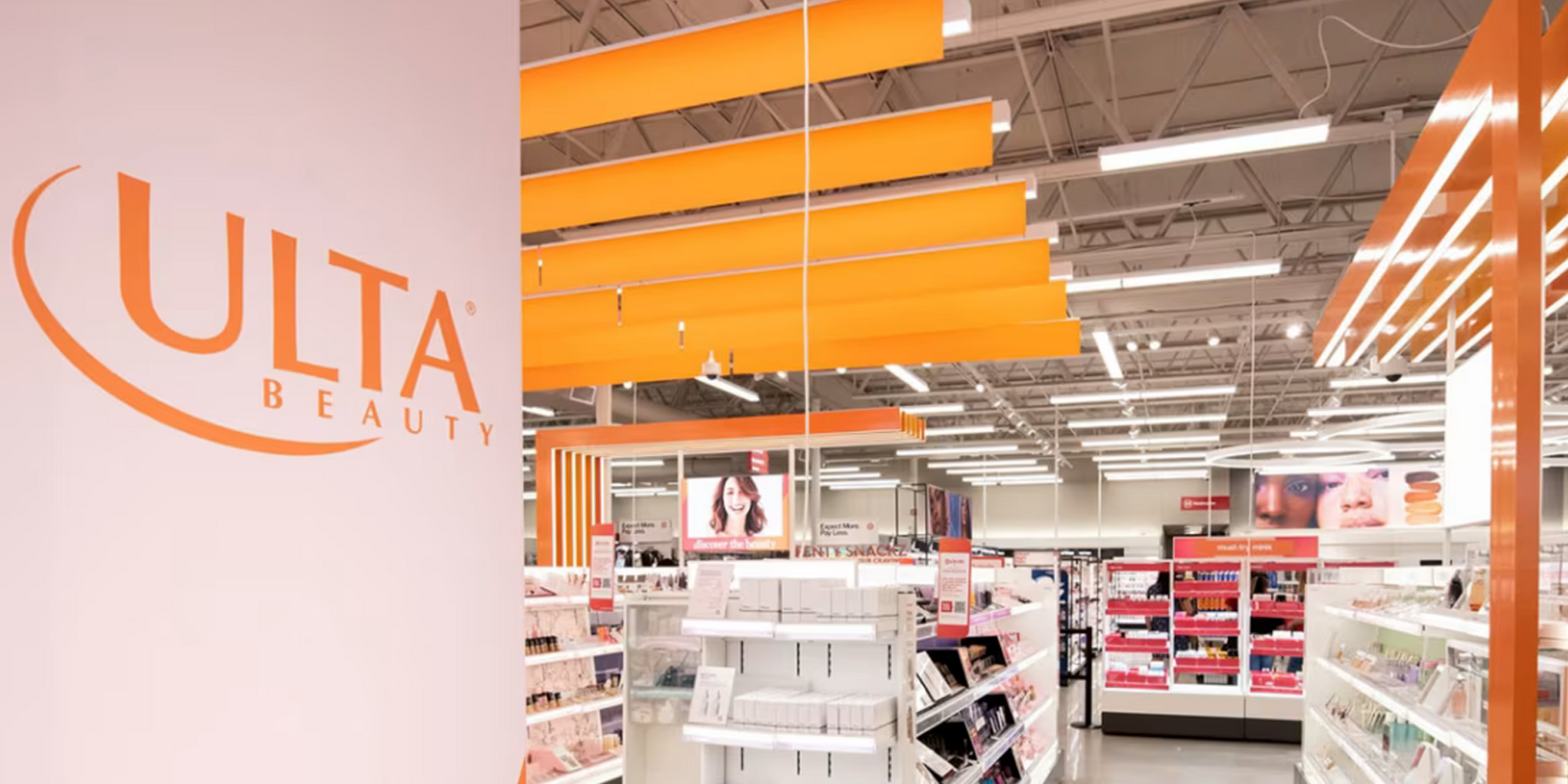

Sephora is known for wielding beauty trends for maximum benefit, cutthroat curation and cooking up brands “in the kitchen” that speak to its shoppers’ intense beauty proclivities and reward the retailer with exclusives. Ulta Beauty is known for responding to trends, assembling an expansive high-low assortment and scaling brands across its larger nationwide store network.
But Ulta, which has been adding brands launched first at Sephora like Rare Beauty, Sol de Janeiro and Ole Henriksen, doesn’t want to cede beauty brand-building skills entirely to its fierce rival, which won a battle with it for Rhode and has been a prominent stage for beauty stars like Summer Fridays, Phlur and Kayali. The Business of Fashion reported last month that CEO Kecia Steelman met with bankers and investors to discuss ways Ulta can improve its relationships with emerging brands.
It’s not as if Ulta hasn’t been trying. The chain has welcomed beauty’s up-and-comers through Sparked, a program for budding brands, since it launched in 2019, the same year Sephora introduced Next Big Thing, its gateway program for beauty upstarts. About-face, Divi, Vacation, Live Tinted and Love Wellness are among the brands that have entered Ulta via Sparked. Kulfi, Refy, Ceremonia, Violette_FR, Emi Jay and Facile are a few of the Sephora brands that are or have been a “next big thing.” Ulta and Sephora also run the accelerators MUSE and Accelerate, respectively, to prepare early-stage brands for big-time retail.
Ulta is assessing its approach to indie brands following a year of aggressive moves under Steelman. The company has reorganized its executive team, pushed into international territories like the United Kingdom, Mexico and the Middle East and launched an online marketplace to drive growth and defend against market share erosion to Amazon and others. The online marketplace is yet another bid for young brands, which can play in the digital environment and test customer receptivity without the high costs of in-store placement.
As Ulta attempts to better understand the forces that shape indie beauty success in its selection, we wondered whether the retailer can meaningfully strengthen its ties to indie beauty brands and bolster their sales performance. So, for the latest edition of our ongoing series posing questions relevant to indie beauty, we asked eight founders, consultants, growth specialists and retail experts the following questions: What should Ulta do to nurture relationships with indie brands? Could it ever be seen as a true brand builder or incubator?
-
 Rachel Roberts Mattox Brand Developer and Founding Member, The Board
 In the prestige beauty wars, the defining metric isn't market share; it’s cultural power. The answer to the Sephora versus Ulta debate is as simple as it is elusive. It’s about desirability.
Sephora has successfully trained founders and consumers alike to view it as the ultimate beauty destination. Its launches are cultural moments; its presence is a stamp of approval. Ulta, by contrast, is the indispensable "store next door," a neighborhood emporium defined by optionality. This operational strength, however, fails to translate automatically into brand builder status because it does not inherently signal taste or status in the same way.
Sephora's strategic moat is built on three reinforcing pillars that act as a flywheel for desirability:
1. Tight Curation Signals High-Value Taste
The "next-gen prestige indie" pipeline typically enters its doors after achieving cultural velocity. This communicates a powerful message to the consumer: This is already hot, and Sephora is the accelerator that makes hot mainstream.
2. Discovery is a Cultural Product
Sephora merchandises discovery as an editorial, curated experience.
3. Founder Equity as Brand Equity
The Sephora founder ecosystem is legible and public-facing. Providing mentorship, curriculum and investor connections, the retailer weaves a narrative: “Sephora helped build us.”
For Ulta to shift its perception from a powerful retailer to a true brand builder, its leadership must execute a strategic pivot that leverages its physical and digital scale:
- Own discovery as world-building: Initiatives like UB Marketplace and Ulta Beauty World can become the company's new operating system for discovery.
- Services as the differentiator: Ulta’s in-store services are its single greatest, most under-leveraged asset. Indie brands are often ritual brands (barrier repair, fragrance layering, textured haircare). Services are the ultimate pathway to teach these learned behaviors, positioning Ulta as the retailer that not only sells the tool but teaches the technique.
- Invest in theater, not just newness: Ulta does not lack newness; it lacks theatrics. It must build a moment-making muscle to transform routine launches into cultural events and its stores into sensorial, sticky playgrounds.
The final imperative for all major beauty retailers is to recognize that the moment of discovery is increasingly owned by TikTok Shop. So, a successful strategy requires creating a frictionless, high-touch bridge that turns that moment of discovery into instant desirability and action.
- Anthony Standifer Founder and Chief Brand Architect, mSEED group
Ulta Beauty has a meaningful opportunity to evolve from offering access to building lasting capability with indie brands. Over the past six years, retailers made real strides in supporting emerging founders, especially Black- and woman-owned brands, through capital and visibility, but capital and short-term accelerators aren’t enough.
At mSEED group, we work with founders who have completed programs and secured funding, yet still lack clear, executable guidance for growing at their current stage and understanding what it truly takes to reach the next one. The missing piece isn’t passion or education; it’s practical, operational depth.
If Ulta wants to be seen as a true brand builder or incubator in the way Sephora often is, it would require a longer-term commitment to mentorship across the core levers that determine survival: finance, distribution strategy and marketing execution. The most fragile moment for many indie brands is the transition from a successful DTC model into formal retail.
There are predictable breakdowns: cash flow strain from inventory builds, margin compression from trade spend, misaligned promotional calendars, lack of operational infrastructure that could be taught early and reinforced through structured advisory support. A six-week curriculum and a check are helpful, but scaling a beauty brand requires 18 to 36 months of disciplined execution with experienced operators guiding the journey.
Ulta could differentiate itself by creating a multi-year founder pathway that combines education with embedded mentorship and milestone-based retail expansion. Pair emerging brands with experienced operators, provide hands-on financial planning before major purchase orders and offer ongoing performance feedback as distribution grows. That kind of sustained partnership, especially when prioritized for underrepresented founders, would position Ulta not just as a supporter of indie brands, but as a true builder of them.
- Stephen Letourneau COO and CBO, BFYW
I love that Ulta is trying to step up and atone for the past (despite not saying that). Ulta's data analytics, institutional knowledge, vendor relationships and marketing teams are all first rate. Should they decide to utilize these in partnership with young brands, they could take those brands to Fenty-level success.
Start by being honest about the costs involved in the building blocks for success: sample programs, marketing costs, beauty ambassadors. Since they know what works, tell brands upfront. DTC launches first, then in stores regionally.
Key pieces will involve building a comprehensive brand strategy with indie brands.
- Focus on SKU development using their search analytics to identify consumer demand, guiding young brands with their product roadmaps.
- Build a marketing and sampling plan where Ulta could initially co-invest in the plan's build-out and deduct a portion from future sales. This ensures indie brands can deliver quality samples to the masses and not deplete their cash flow.
- Train in-store teams to actually hand out the samples. Seeing unopened shipment boxes in the back room or a drawer full of samples behind the cash wrap indicates missing training and support. At this point my advice is to sample on the shelf next to the product. This way, consumers don't have to find anyone.
Finally, the biggest push will be a social plan alongside the DTC presence. The volume of shoppers at home consuming content is undeniable. This is where indie brands can see the biggest difference.
Ulta could pick a couple of brands per category and cross-promote to build interest. They are the authority, so let's focus the spotlight on a full routine: hair, skin and color based on a generated customer profile. Super natural, light and breezy, glam goddess, etc. A quick online quiz to develop a consumer profile, and then spotlight brands that make sense.
Muffy Clince and her amazing team do a phenomenal job bringing new brands in and making them feel welcome. The rest of the departments need to step up to support and nurture those relationships into real business opportunities for brands.
On another note, our industry strongly criticizes Sephora for its requirements for brands. At least LVMH is willing to invest directly with funding and strategic support. Those requirements, i.e. education, sample, marketing buys, are all building blocks for brands to succeed, not only at Sephora, but also as a roadmap to success at any retailer.
- Margarita Arriagada Founder, Valdé
I love Ulta’s ambition and desire to become a better partner, which is mission-critical as brands attempt to lower high investment dependency and diversify their distribution strategy. While many tactical improvements are possible, I underscore the need to build a sustainable foundation for the future.
The primary, big-picture call-out is to shift the internal culture toward establishing principles for a win-win approach to brand partnership and development while being realistic about what a publicly traded company can or cannot do. At the very least, it potentially means balancing a heavy and transactional structure with a more nuanced approach to brand development. A culture focused on "let's build brands" rather than one based generally on performance proof.
What some brands may expect in a win-win development partnership:
- An even playing field: everyone has an opportunity to succeed;
- A sustainable equity and growth partner: equity involves building longer-term brand positioning and storytelling, while balancing trends with building hero SKUs and field education. Growth involves investment, inventory, share and tailoring programs and resources based on each brand's development cycle (i.e. reducing pay to play for indie brands). ROI metrics are necessary for every required spend;
- Transparency in strategy communication: how do changes make sense for brands?
- Promo Cadence: align on strategy, reduce frequency and protect price integrity;
- Customer data sharing to drive growth.
Ulta clearly faces pressure regarding margins, optimization and risk mitigation. Brands, on the other hand, need to build equity, maintain price integrity, invest in innovation and figure out how to sustain. The incentives are not organically aligned. Sephora by comparison is more of a merchant-led organization aligned with building brand equity values. The solution potentially lies at the intersection of aligning values and incentives for everyone, including the customer.
- Murphy Bishop Co-Founder, The Better Skin Co.
I love Ulta and would love to see them figure this out as I worked with them for many years with big corporate brands like Bare Escentuals and indie brands like The Better Skin Co. Sephora figured it out years ago, and it has worked. Yes, they can be seen as an incubator, but they must give it time. The retail expectation needs to be realistic. I’ve created a go-forward plan for Ulta.
STAR:
Stabilize the employee base.
Treat brands as storytellers who sell product. Allow them to be brand-forward.
Amaze the client with service, know the brand story and product knowledge.
Reap the rewards.
- Branding: Indie brands survive off their story and their marketing pillars. The brand must have space to tell the story and show the customer why they exist and what need they are filling. A shelf strip is simply not enough.
- Make them special: Treat each indie brand as a star. Do not crowd them all into one fixture. The focus should not be how many brands can you fit on a shelf, but how you can display them in a way that lets them shine. More brands do not mean more retail. Better space, location and curation mean more retail.
- Stabilize and train the employee base. When we were with Ulta, they had no way to track employee training or gratis. The associates revolved so quickly that it is nearly impossible to build a relationship and train them. Associates also made anything and everything into a tester. They simply did not pay attention and would not look around for the tester. You could often have as many testers on the shelf as live product. These missteps have serious financial consequences. They could also help build brands by cooping promotions instead of 100% of the burden falling onto the brand.
- Anna Vale Beauty Marketing Leadership Consultant
Sephora didn't become a brand architect overnight. It was a deliberate choice to care about what happened to the brand (and founder) after it landed on the shelf. It decides which brand is prioritized in animations and support.
Ulta can make that same choice, but will need to prioritize the incubation time and support both at HQ and store level. Smaller indie brands find it challenging to keep up with the demand of a bigger retailer asking for sampling, marketing participation, field staff support and driving traffic and awareness.
The recent speed at which Ulta has opened its doors to indie founders is impressive, but dropping an emerging brand into 1,300-plus doors before the infrastructure is there doesn't build brands. It breaks them quietly.
I've seen it happen when a founder lands a major retail deal before the brand and team is ready. Without the right set-up, resources, investment, they spend the next 18 months firefighting and trying to keep their shelf space. This is not all on the retailer. How a brand chooses its retail partner is their responsibility. I believe timing is everything.
Ulta can easily compete with Sephora on reputation, not just assortment, but the model needs addressing. A phased distribution, more regional pilots before national rollout, plus offering field support that drives in-store visibility and sales.
Ulta has the footprint, an exceptional loyalty ecosystem, nationwide reach and digital reach. Formalizing how indie brands move through the system, aligning marketing investment to expansion waves, integrating founder storytelling into loyalty and CRM will help shift the perception (of landing a big retailer) from platform to a true growth partner.
- Tracy Holland Founder, Goodwill Brands
This is a timely topic for a host of reasons. It takes into consideration capital accessibility for indie brands, operating team leverage and driving demand into a retail environment that has traditionally been a place to find established brands but not a place to discover new indie brands.
Considering there are obvious friction points for indie brands, Ulta also has a huge number of advantages, which really carve a differentiated path from Sephora. Ulta has a loyalty database of 45 million people. That is extraordinary. This is a huge advantage for indie brands, if Ulta supports the development of brands and concepts with the asks and desires of their customer and provides key partners ways to cater tailored solutions to their customers’ unique pain points (or their desires).
Indie brands are more flexible and easier to move quickly to solve customer problems, or find meaningful solutions that are timely and ready to go. First mover advantage here is key. Ulta has access to a goldmine of information for differentiation on shelf.
Middle America is a huge opportunity and market. Ulta doesn’t need to figure out how to be another Sephora. They have their own unique advantage. They own the everyday woman and the underserved zip codes that bring her something uniquely hers and on trend. Couple that with a strategy to be fast to market, and that is a formula for a huge indie beauty business advantage.
Ulta’s MUSE accelerator concept is a great one, but $50,000 is just not nearly enough to get an indie brand off the ground. Indie brands struggle to find capital partners who really get how to fund brands on a scaled-door rollout basis. I have met with a handful of seasoned former retail execs who are now capital partners that fund CPG growth on retail rollouts. These folks really understand how to underwrite a forecast and demand plan, and fund with non-dilutive capital. What a huge opportunity for incubators and indie brands!
If Ulta really wants to drive innovation, partnering with capital partners who will underwrite launch plans with brand owners is mandatory for indie brands—and Ulta—to have the bandwidth to handle a scale-up plan on a rollout or launch.
- Taylor deDiego Brand Strategy Consultant and Founder, Beauty Work Friends
Ulta’s interest in strengthening its relationships with indie brands reflects a broader shift in beauty retail: scale alone is no longer enough. Emerging brands aren’t just looking for distribution; they’re looking for partnership. They want retail partners who are invested in helping them build enduring brands, not simply providing shelf space. That’s precisely where Sephora has excelled.
At Sephora, merchants are often deeply embedded in how an exclusive brand is built, from assortment and positioning to storytelling and pricing. For founders, that involvement can feel like having an extension of their team inside the retailer. It’s not without trade-offs, but the benefit is alignment and a shared commitment to long-term brand equity.
Ulta has historically operated with a more transactional posture. Brands gain access to foot traffic and national reach, but are largely responsible for defining and defending their own strategy. There’s nothing inherently wrong with that model, but it doesn’t cultivate the same perception of partnership. Strong product alone isn’t enough. Without clear and strategic guidance, even the most promising brands can struggle to scale effectively.
If Ulta wants to be viewed as a true brand builder, it will require structural change:
- Training and empowering merchants to play a more hands-on, advisory role;
- Aligning incentives around sustained brand growth rather than short-term sell-in;
- Creating clearer frameworks for supporting indie brands post-launch. Ultimately, being seen as an incubator is as much a cultural commitment as it is an operational one.
If you have a question you'd like Beauty Independent to ask founders, consultants, growth specialists and retail experts, send it to [email protected].



Leave a Reply
You must be logged in to post a comment.