
In 2025, online winners at Sephora and Ulta Beauty skewed clinical and functional, not simply trend-driven.
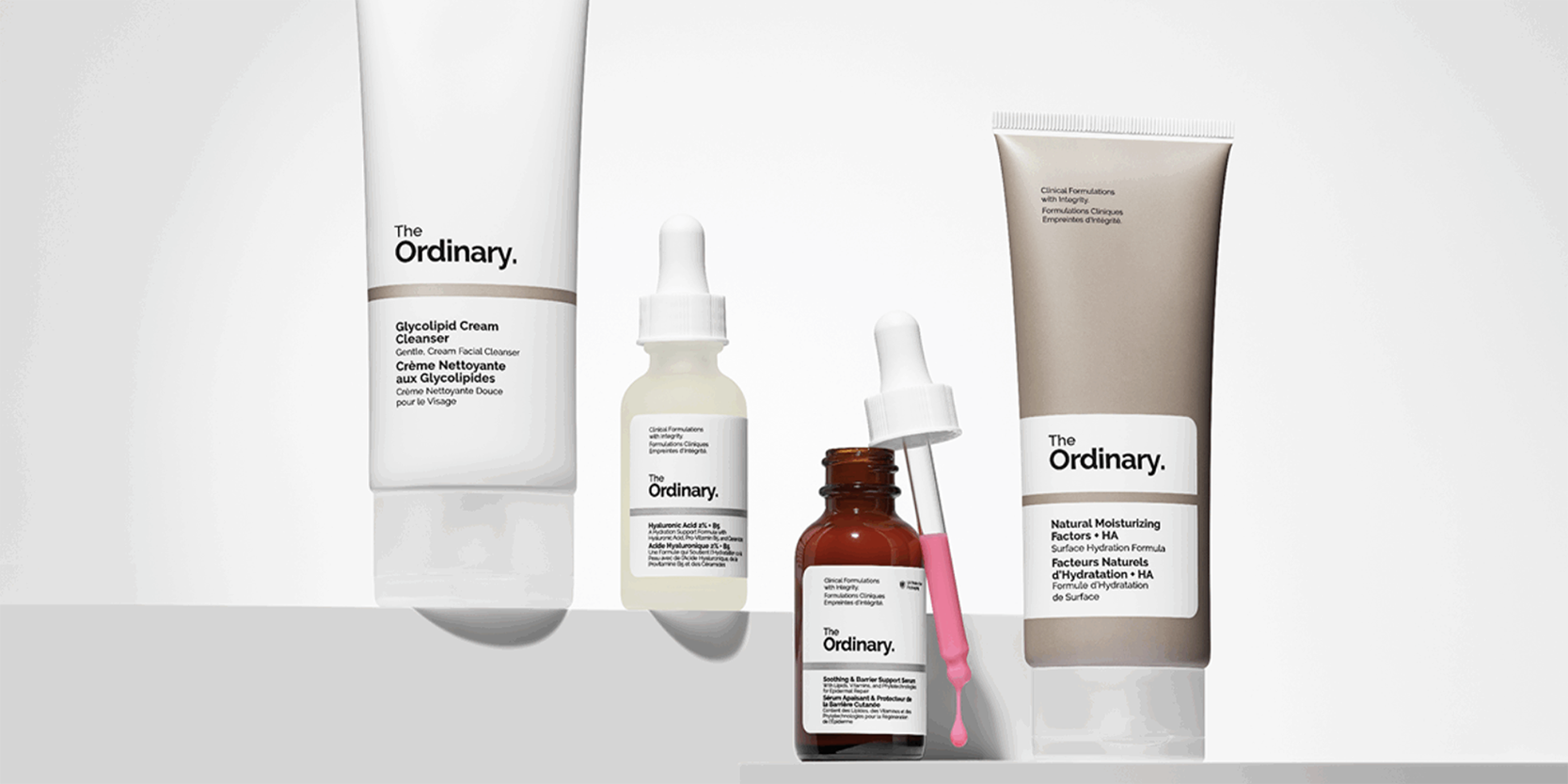
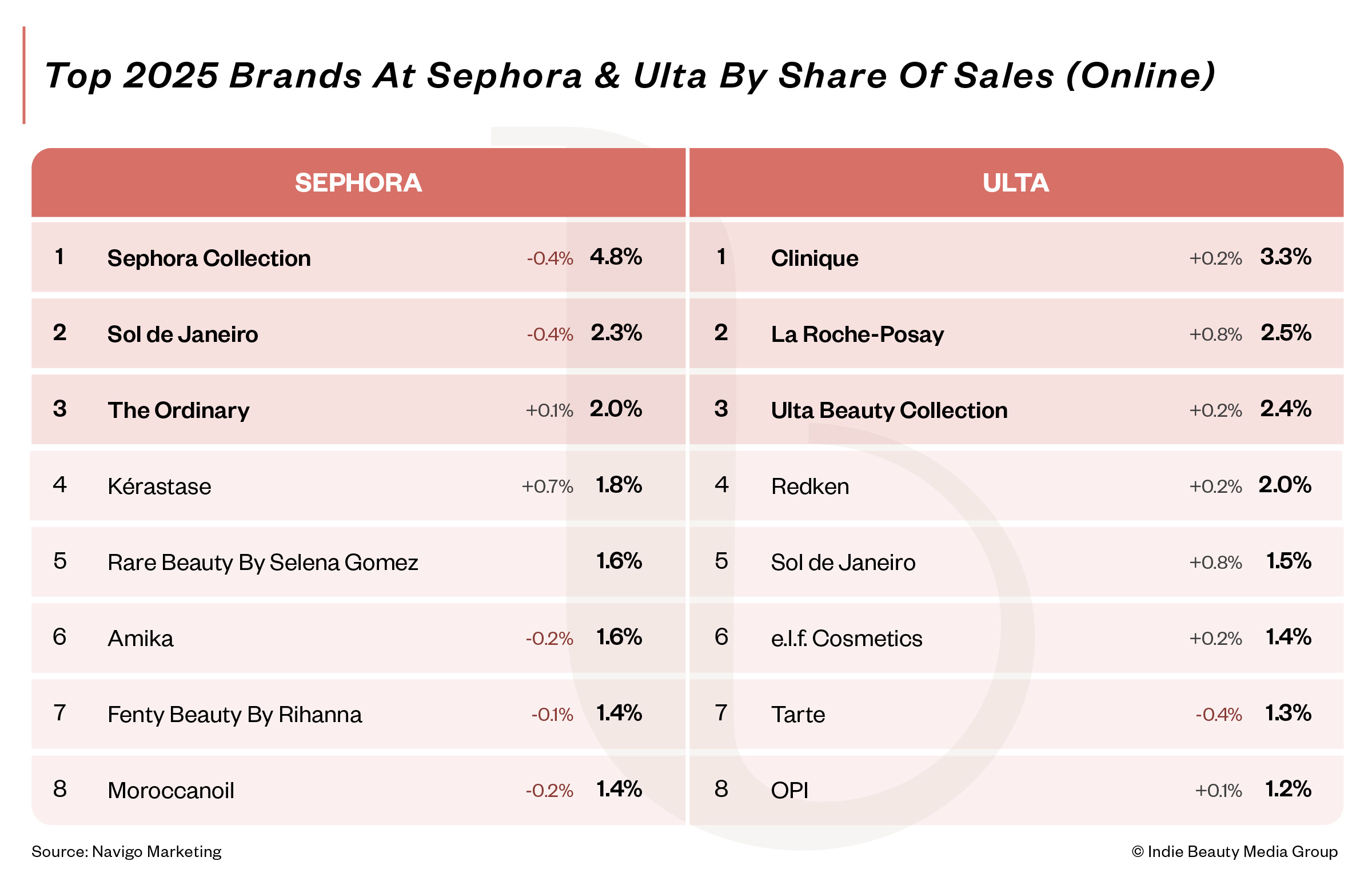
According to new data from beauty e-commerce agency Navigo Marketing, clinical skincare, body care and private-label brands dominated e-commerce sales at the nation’s top beauty specialty retailers. On Sephora’s website, Sephora Collection, Sol de Janeiro and The Ordinary took the top three spots, capturing 4.8%, 2.3% and 2% share of sales in 2025, respectively. On Ulta’s site, Clinique, La Roche-Posay and Ulta Beauty Collection were top performers, at 3.3%, 2.5% and 2.4%, respectively.
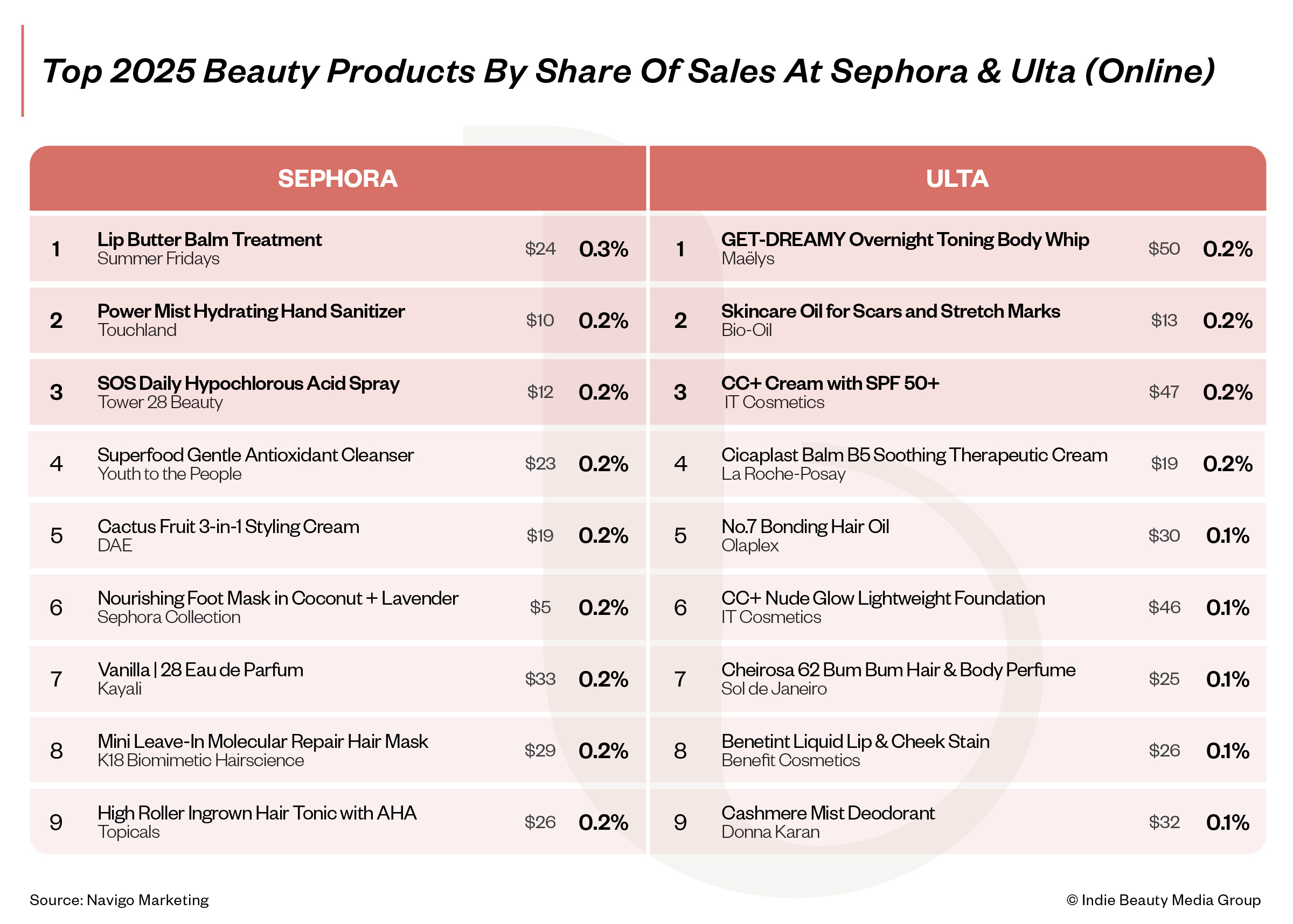
At the product level, Summer Fridays’ Lip Butter Balm, Touchland’s Power Mist Hydrating Hand Spray and Tower 28’s SOS Spray were online sales leaders at Sephora. On Ulta’s e-commerce platform, shoppers clicked “add to cart” on MAËLYS’ Get Dreamy Overnight Toning Body Whip, Bio-Oil’s Skincare Oil for Scars and Stretch Marks, and IT Cosmetics’ CC Cream with SPF 50+ the most.
Across retailers, body care rituals, scalp health, science-backed skincare and fragrance layering powered category momentum in 2025. Overall, categories at Sephora were far more concentrated than Ulta, with top brands typically controlling between 40% and 60% of online sales at the former. The top five skincare brands on Sephora’s site—The Ordinary, Sephora Collection, Glow Recipe, Laneige and Summer Fridays—command 52% of total category sales, for example. The Ordinary controls about 16.5% alone, with its Niacinamide 10% + Zinc 1% Serum and Glycolic Acid 7% Exfoliating Toner holding 3.7% and 2.5% share of sales, respectively.
Navigo’s data wasn’t validated by Sephora and doesn’t factor in sales from brick-and-mortar stores, apps or Sephora’s partnership with Kohl’s. The firm estimates that advertising activity on Sephora’s site declined by 37.2% in 2025, although the retailer refutes the decline. In contrast, Ulta increased online sponsorship investment by 36.4%, particularly in skincare, haircare and makeup.
“Looking at 2025 performance side by side, Sephora remained largely demand-led, with organic brand strength driving share, while Ulta leaned more heavily on paid visibility to fuel performance across a broader mix of brands,” says Meredith Matthes, account director at Navigo Marketing. “The gap between those models widened over the course of the year.”
Market research firm NielsenIQ approximates that e-commerce is responsible for 48% of beauty sales in the United States, and Amazon is the largest beauty retailer, with 22.7% of beauty market share. To enlarge its e-commerce operations, Ulta launched an invite-only marketplace last fall, and Sephora is anticipated to launch a marketplace soon. According to global investment bank TD Cowen, Amazon and TikTok Shop are expected to grow their beauty market share by 6% and 3% over the next seven years, respectively, and Sephora and Ulta’s market shares are expected to remain flat or decrease slightly.
Ulta’s online skincare assortment, which grew in size by about 11% last year, is more fragmented than Sephora and reliant on science-backed credibility. Clinique, La Roche-Posay and Dermalogica occupied the top three highest-selling skincare spots online at 9%, 8% and 4.7%, respectively. Products from La Roche-Posay’s Toleriane and Cicaplast were among the highest-selling items on the retailer’s site. To cut through the noise, skincare brands ramped up paid advertising on Ulta’s site by 58% over 2024, signaling aggressive competition.
Body care at Sephora is even more concentrated than skincare, with Sol de Janeiro commanding a 24% share of total sales in the category, followed by Sephora Collection at 11.4% and L’Occitane at 9.9%. Shoppers are gravitating toward fragrance mists, body oils and butters like Touchland’s Power Mist Hydrating Hand Spray, Sol de Janeiro’s Glowmotions Glow Body Oil and Sephora Collection’s Hand Balm with Shea Butter.
The size of Ulta’s online body care assortment increased significantly as the retailer introduced its new invite-only marketplace in the fall. The number of brands and products listed spiked by 39% over the previous year. Body care standouts at Ulta were more utilitarian and price-accessible than at Sephora, with the exception of Sol de Janeiro, which commanded the second top-selling spot in the category at 4.9%. Tree Hut was the best-selling body care brand on Ulta’s site, with 5.6% share of category sales, and Earth Therapeutics was the third, with 4.6%.
Makeup sales at Sephora were dominated by high-performance color and artistry brands. Sephora shoppers added Sephora Collection, Rare Beauty and Charlotte Tilbury to their carts with aplomb, while also snapping up Patrick Ta’s Major Headlines Double Take Creme & Powder Blush and One/Size On ‘Til Dawn Mattifying Waterproof Spray. The makeup product count on Sephora’s site tightened up considerably last year, falling by about 20%.
At Ulta, Tarte, OPI and E.l.f. performed the strongest online, grabbing 4.2%, 4.1% and 3.8% share of sales, respectively. At the product level, complexion dominated, with IT Cosmetics’ CC+ Cream with SPF 50+, Benefit’s Liquid Lip Cheek & Stain and Tarte’s Shape Tape Concealer winning over makeup shoppers at Ulta.
In fragrance, Sol de Janeiro dominated on Sephora’s site, grabbing 14.6% share of sales, followed by Kayali (14%) and Valentino (7%). Accessible prestige and niche blends saw momentum with customers, with top-selling products landing between $20 and $55. Donna Karan’s Born in Roma Eau de Parfum ($55), Carolina Herrera’s mini Good Girl Blush Elixir ($20) and Kayali’s Yum Boujee Marshmallow ($32) registered the strongest online sales gains during the period.
Besides Sol de Janeiro, which nabbed the second top-selling brand spot in fragrance, designer brands ruled the roost at Ulta online last year. YSL, Valentino, Dior and Chanel came in first, third, fourth and fifth place, respectively, with eau de parfum and body and hair mists seeing demand rise. Ulta expanded its fragrance assortment decidedly last year, with the number of brands climbing 37% and the number of products increasing by 30%.
Styling creams, hair oils, scalp health products and treatment sprays generated the most demand on Sephora’s site in haircare last year, a category that shrunk in size by both brand and product count. Kérastase, Amika and Dae were the strongest-selling brands in the category, grabbing 13.5%, 11.3% and 11% share of sales, respectively. Shoppers gravitated toward Dae’s 3-in-1 Cactus Fruit Styling Cream, Kérastase’s Genesis Strengthening Scalp and Hair Serum and Color Wow’s Dream Coat Supernatural Treatment Spray for their hair needs, among others.
Salon brands Redken (10%), Kenra Professional (4.2%) and Olaplex (3.8%) resonated the most with online shoppers at Ulta last year, who picked up Olaplex’s No.7 Bonding Hair Oil and No.6 Bond Smoother Frizz Control Styling Cream along with at-home DIY hair products like Madison Reed’s Radiant Hair Color Kit and Root Perfection Root Touch-Up Kit. Sponsorship activity was up in haircare by over 27%.
This story was updated on Jan. 27 to mention the channels that Navigo tracks and that Sephora hasn’t validated its data. The retailer refutes that its online advertising activity declined in 2025. The story was updated again on Jan. 28 to change “paid advertising” to “advertising activity.”


Leave a Reply
You must be logged in to post a comment.