
In over three decades in the beauty industry, including as group president of North America and Latin America at Kenvue and CMO at Elizabeth Arden, Kathy Widmer had access to some of the best facial skincare on the market, and it did its job, keeping her face looking youthful. The skin below her neck was another matter.
While she pushed for body care innovations in corporate settings, she encountered little appetite for elevating body care to the sophistication of facial skincare. Putting enough active ingredients into formulas to make them efficacious across the entire body was expensive, and the consensus was that consumers would balk at the required prices. Widmer’s face benefited from the industry’s attention to facial skincare. The rest of her skin hadn’t.
“It’s really about the ingredients,” says Widmer. “Most women I know are taking special care of their skin. They know the ingredients. They know the regimens. But body skin is a place where you can see damage, aging and sun exposure in a way that’s different from the face.”
Seeing body care finally begin to move beyond commodity status, Widmer teamed up with Barry Bruno, a former EVP, CMO and U.S. president at Church & Dwight whom she originally hired at Johnson & Johnson, to deliver facial-skincare efficacy to the category through what they call mini-molecule technology designed to help ingredients penetrate more deeply into skin without sending prices too high. The technology is at the heart of Dewsy, their new brand launching with two products: Down Deep Body Lotion and Down Deep HA Body Serum.
Dewsy arrives as longstanding consumer categories are being disrupted by brands promising better products, stronger design and sharper marketing. Grüns, Hello Products, Naturium, Olly and Poppi are prominent examples of challenger labels capturing share from incumbents.
“The future is smaller, faster disruptor brands,” says Bruno. “Kathy and I lived in big CPG being disrupted. It’s a hell of a lot more fun being on this side of it.”
“The future is smaller, faster disruptor brands.”
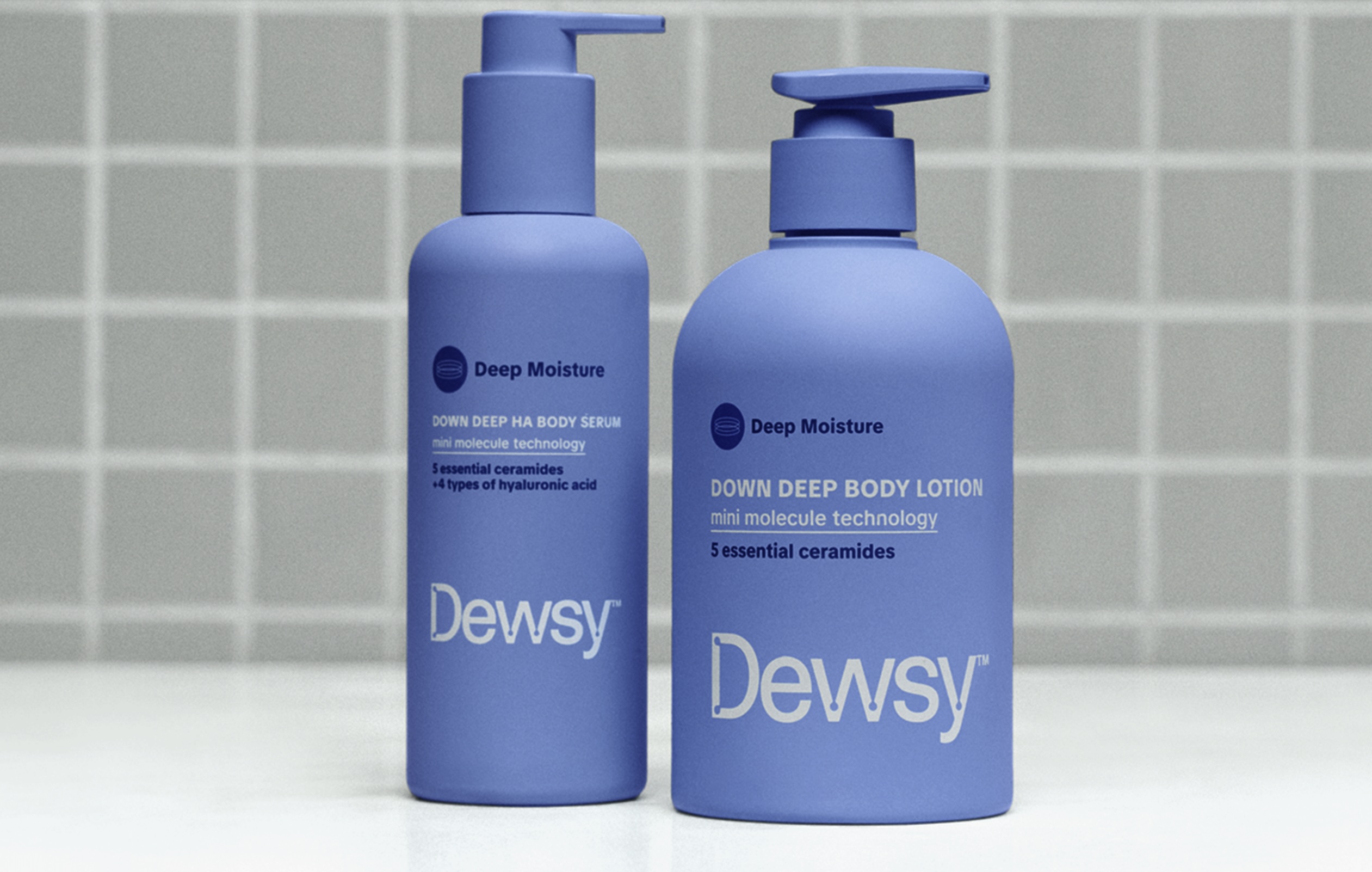
Focused on deep moisture, Dewsy’s debut products contain five ceramides, or barrier-supporting lipids that combat dryness. The serum also contains four types of hyaluronic acid. Both products come in fragranced and fragrance-free versions. The 7.8-ounce lotion is priced at $19.99 and the 8-ounce serum at $35.99, placing them in the masstige segment of the skincare market. At $2.56 per ounce for the lotion and $4.50 per ounce for the serum, Dewsy is priced above commodity body care, but below many prestige treatment brands.
“The idea is mini-molecule technology makes molecules smaller so that it brings ingredients where your skin needs them most,” says Widmer. Bruno adds, “Why haven’t other brands brought these ingredients to body before? Well, they could never get the ingredients at the right size where they need to be.”

Investors see potential in Dewsy’s body care positioning and proprietary technology, a source of scientific defensibility. The brand is oversubscribing a seed round originally targeted at $4 million, with participation from Widmer, Bruno, Scott Emerson, CEO of The Emerson Group, a consumer products sales and retail strategy firm providing infrastructure for Dewsy, and an as-yet undisclosed beauty investor. Emerson previously invested in consumer brands such as Papatui and Liquid I.V. For its partial 2026 launch year, Dewsy is projecting roughly $3 million in sales.
To reach that projection, Dewsy is starting with a digital footprint across direct-to-consumer, Amazon, TikTok and Walmart.com, with plans to pursue an exclusive retail partner after establishing traction online. The strategy is reminiscent of challenger brands such as TheraBreath and Hero Cosmetics, which built meaningful e-commerce businesses ahead of being acquired by Church & Dwight.
“The skinification trend is real.”
Bruno and Widmer believe the timing is right for Dewsy. Data from predictive commerce intelligence platform Daash, cited by Global Cosmetic Industry, shows U.S. bath and body sales rose 23% year over year from June 2024 to June 2025, versus 4% growth for facial skincare. Data from market research firm Circana from the third quarter last year shows masstige skincare sales, in particular, increased by 14%, making it the fastest-growing segment of the category.
Dewsy is targeting millennial and older gen Z women devoted to skincare and wellness routines. For body care, they may currently rely on mass-market staples such as Aveeno, Hempz, Lubriderm, Eos, Tree Hut and Vaseline, but are open to trading up. Their universe of options has widened in masstige body care, with entrants like Ontu, Being Frenshe, Naturium, Saltair and Prequel, but Dewsy maintains that the category’s upgrade cycle remains early.

“The skinification trend is real, and it’s super logical,” says Widmer. “When you consider the really strong understanding women have about facial skin and how easy it is to translate that into body regimens, it’s not a leap.”
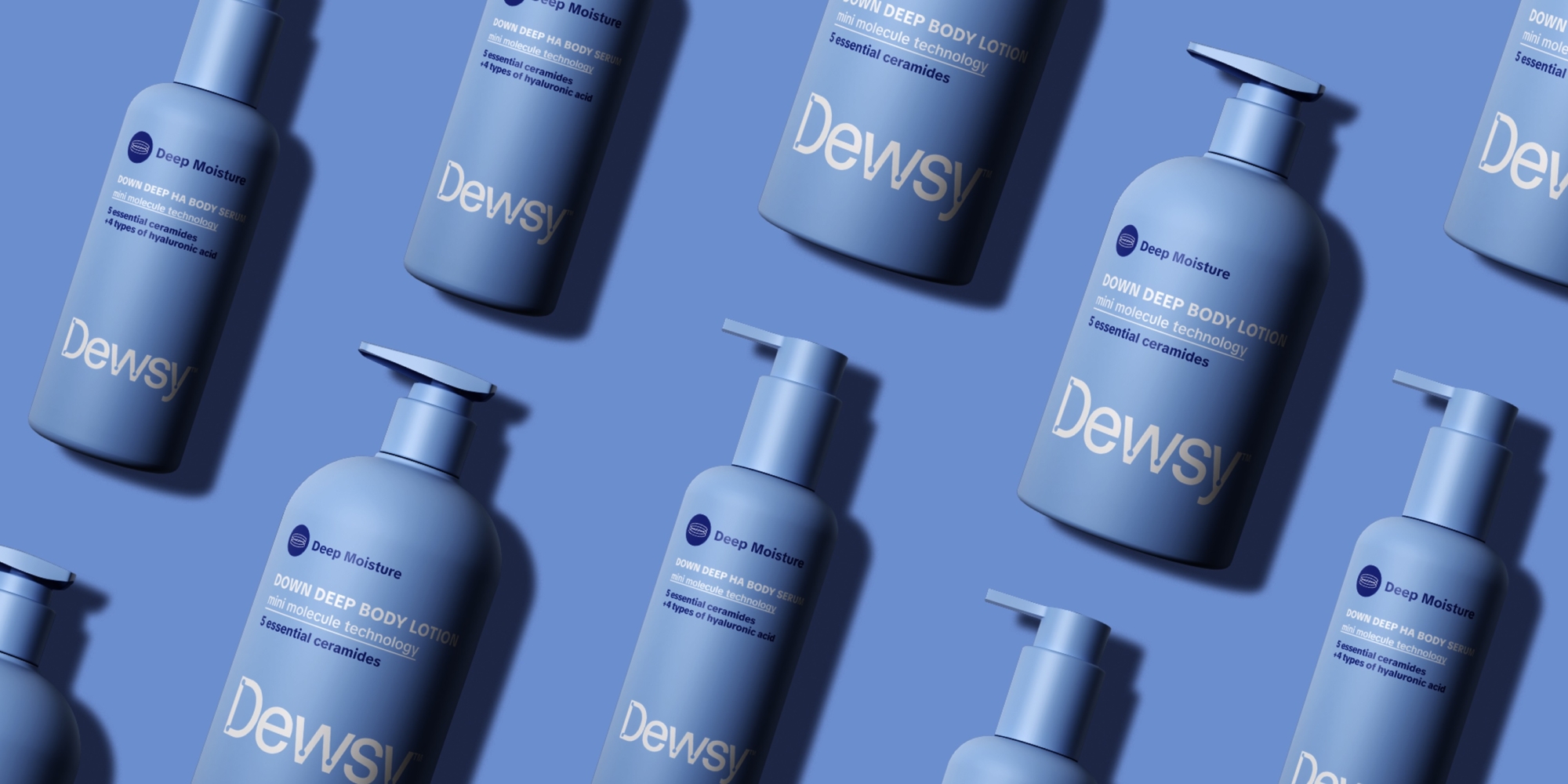
Beyond the initial body lotion and serum, Dewsy has roughly half a dozen additional products in the pipeline spanning firming, sun care, cleansing, everyday moisture and tone-and-texture concerns. The products are expected to feature the brand’s mini-molecule technology. They’re packaged in soft-touch light blue bottles that spotlight their purpose—deep moisture—ingredients and technology. Widmer conceived the name, a riff on “doozy” and dewy.
To raise awareness, Dewsy has enlisted content creators aligned with its core demographic. The brand is leaning on paid search and TikTok, which it views as having a halo effect on its other channels. A prominent search presence could assist Dewsy’s discoverability as large language models increasingly become the gateway for beauty purchases.
Bruno figures the brand’s marketing spend as a percentage of sales is multiple times higher than what would be typical inside a large public consumer packaged goods company. “A startup brand needs to be invested in. It needs oxygen,” says Bruno. “As it ramps up, we get to more moderate numbers that allow for profitability.”