
Habitat Partners On Valuation Discipline, Founder Dilution And The State Of Play In Consumer VC
Early in its history, Red Antler began routinely participating in equity-for-services arrangements with select clients, notably Behance, the platform for creative professionals that was acquired by Adobe in 2012 for over $150 million. The experience, largely a byproduct of client work rather than a formal investment strategy, helped shape how the New York branding agency thought about long-term value creation beyond fees.
Founded in 2007 by Emily Heyward, J.B. Osborne and Simon Endres after they left major advertising agencies like Saatchi & Saatchi, Red Antler would revisit that idea more deliberately about a decade later. In 2019, the agency began writing $50,000 to $100,000 checks into client companies, ultimately committing about $6 million from its balance sheet across roughly 65 brands such as Topicals, Saie, Cake and InnBeauty Project.
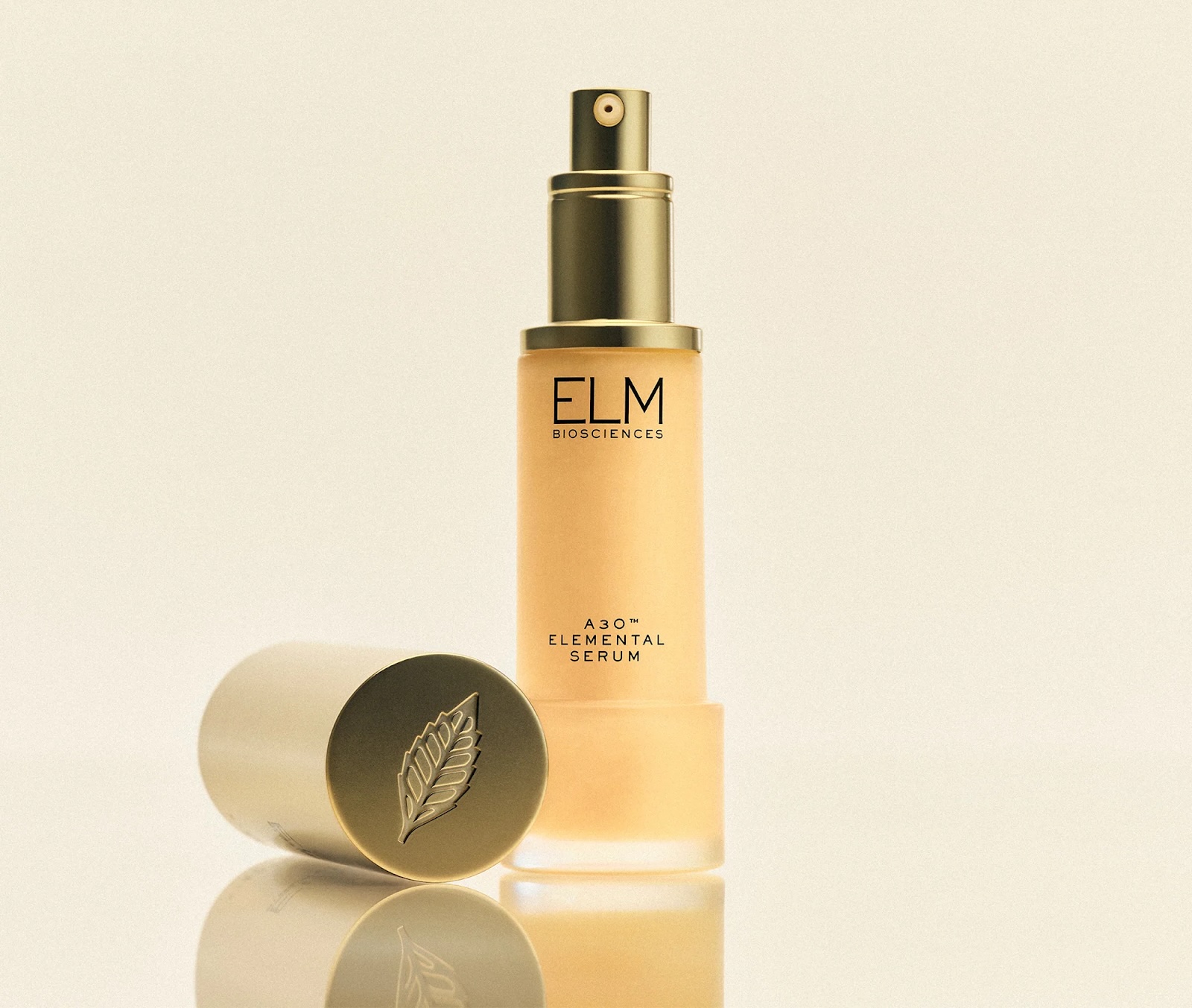
About three years later, growing more confident in its investing capabilities, Red Antler launched Habitat Partners as a distinct venture capital firm with an initial $31 million fund to back both client and non-client companies. Today, Habitat Partners invests in consumer brands, primarily in beauty, food and beverage, as well as B2B software startups and frontier technology companies. To date, it has invested in 28 technology companies and 21 consumer brands, including Hetal Retail, Damdam Tokyo, father-and-daughter influencers Jordan and Salish Matter’s Sincerely Yours and Martha Stewart’s Elm Biosciences.
According to Habitat Partners partner Daniel Faierman, 25% to 35% of the firm’s investments are in pre-launch companies, while 65% to 75% are seed-stage businesses generating roughly $2 million to $7 million in annual revenue. Habitat Partners typically invests about $500,000, though recent beauty investments have climbed closer to $600,000, and the firm maintains flexibility to size checks up or down to fit alongside other investors.
Habitat Partners managing partner Blake Lyon, who is also a partner and chief business officer at Red Antler, says the firm’s investing approach is closely tied to Red Antler’s embedded position inside venture-backed innovation cycles. Red Antler is widely recognized for defining the look and feel of direct-to-consumer pioneers such as Casper, Allbirds and Glossier. “We’ve always shifted with where innovation is going,” says Lyon. “Nine years ago, about 25% of our work was B2B. Today, it’s closer to 50%, and many of the companies we’re working with now have an AI component.”
Beauty Independent spoke to Lyon and Faierman about founder dilution, secondary transactions, a big trend they’re betting on and the state of play in consumer VC.
What do you look for in startups?
Faierman: The most important thing to me is that you’re solving a genuine consumer need that is largely unsolved by the competitive landscape, being extremely confident that it’s a huge opportunity and being able to communicate that in a compelling manner.
I see so many entrepreneurs who may have something come about in their own lives, and it becomes a problem that they want to personally solve, but they don’t realize that either the problem isn’t that big and it’s really only an acute problem for their inner circle or there are 10 other competitors who have been solving this problem for several years and they’re just not aware.
In a recent LinkedIn post, for pre-launch investments, you wrote you look for product, distribution and founder moat, gross margin, brand and product differentiation, and valuation with the median target of $5 million post-money. Is that long list of requirements realistic?
Faierman: In one month, we may look at 40 to 50 prospective beauty/personal care deals and maybe five of those deals make it to a real diligence process, maybe one or two gets to the point where we’re going to the investment committee and making a decision.
Valuation is a major factor from the top to the bottom of the funnel. We’re very disciplined about trying to balance out the premium multiples we’re having to pay for on the technology side with very, very fair multiples on the consumer side. Pre-launch, there’s not really a multiple because there isn’t revenue, but what we’ve found is that we have been able to do deals anywhere from $5 million to $12 million post-money.
$5 million to $8 million is a standard place where we like to start discussions. We’ve broken valuation parameters in certain rare cases, and we’ll likely continue to occasionally break rules in very unique circumstances in the future, assuming we are confident we can still hit our target MOIC [multiple on invested capital]. Depending on round size, we also want to be respectful of the level of equity that the founder is giving away and not get to a point where there’s so much dilution before they’ve even launched the business and they’re not motivated.
A lot of it also comes down to round size. If it’s a $2 million or $3 million pre-seed round, it would be very hard to get a deal done at $5 million post. But if it’s a $1 million round, it is honestly quite feasible, and we’ve seen opportunities that fit that criteria.
What about the criteria moving up the chain?
Faierman: Broadly speaking, we’ve seen anywhere from three to five times sales. That’s usually what we look for once a company is post-launch from a valuation perspective. What’s amazing about beauty and the reason why we’re excited about it from a financial perspective is that inherently it’s one of the highest gross margin categories within all of CPG.
In certain cases in beauty, because those businesses tend to be more capital efficient than food or beverage, we may be willing to pay a slight premium multiple compared to another category because we don’t expect the dilution during the life cycle of our investment to be as extreme as it might be for a food and beverage investment. There are a few deals that we have done in beauty and personal care in our past where we’ve definitely paid a slight premium on valuation and we’ve been able to get comfortable knowing that the dilution will be less impactful.
If you are an early-stage beauty and personal care brand, what do you think you should know about the state of play in VC right now?
Faierman: Investors are doing a really good job diligencing that unit economics are set up to work really effectively on DTC out of the gates. Even if it’s a pre-revenue company, we’re starting to forecast what an AOV to CAC dynamic and an LTV to CAC dynamic is going to look like, if reaching first-order profitability on DTC is really possible. As a founder, you should try to show a really clear path to first-order profitability, essentially scalable unit economics on DTC that are sustainable and also, from a price architecture perspective, will translate to a solid gross margin when you leap into a retailer like an Ulta, Sephora or Credo.
The second thing, and this is less tactical, is building relationships with investors early and continuing to communicate even when you’re not raising. Given that we are pre-seed investors, I would hope they’d approach me at the pre-seed stage. If I did pass on them, I would hope that we’ve been able to keep some kind of relationship so I can get comfortable with the business as it gets to the point where it might be attractive for a seed-stage investment.
One of the tough parts of the job for both the founder and the VC is just that we’re constantly getting rejected and that’s disheartening. We both have to try to find a point of empathy where we can still maintain a solid relationship if the first interaction ended in a pass because there’s a chance that we can potentially pick back up at the seed stage.
Lyon: The middle has fallen out with regard to funding. I think there’s available capital for pre-launch companies that are telling an amazing story, and they have distribution advantage or a moat around their product. The seed-to-series A investor has gone more upmarket these days.
The amount that a company needs to prove from their launch and that first initial bit of capital that they get is tremendous compared to what was happening in the past. You will see funds on the later stage side that used to be writing $5 million to $10 million checks into companies, and now maybe they’re only writing one check a year for $40 million when a company has proven that they’ve broken out.
Founders need to be wise about that because, 12 months after launch, they’ll not automatically be able to raise the capital that they thought they would and then, 12 months later, raise capital again. It’s not happening in that programmatic way that I think it had been before.
Faierman: We’ve been pushing our founders in the early stage, even if it means there’s a little more dilution upfront, to raise large amounts, knowing that they’re going to have to really progress to be a healthy series A company from post-launch until the time that they’re ready to raise. It’s going to be very hard to raise capital in between.
It just feels more binary, and people get stuck in this in-between phase where they’re not quite at the traction level where people want to fund them, but they’re also not early enough where it’s a super enticing valuation to get in at.
In 2025 beauty M&A, there were a few blockbuster deals, but overall deal volume was down. What do you make of it?
Faierman: There’s been more pressure for businesses to be capital efficient throughout their growth journeys, and there’s just more profitable, sizable assets to choose from for strategics. They’re spending more time looking at the landscape of acquirable assets because there’s more of them. I won’t mention names, but there’s been several assets that have been out there trying to sell within the beauty personal care space for a while.
The list is growing on a monthly basis, and that shows the quality of the entrepreneurs who have built over the last few years because of the pressure to have real EBITDA margins when you’re going to exit. So, there’s more sellable assets, which makes it harder for strategics to choose, which delays the time it takes to acquire an asset.
The bar has risen. It used to be that there were a lot of acquisitions that could happen between the $50 million to $100 million sales range, and it seems like strategics want more proof points that this brand is going to have a sustainable life for 10- to 15-plus years. Waiting longer for brands that are bigger and have more awareness de-risks the potential that a post-M&A integration is a failure.

What about celebrity brands?
Faierman: We’ve invested in two brands over the last year in the beauty space that have celebrity or creator attachment. We always diligence businesses for their core fundamentals, and that starts with the founder, and it goes into economics and velocities that make a business attractive.
The celebrity is one piece of the diligence, but we really try to close our eyes and imagine, would we want to invest in this business if the celebrity never existed? Then, we’ll assess the impact and fit of the celebrity after we’ve gone to a point where we’re excited about the fundamentals of the business excluding the celebrity.
With Elm Biosciences and Sincerely Yours, we believe that the celebrities are highly authentic for the products being sold, but we also believe that the products are incredibly high quality and they’re solving a real consumer problem that can stand on their own feet. In the case of Salish, we’re extremely excited about her resonance within the gen alpha audience. She’s been speaking to that audience almost her whole life. In the case of Martha, we believe she’s a great pioneer for what healthy anti-aging looks like.
As an investor, I think you have to be really careful that, if a celebrity brand does go from zero to $10 million, you have to really snip out if non-core followers are going to convert after the core followers are tapped out. We felt confident enough in that the product quality was high enough that non-core followers would eventually be buying the product who may have no association with Martha or Salish.
What should founders consider about the rise of secondaries?
Faierman: With the threshold for brands higher and it taking more years to reach that sales threshold, the goalpost potentially keeps moving. As long as the structure is still incentivizing the founder long term, I’m supportive of them finding liquidity before they reach an exit. People have put their blood and sweat in these businesses for five-plus years, and they haven’t reaped rewards from it.
We aren’t supportive of a founder completely selling out. The structure needs to be thoughtful in terms of the incentives that get set for the future of the business from a founder and investor perspective. But because these businesses are more profitable than ever, there’s less need for primary capital.
A lot of times what we’re seeing is, when growth equity investors get involved and they have a certain check size minimum, the only way for deals to get done because these businesses don’t need that much primary capital is through a mix of primary and secondary. I think it’s a healthy thing for founders to be able to achieve, whether that’s five years or seven years in, as long as it’s still the right incentive structure for the long-term trajectory of the business.
What is the right amount of dilution that a founder should expect to experience throughout the life cycle of building a business?
Faierman: The average equity purchase for an investor for a round is somewhere between 15% to 25%, with 25% on the high side, 15% probably on the low side. If you imagine that a founder is raising three to four rounds—beauty businesses are more capital efficient, and they probably don’t raise as many rounds as your average food or beverage brands—you’re probably giving away somewhere between 60% to 80% of your business. So, most founders probably end up somewhere between 20% to 40% with a healthy outcome.
How do you think of distribution when you’re evaluating a brand?
Faierman: Long term, we’re bullish on omnichannel brands. When brands can prove performance across multiple distribution channels, it becomes de-risked in the eyes of strategic acquirers.
To the extent that brands that we invest in are 100% DTC for several years, we’re supportive of that model as long as the unit economics work because they’re able to then build strong brand awareness before they get on shelf and feel the pressure to perform velocity wise.
We have several investments that are right now 100% DTC, and we don’t necessarily feel like there’s any pressure to quickly get to retail. We are thinking about retail out of the gate, and at some point it has to happen, but it’s not the kind of thing where we are like, “Hey, we’re not investing unless you’re in Sephora in a year.”
When the brand awareness is right and we feel confident that we can go execute Sephora, Ulta or another retailer from a balance sheet perspective, we are supportive of that, but it can be in DTC for up to three to five years in our opinion.
What are big trends you’re bullish on?
Faierman: I’m a new dad. Blake is a new dad. We’re both constantly thinking about infant formulas, smoothie pouches and bathtime products. There’s a lot of momentum across all verticals within CPG surrounding kids’ health, and it’s a space that we will continue to be super focused on into the future.
We’re investors in a kids’ beverage business called Roxbury Fizz. That’s a low-sugar version of soda for kids specifically with unique fun flavors. On the beauty side, we’ve been obsessed with the idea that gen alpha is controlling a large portion of their parents’ spend and that led to our investment in Sincerely Yours.


Leave a Reply
You must be logged in to post a comment.