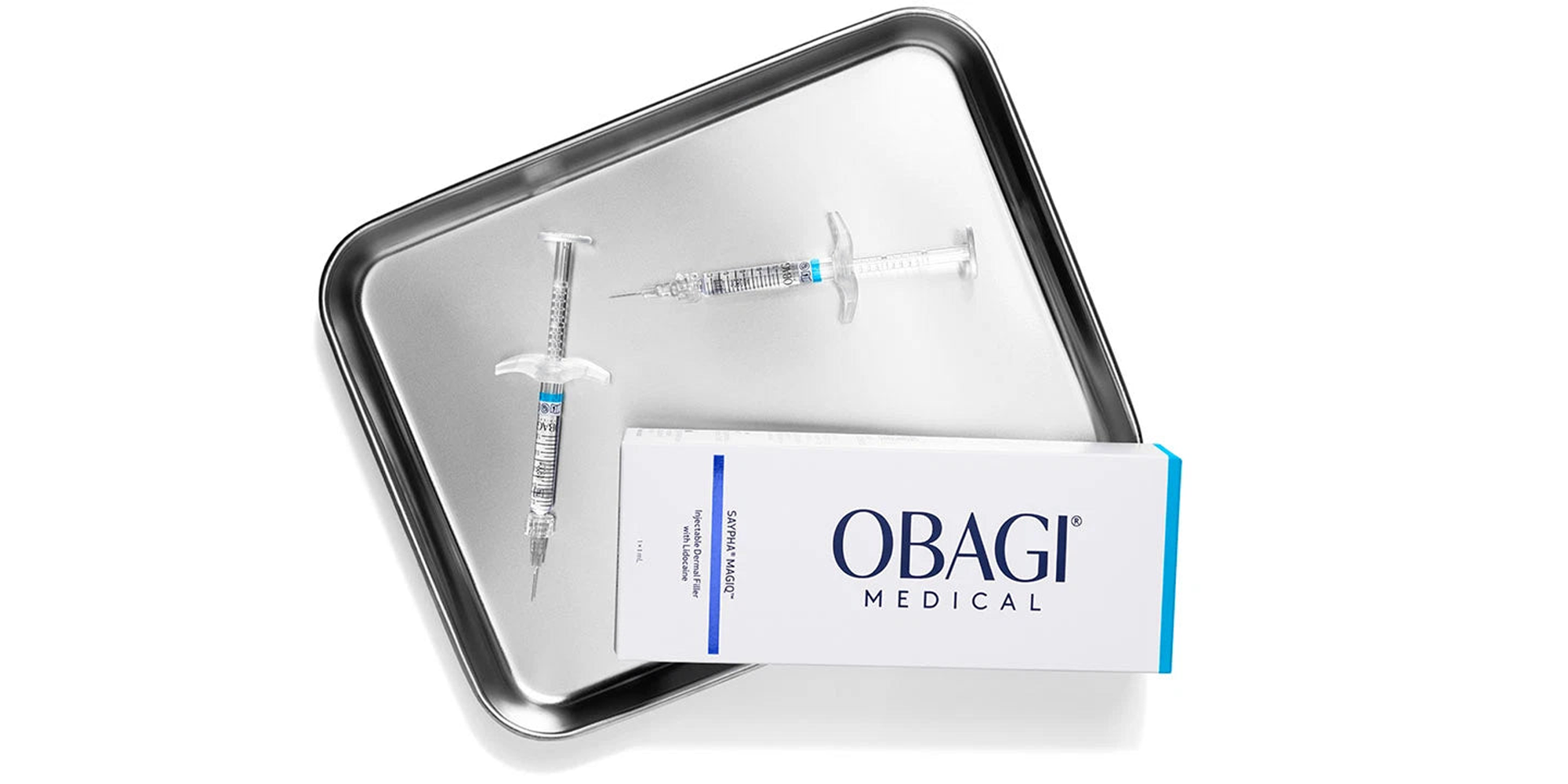
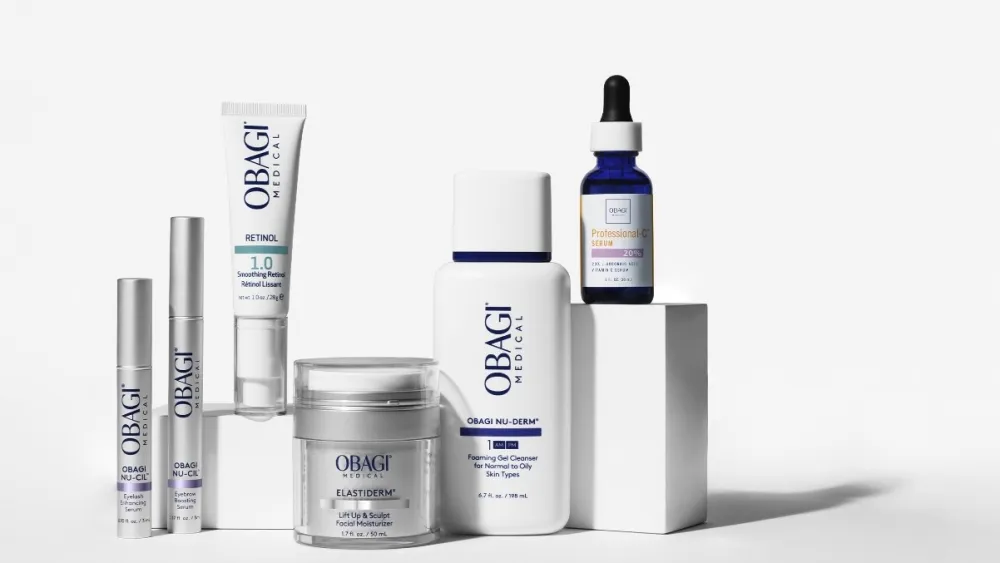
Waldencast has sold Obagi Medical, the 38-year-old professional skincare brand founded by dermatologist Zein Obagi, to private equity firm Bridgepoint Group for up to $460 million as the lines between beauty, aesthetics and wellness continue to blur.
Based on Obagi’s 2025 results, the deal represents a 2.8X multiple on the brand’s $161.6 million in sales and a 23.7X multiple on its $19.4 million in adjusted earnings before interest, taxes, depreciation and amortization (EBITDA). Although the multiples trail many high-profile skincare acquisitions in recent years, including Medik8, Skinbetter Science and Paula’s Choice in the 7X to 8X sales multiple range, the deal illustrates Bridgepoint’s belief that businesses at the intersection of skincare and aesthetics have significant room for growth.
Michel Brousset, co-founder and CEO of Waldencast, who is exiting the company to become CEO of Obagi at Bridgepoint, argues that Obagi, with its heritage in physician-dispensed skincare, can become one of the few consumer-recognized household names in aesthetics, following a path blazed by Botox in a segment largely populated by little-known pharmaceutical brands. That ambition moved closer to reality in the first quarter with the launch of Obagi Saypha MagIQ, a hyaluronic acid dermal filler that Waldencast estimates effectively doubles the brand’s addressable market.
“We think of our approach as fundamentally rooted in what consumers want: the medical credentials, professionalization and clinical evidence that comes from Obagi,” says Brousset. “The reason why doctors not only recommend, but also sell Obagi is not because they saw it on TikTok. They do it on the basis of the performance of the product, clinical testing and that it fundamentally makes a difference. Now, it’s increasingly becoming a household name.”
Along with Brousset, Waldencast co-founder and chief growth officer Hind Sebti is departing the company for Bridgepoint, where she will be chief growth officer of Obagi. After the sale, Milk Makeup will be Waldencast’s sole operating brand, and Brousset says the company will be able to focus its attention on it. Waldencast completed its acquisition of Milk Makeup in 2022 through a SPAC merger that raised $345 million and valued the combined company at around $1.2 billion. Board chair Felipe Dutra will guide Waldencast, while Mazdack Rassi, who rejoined Milk Makeup in 2025, oversees the brand.
Shareholders reacted positively to Waldencast’s transaction, sending the stock up nearly 49% to $1.83 and lifting its market capitalization to around $230 million on Monday. Prior to the announcement, Waldencast’s market capitalization was around $160 million, far below the $460 million Bridgepoint is paying for Obagi alone. Waldencast plans to use the proceeds to repay approximately $178 million of senior secured debt. The sale, which consists of $366 million in cash at closing, $30 million in vendor notes and as much as $64 million in earnout payments linked to 2026 and 2027 revenue milestones, culminates a strategic review Waldencast initiated last year to unlock shareholder value.
Headquartered in London, mid-market private equity firm Bridgepoint Group has $94 billion in assets under management. At the firm, Obagi enters a portfolio with RoC, a mass-market skincare brand acquired in 2024 for approximately $500 million, and Laboratoires Vivacy, a French medical aesthetics company acquired in 2023 for approximately $830 million. Brousset says Laboratoires Vivacy will maintain its own separate team, but Obagi is working on synergies with it.
Brousset characterizes Obagi as one of the fastest-growing professional skincare brands in the U.S. Under Waldencast, its net sales rose 8.3% last year. However, adjusted EBITDA declined 36.3%, with EBITDA margin contracting from 20.4% to 12%. Waldencast attributed the profitability decline in part to investments in Obagi’s injectables platform, including approximately $5.3 million in launch-related expenses for Saypha MagIQ. The company reported adjusted EBITDA would have been approximately $24.7 million, a decline of about 19%, excluding those investments.
“This is not a trend. This is a fundamental shift.”
To drive growth, Brousset outlines Obagi has been pursuing a three-pronged growth strategy: leaning into its medical DNA, revving up innovation and expanding its footprint both geographically and in terms of product reach. In the past year, he says the brand’s sales due to new products jumped from a low single-digit percentage to a percentage in the mid-teens. He lists scalp care, longevity and injectables as areas of innovation for Obagi.
In November, Obagi sold the trademark for Obagi Japan to its longtime partner in the country, Rohto Pharmaceutical Co. Ltd., for $82.5 million, using $77.5 million of the proceeds to pay down debt. Currently, roughly two-thirds of Obagi’s revenue comes from the U.S., leaving considerable runway for international expansion. Outside of North America, the brand has established a presence in the Middle East, Asia and Europe. Globally, it sells through dermatologists’ offices, aesthetics practices and other professional outlets.
Brousset stresses that Obagi’s growth strategy will remain unchanged under Bridgepoint and points out the brand will benefit from the firm’s expertise in aesthetics and skincare as well as access to technologies developed by portfolio companies, particularly Laboratoires Vivacy. He also expects Bridgepoint’s capital and network to facilitate dealmaking, with growth for Obagi potentially fueled by licensing agreements and acquisitions.
Obagi’s deal with Bridgepoint comes as consumers’ beauty routines extend beyond traditional skincare into aesthetics, prompting skincare companies to push deeper into aesthetics through innovation and acquisitions. Last year, L’Oréal Groupe doubled its stake in Galderma, the maker of Restylane and Dysport, to 20%.
In a Boston Consulting Group and Women’s Wear Daily survey, about 15 million Americans qualified as “optimizers,” highly engaged beauty consumers who spend roughly $3,000 annually across the beauty ecosystem and are among the earliest adopters of aesthetic treatments and longevity products. Brousset identifies optimizers as Obagi’s core demographic and maintains the adoption of professional skincare and aesthetic services will accelerate.
“This is not a trend. This is a fundamental shift,” he says. “There’s a lot of information today in the hands of consumers, and they very clearly understand the difference between performance-driven products and those that aren’t. They want to optimize their skincare and aesthetics, and we will see more and more consumers gravitating toward technologies that deliver better outcomes.”
With Obagi’s future unfolding under Bridgepoint, Waldencast’s future is now tied to Milk Makeup. The brand generated approximately $110.4 million in sales in 2025, down 11.4% year-over-year. Adjusted EBITDA fell 44.5% to $9.6 million. Brousset ascribes some of the pressure to difficult comparisons against 2024, when Milk Makeup was propelled by the success of the breakout beauty launch Cooling Water Jelly Tint Lip + Cheek Blush Stain.
Available at Sephora and Ulta Beauty, Milk Makeup is looking ahead in a challenging environment for prestige makeup. According to Circana, makeup was the slowest-growing prestige beauty category in the first quarter, with sales up just 2%. Beyond a limited pool of buyers, the category’s sluggishness has weighed on dealmaking activity.
Still, Brousset is bullish on Milk Makeup’s prospects. “It is a brand that is extremely unique, and real brands stand for something. They aren’t built on influencers,” he says. “It’s a real brand, not just a collection of products with a name. It’s a brand that has tremendous potential for growth.”
Click here to secure Early Bird tickets to Dealmaker Summit happening November 9 & 10 in London.

Leave a Reply
You must be logged in to post a comment.