
Beautyspace is entering Belk in another example of the shop-in-shop model that has become a defining feature of beauty retail as brick-and-mortar players try to drive foot traffic and excitement in the face of e-commerce pressure, although success is hardly guaranteed, with strategy, positioning and operational complexities factors in the outcomes.
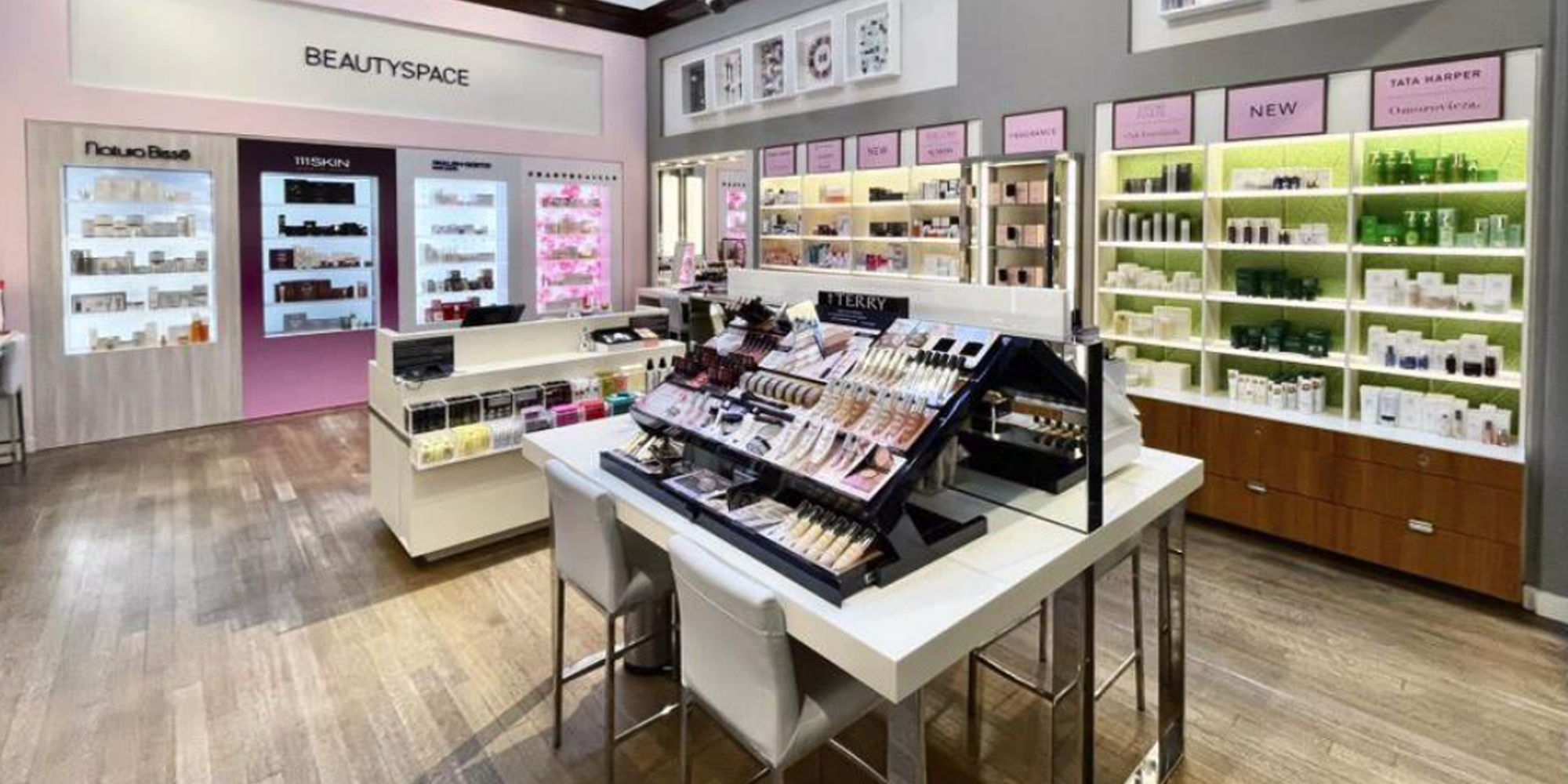
Earlier this week, Beautyspace, an outgrowth of Space NK’s former U.S. business, planted prestige shop-in-shop installations in five Belk locations across the Southeast and on the department store retailer’s website, with plans to expand to an additional 100 Belk doors. The online assortment contains brands such as Oak Essentials, Indie Lee, Blossom Essentials, Briogeo, Verb, Floral Street and Monday. The Belk partnership adds to Beautyspace’s growing list of wholesale relationships, which includes shop-in-shops at Walmart, Bloomingdale’s, Nordstrom, Nordstrom Rack and Macy’s.
Elsewhere in the beauty landscape, Violet Grey is expanding internationally for the first time through a limited-time pop-up with British department store Harvey Nichols featuring 26 brands from its assortment. The e-tailer, which operates a store in Los Angeles, opened a shop-in-shop at Long Island retailer Hirshleifers in 2024.
While shop-in-shop partnerships are hardly new to retail, they’ve been accelerating since the pandemic as beauty retailers try different tactics to spark growth and attention in a competitive and fragmented environment. Sephora and Ulta Beauty almost simultaneously announced their partnerships with Kohl’s and Target, respectively, in 2020. Sephora previously partnered with J.C. Penney on a shop-in-shop agreement that lasted about 17 years. In the fall of 2021, J.C. Penney replaced Sephora with a shop-in-shop partnership with inclusive beauty retailer Thirteen Lune that landed in 10 pilot locations.
While shop-in-shop partnerships are typically framed as win-win growth drivers, their viability often hinges on the alignment between the retailers’ business models and customer bases. Mutually beneficial economics and a diversified assortment that allows shoppers to discover new brands without cannibalizing either retailer are just as critical. Neil Saunders, managing director of retail at GlobalData, says, “A shop-in-shop cannot really work if it completely jars with the host concept, and both parties need to bring something to the table that the other would struggle to create alone.”
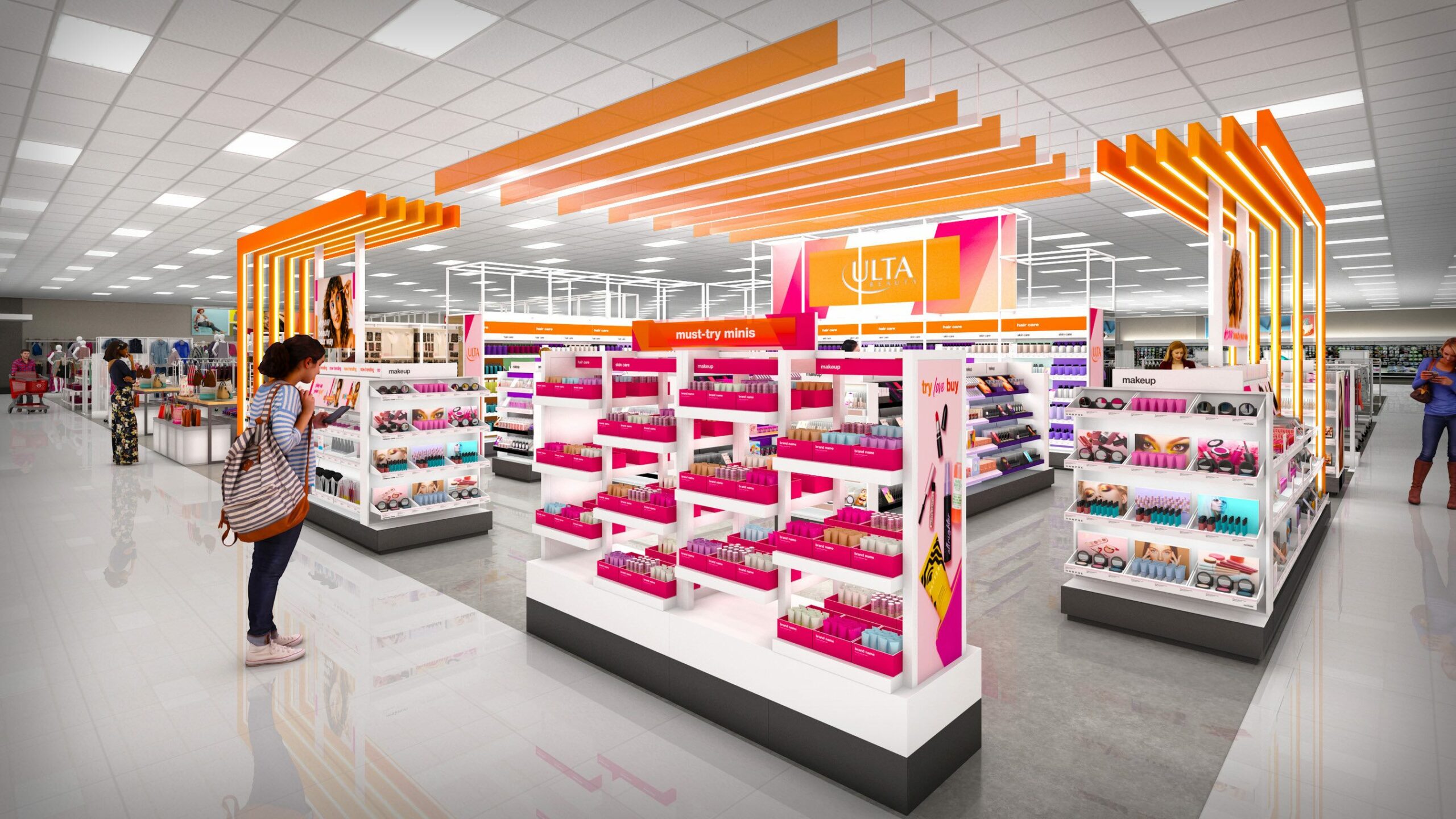
At their best, shop-in-shop partnerships should unlock incremental sales and new customer acquisition for the retailers involved. The host retailer usually controls the customer relationships and foot traffic, giving it a structural advantage. For the incoming partner, the upside comes from access to new revenue streams at a lower cost than it would get opening its own store. Julie Garza, owner and founder of consultancy Belleza Brands, says, “This takes time, especially if the brand and assortment are not recognized and price points are not aligned with customer spending habits.”
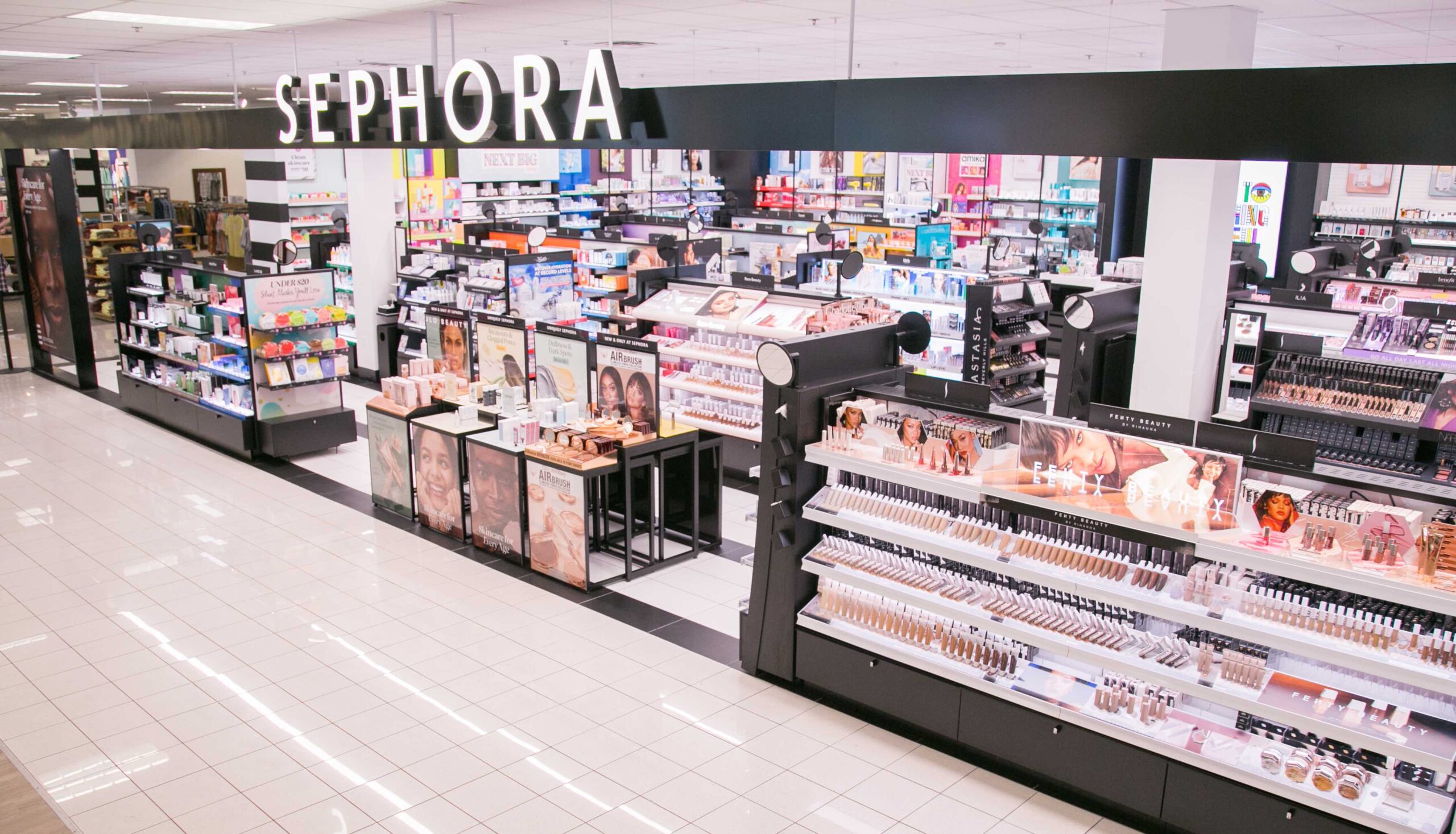
The divergent outcomes of Sephora’s partnership with Kohl’s and Ulta Beauty’s soon-to-be-over deal with Target underscore just how fragile the balance can be between retail partners. Sephora at Kohl’s has largely been successful because it’s expanded both retailers’ reach in impactful ways. Kohl’s has gained credibility in prestige beauty, a category it effectively exited after partnering with Sephora. Meanwhile, Sephora has gained access to off-mall locations, an area where it lacked a presence, and a more value-oriented customer. Crucially, the partnership appears to align on shopper mission and execution.
“Kohl’s has supported the partnership aggressively with exterior signage, front‑of‑store placement and integrated marketing, while Sephora executed with the discipline of a retailer that had already spent a decade perfecting the shop‑in‑shop model inside J.C. Penney,” explains Lane Barrocas, a beauty and retail strategy advisor. “Education, sampling, storytelling, and visual standards were protected. The result was a partnership where the operational model, shopper mission and economic incentives were aligned and the performance reflected it.”
Across multiple earnings periods, Kohl’s has credited Sephora as a key driver of traffic, margin and even stock performance. The partnership, which extends across Kohl’s full fleet of over 1,000 stores, was projected to hit $2 billion in sales last year. However, growth appears to be moderating. During Kohl’s recent fourth quarter earnings, it disclosed Sephora’s business there grew 2%, with same-store sales improving to flat.
Profits from the Sephora and Kohl’s partnership are said to be split evenly between the partners, a generous arrangement especially when compared to the structure of Ulta and Target’s deal. A royalty-based agreement, Ulta’s share of the partnership sales was estimated by financial services firm TD Cowen to land between 10% and 15%, with Target snagging the majority of the gains. However, the publication Puck reported last year that the figure was more in the mid single-digit range. Beautyspace confirmed to the publication BeautyMatter that it operates on a margin structure with Belk.
Beyond the lopsided financials, the Ulta Beauty at Target format was plagued by other issues. From the outset, the two retailers shared a significant overlap in customer base and geography, often co-existing in the same shopping centers. Rather than drawing new customers, Barrocas says that Ulta was effectively “entering through a different door of the same parking lot.” Target captured momentum without having to build the infrastructure, staffing model or relationships necessary to support a prestige beauty business.
Execution challenges compounded the problems. Ulta’s core proposition didn’t translate within Target’s mass environment. The result was a diluted experience. Barrocas says, “The shop‑in‑shops often felt like ‘Ulta‑lite,’ with no exterior signage, no service theater and no beauty advisors driving the experiential layer that powers Ultamate Rewards.”
After five years, the partnership is set to expire this August after reaching 610 Target locations. Initially, it was supposed to expand to 800 locations. Target is replacing the shop-in-shop space with its own prestige beauty concept dubbed Target Beauty Studio.
For brands, the implications of shop-in-shop partnerships are equally nuanced. They can serve as powerful accelerators that offer exposure to new audiences and integration into major loyalty systems. However, they carry risks. Saunders points to possible brand dilution. He says, “Brands can benefit if they gain more exposure. The risk is that they may be placed in channels and stores that they would rather not show up in.”
Promotions and substantial inventory commitments can also compress margins. A consultant told Beauty Independent that a brand client in the Ulta Beauty at Target assortment negotiated a margin of 45% compared to 55% at Ulta standalone stores.
Scaling too quickly can be damaging for brands as well. Emerging beauty brands were left financially damaged when Thirteen Lune expanded into 600 J.C. Penney locations in 2023. Largely new to national retail, many of the brands faced sizable return-to-vendor shipments when products didn’t sell through in stores. J.C. Penney ultimately pulled the plug on the partnership last spring after Thirteen Lune fell behind on payments to vendors.
Brands in shop-in-shops can become scapegoats for underperformance, even if that blame is misplaced. “Misaligned shopper missions can hurt velocity,” says Barrocas. “When the host retailer’s shopper isn’t the brand’s shopper, the brand often gets blamed for underperformance even when the issue is structural.”