The Black Beauty Club’s Tomi Talabi On The Structural Undervaluation Of Black Beauty
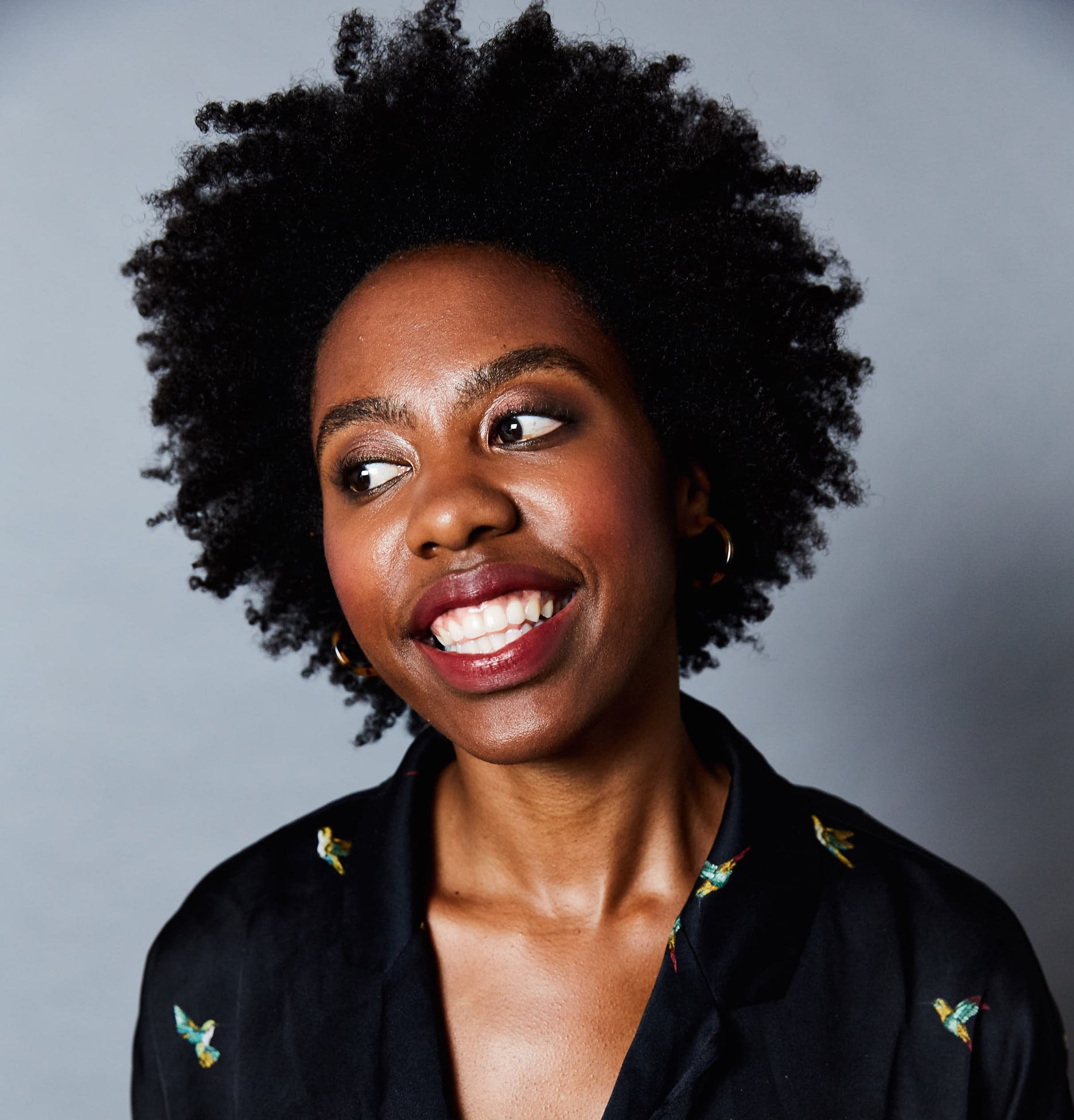
Long before Tomi Talabi entered the workforce, her understanding of beauty was informed by an upbringing spread between Lagos, London and New York, with early experiences that grounded it in daily rituals rather than products. Later, in roles at Bobbi Brown Cosmetics, where she served as director of communications and influencer relations, and Pinterest, where she was a communications lead, she pushed for deeper storytelling despite both companies’ reputations for inclusivity.
“I kept wanting the team to focus less on product and more on the cultural meaning behind it,” she says, pointing to efforts to connect red lipstick to Latina and Afro-Latina culture and its significance. “I don’t think that people got it. People just didn’t really understand that you can get farther by connecting people via culture.”
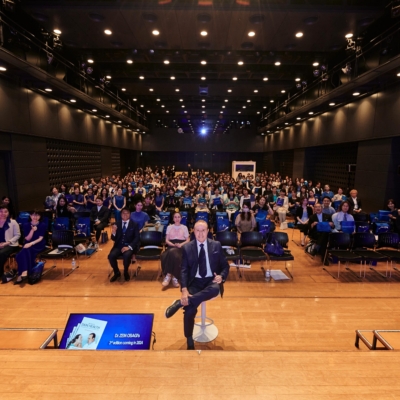
That connection between beauty and culture became the impetus for The Black Beauty Club, which Talabi launched in 2020 on Clubhouse as a digital community. Today, it’s a global network of founders, content creators and consumers that hosts sold-out free events, including talks in Paris, London and other cities, and has achieved organic reach in the hundreds of millions.
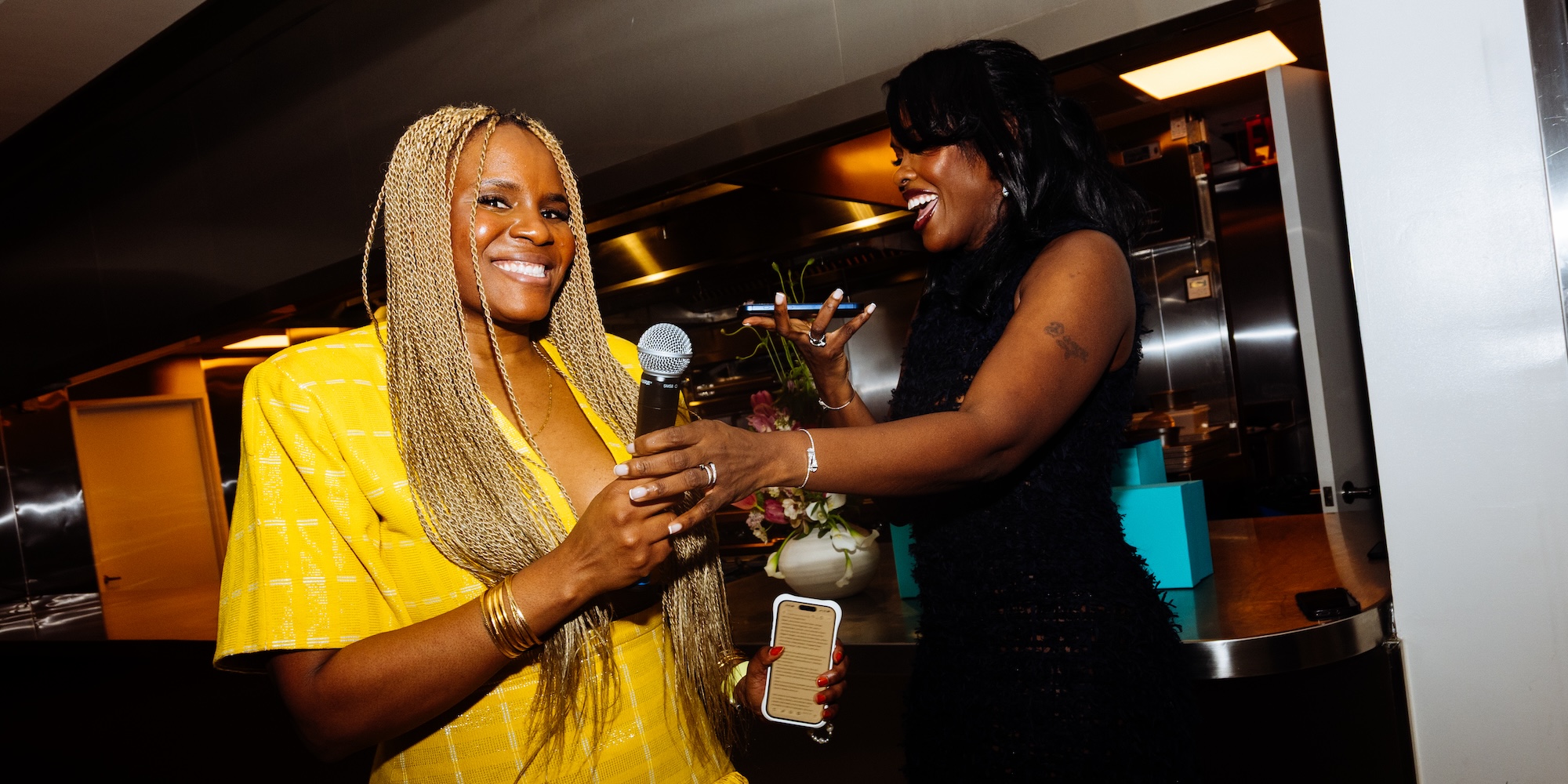
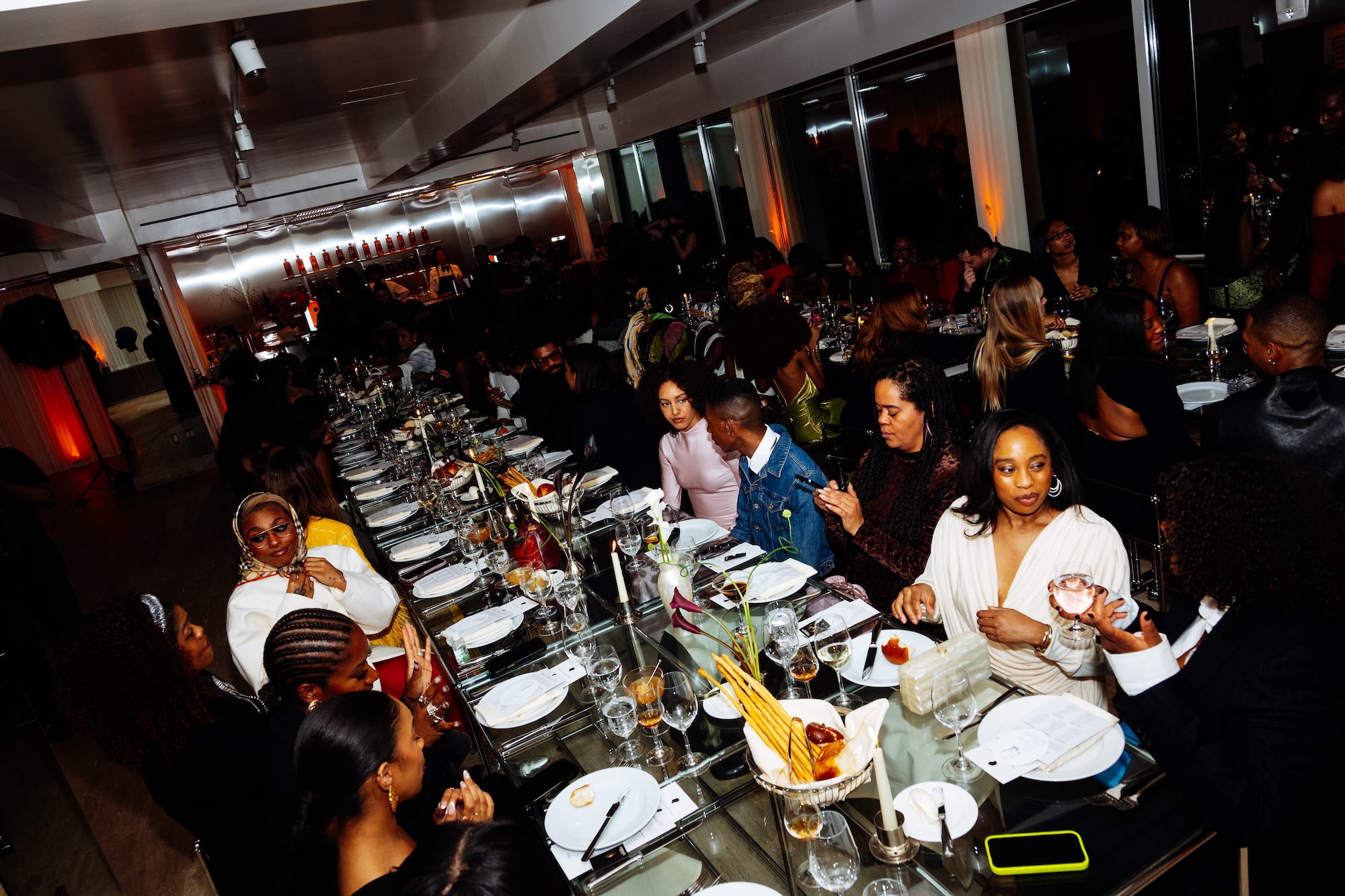
On Feb. 26, The Black Beauty Club held its inaugural Beauty Vanguard Awards dinner in New York, celebrating honorees such as Tracy Ellis Ross and Tina Knowles. In June and August it will host an IRL shopping experience called Beauty On The Block in New York and Chicago. In September, it will hold its annual Black Beauty Talks summit, and it runs a quarterly Friends and Founder series.
Talabi has financed The Black Beauty Club with personal savings and sponsorships from companies like Nars, Moët Hennessy and Sephora. “I have always thought carefully about the tension between building something sustainable and democratizing access to beauty,” she says. “I never wanted The Black Beauty Club to become a platform that only felt available to people who could afford to buy their way in.”
She’s considering the prospect of a paid membership for members-only conversations, founder and creator resources and direct access to ideas and opportunity. Another idea Talabi is exploring is starting a fund to support Black-owned brands, which she says would bridge the gap between “the cultural value Black beauty creates and the capital that actually reaches Black brands. The ambition is not just to talk about the future of Black beauty, but to help back it.”
Ahead, we speak with Talabi about the future of Black beauty, the widening funding gap for Black startups, why companies may regret retreating from DEI, what keeps her optimistic, the brands she’s loving right now and scrutiny facing organizations like Fifteen Percent Pledge and The Black Beauty Club.
What are the Beauty Vanguard Awards?
We wanted to find a way to protect cultural authorship for Black people in beauty and adjacent industries making an impact. Very often, when it comes to Blackness overall, not just beauty, it feels like we’re part of a trend cycle, but we’re never part of the actual foundation of what is happening. The awards were a way to put that forward, but also make it recognized across media so that people see the people shaping where beauty is today.
We’re going to continue to do this. We need to continue to document over and over again and find ways to elevate people impacting the way in which we see ourselves and the way everybody else sees us.
How are you looking at other events?
We’ll be back in Paris again and London as well, but last year we did well going into states outside of New York. There’s a lot of focus on New York, but it’s important for brands, especially Black brands, to capitalize on different regions and building community across the country in areas like Dallas, Houston, the DMV, Chicago.
The word “community” is thrown around a lot in beauty. What do brands get wrong about that term?
People are throwing community around very loosely. We don’t just show up, we actually co-create with our members and get feedback. They drive all the activations and conversations we have. Every time you see a conversation, it’s because something clicked. You need to care about what they care about, that’s all.
An example of that is Topicals. Topicals understands community, they want to serve their community. Brands often want to transact the community. They want to force their way, but they don’t really want to serve or uplift their community in a way that actually helps. If you’re not solving something for people or you’re not co-creating for people, then you’re just dipping your toes in and out.
In 2020, one of the first The Black Beauty Club events focused on funding Black beauty brands. What’s changed since then?
Things have changed, but not necessarily in the direction that most people are hoping for. I’m on Crunchbase often and recently found that funding for Black founders’ startups in the U.S. fell from $4.9 billion in 2021 to $730 million in 2024. That is not a plateau, it truly is a reversal. And it happened against a backdrop where the broader beauty market was still attracting capital.
Also, what is being identified is that Black-owned has, in some cases, become a commercial liability rather than an asset. I remember a WWD article in which one anonymous investor said that being a Black owner can be a disadvantage because shoppers wonder if the product is for them. This is something that I am constantly thinking about, and I find it to be nothing positive. I don’t think anyone is sitting around saying K-Beauty or an Asian beauty brand is not funded because it was created by an Asian person.
With that said, there are bright spots. Last year, LYS was able to raise funding, Topicals was able to raise as well. Then, we know brands have also closed and announced bankruptcy. Black brands have to learn the same hard lessons, which is that steady fundamentals and operations matter more than hype or scale. Brands are not taking their time to grow their brand, to understand the consumer. They’re not building the DTC as strong as they need to be. They’re just going directly to massive funding or hundreds of Sephora stores, which is so expensive.
Danessa Myricks has been in business for a very long time. She was DTC for a very long time. She just started to get funding in the past few years, and she didn’t just launch everywhere in Sephora, she took her time to grow. She consistently shows up in stores across the nation. She really puts in the effort. She wants to know her consumer, which is why she’s going to last.
McKinsey has said Black consumers account for 11.1% of beauty spending while Black brands capture only 2.5% of the revenue. That’s a really important number. It shows that Black brands are not obviously capturing the full 11.1% and not that they would, but there is a gap. Black brands and founders, not only should they be marketing to Black people, but ultimately marketing beyond, without denying or withdrawing from the support of or centering on Blackness.
How can brands that start with Black consumers not be boxed in by demographic assumptions?
The first thing is to refuse to accept the premise that starting with Black consumers is starting small. Often, when people think of Blackness, they see only one specific skin tone or one specific accent. Meanwhile, Black people are really fair, like Tessa Thompson or Zendaya, all the way down to like an Anok Yai. Some people have wavy, curly, coily or kinky hair. The spectrum of Blackness is very expansive. Black consumers are among the most knowledgeable and discerning consumers in beauty because they’ve had to be.
The problem is not with Black consumers. It’s about how investors, retailers and press have historically coded Black-founded brands. That is a market failure, not a brand failure. Danessa Myricks has done a good job navigating the space. Her brand has been about everyone, and she keeps that ethos front and center. Another brand that’s really cool is BeautyStat. Ron Robinson is a chemist and has proof behind his products. He lets the product speak for itself.
There are strategies for making a Black founder brand undeniable in a market that historically looks for reasons to limit it. It’s not to move away from Black consumers, it’s to go from that insight so powerfully that the broader market has to come to you.
There have been conversations about the Fifteen Percent Pledge and who the nonprofit chooses to give their award money to. Do you have an opinion?
In general, any organization that positions itself as a force for change should expect and be open to any scrutiny, not just the Fifteen Percent Pledge. The same goes for the Black Beauty Club, the same goes for Gold House. There’s going to be scrutiny, and it is healthy because founders do not need symbolic alignment alone. They need measurable outcomes.
The criticism that has emerged publicly, including founders who have gone through the application process, is that the process requires so much information such as detailed financials. We already know that it’s an issue as to the amount of information that Black people have always needed to give, even to get a loan or a house. It’s similar.
“Accountability without transparency is not accountability, it’s just posture.”
If anything, Fifteen Percent Pledge probably needs to go back to these founders and have a chat with them. Everyone at some point is going to face scrutiny, the only thing we can do is be open to a conversation within our own community. If we can’t do that, then what are we doing?
Honestly, what’s important to me is that there are 29 major retailers who have signed the Pledge and very few of them have publicly released any available data on their progress. I think they should be held accountable because accountability without transparency is not accountability, it’s just posture. I know the Pledge had mentioned that a few people have stepped back from their funding. Who? I think we should know who they are.
How do you think DEI rollbacks might affect companies long term?
Some companies have treated inclusion like a seasonal language strategy, whether it’s Black History Month, Juneteenth, Diwali, whereas others have embedded it into how they build, hire, assort and show up. There are many brands, companies and retailers that are continuing to invest rather than retreat. They should be celebrated and honored. Sephora still publicly supports DEI as well as J.P. Morgan, Sally Beauty.
Long term, history is going to be unkind to the brands that quietly reverse themselves. We live in a world where old statements, archive reports, leadership decisions and public commitments are searchable, screenshotted and now increasingly surfaced by AI systems. When the time comes, this is going to make performative backtracking so much harder to bury. My view is that the brands that stay principled will age better than the ones that spare their values.
I’ve been in this industry long enough to see people hop on and off. I knew this was going to happen back in 2020. I was actually surprised at how long this went on for because it usually has a max of two years. After two years, they move on to the next hot demographic, but I think it’s going to be unfortunate for retailers because they’re not going to be able to come back and say, “Well, we’ve always been supportive.”
What’s your take on the current state of Black beauty?
Black beauty remains one of the most culturally generative forces in the industry, but it is still obviously structurally undervalued. The consumer power is there. The creative power is there. The global influence is there. But ownership, capital allocation and its institutional follow-through is still behind the cultural contribution.
I would describe this moment as both powerful and unresolved. What keeps me optimistic is that I’ve been in this industry long enough to know that institutions flip-flop all the time, but Black people are not a trend and we’re not a temporary audience. We’re a global diaspora and a permanent part of human history. We’re always going to be here no matter what changes, no matter what people’s new rules are.
Blackness is not peripheral to humanity, it’s foundational to it. Black communities continue to shape culture, care practices, beauty, ritual, aesthetics, language. I do not need to be optimistic based on corporate consistency. I’m optimistic because the source material itself, which is Black people, is infinite.
Are there beauty brands that you’re loving right now?
I’m drawn to brands that have strong authorship of who they are. They’re disciplined and emotionally intelligent and know exactly what they are and do not compromise that for visibility. Topicals remains one for me. It really has a strong cultural fluency, real product relevance, and it’s proven that it can translate that into serious fundraising. Epi.logic stands out because it’s the kind of science-backed Black beauty brand that the industry needs more of.
Another one I really love is D.S. & Durga. It’s world-building, it’s referential, and it’s a gold standard of what indie fragrance should be. I’m also super in love with Violette_FR. I love how they’re doing intergenerational marketing that feels natural, not performative.